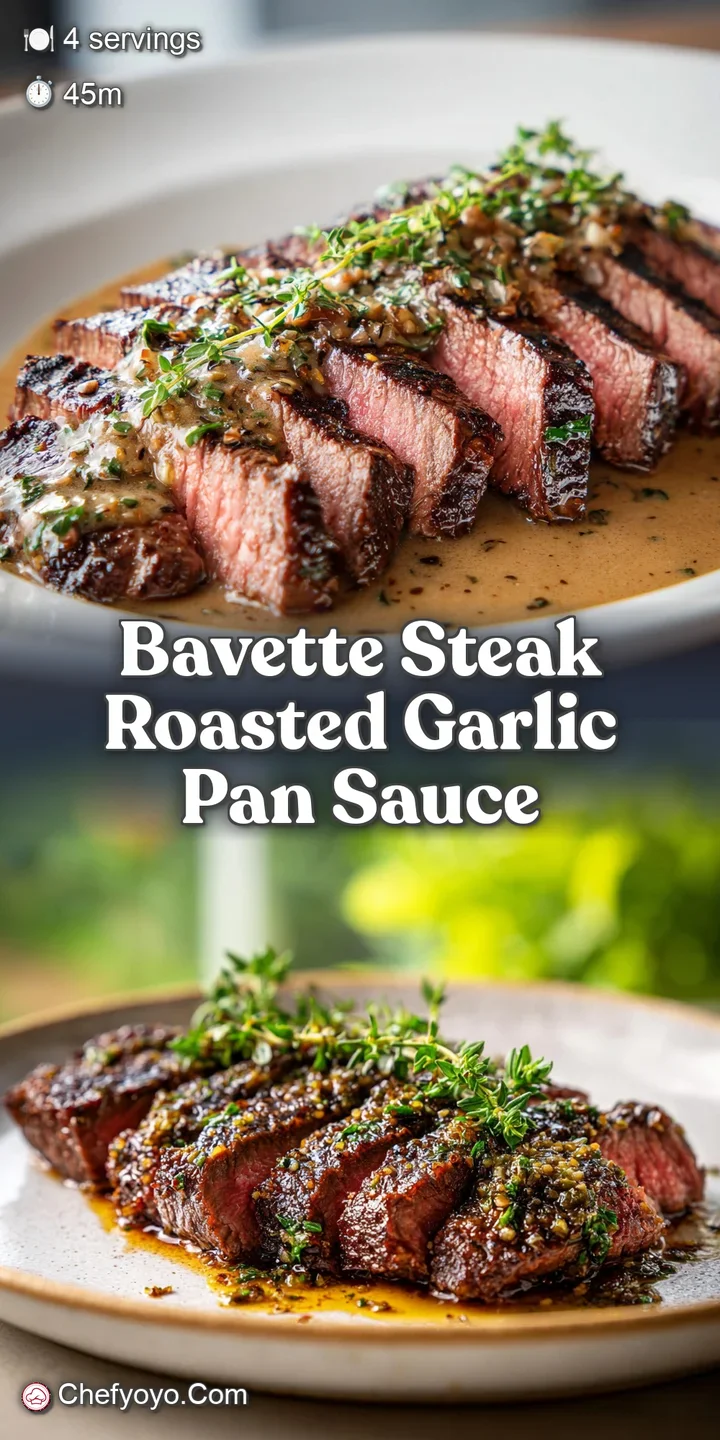
Bavette Steak Roasted Garlic Pan Sauce
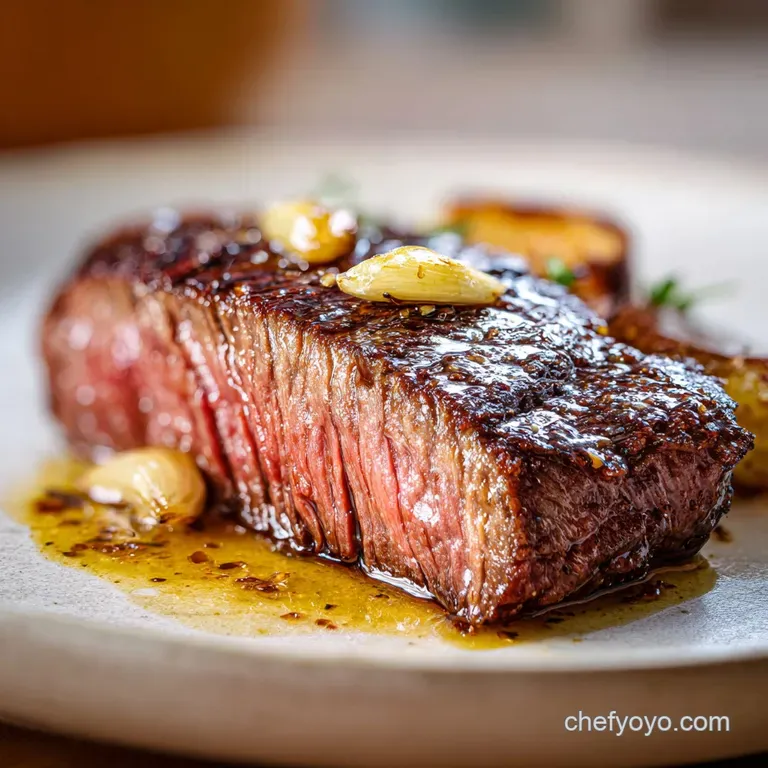
- Time: Active 20 mins, Passive 25 mins, Total 45 mins
- Flavor/Texture Hook: Silky roasted garlic meets a savory, wine dark reduction with a shatter crisp steak crust.
- Perfect for: A high end date night or a weekend dinner where you want to impress without the filet mignon price tag.
- Creating Bavette Steak Roasted Garlic Pan Sauce
- Why This Flavor Profile Works
- The Chemistry of the Ingredients
- Premium Ingredient Selection Guide
- Required Culinary Equipment
- Detailed Preparation Instructions
- Professional Success Strategies
- Flavor and Ingredient Variations
- Scaling the Recipe
- Storage and Safety Rules
- Ideal Serving Partners
- Debunking Steak Myths
- Very High in Sodium
- Recipe FAQs
- 📝 Recipe Card
Creating Bavette Steak Roasted Garlic Pan Sauce
The first time I pulled a head of roasted garlic out of the oven, I almost ate the whole thing with a spoon before the steak even hit the pan. The aroma is intoxicating sweet, nutty, and completely devoid of that sharp bite raw garlic carries.
When you squeeze those jammy cloves into a simmering pan of red wine and beef bone broth, something magical happens. The kitchen fills with this rich, heady scent that practically screams "fine dining," even if you're standing there in your pajamas with a pair of tongs.
Bavette is the secret weapon of home cooks who know their butcher. It’s a long, flat cut similar to flank or skirt but with significantly more marbling and a looser grain that practically begs to be bathed in a velvety sauce.
I remember making this for a friend who usually only eats ribeye; after one bite of this sliced thin against the grain, dripping in that glossy, dark reduction, they asked which expensive steakhouse I’d ordered from. It’s that good.
We are going for a over high heat sear here to get that specific "shatter" on the crust, followed by a pan sauce that pulls every bit of flavor from the bottom of the skillet. The roasted garlic isn't just an afterthought; it acts as a natural thickener, giving the sauce a body that feels luxurious without being heavy.
If you've ever struggled with thin, watery sauces, this technique is going to be your new favorite trick.
Why This Flavor Profile Works
- Maillard Magnification: over High heat searing creates a complex crust of caramelized proteins that provides the savory base for our liquid reduction.
- Enzymatic Softening: Roasting the garlic at 400°F (200°C) converts harsh sulfur compounds into sweet vanillin and nutty caramel notes through slow thermal breakdown.
- Emulsion Stability: Whisking cold, cubed butter into the final reduction traps fat droplets in the liquid, creating a glossy sheen that clings to the meat.
- Acid Balance: The balsamic vinegar and red wine provide a sharp counterpoint to the rich beef fat, cutting through the heaviness to keep the palate refreshed.
| Thickness | Internal Temp | Rest Time | Visual Cue |
|---|---|---|---|
| 0.75 inch | 130°F (Medium Rare) | 8 mins | Deep brown crust, warm red center |
| 1 inch | 130°F (Medium Rare) | 10 mins | Firm bounce when pressed, juices clear |
| 1.5 inch | 130°F (Medium Rare) | 12 mins | Resilient texture, edge to edge pink |
The rest time is non negotiable for this specific cut because the loose grain structure will dump its juices instantly if you slice it too soon. Letting it sit allows those fibers to relax and reabsorb the liquid, ensuring every slice is succulent rather than dry.
The Chemistry of the Ingredients
| Component | Science Role | Pro Secret |
|---|---|---|
| Bavette Steak | Fiber Structure | Always slice against the grain to break the long muscle fibers for tenderness. |
| Red Wine | Solvent | The alcohol extracts flavor compounds from the fond that water based liquids can't reach. |
| Cold Butter | Emulsifier | Using cold butter prevents the sauce from "breaking" or becoming oily. |
| Grapeseed Oil | Heat Threshold | Its high smoke point allows for a brutal sear without the oil turning bitter or smoky. |
Premium Ingredient Selection Guide
To get the best results, start with a 1.5 lbs bavette steak (sirloin flap) that has visible marbling. You'll also need 2 tbsp grapeseed oil for its high smoke point, 1 tbsp kosher salt, and 1 tsp coarse black pepper for the initial seasoning.
For the aromatic base, grab 1 large head of garlic and 1 tbsp extra virgin olive oil for the roasting phase.
The sauce building requires 1 medium shallot (finely minced), 0.5 cup dry red wine (Cabernet or Syrah works best), and 1 cup beef bone broth for that deep, collagen rich mouthfeel.
Finish the masterpiece with 2 tbsp cold unsalted butter (cubed), 1 tsp fresh thyme, and 1 tsp balsamic vinegar to brighten the whole profile.
| Original Ingredient | Substitute | Why It Works |
|---|---|---|
| Bavette Steak | Skirt Steak | Similar loose grain and intense beefy flavor, though slightly thinner. |
| Red Wine | Beef Broth + 1 tsp Vinegar | Replicates the acidity and volume without the alcohol content. |
| Grapeseed Oil | Avocado Oil | Both have high smoke points (above 400°F) necessary for a proper sear. |
| Shallot | Red Onion (finely minced) | Provides the same sweetness and sharp bite when sautéed. |
Required Culinary Equipment
You don't need a professional kitchen, but a heavy bottomed pan is essential. I swear by a 12 inch cast iron skillet because it holds heat like nothing else, which is exactly what you need to get that dark, savory crust on the 1.5 lbs bavette steak.
If you use a thin stainless steel pan, the temperature will drop the moment the cold meat hits it, and you'll end up steaming the steak instead of searing it.
You will also need some aluminum foil to wrap the garlic head and a fine mesh whisk to incorporate the butter into the sauce at the end. A reliable meat thermometer is the only way to ensure you hit that 130°F (54°C) mark for a perfect medium rare. If you want to dive deeper into butter based aromatics, you might find my Garlic Butter Recipe helpful for other steak nights where you want a simpler finish.
Detailed Preparation Instructions
1. Roast the Garlic Base
Preheat your oven to 400°F (200°C). Slice the top off 1 large head of garlic to expose the cloves, drizzle with 1 tbsp extra virgin olive oil, and wrap tightly in foil. Bake for 30 minutes until the cloves are buttery and golden brown.
Once cool enough to touch, squeeze the cloves into a small bowl and mash into a smooth paste.
2. Prepare the Protein
Pat the 1.5 lbs bavette steak completely dry with paper towels. Season aggressively with 1 tbsp kosher salt and 1 tsp coarse black pepper on both sides. Note: Surface moisture is the enemy of a good sear; dry meat browns faster.
3. Searing the Steak
Heat 2 tbsp grapeseed oil in your cast iron skillet over high heat until the oil just begins to shimmer and smoke. Carefully lay the steak into the pan, laying it away from you to avoid splashes.
Sear for 4-5 minutes per side, undisturbed, until a dark, mahogany crust forms.
4. Resting Period
Remove the steak from the pan and place it on a warm plate. Tent loosely with foil and let it rest for at least 10 minutes. Note: This prevents the juices from running out during slicing.
5. Sauté the Aromatics
Reduce the pan heat to medium and add 1 medium shallot, finely minced. Sauté for 2 minutes until translucent and fragrant, using a wooden spoon to scrape up the browned bits (the fond) from the bottom of the pan.
6. Deglaze the Pan
Pour in 0.5 cup dry red wine. Let it bubble and reduce by half, about 3-4 minutes, until the harsh alcohol scent disappears.
7. Build the Sauce
Stir in 1 cup beef bone broth and the reserved roasted garlic paste. Simmer for 5-7 minutes until the liquid coats the back of a spoon.
8. Finish with Velvet
Whisk in 1 tsp fresh thyme and 1 tsp balsamic vinegar. Turn off the heat and whisk in 2 tbsp cold unsalted butter, one cube at a time, until the sauce is glossy and thick.
9. Slice and Serve
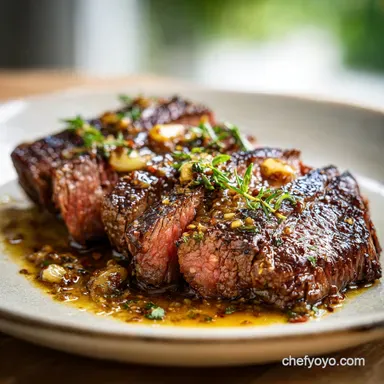
Slice the rested steak against the grain into 1/4 inch strips. Fan the meat out on a platter and spoon the warm roasted garlic pan sauce generously over the top.
Professional Success Strategies
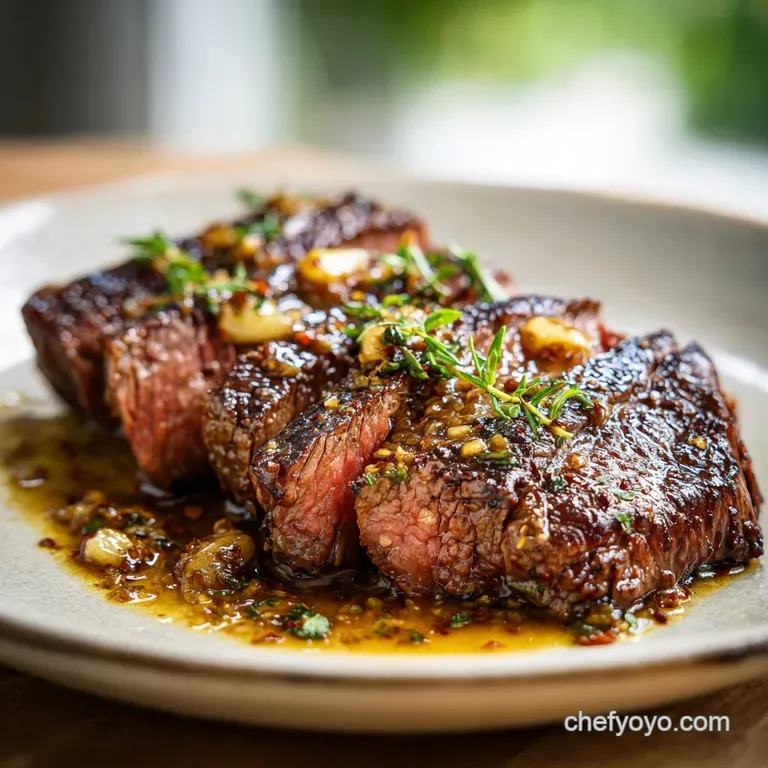
One of the biggest hurdles with pan sauces is the "break" where the fat separates from the liquid and you're left with an oily mess. This usually happens if the sauce gets too hot after the butter is added. Always pull the pan off the burner before whisking in those cold cubes.
The residual heat is plenty to melt the fat while the cold temperature of the butter helps create that stable emulsion.
Why Your Steak is Tough
If you slice bavette with the grain (parallel to the muscle fibers), it will be chewy and difficult to eat, regardless of how perfectly you cooked it. Look for the lines running across the meat and cut perpendicular to them. This shortens the fibers, making every bite feel tender and effortless.
How to Prevent Sauce Separation
A sauce "breaks" when the emulsion of fat and water collapses. This often happens if you boil the sauce after adding the butter. If you see oil droplets forming on the surface, quickly whisk in a teaspoon of cold water or broth to bring it back together.
| Problem | Root Cause | Solution |
|---|---|---|
| Gray, boiled steak | Pan wasn't hot enough | Wait for the oil to smoke before adding meat. |
| Bitter sauce | Burnt shallots or garlic | Sauté on medium heat and deglaze immediately if they darken. |
| Thin, watery sauce | Not enough reduction | Simmer the broth longer before adding butter to concentrate proteins. |
Common Mistakes Checklist
- ✓ Skipping the pat dry step (results in gray, steamed meat).
- ✓ Slicing the steak immediately (all the flavor will end up on the cutting board).
- ✓ Using "cooking wine" (the high salt content will ruin the balance).
- ✓ Crowding the pan (if the steak is too big, cut it into two pieces).
- ✓ Forget to take the butter out of the fridge (it must be cold for the sauce).
Flavor and Ingredient Variations
If you want to move away from the classic red wine profile, you can swap the wine for a splash of cognac or even a dark balsamic reduction for a sweeter, stickier finish. Some people love adding a tablespoon of Dijon mustard to the sauce for a French bistro vibe. It acts as an additional emulsifier and adds a pleasant tang that pairs beautifully with the roasted garlic. For a different creamy profile, you could even draw inspiration from a Garlic Parmesan Sauce recipe if you want something heavier on the dairy side.
- The Umami Bomb: Add 1 tsp of soy sauce or Worcestershire sauce during the broth reduction phase.
- The Herbaceous Twist: Replace thyme with rosemary or tarragon for a more floral, aromatic sauce.
- The Creamy Finish: Stir in 2 tbsp of heavy cream right before the butter for a "Steak au Poivre" style texture.
Scaling the Recipe
Scaling Down (1-2 servings): Use a smaller 8 inch skillet to ensure the sauce doesn't evaporate too quickly. Halve all ingredients exactly, but keep the roasting time for the garlic the same, as the bulb size remains constant.
Scaling Up (6-8 servings): You will need to sear the steak in two batches. Never overcrowd the pan, or the temperature will drop. Increase the wine and broth to 1.5x rather than doubling them to avoid an overly long reduction time, which can make the sauce too salty.
| Feature | Fast Method | Classic Method (This Recipe) |
|---|---|---|
| Garlic Prep | Raw minced garlic | Roasted garlic paste |
| Flavor Depth | Sharp and pungent | Sweet, nutty, and mellow |
| Sauce Texture | Thin and watery | Thick, jammy, and glossy |
Storage and Safety Rules
Storage: Leftover steak and sauce can be kept in an airtight container in the fridge for up to 3 days. To reheat, do it gently in a pan over low heat with a splash of broth; microwaving steak often turns it into rubber.
Freezing: The roasted garlic paste freezes beautifully in ice cube trays for up to 3 months. However, I don't recommend freezing the finished pan sauce, as the butter emulsion will break upon thawing and lose its silky texture.
Zero Waste Tip: Don't throw away the garlic skins or the trimmings from the steak! Toss them into a pot with some water and vegetable scraps to make a quick "scrap broth" for your next soup.
Ideal Serving Partners
This bavette steak roasted garlic pan sauce is a star on its own, but it needs something to soak up that incredible liquid. I usually serve it with crispy smashed potatoes or a simple loaf of crusty sourdough. If you’re looking for a bold flavor contrast, a side of horseradish spiked greens or even a Fiery Homemade Horsey recipe on the side can add a nice kick to the rich beef.
A simple arugula salad with lemon vinaigrette is also a fantastic choice. The peppery bite of the greens and the acidity of the lemon help clear the palate between rich, garlic laden bites of steak. Whatever you choose, make sure it’s something that won’t compete with the complex flavors of the sauce.
Debunking Steak Myths
Myth: Searing "seals in" the juices. The truth is that searing is entirely about flavor development through the Maillard reaction. Moisture is lost during the searing process regardless of the crust.
The reason the steak stays juicy is actually due to the internal temperature and the resting period, not the "seal" of the crust.
Myth: You should only flip a steak once. Recent kitchen science has shown that flipping your steak every 60 seconds actually helps it cook more evenly and prevents a thick "gray band" of overcooked meat beneath the crust.
However, for a thin cut like bavette, a single 4 minute sear per side is usually more efficient for developing that deep mahogany color we want.
Very High in Sodium
1240 mg mg of sodium per serving (54% % of daily value)
The American Heart Association recommends limiting sodium intake to no more than 2,300mg per day for optimal health.
Sodium Reduction Tips for Bavette Steak Recipe
-
Low-Sodium Broth-30%
Replace the regular beef bone broth with a low-sodium or no-sodium beef broth. This simple swap can significantly reduce the overall sodium content of the dish.
-
Reduce Salt-25%
Reduce the amount of kosher salt used from 1 tbsp to 0.75 tbsp, or even 0.5 tbsp, and taste as you go. You can always add more to taste, but you can't take it away.
-
Unsalted Butter-10%
Ensure that the butter used is truly unsalted. Some butter brands contain trace amounts of salt. Double check the label for a sodium content of zero.
-
Fresh Ingredients-5%
Opt for fresh garlic and shallots rather than processed or pre-minced versions. These tend to have less sodium.
-
Flavor Boost
Experiment with sodium free herbs and spices to enhance the flavor of the steak. Consider using smoked paprika, garlic powder (not garlic salt!), or onion powder.
Recipe FAQs
What sauce is good on bavette steak?
A pan sauce made by deglazing the pan is ideal. The roasted garlic pan sauce mentioned here utilizes the fond left from searing, creating a deeply savory reduction that perfectly complements the steak's loose grain structure.
What's the best way to cook bavette steak?
Sear it hot and fast over high heat. Use a heavy bottomed pan, like cast iron, with a high smoke point oil to achieve a deep mahogany crust before resting and slicing thin against the grain.
Is it best to marinate bavette steak?
No, a dry brine or simple seasoning is usually better. Bavette is flavorful already; heavy marinades can obscure its natural beefiness and introduce unwanted moisture which hinders proper searing.
What is bavette steak called in the USA?
It is most commonly called "Sirloin Flap" or "Flap Meat" in the USA. It’s structurally similar to flank or skirt steak but often boasts superior marbling compared to those cuts.
How do I ensure my pan sauce emulsifies and doesn't break?
Whisk in cold, cubed butter off the heat at the very end. The residual heat is enough to melt the fat without boiling it, allowing the butter to stabilize the liquid into a glossy emulsion.
Can I use a different liquid instead of red wine for the pan sauce?
Yes, you can substitute the wine for depth and acidity. Try using cognac or port, or for an alcohol free option, use good quality beef stock mixed with a splash of balsamic vinegar for necessary tang.
Why is resting the steak so critical for this cut?
Resting allows the internal muscle fibers to relax and reabsorb juices. If you slice too soon, the loose grain of the bavette will immediately release all its moisture, resulting in a dry piece of meat.
Bavette Steak Roasted Garlic Sauce
Ingredients:
Instructions:
Nutrition Facts:
| Calories | 486 kcal |
|---|---|
| Protein | 38 g |
| Fat | 31 g |
| Carbs | 7 g |
| Fiber | 1 g |
| Sugar | 2 g |
| Sodium | 1240 mg |
