Black Eyed Peas: Velvety Fusion Dish
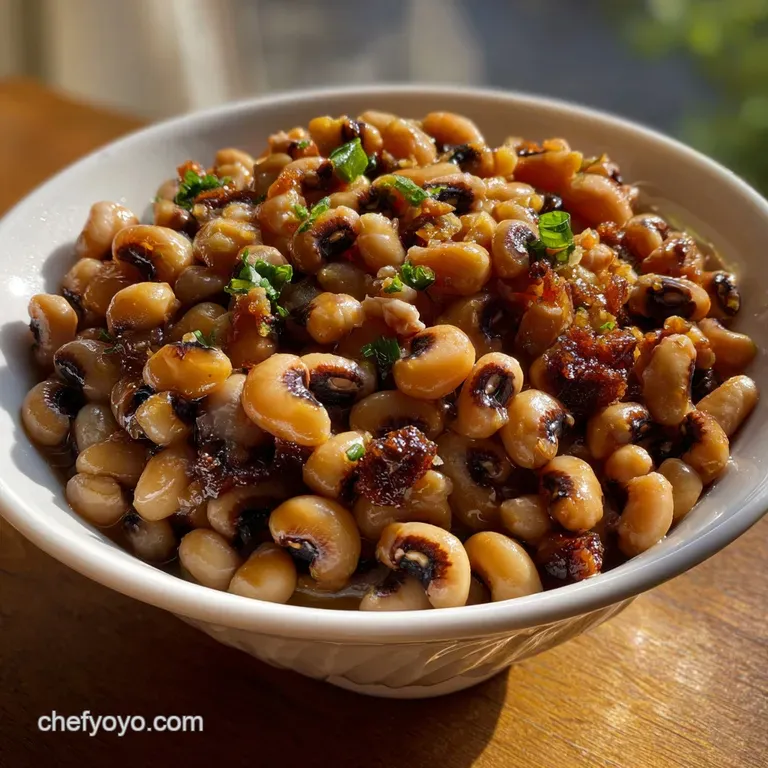
- Effort/Time: Low-active effort; 2 hour 15 minutes total.
- Flavor Hook: Smoked-mahogany depth meets bright, vinegary finish.
- Perfect for: High-protein meal-prep or traditional celebrations.
Master the Ultimate black eyed peas
There is nothing more disheartening than spending hours over a stove only to serve a bowl of gray, mealy pellets that taste like wet cardboard. I remember my first attempt at cooking black eyed peas for a New Year’s gathering; I rushed the soak and skipped the Maillard reaction on the aromatics.
The result was a watery, flavorless mess that even a bottle of hot sauce couldn't save. It was an expensive waste of organic stock and premium smoked meats, leaving me with nothing but a sink full of scorched ceramic and a hungry family.
I destroyed at least three batches of beans trying to figure out why some remained "bullet hard" while others disintegrated into a murky sludge. It wasn't until I stopped treating them like a side dish and started treating them like a structural engineering project that it clicked.
The secret to the perfect batch of black eyed peas isn't just luck; it's the physics of hydration and the chemistry of acid timing.
The scientific revelation came when I realized that salt and acid are the gatekeepers of bean texture. Adding 1 tbsp apple cider vinegar too early prevents the pectin in the skins from breaking down, leaving you with forever tough beans.
However, when introduced as a finishing touch, it brightens the heavy lipids from the 1.5 lbs smoked ham hocks. This creates a contemporary flavor profile that balances the weight of the protein with a sharp, creative finish.
The Molecular Magic Behind This Southern Classic
- Pectin Breakdown: Heat weakens the calcium pectin bonds in the cell walls, allowing the bean to soften without losing its structural integrity.
- Collagen Hydrolysis: Long, slow simmering transforms the tough connective tissue of the ham hocks into liquid gelatin, providing a velvety mouthfeel.
- Starch Gelatinization: As the black eyed peas absorb the 7 cups low-sodium chicken stock, the internal starches swell and burst, creating a natural thickening effect in the pot liquor.
- Aromatic Infusion: Fat-soluble compounds in the 1 tsp smoked paprika and 0.5 tsp cayenne pepper dissolve into the vegetable oil, ensuring even flavor distribution.
Precision Metrics for a Batch of Soul Food
| Metric Category | Specification | Target Goal |
|---|---|---|
| Primary Mass | 1 lb dried black eyed peas | Uniform hydration and even cooking |
| Thermal Duration | 1 hour 30 mins to 2 hours | Reaching the "tender pop" threshold |
| Liquid Ratio | 7 cups chicken stock | Controlled reduction for rich pot liquor |
The Alchemy of Umami: Selecting Your Elements
Selecting your components for these black eyed peas requires a focus on authentic quality and creative pairing.
- 1 lb dried black eyed peas: Why this? Dried legumes offer superior starch release compared to canned versions for a creamier broth.
- 1.5 lbs smoked ham hocks: Why this? High collagen content provides essential body and smoky, authentic depth to the liquid.
- 7 cups low-sodium chicken stock: Why this? Control over sodium levels allows for a deep Maillard enhanced flavor without over salting.
- 1 large yellow onion: Dice this finely to ensure it melts into the base during the long simmer.
- 1 tbsp apple cider vinegar: Why this? Acid cuts through the heavy animal fats, balancing the contemporary flavor profile.
- 1 tsp smoked paprika: This provides a vibrant mahogany hue and reinforces the smokiness of the hocks.
If you’re looking for another pantry staple that delivers on texture, check out this Spicy Black Bean recipe.
Ingredient Chemistry Breakdown
| Ingredient | Chemical/Physical Role (Science) | The Pro Secret (Why This Matters) |
|---|---|---|
| Smoked Ham Hocks | Collagen hydrolysis into gelatin | Creates a "lip-sticking" richness without added cream |
| Dried black eyed peas | Starch gelatinization | Provides the thickening power for the "pot liquor" |
| Vegetable Oil | Lipid based flavor extraction | Extracts fat-soluble capsicum from the cayenne and paprika |
| Apple Cider Vinegar | pH balance and pectin stabilization | Prevents the beans from becoming an indistinct mush |
Essential Tools for Contemporary Bean Preparation
To achieve masterclass results, use a Lodge Cast Iron Dutch Oven or a heavy bottomed Le Creuset Stock Pot. The thermal mass of cast iron ensures a consistent simmer, preventing the bottom scorching common in thin stainless steel pans.
You’ll also need a fine mesh sieve for rinsing the 1 lb dried black eyed peas to remove dust and debris.
For the aromatics, a Victorinox Chef’s Knife is essential for the 1 large yellow onion and 2 stalks celery. Precision cuts ensure that the 1 green bell pepper and other vegetables soften at the same rate. Mastering the liquid base is key, similar to the process in my Creamy Fish Stock recipe.
Precision Thermal Protocol for Silky Beans
- Rinse the 1 lb dried black eyed peas in cold water until the runoff is crystal clear.
- Heat 2 tbsp vegetable oil in a Dutch oven until a faint shimmer appears.
- Sauté the diced 1 large yellow onion, 1 green bell pepper, and 2 stalks celery for 8 minutes until the onion edges are translucent and the sharp aroma turns sweet.
- Add 4 cloves minced garlic for 60 seconds until the fragrance is pungent but not toasted.
- Incorporate 1 tsp smoked paprika, 1 tsp dried thyme, and 0.5 tsp cayenne pepper, stirring for 30 seconds until the oil turns a deep mahogany.
- Pour in 7 cups low-sodium chicken stock and scrape the bottom of the pot to release any caramelized bits.
- Submerge 1.5 lbs smoked ham hocks and 2 dried bay leaves into the liquid.
- Add the rinsed black eyed peas and bring the mixture to a boil until large bubbles break the surface.
- Reduce heat to low and simmer for 1 hour 30 mins until the beans are tender when pressed against the roof of your mouth.
- Stir in 1 tbsp apple cider vinegar, 1 tsp kosher salt, and 0.5 tsp freshly cracked black pepper until the aroma shifts from heavy smoke to a balanced tang.
Chef's Note: If you want a creamier texture, take one ladle of the cooked beans and mash them against the side of the pot. This releases extra starch into the liquid, creating a fusion style "gravy" for the black eyed peas.
Solving Common Textural and Flavor Imbalances
The most frustrating part of cooking black eyed peas is the "Hard Bean Syndrome." This usually happens because of old beans or early salting.
Why Your Peas Remain Tough
If your beans are still firm after two hours, the cell wall pectins have likely been "locked" by high mineral content in your water or premature acid introduction. Magnesium and calcium in hard water bind to the pectin, making it nearly impossible for the beans to soften.
| Problem | Root Cause | The Fix | Pro Protocol |
|---|---|---|---|
| Tough Skins | Hard water or old beans | Add a pinch of baking soda | 1/8 tsp soda increases pH to soften pectin |
| Mushy Texture | Excessive boiling/agitation | Simmer, don't boil | Maintain a "lazy bubble" at 95°C |
| Flat Flavor | Under extracted hocks | Simmer hocks 30 mins before beans | Pre-extracting collagen builds a richer base |
⚗️ The Scaling Lab
When doubling this black eyed peas recipe to serve a larger crowd, you must account for the Evaporation Paradox.
- Liquid Reduction: When doubling to 2 lbs of beans, do NOT use 14 cups of stock. Use 12 cups. In the same diameter pot, you lose the same amount of moisture to steam regardless of volume.
- Spice Saturation: Scale spices like the 0.5 tsp cayenne to 1.5x rather than 2x. Heat accumulates non-linearly in larger batches.
- Pan Crowding: Do not double the aromatics in a small pot. Sauté the onions in two batches to ensure they caramelize (Maillard reaction) rather than steam.
Stovetop vs. Oven Comparison
| Method | Texture Result | Time Factor |
|---|---|---|
| Stovetop Simmer | Creamier pot liquor, softer skins | 1 hour 45 mins |
| Oven Braise (160°C) | More intact beans, concentrated flavor | 2 hours 15 mins |
Creative Flavor Architecture and Ingredient Swaps
If you are looking for a creative twist or need to accommodate dietary needs, these swaps for the black eyed peas will maintain the integrity of the dish.
Substitution Table
| Original Ingredient | Substitute | Why It Works |
|---|---|---|
| 1.5 lbs Smoked Ham Hocks | Smoked Turkey Wings | Lower fat but identical smoky aroma profile |
| Chicken Stock | Vegetable Broth + 1 tsp Liquid Smoke | Replicates the umami depth for a fusion twist |
| Vegetable Oil | Bacon Fat | Enhances the authentic "soul food" flavor profile |
- If you want creamy, thick liquid
- Mash 10% of the beans at the end.
- If you want clean, distinct beans
- Cook 15 minutes less and skip the mash.
- If you want maximum smoke
- Use both ham hocks and bacon fat.
Preserving Integrity and Zero Waste Protocols
- Fridge
- Store in airtight containers for up to 4 days. The starch will thicken further as it cools.
- Freeze
- These freeze beautifully for 3 months. Leave 2cm of headspace in the container for expansion.
- Reheat
- Warm on the stove over medium heat. Add a splash of water or stock to loosen the gelatinized liquid.
💡 ZERO WASTE: Don't discard the ham hock bones! Transform: Boil them again with vegetable scraps for a secondary "remouillage" stock. Science: Even after the first boil, the marrow and deep connective tissues contain residual minerals and umami. For more tips on maximizing your ingredients, check out our How to Make recipe for gourmet twists.
Contemporary Presentation and Pairing Strategies
For a creative presentation, serve these black eyed peas in a wide, shallow bowl rather than a deep one. This allows the mahogany pot liquor to form a beautiful ring around the legumes. Top with finely sliced scallions and a drizzle of extra virgin olive oil to add a contemporary brightness to the earthy tones.
The Traditional Southern Spread While tradition dictates cornbread, a modern approach involves serving these alongside a bright citrus slaw. The acidity of the slaw acts as a palate cleanser between bites of the rich, smoky beans.
These black eyed peas also pair exceptionally well with a crisp, dry Riesling, which cuts through the lipids and highlights the 1 tsp dried thyme and pepper notes.
- Myth
- You must soak black eyed peas overnight.
- Truth
- These are thin skinned beans; while soaking reduces cook time, you can cook them from dry in about 2 hours with excellent results.
- Myth
- Salt makes beans tough.
- Truth
- Salt actually helps soften the skins by displacing magnesium; it's the acid (vinegar/lemon) that makes them stay tough if added too early.
Whether you are seeking luck for the New Year or just a high protein, creative dinner, mastering these black eyed peas ensures a result that is never mealy, always flavorful, and structurally perfect.
Recipe FAQs
Should I soak dried black eyed peas overnight?
No. Soaking is optional for this thin skinned legume. While soaking reduces cook time, these beans will fully soften after approximately 1 hour 45 minutes from dry. Mastering the technique in our Black Eyed Peas: Smoky Southern Style Recipe for New Years Luck shows how to skip the soak.
Why are my finished black eyed peas still crunchy in the middle?
Acid was added too early, locking the pectin structure. Acidic ingredients like vinegar bind to the pectin molecules in the bean skins, preventing water absorption and softening. Always add finishing acid after the structural softening phase is complete.
- Use only 1 tbsp apple cider vinegar
- Wait until beans are nearly tender
- Introduce acid only in the final 10 minutes
Are canned black eyed peas a suitable substitute for dried?
Canned peas result in a thinner pot liquor. Canned beans have already released most of their starch into the canning liquid, yielding a less creamy broth base. They are best suited for quick sides like Southwestern Black Bean Salad: The Quick, No-Cook Summer Side Dish.
Does adding salt early make the beans tough?
Myth: Salt inherently prevents bean softening. Sodium ions actually help displace bound calcium and magnesium, aiding the breakdown of cell walls. The primary culprit for toughness is premature acid addition.
Should I use smoked ham hocks or smoked turkey wings?
Ham hocks offer superior collagen and fat density. The higher amount of connective tissue in ham hocks hydrolyzes into rich gelatin during the long simmer, creating a superior velvety mouthfeel. Turkey wings provide smoke but lack the same richness found when mastering technique in our Black Bean Brownies: The Best Fudgy, gluten-free Recipe.
What is the minimum cook time for perfectly tender black eyed peas?
Approximately 1 hour 45 minutes simmer time. This duration allows sufficient time for starch gelatinization without turning the skins into an unappetizing paste. Low, slow heat prevents thermal shock and ensures even cooking across the batch.
What is the purpose of the apple cider vinegar finish?
The vinegar provides necessary acid to balance heavy lipids. The richness from the smoked ham hocks requires a sharp counterpoint to prevent the flavor profile from becoming flat or overly heavy. This final tang elevates the earthy legume flavor.
Black Eyed Peas Fusion
Ingredients:
Instructions:
Nutrition Facts:
| Calories | 309 kcal |
|---|---|
| Protein | 21g |
| Fat | 7.8g |
| Carbs | 38g |
| Fiber | 7g |
| Sugar | 3g |
| Sodium | 560mg |
