Christmas Cracker Toffee Recipe

- Effort/Time: 20 minutes (Plus chilling)
- Flavor Hook: Salty-sweet umami with a deep buttery finish.
- Perfect for: Holiday gifting, grab-and-go parties, and make-ahead dessert platters.
- The Physics of Crunch: Why This Recipe Works
- Efficiency and Yield: The Critical Success Specs
- The Alchemy of Texture: Selecting Your Elements
- Professional Equipment for Precision Results
- The Heat Protocol: Key Assembly Steps
- Why Toffee Separates: Troubleshooting and Fixes
- Flavor Architecture: Creative Variations and Subs
- ⚗️ The Scaling Lab: The Physics of Quantity
- Debunking Common Toffee Myths
- Preservation Science: Storage and Reheating Tips
- Fusion Aesthetics: Contemporary Serving Suggestions
- Recipe FAQs
- 📝 Recipe Card
There is nothing more gut-wrenching than spending your holiday budget on premium butter and chocolate, only to pull a pan out of the oven that looks like a greasy, separated oil slick.
I've seen it happen at a dozen cookie swaps: the toffee refuses to set, the crackers turn into a soggy, flavorless sponge, and the whole mess ends up in the bin. It's a waste of money and a massive blow to your holiday hosting confidence.
I’ll be the first to admit I destroyed three batches of this stuff before I figured out the thermal physics of sugar. I once tried to rush the boil by cranking the heat to high on a thin pan, thinking I could "speed run" the caramelization. The result?
A burnt, bitter layer of carbon that tasted more like a campfire than a confection. I was so frustrated I almost gave up on the concept of christmas cracker toffee entirely.
The secret to success isn't a "magic" ingredient; it’s mastering the sugar fat emulsion. By boiling the butter and sugar for exactly three minutes, you’re creating a stable molecular bond that prevents the fat from leaking out during the bake.
This process, combined with the porosity of the Saltine crackers, creates a structural fusion that results in that signature shattering snap and a rich, mahogany colored finish.
The Physics of Crunch: Why This Recipe Works
- Sugar Fat Emulsification: Boiling butter and sugar creates a temporary emulsion where fat droplets are suspended in a supersaturated sugar solution.
- Starch Gelatinization: The brief oven bake forces the hot toffee into the pores of the Saltines, reinforcing the cracker’s structure so it stays crisp rather than getting soggy.
- Crystalline Structure: Using brown sugar provides molasses, which adds acidity and moisture attracting properties, ensuring the christmas cracker toffee has a deep flavor profile without being brittle dry.
- Thermal Shock Set: Rapidly cooling the molten chocolate after spreading allows the fat crystals to align, creating a glossy, velvety top that snaps when bitten.
Efficiency and Yield: The Critical Success Specs
| Metric | Specification |
|---|---|
| Total Batch Weight | ~950g (approximately 2 lbs) |
| Target Boiling Temp | 240°F - 250°F (Soft Crack Stage) |
| Optimal Sheet Size | 13x18 inch (Half Sheet Pan) |
When you're building a holiday spread, this recipe is a logistical dream. It delivers high volume results with minimal active labor. If you’ve already mastered a Classic english toffee recipe, you'll find this version much faster because the crackers provide the structural integrity that usually takes longer to develop in pure sugar work.
The Alchemy of Texture: Selecting Your Elements
Selecting the right components is the difference between a "fine" snack and a professional grade christmas cracker toffee. We are looking for high-quality fats and stable sugars to ensure the toffee layer doesn't grain or break.
Ingredient Chemistry Breakdown
| Ingredient | Chemical/Physical Role (Science) | The Pro Secret (Why This Matters) |
|---|---|---|
| Unsalted Butter | Lipids provide fat for emulsion and flavor | high-quality butter (like Kerrygold) has lower water content, preventing toffee separation. |
| Light Brown Sugar | Molasses content facilitates the Maillard reaction | The slight acidity helps stabilize the sugar crystals during the rapid boil. |
| Semi sweet Chocolate | Lecithin acts as an emulsifier for a smooth melt | High cocoa butter content ensures a velvety mouthfeel that contrasts the crunch. |
| Fine Sea Salt | Enhances perception of sweetness via ion signaling | Balancing the sugar with salt prevents "palate fatigue" from excessive sweetness. |
The Base Components:
- 48 Saltine crackers (115g): Why this? Their high porosity allows the toffee to anchor into the cracker. Use Nabisco Premium Saltines for the most consistent structural integrity.
- 1 cup (225g) unsalted butter: Why this? Butter provides the essential fats for the caramelization process.
- 1 cup (200g) light brown sugar, firmly packed: Why this? The molasses adds depth and helps the toffee stay slightly chewy.
- 1/2 tsp (2.5ml) Nielsen Massey Pure Vanilla Extract: Adds a complex floral aroma.
- 1/4 tsp (1.5g) fine sea salt: Sharpens the flavor of the caramel.
- 2 cups (340g) semi sweet chocolate chips: Why this? Ghirardelli Semi Sweet chips have the best melt-to-set ratio.
- 1/2 cup (60g) chopped pecans: Adds a nutty, buttery crunch to the top.
- 1 tsp (5g) Diamond Crystal Flaky Sea Salt: For that final hit of savory contrast.
Professional Equipment for Precision Results
You don't need a lab, but using the right tools ensures your christmas cracker toffee comes out consistent every single time.
- Nordic Ware Half Sheet Pan: The heavy gauge aluminum ensures even heat distribution, preventing the bottom of your crackers from scorching.
- Cuisinart 3 Quart Stainless Steel Saucepan: A heavy bottomed pan is non-negotiable. Thin pans create hot spots that break the butter sugar emulsion.
- Silpat Non-stick Silicone Baking Mat: This is far superior to parchment paper. It provides a completely flat surface and makes removal of the toffee effortless.
- Offset Spatula: Essential for spreading the melted chocolate into an even, velvety layer without disturbing the toffee underneath.
- Digital Instant Read Thermometer: While you can time the boil, checking for 240°F ensures a perfect set.
The Heat Protocol: Key Assembly Steps
This process is about timing and temperature. Follow these atomic steps for the best christmas cracker toffee experience.
- Preheat oven to 400°F (200°C). Note: High heat is required for rapid infusion.
- Line a Nordic Ware Half Sheet Pan with a Silpat mat.
- Arrange 48 Saltine crackers in a single layer until the entire base is covered with no gaps.
- Melt 1 cup (225g) unsalted butter and 1 cup (200g) light brown sugar in a Cuisinart saucepan over medium heat.
- Boil the mixture for exactly 3 minutes until it becomes a thick, bubbling, pale mahogany foam.
- Remove from heat and stir in 1/2 tsp (2.5ml) vanilla extract and 1/4 tsp (1.5g) fine sea salt.
- Pour the mixture over the crackers immediately until every cracker is submerged in a bubbling golden coat.
- Bake for 5 minutes until the toffee is dark amber and the edges are vigorously bubbling.
- Remove from oven and sprinkle 2 cups (340g) semi sweet chocolate chips evenly over the top.
- Wait2 minutes until the chips look shiny and soft to the touch.
- Spread the chocolate with an offset spatula until a smooth, velvety layer covers the toffee.
- Garnish with 1/2 cup (60g) chopped pecans and 1 tsp (5g) flaky sea salt.
- Chill for 1 hour until the chocolate is completely set and snaps when pressed.
Why Toffee Separates: Troubleshooting and Fixes

Making christmas cracker toffee can be tricky if the temperature fluctuates. If your butter is pooling on top, you've hit a common snag.
Why Your Toffee Layer Separates
When the butter and sugar separate (look for an oily slick), it’s usually due to "thermal shock" or lack of agitation. If you stir too little at the start, the sugar won't dissolve into the fat. If the heat is too high, the water in the butter evaporates too quickly, breaking the bond.
This is a classic case of an emulsion failure where the hydrophobic (fat) and hydrophilic (sugar/water) components refuse to stay together.
| Problem | Root Cause | The Fix | Pro Protocol |
|---|---|---|---|
| Oily Toffee Top | Emulsion break due to high heat | Add 1 tbsp of hot water and whisk vigorously | Maintain a steady "gentle" boil, not a violent one. |
| Soggy Crackers | Under boiled toffee or slow bake | Ensure toffee reaches 240°F before pouring | Use a thermometer every time to verify the sugar stage. |
| Gritty Texture | Sugar crystals didn't fully dissolve | Stir more frequently during the initial melting phase | Use a pastry brush with water to wipe down sugar crystals on the side of the pan. |
Chef's Note: If you're looking to vary your holiday baking, these skills transfer perfectly to a Crinkle Cookies recipe, where sugar structure determines the "crack" on the cookie top.
Flavor Architecture: Creative Variations and Subs
If you need to pivot based on what's in your pantry, use this table to ensure your christmas cracker toffee maintains its structural integrity.
| Original Ingredient | Substitute | Why It Works |
|---|---|---|
| Saltine Crackers | Graham Crackers | Same surface area; results in a sweeter, more "s'mores" style base. |
| Light Brown Sugar | Dark Brown Sugar | Higher molasses content; adds a deeper, slightly more bitter caramel note. |
| Semi sweet Chocolate | White Chocolate | Different fat profile; makes the treat significantly sweeter and richer. |
| Pecans | Toasted Almonds | Similar oil content; provides a cleaner, more floral nuttiness. |
Precision Decision Shortcut
- If you want a softer bite, pull the toffee at 235°F.
- If you want a shattering glass texture, boil until 250°F.
- If you want a savory forward snack, double the flaky sea salt garnish.
⚗️ The Scaling Lab: The Physics of Quantity
When you're making a massive batch of christmas cracker toffee for the neighborhood, you can't just double everything and expect it to work.
- Flavor Saturation (Salt/Spices): Scale to 1.5x (NOT 2x). If you use 2x the sea salt, the sodium levels will overpower the delicate caramel notes.
- The Evaporation Paradox: If you use a larger pot to double the butter and sugar, the surface area increases. This means water evaporates faster, and your toffee will hit the "Hard Crack" stage much sooner than 3 minutes. Watch the thermometer, not the clock.
- Pan Crowding: Do not overlap crackers. If you double the recipe, use two separate sheet pans. Crowding the crackers prevents the toffee from seeping into the edges, leading to "bald" spots that lack crunch.
Thermodynamics Warning: A double batch of molten toffee holds significantly more thermal mass. It will stay liquid longer, which can actually lead to the crackers becoming overly soft if you don't get it into the oven quickly. Work in batches for the best results.
Debunking Common Toffee Myths
Myth: You must use expensive European butter for the toffee to set. Truth: While European butter tastes better, standard unsalted butter works perfectly as long as you maintain the 3 minute boil to stabilize the emulsion.
Myth: The crackers will always be soggy the next day. Truth: If you bake the toffee at 400°F as instructed, the heat drives out all moisture from the cracker, replacing it with sugar fat, which keeps it crisp for up to two weeks.
Preservation Science: Storage and Reheating Tips
Because christmas cracker toffee is essentially a low-moisture confection, it has a fantastic shelf life if kept away from humidity.
- Fridge: Store in an airtight container for up to 2 weeks. The cold keeps the chocolate "snappy."
- Freeze: This is my favorite method. Wrap the pieces in parchment paper and place in a freezer bag for up to 3 months. It's actually incredible eaten straight from the freezer.
- Reheating: Do not reheat. The goal is to keep the chocolate tempered and the toffee crystalline. Heat will turn it into a sticky, greasy mess.
💡 ZERO WASTE PHILOSOPHY: Don't discard the "dust" and small shards at the bottom of the pan. Transform: Save them in a jar to use as a topping for vanilla ice cream or to fold into a Classic Creamy Eggnog recipe. Science: The salt and caramelized sugar provide a concentrated "flavor bomb" that cuts through the richness of dairy.
Fusion Aesthetics: Contemporary Serving Suggestions
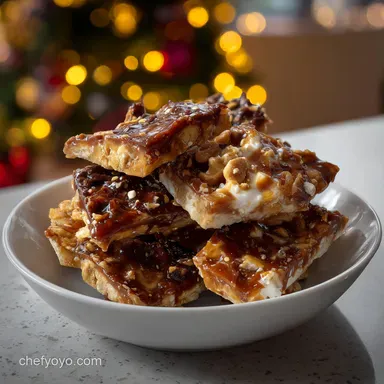
For a creative presentation, don't just pile the christmas cracker toffee on a plate. Break it into jagged, geometric shards that show off the layers. The contrast between the pale cracker, the amber toffee, and the dark chocolate is visually striking.
I love serving these alongside a sharp espresso or a glass of tawny port. The bitterness of the coffee or the acidity of the wine cuts right through the richness of the butter and sugar.
If you're feeling adventurous, try a fusion approach by adding a tiny pinch of gochugaru (Korean chili flakes) to the chocolate layer for a contemporary "sweet and heat" profile. Whether you're gifting it in clear cellophane bags with a velvet ribbon or serving it as the centerpiece of a dessert board, this christmas cracker toffee is guaranteed to be the first thing to disappear.

Recipe FAQs
What is the target temperature for the toffee boil?
240°F - 250°F (Soft Crack Stage). Boiling past 250°F results in a brittle, glass like toffee that shatters too aggressively. Achieving the correct temperature ensures the sugar molecules form a stable matrix with the fat.
Can I substitute the Saltine crackers with Ritz crackers?
No. Ritz crackers contain added yeast and higher fat content, leading to sogginess. The classic Saltine structure is crucial because its low moisture content allows the toffee to fuse without dissolving the cracker base. The resulting texture from Ritz is often too soft for this application.
Why is my toffee weeping oil after cooling?
The butter and sugar emulsion broke during the heating process. Rapid boiling or using a thin saucepan causes the water in the butter to flash off before the sugar can bind the fat, resulting in separation upon cooling.
- Ensure pan has a heavy bottom
- Stir continuously during initial melt phase
- Do not exceed 3 minutes of vigorous boiling
Is it necessary to use brown sugar instead of white granulated sugar?
Brown sugar for depth of flavor and texture. Granulated sugar only contains sucrose, leading to a brighter, sharper caramel flavor profile. The molasses in brown sugar adds crucial acidity, which stabilizes the melt and contributes to a deeper mahogany color.
Do I need to use a silicone mat or will parchment paper suffice?
Silpat mats provide superior, non-stick release properties. While parchment paper works, it can sometimes fuse slightly to the caramel if the toffee pools unevenly.
If you enjoyed mastering temperature control in this recipe, apply that precision to the Christmas Morning Breakfast: Shatteringly Crisp Bake where consistent surface contact is also key.
Myth: Using low-fat butter will reduce the overall calories significantly.
Myth: Using low-fat butter will significantly reduce calories. Reality: low-fat substitutes lack the necessary fat ratios for a stable toffee emulsion; they will cause separation and result in an inedible, gritty mess.
Myth: Cooling the toffee quickly in the freezer is the best setting method.
Myth: Freezing is the fastest way to set the layers. Reality: Rapid freezing can cause sugar crystallization defects; chilling in the refrigerator for one hour ensures the chocolate sets with a tempered, glossy finish.
Cracker Toffee Christmas Crack
Ingredients:
Instructions:
Nutrition Facts:
| Calories | 205 kcal |
|---|---|
| Protein | 1.2 g |
| Fat | 13.9 g |
| Carbs | 20.5 g |
| Fiber | 0.9 g |
| Sugar | 15.4 g |
| Sodium | 156 mg |
