Food Lab Creamy Cheesy Ultimate Spinach Lasagna
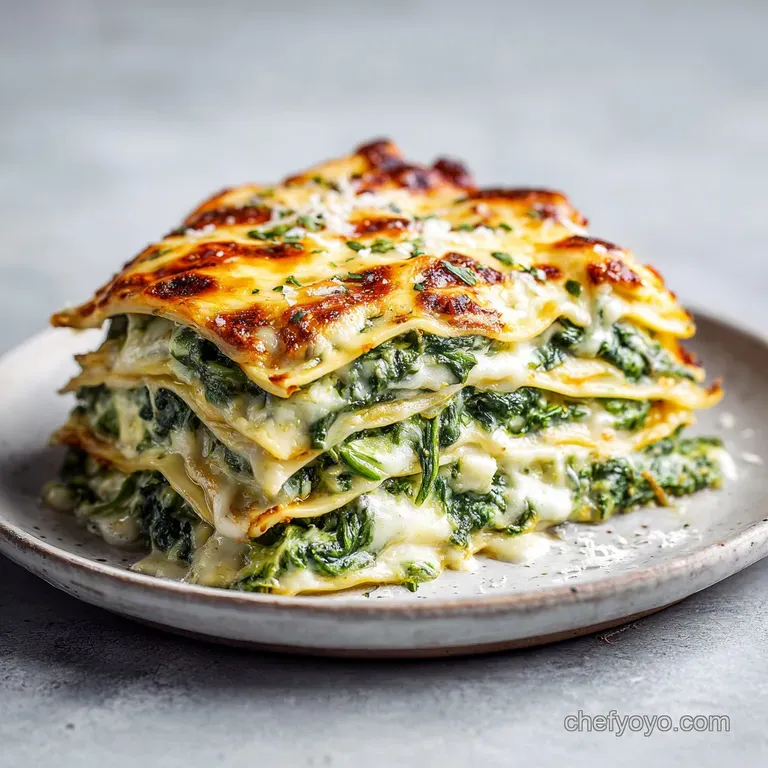
- Time: Active 25 minutes, Passive 45 minutes, Total 1 hour 10 minutes
- Flavor/Texture Hook: Velvety béchamel meets earthy, vibrant spinach
- Perfect for: Sunday family dinner or vegetarian meal prep
- Food Lab Creamy Cheesy Ultimate Spinach Lasagna Recipe
- Why This Recipe Works
- Component Analysis
- What You'll Need
- Essential Kitchen Tools
- Step-by-Step Cooking Guide
- Fixing Common Lasagna Mistakes
- Scaling Your Meal
- Creative Flavor Variations
- Storage and Reheating Tips
- Perfect Complements
- Debunking Pasta Myths
- HIGH in Sodium
- Recipe FAQs
- 📝 Recipe Card
Food Lab Creamy Cheesy Ultimate Spinach Lasagna Recipe
The first time I tried making a spinach lasagna, it was a total disaster. I followed a random recipe that promised "easy" results, but what I pulled out of the oven looked more like a swampy lake than a dinner. The noodles were sliding everywhere, and a green, watery liquid pooled at the bottom of the dish.
It was heartbreaking, honestly, but it taught me the most valuable lesson in Italian American cooking: moisture is the enemy of structure. This Food Lab creamy cheesy ultimate spinach lasagna recipe will become your new favorite comfort food because it tackles that soggy mess head on.
We’re moving away from the standard "dump and bake" method. Instead, we’re focusing on layering flavors and textures so that every bite is a mix of shatter crisp cheese and silky filling. You won't find a drop of watery residue here.
We’re using a classic béchamel a white sauce instead of marinara, which gives the dish a luxurious, velvety mouthfeel that pairs perfectly with the earthy baby spinach.
Trust me, once you taste how the nutmeg in the sauce highlights the sweetness of the ricotta, you’ll never go back to the red sauce version of this veggie classic.
Why This Recipe Works
The Physics of the Puddle Free Bake
- Cellular Dehydration: Sautéing the spinach first breaks down the cell walls, allowing us to squeeze out every drop of excess water before it enters the lasagna.
- Starch Suspension: The béchamel acts as a structural glue, using a flour and butter roux to suspend milk fats in a stable matrix that won't break under high heat.
- Protein Binding: Adding a single egg to the ricotta creates a custard like set, preventing the cheese from weeping and keeping your layers distinct and stackable.
- Osmotic Balance: Salting the spinach during the sauté phase draws out moisture early, ensuring the greens don't release liquid during the final 45 minute bake.
| Method | Cook Time | Texture | Best For |
|---|---|---|---|
| Standard Oven | 45 minutes | Crispy edges, soft center | Traditional family dinner |
| Convection | 35 minutes | Extra shatter crisp top | Those who love crunchy cheese |
| Toaster Oven | 50 minutes | Deeply caramelized corners | Smaller 8x8 batches |
If you're a fan of greens, you'll see some similarities here to my Classic Creamed Spinach recipe, but we're taking it up a notch for this bake. While a Classic Lasagna Recipe usually leans on tomato acidity, this version is all about the velvet smooth dairy and the innovative balance of the nutmeg.
Component Analysis
| Ingredient | Science Role | Pro Secret |
|---|---|---|
| Whole Milk Ricotta | Moisture & Creaminess | Strain for 30 minutes to ensure a thick, pipeable consistency. |
| Fresh Baby Spinach | Bulk & Earthy Flavor | Double squeeze in a kitchen towel; it should feel like a dry ball of yarn. |
| Nutmeg | Flavor Bridge | Only use freshly grated; it chemically enhances the perception of "creaminess" in dairy. |
| Low Moisture Mozzarella | Structural Stretch | Grate it yourself from a block to avoid the grainy anti caking starches in pre shredded bags. |
What You'll Need
- 2 lbs fresh baby spinach: Why this? Fresh has better texture than frozen, which can turn to mush easily. (Substitute: 20 oz frozen chopped spinach, thawed and squeezed very dry)
- 15 oz whole milk ricotta cheese: Why this? Fat carries flavor; skim ricotta is grainy and bland. (Substitute: Sieved cottage cheese for a higher protein, tangier result)
- 1 large egg: Why this? Acts as a binder for the ricotta. (Substitute: 2 tbsp heavy cream for a softer, looser set)
- 0.25 tsp freshly grated nutmeg: Why this? The "secret" ingredient for all white sauce pastas. (Substitute: A pinch of mace for a similar but slightly spicier profile)
- 4 tbsp unsalted butter: Why this? Controls salt levels in the roux. (Substitute: Salted butter, but reduce added Kosher salt by half)
- 0.25 cup all purpose flour: Why this? Thickens the milk into a silky sauce. (Substitute: 3 tbsp cornstarch mixed with cold milk for a gluten-free thickener)
- 3 cups warm whole milk: Why this? Warm milk prevents lumps when forming the béchamel. (Substitute: 2 cups 2% milk and 1 cup heavy cream)
- 12 oz shredded low moisture mozzarella: Why this? Best melting properties without adding too much water. (Substitute: Provolone for a sharper, more piquant finish)
- 1 cup finely grated Pecorino Romano: Why this? Adds a salty, umami punch. (Substitute: Parmesan for a milder, nuttier flavor)
- 3 cloves minced garlic: Why this? Essential aromatic for the spinach base. (Substitute: 1 tsp garlic powder mixed into the ricotta)
- 12 lasagna noodles: Why this? Provides the "bones" of the dish. (Substitute: Fresh pasta sheets for a more delicate, melt in-your mouth texture)
- 0.5 cup torn fresh basil: Why this? Adds a bright, herbal finish to the heavy cheese. (Substitute: 1 tbsp dried Italian seasoning in the sauce)
- Kosher salt and black pepper: To taste.
Essential Kitchen Tools
For this recipe, you'll need a large 9x13 inch baking dish. I personally love using a ceramic dish because it holds heat more evenly than glass. You will also need a large skillet or Dutch oven to wilt that massive mountain of spinach don't worry, it shrinks down to almost nothing!
A sturdy whisk is non negotiable for the béchamel to ensure there are no floury lumps. Finally, grab a clean kitchen towel or cheesecloth. You're going to use this to squeeze the living daylights out of the cooked spinach.
If you don't have a kitchen towel you're willing to stain green, a fine mesh sieve and the back of a large spoon will work, but the towel method is much more effective.
step-by-step Cooking Guide
Extracting the Spinach Essence
- Sauté the greens. Heat a drizzle of oil in a large skillet over medium high heat. Add the 2 lbs of baby spinach in batches, tossing until completely wilted and dark green.
- Drain and cool. Move the spinach to a colander and let it cool for 5 minutes. Don't skip this, or you'll burn your hands in the next step!
- The Big Squeeze. Place the cooled spinach in a clean kitchen towel. Twist and squeeze over the sink until no more liquid drips out.
- Chop and season. Roughly chop the dry spinach ball and mix it in a bowl with the 3 cloves of minced garlic and 0.5 cup torn basil.
Crafting the Silky Béchamel
- Make the roux. Melt 4 tbsp unsalted butter in a medium saucepan over medium heat. Whisk in 0.25 cup all purpose flour and cook for 2 minutes until it smells like toasted shortbread. Note: This removes the raw flour taste.
- Incorporate the milk. Slowly pour in the 3 cups of warm milk, whisking constantly. Simmer for 5-7 minutes until the sauce coats the back of a spoon.
- Finish the sauce. Remove from heat and stir in 0.25 tsp nutmeg, salt, pepper, and 0.5 cup of the Pecorino Romano.
Layering for Structural Integrity
- Prep the ricotta. In a separate bowl, mix the 15 oz ricotta with 1 large egg and a pinch of salt. It should be thick and creamy.
- Assemble the base. Spread a thin layer of béchamel on the bottom of a 9x13 dish. Lay down 3-4 lasagna noodles.
- Build the layers. Spread 1/3 of the ricotta mixture, 1/3 of the spinach, a splash of béchamel, and a handful of mozzarella. Repeat for two more layers.
- The final lid. Top with the remaining noodles, the rest of the béchamel, and the remaining mozzarella and Pecorino.
- The final bake. Cover with foil and bake at 375°F (190°C) for 25 minutes. Remove foil and bake for another 20 minutes until the cheese is bubbling and golden brown.
Chef's Tip: Let the lasagna rest for at least 15 minutes before slicing. This allows the starches to set, ensuring you get those beautiful, clean layers instead of a cheese landslide.
Fixing Common Lasagna Mistakes
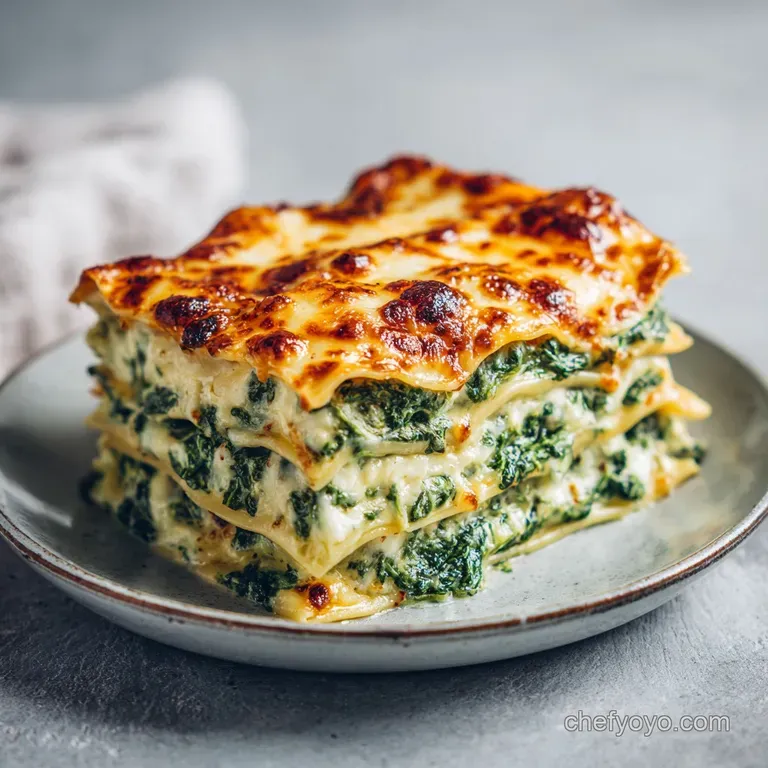
Why Your Lasagna Slipped
If your lasagna layers are sliding apart like a tectonic plate shift, you likely have too much moisture or didn't let it rest. The egg in the ricotta is there to act as a "cement," but it can't fight a pool of water. Always check that your spinach is bone dry.
Solving Grainy Ricotta
Sometimes ricotta can take on a gritty texture if it's overheated or low quality. To fix this, you can whip the ricotta in a food processor for 30 seconds before adding the egg. This smooths out the curds for a more professional, velvety finish.
| Problem | Root Cause | Solution |
|---|---|---|
| Watery bottom | Spinach wasn't squeezed enough | Squeeze spinach in a towel until it feels like a dry ball. |
| Crunchy noodles | Not enough sauce on the edges | Ensure béchamel touches the very edge of every noodle. |
| Burnt cheese top | Oven rack is too high | Bake on the middle rack and tent with foil if browning too fast. |
Common Mistakes Checklist ✓ Didn't squeeze the spinach? It will be watery. Squeeze again! ✓ Used cold milk for the sauce? Whisk harder to break up flour lumps. ✓ Skipping the resting period? Your layers will definitely collapse. ✓ Using pre shredded cheese?
It won't melt as smoothly as block cheese. ✓ Forgot the nutmeg? The flavor will feel flat and one dimensional.
Scaling Your Meal
If you're cooking for a smaller crowd, you can easily cut this recipe in half and use an 8x8 inch square pan. When scaling down, reduce the baking time by about 10 minutes, but keep the temperature the same. For the egg, just beat one in a small bowl and use about half of it.
Scaling up for a party is also simple. You can double the ingredients and use two 9x13 pans. I don't recommend using one giant catering pan unless you increase the bake time by at least 20 minutes, as the center takes much longer to reach the safe internal temp of 165°F (74°C).
When doubling the béchamel, be careful not to double the salt immediately start with 1.5x the salt and taste as you go.
| Servings | Dish Size | Noodle Count | Bake Time |
|---|---|---|---|
| 4 People | 8x8 Square | 6 Noodles | 35-40 mins |
| 8 People | 9x13 Rect. | 12 Noodles | 45-50 mins |
| 16 People | Two 9x13 | 24 Noodles | 50-55 mins |
Creative Flavor Variations
Boosting the Umami
If you want to add a savory depth, try sautéing 8 oz of finely chopped cremini mushrooms with the spinach. Mushrooms have a lot of water too, so make sure you cook them until they are browned and dry.
A teaspoon of white miso paste stirred into the béchamel also adds a hidden "meatiness" that keeps people guessing.
Lightening the Load
For a fresher, lighter take, swap half the ricotta for thick Greek yogurt. You’ll get a nice tang that cuts through the richness of the béchamel. You can also replace the lasagna noodles with thinly sliced zucchini planks.
If you do this, salt the zucchini and let them sit for 20 minutes to sweat out their water before patting them dry.
Going gluten-free
This is actually one of the easiest recipes to convert. Simply use gluten-free lasagna sheets (Barilla makes a decent one) and swap the all purpose flour in the béchamel for a 1 to-1 gluten-free flour blend.
Since GF flour can sometimes be a bit grittier, let the sauce simmer for an extra 2 minutes to ensure it fully hydrates.
Storage and Reheating Tips
Fridge Life: This lasagna is actually better the next day. The flavors meld, and the structure becomes even firmer. It will stay fresh in the fridge for up to 4 days if covered tightly with plastic wrap or stored in an airtight container.
Freezing: You can freeze this either before or after baking. To freeze unbaked, assemble everything in a foil tin, wrap twice in plastic, then once in foil. It stays good for 3 months. To bake from frozen, add 20 minutes to the covered baking time.
Zero Waste Tip: Don't throw away those spinach stems! If you have a lot left over, finely mince them and sauté them with the garlic; they add a nice little crunch. Any leftover béchamel can be thinned with a little milk and used as a base for a quick macaroni and cheese the next day.
Perfect Complements
A rich, creamy dish like this needs some acidity to balance the palate. I almost always serve this with a sharp arugula salad tossed in a lemon shallot vinaigrette. The peppery bite of the arugula cuts right through the mozzarella and ricotta.
If you're looking for more carbs (and let's be honest, who isn't?), a garlic herb focaccia is the way to go.
If you're looking for another cozy side to round out a winter spread, my The Homemade Cheddar recipe is a fantastic starter that mirrors the cheesy, garlicky notes in the lasagna. Just keep the portions small so you have plenty of room for those layers of pasta!
Debunking Pasta Myths
"You must boil the noodles before baking." This is simply not true for most modern lasagna. No boil noodles work perfectly as long as they are completely submerged in sauce. Even regular noodles can be used dry if you add an extra half cup of milk to your béchamel to provide the hydration they need to soften.
"Fresh spinach is always better than frozen." While I prefer fresh for this recipe, frozen spinach is actually a nutritional powerhouse and can be even drier than fresh if handled correctly. The myth that frozen is "low quality" is bunk; it's just about how much you squeeze it!
"Lasagna needs tomato sauce to be authentic." In Northern Italy, Lasagna alla Bolognese is made with a rich meat ragu and béchamel, but many regional variations use only white sauce and vegetables. Creamy white lasagna is just as "real" as the red stuff you see in jars at the grocery store.

HIGH in Sodium
845 mg mg of sodium per serving (37% % of daily value)
The American Heart Association recommends limiting sodium intake to about 2,300mg per day for optimal health.
Sodium Reduction Tips for Your Lasagna
-
Reduce Cheese Sodium-15%
The Pecorino Romano cheese contributes significant sodium. Use half the amount and substitute with a low-sodium Parmesan to reduce sodium substantially.
-
Control Added Salt-25%
Omit adding any Kosher salt during the recipe prep. Taste the dish before serving and add a tiny amount if absolutely necessary.
-
Unsalted Butter
You're already using unsalted butter, which is great! Double check the package to ensure it truly is unsalted to prevent hidden sodium.
-
Fresh Herbs & Spices
Emphasize fresh basil, nutmeg, garlic, and black pepper to boost flavor without adding sodium. Experiment with other herbs and spices like oregano, thyme, or red pepper flakes.
Recipe FAQs
Does spinach need to be cooked before putting in lasagna?
Yes, absolutely cook and squeeze it completely dry. Raw spinach releases massive amounts of water during baking, which leads to a soupy, ruined final product.
What is the secret ingredient in lasagne?
Freshly grated nutmeg stirred into the béchamel sauce. This spice is crucial as it enhances the perception of creaminess in dairy, elevating the flavor beyond simple cheese.
What are common mistakes in veggie lasagna?
The most common mistake is inadequate moisture removal from the spinach. You must squeeze the cooked spinach until it feels like a dry ball of yarn to prevent a watery bottom layer.
What are some common lasagna mistakes to avoid?
Avoid assembling and immediately cutting the lasagna straight from the oven. Let the casserole rest for 15 minutes minimum so the structure sets; this prevents the layers from collapsing into a puddle when served.
Can I prep lasagna in advance?
Yes, you can assemble the entire lasagna up to 24 hours ahead of time. Cover it tightly and refrigerate; when baking, you may need to add about 10 minutes to the covered baking time.
Can leftovers be reheated?
Yes, leftovers reheat excellently, often tasting even better the next day. Reheat individual slices covered loosely with foil in a 350°F oven until warmed through to maintain moisture.
Is it necessary to boil lasagna noodles before layering?
No, you can skip boiling if you use no-boil noodles, or if you adjust the sauce volume. If using standard noodles, add an extra 1/2 cup of warm liquid to your béchamel to ensure the pasta fully hydrates during the bake, similar to the hydration logic in our pdf recipe on how to make lasagna.
Creamy Cheesy Spinach Lasagna
Ingredients:
Instructions:
Nutrition Facts:
| Calories | 582 kcal |
|---|---|
| Protein | 31 g |
| Fat | 28 g |
| Carbs | 49 g |
| Fiber | 4.2 g |
| Sugar | 6.5 g |
| Sodium | 845 mg |
