Definitive Peanut Butter Cookies Recipe
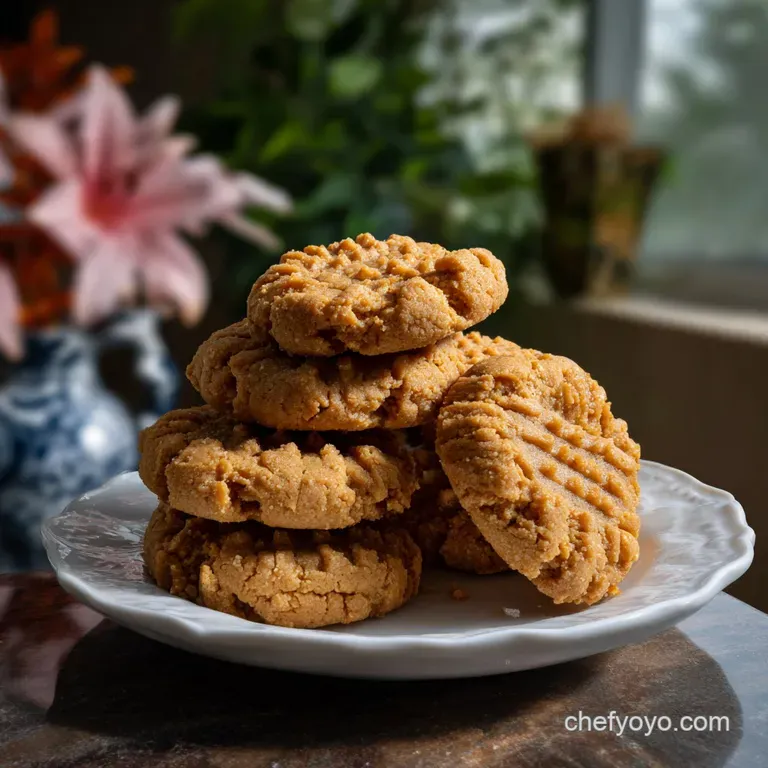
- Effort/Time: 55 minutes (active and passive)
- Flavor Hook: Deeply toasted nuttiness with a bright sea salt finish
- Perfect for: Contemporary dessert platters or high-energy grab-and-go snacks
- The Molecular Architecture Behind the Perfect Snap and Chew
- Precision Metrics for a Reliable Cookie Crumb
- The Alchemy of Ingredients: Selecting Your Elements
- Technical Tools for Achieving Consistent Thermal Distribution
- Actionable Protocols for Shaping and Scoring the Dough
- Why Your Cookies Spread Too Much: Pro Baker Fixes
- ⚗️ The Scaling Lab: The Physics of Quantity
- Debunking Common Cookie Myths
- Creative Flavor Architecture for Contemporary Fusion Profiles
- Preserving Structural Integrity and Zero Waste Strategies
- Artful Presentation and Strategic Flavor Pairings
- Recipe FAQs
- 📝 Recipe Card
There is nothing more heartbreaking than a tray of cookies that fuse into a single greasy, flavorless puddle on your baking sheet. I have wasted pounds of high-quality butter and expensive nut jars trying to find the equilibrium between a "sandy" texture and a "flabby" one.
When the fat-to-flour ratio is off, the structural integrity collapses, leaving you with a mahogany colored mess that sticks to the teeth rather than melting on the tongue. These aren't the peanut butter cookies you remember from childhood.
I once destroyed four batches of dough in a single afternoon because I thought I could skip the room temperature egg requirement. I was rushing, trying to force an emulsion that simply wasn't ready to bond.
The result was a curdled batter that leaked oil during the bake, creating a texture more like fried cardboard than a professional grade treat. It was a humbling lesson in the physics of fat suspension that I never forgot when attempting classic peanut butter cookies.
The secret to the ultimate peanut butter cookies isn't just adding more sugar; it’s about managing the protein denaturation of the egg and the moisture wicking properties of the flour.
By leveraging the Maillard reaction through a specific sugar blend, we create a complex, caramelized crust that protects a soft, aerated interior. The result is a sensory experience defined by a crisp outer snap and a plush, velvety crumb, making these the most satisfying peanut butter cookies.
The Molecular Architecture Behind the Perfect Snap and Chew
To master chewy peanut butter cookies, you have to understand how the ingredients interact at a cellular level. It isn't just mixing; it's engineering a stable suspension of fats and solids. The structure of these peanut butter cookies is key.
- Fat Stabilization: The creamy peanut butter provides a high concentration of monounsaturated fats which, when creamed with softened [Land O'Lakes Unsalted Butter], creates a sophisticated lipid network that traps air.
- Protein Denaturation: The large egg acts as the primary emulsifier; as it heats, the proteins uncoil and bond, providing the "lattice" that prevents the cookie from spreading into a pancake.
- Hygroscopic Balancing: Brown sugar attracts moisture from the air, ensuring the center remains plush, while the white sugar dehydrates the surface for that essential outer shatter.
- Starch Gelatinization: As the oven temperature hits 350°F, the starches in the [King Arthur All-Purpose Flour] swell and set, locking the aerated structure into place before the fats can over melt.
Precision Metrics for a Reliable Cookie Crumb
Achieving the best peanut butter cookies requires understanding the trade offs between speed and traditional technique. While a 3 ingredient peanut butter cookie recipe is popular for its speed, it lacks the complex crumb structure provided by the flour and leavening agents used here, which truly elevate homemade peanut butter cookies.
| Feature | Fast (3 Ingredient) | Classic Masterclass (This Recipe) |
|---|---|---|
| Texture | Dense and fudgy | Crisp edges with a velvety, aerated center |
| Structural Integrity | Fragile; prone to crumbling | Robust; holds up to shipping or dipping |
| Flavor Profile | Dominantly sweet | Complex; notes of caramel, salt, and toasted nut |
Decision Shortcut: If you want a "melt-in-your mouth" velvet texture, use creamy peanut butter. If you want a "rugged and snapping" texture, chill the dough for 30 minutes before baking.
If you want a "fudgy and soft" result, pull the peanut butter cookies when the centers still look slightly wet.
The Alchemy of Ingredients: Selecting Your Elements
When learning how to make peanut butter cookies from scratch, the quality of your fats determines the final mouthfeel. I prefer [Jif Creamy Peanut Butter] for its consistent emulsification, which prevents the oil separation often found in "natural" varieties that can lead to a gritty finish.
| Ingredient | Chemical/Physical Role (Science) | The Pro Secret (Why This Matters) |
|---|---|---|
| Creamy Peanut Butter | Provides structural lipids and legume protein | Ensures a smooth, non-gritty emulsion that won't "break" under high heat. |
| Light Brown Sugar | Increases hygroscopy (moisture retention) | The molasses content creates a soft, chewy core via glucose bonding. |
| Baking Soda | Promotes browning via pH elevation | Accelerates the Maillard reaction for a deep, nutty mahogany color. |
| Sea Salt | Manages osmotic pressure | Sharpens the perception of sweetness while cutting through heavy fats. |
- 0.75 cup (190g) creamy peanut butter
- Why this? Acts as both a flavor agent and a secondary fat source for a complex lipid profile.
- 1.5 cups (190g) all-purpose flour
- Why this? Mid-range protein content (approx. 11.7%) provides structure without making the cookie tough.
- 1 large egg, room temperature
- Essential for a stable emulsion; a cold egg will seize the butter.
- 1 tsp (5ml) pure vanilla extract
- Adds a floral top note to balance the heavy, earthy nut base.
Technical Tools for Achieving Consistent Thermal Distribution
To produce a professional easy peanut butter cookie recipe, your equipment must facilitate even heat transfer. I rely on a [KitchenAid Artisan Series Stand Mixer] to ensure the sugars are fully aerated into the fats, which is nearly impossible to achieve by hand without significant muscle fatigue.
For baking, a [USA Pan Bakeware Warp Resistant Cookie Sheet] is vital. Thinner pans tend to "hot spot," causing the bottoms of your peanut butter cookies to burn before the centers are set.
Pairing this with a [Silpat Premium Non-Stick Silicone Baking Mat] provides an insulated layer that encourages a gentle, even rise rather than a harsh, bottom-up sear.
If you are looking for more texture focused bakes, similar to the precision needed here, you might enjoy mastering the delicate snap of a Butter Cookie Recipe. Both require careful temperature management of the butter to ensure the dough doesn't lose its shape in the heat of the oven when making these delicious peanut butter cookies.
Actionable Protocols for Shaping and Scoring the Dough
- Cream the 0.5 cup unsalted butter and 0.75 cup peanut butter for 3 minutes until the mixture looks pale and has doubled in volume. Note: This incorporates micro bubbles of air for a lighter texture.
- Incorporate 0.5 cup granulated sugar and 0.5 cup light brown sugar for 2 minutes until the texture feels less gritty between your fingers.
- Whisk in 1 large egg and 1 tsp vanilla extract for 1 minute until the emulsion is glossy and completely smooth.
- Sift 1.5 cups all-purpose flour, 0.75 tsp baking soda, 0.5 tsp baking powder, and 0.25 tsp sea salt into a separate bowl until the color is uniform.
- Fold the dry ingredients into the wet mixture until no streaks of white flour remain. Note: Over mixing here will activate too much gluten, making the cookies tough.
- Chill the dough in the refrigerator for 30 minutes until it feels firm and easy to handle.
- Scoop 1 tablespoon portions and roll into balls until the surface is smooth and round.
- Press a fork into the top of each ball in a criss cross pattern until the cookie is flattened to 1/2 inch thickness.
- Bake at 350°F for 10 minutes until the edges are golden brown but the centers look slightly soft.
- Cool on the baking sheet for 5 minutes until the structure sets enough to move to a wire rack.
Why Your Cookies Spread Too Much: Pro Baker Fixes
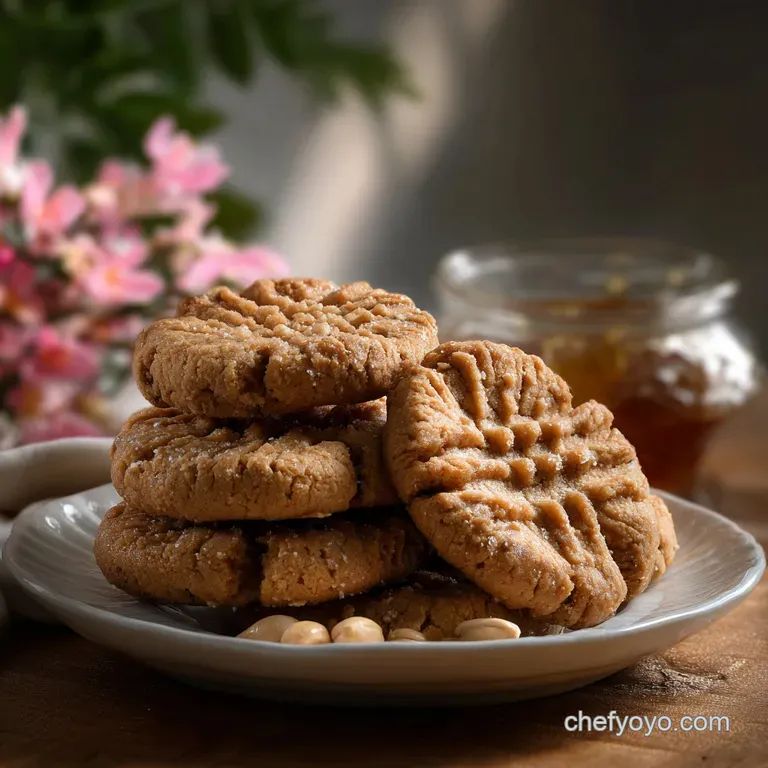
If your easy peanut butter cookie recipe results in thin, oily wafers, the culprit is usually the starting temperature of your fats. When butter is too warm (greasy to the touch rather than just soft), it cannot hold the air bubbles created during creaming.
A properly chilled dough is the secret to great peanut butter cookies.
The Physics of the "Greasy Spread"
When the dough enters the oven, the fat melts before the flour starches can gelatinize. This causes the dough to "leak" across the pan. If the protein in the egg hasn't been properly emulsified, there is no "net" to catch that melting fat, resulting in a flat, crisp only cookie with no chewy center.
| Problem | Root Cause | The Fix | Pro Protocol |
|---|---|---|---|
| Cookies are flat | Butter was too warm or melted | Chill dough for 60 minutes | Use butter at 65°F (cool to the touch) |
| Crumbly texture | Too much flour/over baked | Weigh flour (190g) exactly | Pull from oven while centers look "underdone" |
| Burnt bottoms | Dark baking sheet usage | Use a silicone mat or parchment | Place an empty tray on the bottom rack to deflect heat |
⚗️ The Scaling Lab: The Physics of Quantity
When doubling this batch to make 48 servings, you cannot simply multiply every factor by two. The thermodynamics of a larger dough mass change how the ingredients react when attempting double the amount of peanut butter cookies.
- Leavening Precision: Do NOT double the baking soda blindly. For a double batch, use 1.25 tsp (instead of 1.5 tsp) to avoid a metallic, soapy aftertaste caused by excess pH levels.
- The Evaporation Paradox: In a larger bowl, the surface area to volume ratio decreases. You may find the dough feels stickier. Add flour only by the teaspoon if needed, as the 15 20% reduction in relative evaporation can change the hydration of your peanut butter cookies.
- Pan Crowding: Doubling the cookies on one tray will drop the oven temperature significantly. This leads to steaming. Mandatory instruction: Always bake in batches with at least 2 inches of space between cookies to allow for proper airflow.
- Thermal Mass: A cold, double sized bowl of dough will take longer to reach room temperature. If baking from the fridge, allow the larger mass to sit out for 10 minutes longer than a single batch to ensure even heat penetration.
Debunking Common Cookie Myths
Myth: Using "Natural" peanut butter makes the cookies healthier and better. Truth: Natural peanut butter (oil-on-top) lacks the stabilizers (like palm oil or mono glycerides) required for a consistent cookie crumb.
It often leads to a gritty, oily mess when making peanut butter cookies.
Myth: You must use a fork to make the criss cross pattern. Truth: While iconic, the criss cross is actually a functional tool to ensure even baking in a dense dough.
Without flattening, the high fat content in peanut butter cookies would leave the center raw while the edges burn.
If you enjoy experimenting with these traditional techniques, you might also find the "cracked" texture of a Crinkle Cookies recipe fascinating it uses a similar moisture management strategy to achieve that beautiful contrast.
Creative Flavor Architecture for Contemporary Fusion Profiles
While the classic version is iconic, you can adapt this base for a more contemporary "fusion" style. These variations ensure your peanut butter cookies remain exciting.
- Chocolate Chip Peanut Butter Cookies: Fold in 0.5 cup of dark chocolate chunks (60% cacao). The bitterness of the chocolate provides a sharp contrast to the salty sweet dough.
- Peanut Butter Cookies with Honey: Replace 2 tablespoons of granulated sugar with high-quality wildflower honey. This increases the "chew" factor significantly due to the invert sugar properties of honey.
- Vegan Peanut Butter Cookie Recipe: Use a flax egg (1 tbsp ground flax + 3 tbsp water) and a plant based butter block. Note: The texture will be denser and more "fudgy" than the original crumb.
- Contemporary Fusion Twist: Add 0.5 tsp of miso paste to the butter/sugar mixture. This introduces an "umami" depth that makes the peanut flavor pop with professional intensity.
Preserving Structural Integrity and Zero Waste Strategies
To keep your best peanut butter cookies fresh, you must protect them from oxygen, which oxidizes the nut fats and leads to a "stale" or "rancid" flavor.
- Room Temperature: Store in an airtight glass jar for up to 5 days. Add a small piece of white bread to the jar; the cookies will pull moisture from the bread to stay soft.
- Freezing: These cookies freeze exceptionally well. Freeze the raw dough balls on a tray, then transfer to a bag. Bake directly from frozen, adding 2 minutes to the total time.
- Reheating: To restore the "just baked" shatter, pop a room temperature cookie into a 300°F oven for 3 minutes. Avoid the microwave, as it turns the fats rubbery.
💡 ZERO WASTE PHILOSOPHY: Don't discard those tiny crumbs at the bottom of the bag! Transform: Pulse them in a blender to create a "Cookie Dust" crust for a cheesecake or as a topping for vanilla bean ice cream.
Science: The high fat and sugar content in the crumbs provides a pre-caramelized, crunchy texture that won't get soggy when mixed with dairy.
Artful Presentation and Strategic Flavor Pairings
Presentation is what separates a home bake from a contemporary dessert. Instead of a pile, arrange your peanut butter cookies on a slate board with a light dusting of flaky Maldon salt. The salt crystals catch the light and signal the savory sweet profile to the palate.
- The Contrast Pair
- Serve with a glass of cold, unsweetened almond milk to cleanse the palate of the heavy fats.
- The Rich Pair
- Pair with a double espresso. The acidity of the coffee cuts through the dense peanut oils, highlighting the vanilla and caramel notes in these magnificent peanut butter cookies.
- The Fusion Pair
- Drizzle with a thin line of melted dark chocolate and a pinch of toasted sesame seeds for a sophisticated, modern look.
If you are looking for a savory accompaniment to a brunch spread featuring these cookies, a Garlic Butter Recipe on toasted brioche offers a wonderful savory counterpoint to the sweet, nutty profile of the cookies.
Recipe FAQs
Why are my peanut butter cookies spreading too thin?
Butter was too warm before mixing. If the fat melts prematurely, it cannot hold the air incorporated during creaming, causing structural collapse upon oven entry.
- Ensure butter is soft, not greasy (ideal temp 65°F)
- Chill dough for a minimum of 30 minutes
- Increase dry ingredient ratio slightly if necessary
Can I substitute creamy peanut butter for crunchy?
Crunchy peanut butter results in a rugged texture. Crunchy nuts disrupt the smooth fat-protein emulsion you build during the creaming stage, preventing a velvety interior. If you master controlling cookie spread here, see how the same principle applies to achieving the right texture in our The Best Classic Soft Sugar Cookies Recipe Chewy Tender.
Myth: The criss cross fork press is just for decoration.
Myth: The criss cross fork press is just for decoration. Reality: This flattening step is crucial for dense peanut butter doughs to ensure even heat penetration, preventing raw centers when baking.
Should I use salted or unsalted butter?
Unsalted butter offers superior flavor control. Commercial salted butter sodium levels vary widely, disrupting the delicate salt balance needed to offset the sweetness of the sugars. Unsalted provides a clean fat base, allowing you to precisely season the dough using the recommended sea salt.
How long should the dough chill before baking?
Chill dough for 30 minutes minimum. Chilling allows the gluten strands to relax and the fat solids to re-harden, providing necessary structural stability against oven heat. For extra thickness, aim for an hour, similar to stabilizing high fat pastry dough in The Flaky Foolproof AllButter Pie Crust Recipe The Classic.
Myth: Natural peanut butter is always better for baking.
Myth: Natural peanut butter is always better for baking. Reality: The separated oil in natural varieties compromises the structure, often leading to oil seepage and gritty texture in the final baked cookie.
What is the role of brown sugar in the final texture?
Brown sugar maximizes chewiness via moisture retention. The molasses content in brown sugar is hygroscopic, meaning it actively attracts and holds atmospheric water, keeping the cookie's interior plush long after cooling. This sugar dynamic is also key to preventing dryness in recipes like Classic Soft Oatmeal Cookies The Proper Chewy Recipe Great for Dunking.
Definitive Peanut Butter Cookies
Ingredients:
Instructions:
Nutrition Facts:
| Calories | 147 kcal |
|---|---|
| Protein | 2.8 g |
| Fat | 8.1 g |
| Carbs | 16.5 g |
| Fiber | 0.6 g |
| Sugar | 9.6 g |
| Sodium | 91 mg |
