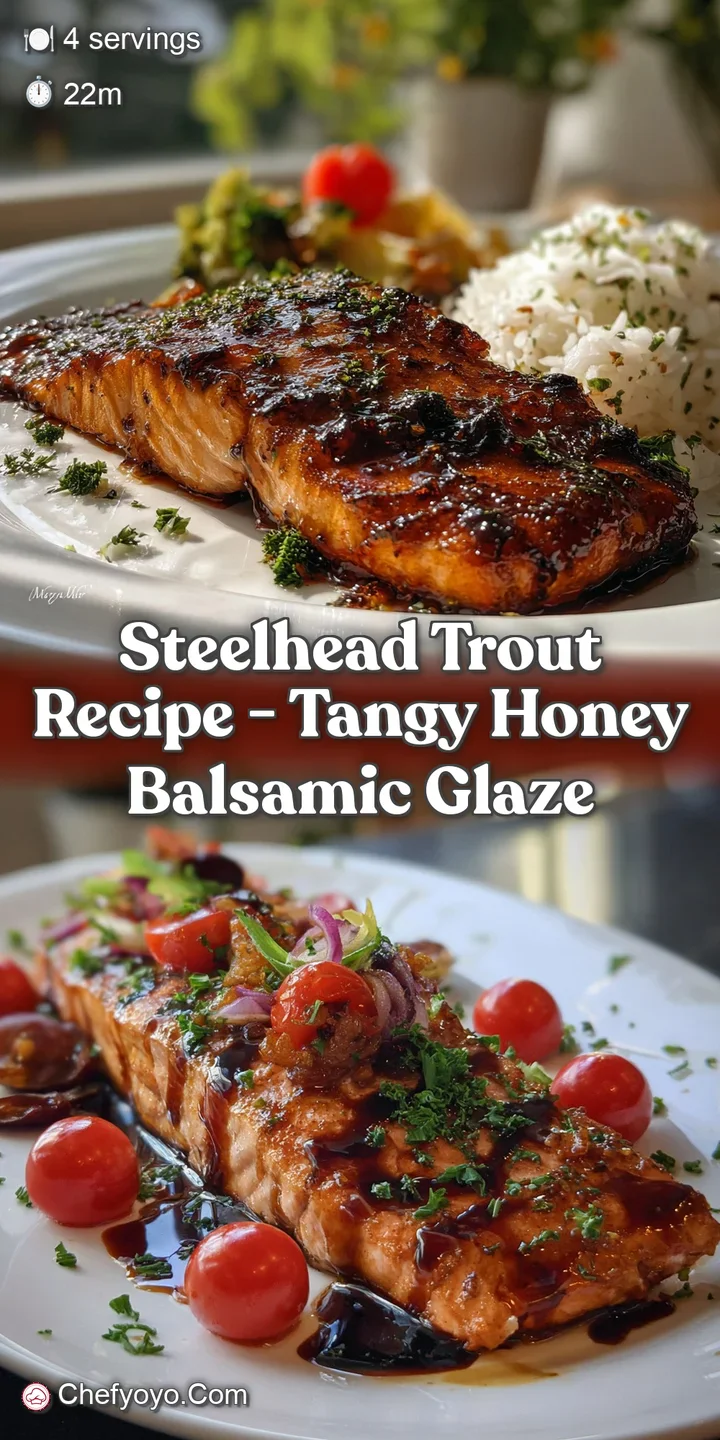
Honey Balsamic Steelhead Trout Recipe
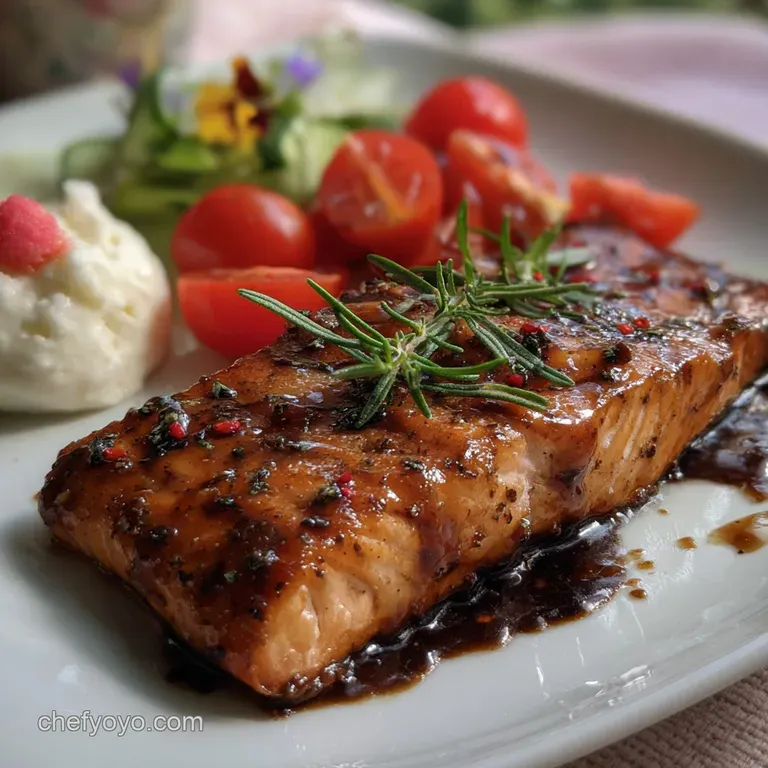
- Effort/Time: 22 minutes total (low effort, high reward).
- Flavor Hook: Tangy Modena balsamic balanced by raw honey floral notes.
- Perfect for: Weeknight-luxury or impressive date-night dining.
- Achieving the Perfect Honey Balsamic Glazed Steelhead Trout Recipe
- The Thermodynamics of Protein Denaturation and Glaze Adhesion
- Precision Timing and Thermal Benchmarks for Optimal Results
- The Alchemy of Umami: Selecting Your Elements
- Essential Culinary Engineering Tools for Precise Searing
- The 22 Minute Assembly Protocol for Succulent Seafood
- Why Your Fish Sticks or Overcooks: Pro Solutions
- Flavor Architecture and Dietary Ingredient Swaps
- Preserving Structural Integrity During Cooling and Storage
- Strategic Pairings for a Balanced Flavor Profile
- Thermal Mass and Scaling Logistics
- Recipe FAQs
- 📝 Recipe Card
Achieving the Perfect Honey Balsamic Glazed Steelhead Trout Recipe
We’ve all been there: you splurge on a beautiful fillet, only to end up with a dry, chalky mess that sticks to the pan. I remember one specific Tuesday where I ruined a gorgeous $25 piece of fish because I didn't understand the science of carryover cooking. It was essentially an expensive, fish flavored eraser.
That failure drove me to master this steelhead trout recipe, ensuring every bite is a velvet textured success.
The secret lies in the interplay between the sugars in the balsamic glaze and the specific fat content of the steelhead. Unlike leaner white fish, steelhead has an orange pink hue and a higher oil density that demands precision heat.
When the sizzle of the Lodge Cast Iron Skillet meets the cold honey balsamic mixture, an instant emulsion occurs. You aren't just cooking fish; you’re engineering a flavor tight seal that locks in moisture.
This steelhead trout recipe is your ticket to a restaurant quality crust without the professional kitchen stress. By leveraging the Maillard reaction through the raw honey and balancing it with the acidity of Balsamic Vinegar of Modena, we create a complex flavor profile.
The result is a shatter crisp skin and an interior that melts on the tongue, transforming a simple protein into a technical masterpiece.
The Thermodynamics of Protein Denaturation and Glaze Adhesion
- Osmotic Pressure Management: Kosher salt draws out surface moisture initially, allowing the oil to create a direct sear before the glaze is applied.
- Viscosity Control: The raw honey and Balsamic Vinegar of Modena create a non-Newtonian fluid state that thickens as it cools, ensuring total coverage.
- Protein Denaturation: Gentle heat application prevents the rapid contraction of muscle fibers, which otherwise squeezes out savory juices.
- Caramelization Kinetics: High fructose honey undergoes browning at lower temperatures than sucrose, providing a mahogany sheen without burning the fish.
Precision Timing and Thermal Benchmarks for Optimal Results
This steelhead trout recipe thrives on accuracy, moving from preparation to plate in under 25 minutes. We prioritize a hot-pan start to achieve skin crispness, followed by a lower intensity glaze reduction.
This sequence ensures the fish reaches its target internal temperature exactly as the sauce hits peak gloss.
- Prep Time: 10 minutes (focus on tempering the fish to room temperature).
- Cook Time: 12 minutes (including glaze reduction and basting).
- Total Time: 22 minutes.
- Yield: 4 servings (approximately 6 oz per portion).
The Alchemy of Umami: Selecting Your Elements
Success in this steelhead trout recipe starts with the quality of your raw materials. Using a high-quality fat like Extra Virgin Olive Oil provides the necessary slip, while unsalted butter adds the final glossy finish.
| Ingredient | Chemical/Physical Role (Science) | The Pro Secret (Why This Matters) |
|---|---|---|
| 1.5 lbs Steelhead Trout | Protein denaturation via conductive heat | High fat content mimics salmon but with a finer, more delicate flake. |
| 2 tbsp Raw Honey | Low-temperature caramelization (Maillard) | Acts as the primary adhesive for the glaze while balancing acidity. |
| 3 tbsp Balsamic Vinegar | Acidic denaturing and flavor brightening | Breaks down surface proteins slightly to allow seasoning penetration. |
| 1 tsp Kosher Salt | Osmotic regulation and moisture retention | Large grains like Diamond Crystal provide even coverage without over salting. |
- 1.5 lbs Steelhead Trout Fillet, skin-on: Why this? Skin protects the delicate flesh from direct thermal shock.
- 1 tbsp Extra Virgin Olive Oil: Why this? High smoke point for the initial sear phase.
- 1 tsp Diamond Crystal Kosher Salt
- 1/2 tsp Cracked Black Pepper
- 1 tsp Garlic Powder
- 3 tbsp Balsamic Vinegar of Modena
- 2 tbsp Raw Honey
- 1 tbsp Unsalted Butter, melted: Why this? Adds milk solids for a richer, more velvety sauce emulsion.
- 1 tbsp Fresh Parsley, finely chopped
- 1 tsp Lemon Zest: Why this? Volatile oils in zest provide an olfactory lift that juice lacks.
Essential Culinary Engineering Tools for Precise Searing
To execute this steelhead trout recipe perfectly, you need tools that manage heat distribution effectively. A heavy bottomed skillet is non-negotiable for maintaining thermal mass when the cold fish hits the pan.
- Lodge 12 inch Cast Iron Skillet: Essential for even heat retention and superior skin crisping.
- Fish Spatula (Mercer Culinary): The thin, flexible edge allows you to flip the fillet without tearing the delicate skin.
- Instant Read Thermometer (Thermapen): Precision is key; 135°F is the "sweet spot" for medium rare steelhead.
- Stainless Steel Whisk: For emulsifying the honey and balsamic vinegar into a cohesive glaze.
The 22 Minute Assembly Protocol for Succulent Seafood
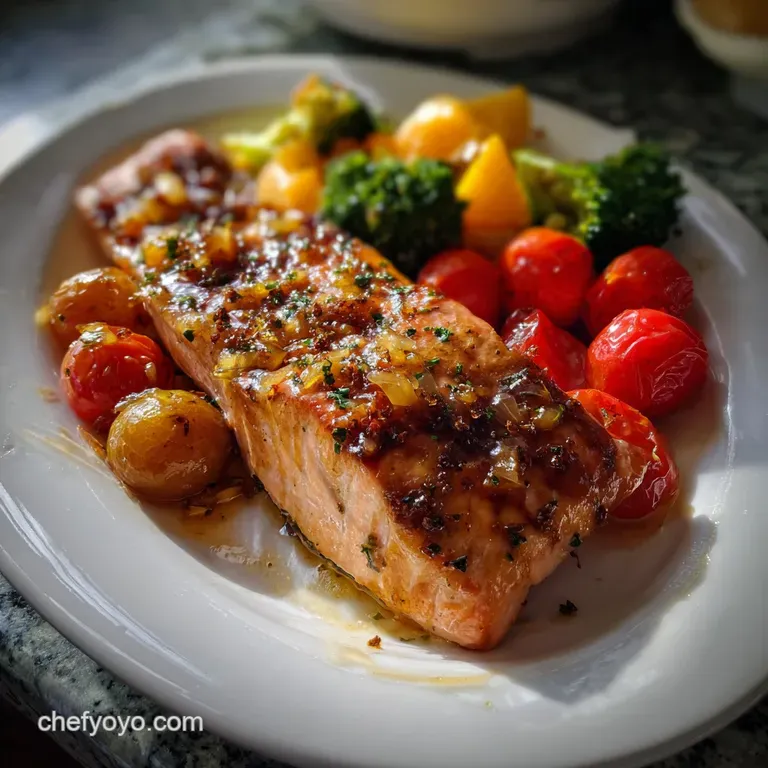
- Pat the 1.5 lbs Steelhead Trout Fillet completely dry with paper towels. Note: Moisture is the enemy of the Maillard reaction; dry skin equals crispy skin.
- Season the flesh side with 1 tsp Kosher Salt, 1/2 tsp pepper, and 1 tsp garlic powder until evenly coated with a fine spice layer.
- Whisk 3 tbsp Balsamic Vinegar, 2 tbsp Raw Honey, and 1 tbsp melted butter in a small bowl until the mixture is glossy and dark.
- Heat 1 tbsp EVOO in your Lodge Cast Iron Skillet over medium high heat until the oil shimmers and a faint wisp of smoke appears.
- Place the trout skin side down in the pan. Sear for 5 minutes until the skin is audible crackling and releases easily from the pan.
- Flip the fillet carefully using a fish spatula.
- Pour the balsamic honey mixture over the fish immediately.
- Baste the fish continuously for 4 5 minutes until the glaze reduces to a thick, syrupy consistency and bubbles vigorously.
- Remove from heat when the internal temperature hits 130°F as the center appears slightly translucent but the edges are opaque.
- Rest for 3 minutes until carryover heat brings the internal temperature to a perfect 135°F.
- Garnish with 1 tbsp fresh parsley and 1 tsp lemon zest until the aroma of citrus is immediately apparent.
Why Your Fish Sticks or Overcooks: Pro Solutions
The Science of Albumin Leakage
Have you ever seen that unappealing white gunk on your trout? That’s albumin. It happens when the muscle fibers contract too quickly from high heat, squeezing the protein out like a sponge.
To prevent this in your steelhead trout recipe, avoid cooking the fish straight from the fridge; let it temper for 15 minutes first.
| Problem | Root Cause | The Fix | Pro Protocol |
|---|---|---|---|
| White "stuff" on fish | Rapid protein contraction (Heat shock) | Lower the temperature slightly after the initial sear. | Pull fish at 130°F; let carryover heat finish it. |
| Skin sticks to pan | Surface moisture or cold pan | Pat the skin bone dry and ensure oil is shimmering. | Use a stainless steel or cast iron pan for better release. |
| Glaze tastes burnt | Sugar carbonization | Honey was added too early or heat was too high. | Add glaze only in the final 4 5 minutes of cooking. |
Flavor Architecture and Dietary Ingredient Swaps
If you need to pivot based on what's in your pantry, use these scientifically backed substitutions. Keep in mind that altering the fat or sugar source will change the viscosity of your final steelhead trout recipe.
| Original Ingredient | Substitute | Why It Works |
|---|---|---|
| Raw Honey | Maple Syrup (Grade A) | Similar sugar density; adds a woody, autumnal flavor profile. |
| Balsamic Vinegar | Apple Cider Vinegar + 1 tsp Sugar | Mimics the acidity but results in a thinner, lighter glaze. |
| Steelhead Trout | Atlantic Salmon | Nearly identical fat-to-protein ratio. Note: Salmon fillets are often thicker. |
| Unsalted Butter | Ghee (Clarified Butter) | Higher smoke point and richer nutty flavor; great for dairy sensitivity. |
Chef's Note: If you want a more punchy finish, similar to a Bang Bang Sauce recipe, you can whisk a teaspoon of Sriracha into the honey balsamic mixture for a "Sweet and Spicy" profile.
Preserving Structural Integrity During Cooling and Storage
This steelhead trout recipe is best served immediately to enjoy the contrast of the hot glaze and cool lemon zest. However, if you have leftovers, proper storage is critical to prevent the fish from becoming "fishy" (the result of lipid oxidation).
- Fridge: Store in a shallow, airtight container for up to 2 days. The glaze will thicken significantly when cold.
- Freezing: Not recommended for cooked trout as the delicate cell structure ruptures upon thawing, leading to a mushy texture.
- Reheating: Avoid the microwave. Place the trout in a pan with a splash of water, cover with a lid, and steam on low for 4 minutes until just warmed through. This preserves the emulsion of the honey balsamic sauce.
💡 ZERO WASTE PHILOSOPHY: Don't discard the lemon carcass after zesting. Transform: Slice it and char it in the pan after the fish is removed.
Science: Charring lemons concentrates the sugars and tarts up the juice, making it a perfect final squeeze for the trout.
Strategic Pairings for a Balanced Flavor Profile
Because this steelhead trout recipe is rich in umami and sweetness, you want sides that offer textural contrast or "clean" flavors. A bitter green like roasted broccolini or a bright citrus salad works wonders.
If you’re looking for a more indulgent meal, this fish pairs beautifully with a creamy side. For instance, the peppery notes in a Country Gravy Recipe can be adapted into a savory biscuit side to soak up any extra balsamic glaze. Alternatively, a simple bed of jasmine rice will absorb the reduction perfectly, ensuring no drop of that honey Modena gold goes to waste.
Common Myths About Cooking Trout
Myth: You must remove the skin before cooking for a "cleaner" taste. Truth: The skin acts as a thermal insulator. Keeping it on during this steelhead trout recipe prevents the flesh from drying out and provides a delicious textural contrast once crisped.
Myth: Fish is only "safe" when it's opaque all the way through. Truth: Like steak, fish has doneness gradients. 135°F (medium) is the industry standard for steelhead. By the time it's fully opaque, it's usually overcooked and dry.
Thermal Mass and Scaling Logistics
When doubling this steelhead trout recipe for a dinner party, the physics of your pan change. Do not crowd the skillet.
- Pan Crowding: If you put 3 lbs of fish in a single 12 inch pan, the surface temperature drops instantly. Instead of searing, the fish will steam in its own juices, resulting in soggy skin.
- Scaling Spices: When doubling, scale salt to 1.5x rather than 2x. Salt doesn't scale linearly in flavor perception and can quickly overwhelm the delicate steelhead.
- Thermal Mass Warning: A larger batch of glaze will take 20 30% longer to reduce because there is more liquid volume to evaporate relative to the surface area of the pan.
Enjoy this steelhead trout recipe tonight it's the perfect blend of kitchen chemistry and home cooked comfort. Just remember: dry the skin, watch the temp, and let the balsamic do the heavy lifting!
Recipe FAQs
What internal temperature indicates perfectly cooked steelhead trout?
140°F (60°C) for medium. Fish continues cooking off-heat due to carryover, so remove it slightly before reaching the target. Aiming for 140°F ensures moisture retention.
- Use a thin probe instant read thermometer
- Insert probe into the thickest part
- Avoid touching bone during measurement
Can I sear the trout skin side down first for crispiness?
Yes, sear skin side first. Searing the skin creates a barrier protecting the delicate flesh from overcooking while rendering the fat. If you enjoyed mastering the high heat sear in this recipe, apply the same technique when developing flavor in our Korean BBQ Sauce: Easy Recipe for Ultimate Bulgogi Marinade.
Is substituting maple syrup for honey acceptable in the glaze?
Maple syrup works well. Maple has a deeper, woodier flavor profile than floral honey, slightly altering the tang balance. It will still caramelize effectively under heat.
What is the purpose of the acidic component (balsamic) in the glaze?
Acidity cuts through the richness of the fish. The vinegar counteracts the richness of the fat while its reduced sugars provide necessary caramelization structure. If you enjoyed balancing these sweet and sour elements, see how the same acid principle creates stability in the Béarnaise Sauce Recipe: Master The Classic Steakhouse Emulsion.
Myth: Baking powder should be added to the glaze for extra puffiness.
Myth: Baking powder should be added to the glaze for extra puffiness. Reality: Baking powder is a leavening agent intended for baked goods, not thin sauces. It will not interact chemically with the glaze ingredients to change texture significantly.
Why did my honey balsamic glaze separate or become gritty?
High heat caused the sugars to crystallize unevenly. When sugar is heated too quickly or cools too rapidly, the crystalline structure forms large, gritty particles instead of a smooth syrup.
- Use low, controlled heat during reduction
- Whisk vigorously off-heat to re-emulsify
- Incorporate a small splash of water if overly thick
Should I use fresh or frozen steelhead fillets?
Fresh fillets provide superior texture. Frozen fish often releases excess moisture during thawing, potentially steaming the flesh instead of searing it. Thawing quickly and patting dry is crucial for success.
Grilled Honey Balsamic Trout
Ingredients:
Instructions:
Nutrition Facts:
| Calories | 338 kcal |
|---|---|
| Protein | 34 g |
| Fat | 16.5 g |
| Carbs | 11 g |
| Fiber | 0.1 g |
| Sugar | 10.2 g |
| Sodium | 520 mg |
