Prime Rib Side Dish with Garlic Mashed Potatoes

- Effort/Time:50 minutes (Intermediate precision required)
- Flavor Hook: Pungent garlic mellowed by high-fat butter and a sharp horseradish finish.
- Perfect for: Holiday centerpieces, high-end steakhouse-at-home nights, or cold-weather feast-loading.
- Decoding the Physics of Starch Gelatinization and Fat Emulsion
- Mastering the 50 Minute Timeline for Flawless Execution
- The Architectural Elements of Velvet Starch and Fat
- Selecting Your Arsenal for Professional Results
- The Step-by-Step Choreography of Thermal Management
- Solving the Mystery of Gummy and Bland Results
- Elevating Flavor Profiles with Contemporary Creative Twists
- ⚗️ The Physics of Multiplication: Proportional Adjustments
- Debunking Kitchen Folklore
- Thermal Integrity and Sustainable Kitchen Practices
- Curating a Balanced Menu for High-End Entertaining
- Engineering Solutions for Final Execution Hurdles
- Recipe FAQs
- 📝 Recipe Card
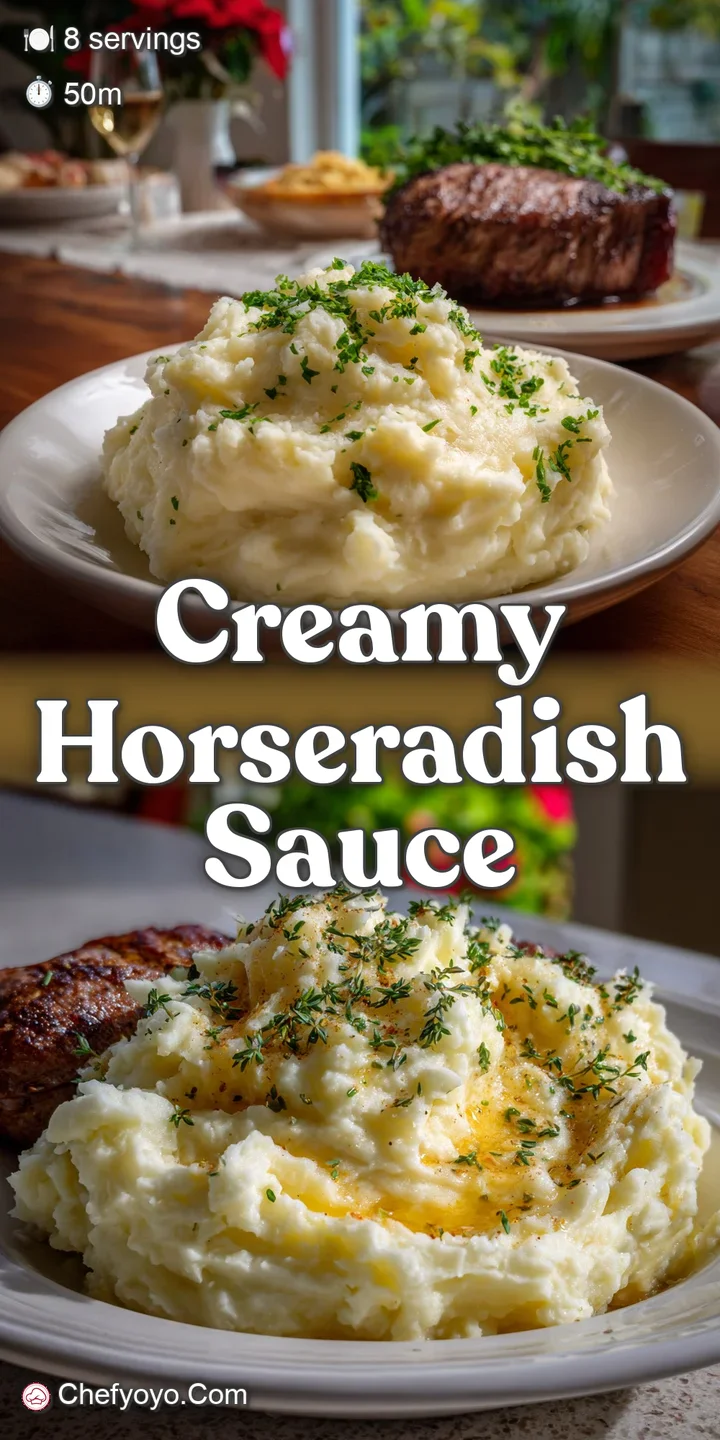
Imagine the heavy, mahogany crusted slice of prime rib resting on your plate, its juices pooling toward a mountain of porcelain white, velvet textured starch. The first forkful of these potatoes doesn't just sit on the tongue; it dissolves, releasing a contemporary fusion of mellowed garlic and the sharp, sinus clearing bite of fresh horseradish.
We are moving beyond basic mash into the territory of architectural side dishes that demand as much respect as the roast itself. This Prime Rib Side Dish with Garlic Mashed Potatoes elevates the entire meal.
Achieving this level of culinary sophistication requires more than just boiling tubers; it is about managing starch gelatinization and the delicate physics of fat-in-water emulsions. I remember the frustration of my early attempts soupy, grey masses that did no justice to a $100 roast.
This recipe solves that pain point by controlling moisture and utilizing technical ricing methods to ensure a fluffiness that defies gravity.
The aroma of thyme infused heavy cream swirling into hot Russet potatoes is the definitive scent of a successful dinner party. By following this protocol, you transform the humble potato into a creative, contemporary masterpiece.
We aren't just making a side; we are engineering the essential companion to the king of beef the Prime Rib Side Dish with Garlic Mashed Potatoes.
Decoding the Physics of Starch Gelatinization and Fat Emulsion
The secret to a non-gummy mash lies in the temperature controlled breakdown of starch granules within the Russet potato. When we boil potatoes, the starch granules swell and eventually burst (gelatinization); however, if we agitate them too much through heavy mashing, we release excess amylose, which turns the mixture into a glue like paste.
By using a Richelieu Ricer or a food mill, we separate the granules without rupturing them, preserving a light, airy structure.
Simultaneously, we are creating a stable emulsion. By whisking 85g of high fat butter and warm heavy cream into the riced potatoes, we coat the starch molecules in lipids. This prevents them from bonding together, resulting in a "velvety" mouthfeel rather than a sticky one.
The addition of apple cider vinegar and horseradish provides a chemical "brightener," as the acidity cuts through the heavy long chain fats of the prime rib, cleansing the palate between every decadent bite.
The success of this entire profile hinges on properly executing this foundational Prime Rib Side Dish with Garlic Mashed Potatoes.
Mastering the 50 Minute Timeline for Flawless Execution
Precision in timing ensures that your side dish reaches the table at peak thermal energy. Russet potatoes have a high specific heat capacity, meaning they hold onto warmth, but they also begin to oxidize and lose their structural integrity if left sitting too long.
We have optimized this workflow to sync perfectly with the resting period of your roast.
| Metric | Specification |
|---|---|
| Prep Time | 20 minutes |
| Cook Time | 30 minutes |
| Total Time | 50 minutes |
| Yield | 8 generous servings |
| Ideal Serving Temp | 165°F (74°C) |
Chef's Tip: Freeze your 85g of high fat butter for 10 minutes before dicing. Adding chilled butter to the hot potatoes creates a more stable emulsion than melted butter, resulting in a creamier, more "shatteringly" light fluff.
The Architectural Elements of Velvet Starch and Fat
Selecting the right materials is the first step in deconstructing the perfect mash. For this Prime Rib Side Dish with Garlic Mashed Potatoes, we utilize high starch Russets because their low moisture content allows them to absorb the garlic infused dairy like a sponge.
Ingredient Chemistry Breakdown
| Ingredient | Chemical/Physical Role (Science) | The Pro Secret (Why This Matters) |
|---|---|---|
| Russet Potatoes | High amylopectin content for dry, fluffy cells | Essential for maximum dairy absorption without becoming "soupy" |
| Garlic Cloves | Allicin transformation through gentle heat | Smashed cloves release flavor into fat without the bitterness of minced garlic |
| Heavy Cream | High fat liquid for emulsion stability | Fat coats starch granules to prevent gluten like stickiness |
| Apple Cider Vinegar | Acidic pH adjustment | Cuts through the "cloying" nature of animal fats in the prime rib |
- 2.2kg (5 lbs) Russet potatoes
- Peeled and cut into 2 inch chunks. Why this? High starch-to-water ratio ensures a "fluffy" rather than "waxy" finish.
- 120ml (1/2 cup) Heavy cream
- To be infused with aromatics.
- 60ml (1/4 cup) Whole milk
- Adjusts final viscosity.
- 8 Large garlic cloves
- Smashed to release essential oils.
- 2 Sprigs fresh thyme
- Adds an earthy, herbaceous backbone.
- 15g (1 tbsp) Fine sea salt
- Diamond Crystal is preferred for even distribution.
- 1g Cracked black pepper
- For subtle heat.
- 240ml (1 cup) Sour cream
- The base for our contemporary horseradish sauce.
- 45g (3 tbsp) Prepared horseradish
- Drained well to avoid watering down the sauce.
- 15ml (1 tbsp) Dijon mustard
- Provides an emulsifying agent and tang.
- 5ml (1 tsp) Apple cider vinegar
- Brightens the heavy fats.
Selecting Your Arsenal for Professional Results
To achieve the "Contemporary" aesthetic of this dish, you must avoid the traditional hand masher, which often results in uneven lumps. Instead, we rely on tools that provide mechanical separation of the potato cells.
- KitchenAid Stand Mixer: For the final "whip" that incorporates air.
- Stainless Steel Ricer: This is non-negotiable for a professional, velvety texture.
- Lodge 2 Quart Saucier: The rounded bottom prevents the garlic and cream from scorching.
- Digital Thermometer: To ensure the potatoes are pulled at exactly 210°F (98°C) internal temp.
- Fine Mesh Sieve: To strain the thyme and garlic solids from the cream.
The step-by-step Choreography of Thermal Management
Follow these atomic steps to ensure your Prime Rib Side Dish with Garlic Mashed Potatoes remains the star of the table.
- Place 2.2kg peeled Russet chunks in a large pot. Note: Starting in cold water ensures the outside doesn't overcook before the center reaches gelatinization.
- Add 15g fine sea salt to the water. Note: Osmotic pressure seasons the potato from the inside out during the boil.
- Boil potatoes for 20 25 minutes until a paring knife slides in with zero resistance and the edges look slightly frayed.
- Simmer 120ml heavy cream, 60ml milk, 8 smashed garlic cloves, and thyme sprigs in a saucier until the liquid begins to steam and smells intensely of garlic.
- Strain the dairy through a mesh sieve, discarding the solids. Note: This creates a "clean" infusion without the gritty texture of cooked garlic.
- Drain the potatoes and return them to the hot pot for 2 minutes until the visible steam subsides and the surface looks "chalky" or dry.
- Pass the hot potatoes through a ricer into your KitchenAid bowl. Note: Ricing while hot prevents the starch from setting into a gummy state.
- Incorporate the 85g of chilled, cubed butter one piece at a time until fully absorbed and the mixture looks glossy.
- Whisk in the warm infused dairy in three stages until the potatoes achieve a velvety, cloud like consistency.
- Fold 240ml sour cream, horseradish, Dijon, and vinegar into a separate bowl until smooth and shimmering, then serve as a dollop atop the warm mash.
Solving the Mystery of Gummy and Bland Results
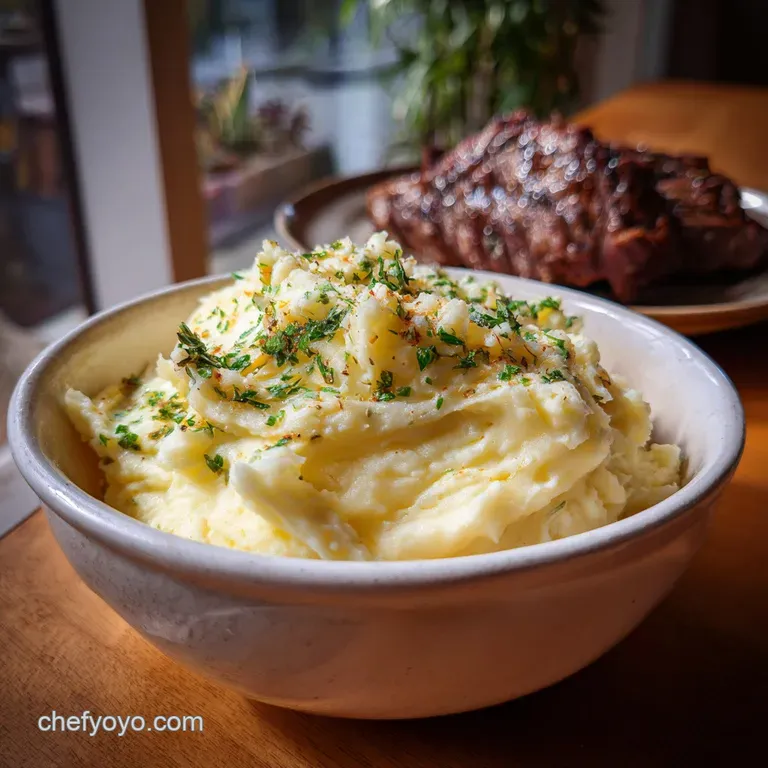
If your mash feels more like library paste than a cloud, you have likely encountered starch shear. This happens when the mechanical action of a food processor or over whisking breaks the starch granules.
Why Your Potatoes Turn Gummy
When potatoes are overworked, the amylose molecules form a massive, interconnected network. To prevent this, never use a blender or food processor. If you've already made this mistake, you can't "un-gum" them, but you can transform them. Similar to the logic in our Taco Soup Recipe, adding a liquid heavy component or baking them into a casserole with cheese can mask the texture. The goal when serving the Prime Rib Side Dish with Garlic Mashed Potatoes is always fluffiness.
| Problem | Root Cause | The Fix | Pro Protocol |
|---|---|---|---|
| Gummy Texture | Amylose release from over agitation | Use a ricer, not a blender | Add 1/4 tsp baking powder to help "lift" the structure |
| Bland Flavor | Insufficient salt in boiling water | Season the water, not just the mash | Use a splash of the prime rib's Au Jus Recipe for deep umami |
| Watery Mash | Excess moisture retained after boiling | Steam dry potatoes in the hot pot | Press a clean towel over riced potatoes to absorb steam |
Elevating Flavor Profiles with Contemporary Creative Twists
While the classic Garlic Mashed Potatoes are a perfect Prime Rib side, you can adapt this blueprint to fit various culinary themes. This versatility ensures your Prime Rib Side Dish with Garlic Mashed Potatoes remains a staple.
Contemporary Fusion Variations
- Miso Roasted Garlic: Replace 4 of the garlic cloves with 2 tablespoons of white miso paste. The fermentation adds a "contemporary" salty sweet depth that pairs beautifully with the beef's Maillard crust.
- Truffle Infused Silk: Swirl in 10ml of white truffle oil during the final whipping stage. This adds a luxurious, earthy aroma that complements the richness of the roast.
- Brown Butter & Sage: Instead of a simple cream infusion, brown the 85g of butter with fresh sage leaves until it smells "nutty" and looks like "mahogany," then strain it into the mash.
If you are looking for a leaner alternative for a weekday meal, you might find inspiration in our Turkey Meatloaf Recipe, which utilizes similar moisture locking techniques, though none can replace this perfect Prime Rib Side Dish with Garlic Mashed Potatoes for a special occasion.
⚗️ The Physics of Multiplication: Proportional Adjustments
When preparing this Prime Rib side dish for a large holiday gathering, scaling is not a linear process.
- The Evaporation Paradox: When doubling to 4.4kg of potatoes, do not double the milk and cream immediately. Use 1.75x the liquid initially. Because the surface area of your pot doesn't increase as much as the volume, less moisture evaporates, and you risk a runny mash.
- Thermal Mass Warning: Doubling the potatoes increases the "thermal mass." This means they will stay hot longer, but they also take much longer to reach a boil. Start your water 15 minutes earlier than you think you need to.
- Carry Over Softening: A massive pot of boiling potatoes continues to cook in the center after you drain them. Pull them when they are just barely tender to avoid them turning to mush during the ricing process.
Debunking Kitchen Folklore
- Myth: You should start potatoes in boiling water to save time.
- Truth: Starting in boiling water cooks the outside too fast, causing it to fall off before the middle is soft. Start in cold water for a uniform texture.
- Myth: Adding more butter always makes them better.
- Truth: Past a certain point, the emulsion breaks. If you add more than 20% fat by weight, the potatoes will look greasy and "bleed" oil.
Thermal Integrity and Sustainable Kitchen Practices
Storage Protocols
- Fridge: 4 days in an airtight container. The starch will undergo retrogradation (firming up), so they will be stiff when cold.
- Freeze: 2 months. To preserve the structure, ensure you have used the full amount of sour cream and butter; fat acts as a cryoprotectant for the starch cells.
- Reheat: Place in a saucier over low heat with a splash of milk. Whisk constantly to re-emulsify the fats.
Zero Waste Philosophy
- Potato Skins: Don't discard the peels! Transform: Toss with olive oil and salt, then bake at 400°F until they shatter. Science: The skin contains concentrated minerals and fiber, creating a "creative" rustic garnish.
- Garlic Peels: Add these to your stock pot. Science: They contain polyphenols that add color and subtle earthy notes to beef broth.
- Herb Stems: The thyme stems from the cream infusion can be dried and used as "smokers" on top of charcoal when grilling.
Curating a Balanced Menu for High End Entertaining
A Prime Rib Side Dish with Garlic Mashed Potatoes needs a balanced plate to succeed. The richness of the starch and the protein requires a "bright" or "crisp" element to prevent sensory fatigue.
- The Acid Element: Serve alongside a crisp green salad or roasted balsamic Brussels sprouts.
- The Liquid Element: No prime rib is complete without a rich sauce. Our Au Jus Recipe provides the necessary moisture to tie the beef and potatoes together.
- The Texture Element: Consider adding a topping of crispy fried shallots to the potatoes just before serving to add an "auditory sizzle" to the meal.
Engineering Solutions for Final Execution Hurdles
Can I make these Garlic Mashed Potatoes in advance? Yes, but do not add the horseradish sauce until serving. Keep the riced potatoes and dairy separate, or keep the finished mash in a slow cooker on "Warm" for up to 2 hours.
If they stiffen, whisk in 30ml of hot milk to restore the "velvety" flow.
What is the best way to peel 5 lbs of potatoes quickly? Use a Y-peeler rather than a swivel peeler. The ergonomic grip allows for longer strokes, reducing fatigue. Store peeled potatoes in cold water to prevent browning (enzymatic oxidation) while you finish the rest of the batch.
Why did my potatoes turn grey? This is often caused by using an aluminum pot. The acid in the potatoes reacts with the metal. Always use stainless steel or enameled cast iron (like a Le Creuset) to maintain that "porcelain white" contemporary look.
How do I make this dairy-free for guests? Substitute the butter with a high-quality vegan butter alternative (look for oil-based blocks, not tubs) and use full fat oat milk. Avoid coconut milk as the "nutty/tropical" notes will clash with the prime rib's savory profile.
The "Science of Why it Works" remains the same: you are still creating a fat-in-water emulsion to coat the starch, ensuring your adaptation of the Prime Rib Side Dish with Garlic Mashed Potatoes is a success.
Recipe FAQs
What is the essential tool for achieving velvet smooth mashed potatoes?
A potato ricer is non-negotiable for texture. Ricing prevents the mechanical shearing of starch granules, which is what creates gummy texture when using a standard masher.
- Use cold start potatoes for even internal cooking
- Pass potatoes through the ricer while piping hot
- Incorporate fat before adding any liquid dairy
Can I substitute Yukon Gold potatoes for Russets in this recipe?
Yukon Golds yield a naturally creamier texture. Russets are high starch, ideal for fluffing, while Yukon Golds have higher natural moisture content and butterfat, leading to a naturally waxy, denser mash. If you enjoyed mastering the emulsification technique here, see how the same fat-binding principle applies when making Summer Macaroni Salad with Tomatoes: The Creamy Picnic Essential.
What causes the mashed potatoes to turn grey or slightly blue after mixing?
Myth: Aluminum pots cause this discoloration.Reality: The grey hue is caused by a reaction between the potato's phenolic compounds and specific metals, typically aluminum, when exposed to heat.
Always use stainless steel or enameled cast iron to maintain the porcelain white aesthetic.
Should I use salted or unsalted butter for the infusion?
Unsalted butter provides necessary control over final salinity. Salted brands vary widely in sodium content, complicating the precise seasoning required for rich side dishes.
Unsalted allows you to adjust salt independently from the butterfat volume, which is crucial when balancing against rich prime rib.
How do I ensure the garlic flavor is present but not sharp or bitter?
Myth: Mince the garlic finely for maximum flavor dispersal.Reality: Mincing releases aggressive allicin compounds that burn easily.
Gentle heat infusion of smashed cloves into the dairy softens the allicin, yielding a mellow, aromatic background note instead of a harsh bite.
Is it safe to make this entire side dish ahead of time?
You can hold them, but quality degrades rapidly after 90 minutes. The mash stiffens due to starch retrogradation upon cooling, and flavor components separate from the emulsion. If you must advance prep, keep them warm in a slow cooker, but ensure you use high fat dairy to slow the structural breakdown. For the best results, complete the final steps just before serving the roast, perhaps while you are finalizing Sliders: Pub Classic Beef with Sharp Cheddar and Caramelized Onions.
What is the role of the apple cider vinegar in the horseradish sauce?
The vinegar acts as a critical palate cleanser against richness. Acidity chemically cuts through the heavy, long chain triglycerides found in the butter and prime rib fat, preventing the overall dish from tasting "cloying" or too heavy on the palate.
This brightener is essential for achieving a sophisticated finish.
Prime Rib Side Dish Potatoes
Ingredients:
Instructions:
Nutrition Facts:
| Calories | 411 kcal |
|---|---|
| Protein | 6.8g |
| Fat | 20.2g |
| Carbs | 49.4g |
| Fiber | 4.6g |
| Sugar | 3.1g |
| Sodium | 812mg |
