Our Foolproof Chicken and Noodles Recipe
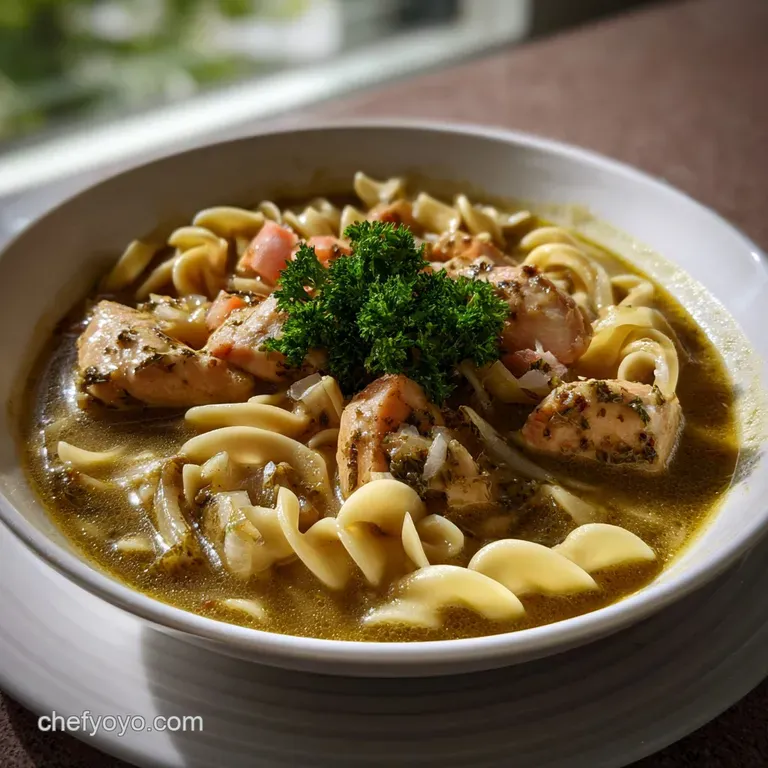
- Effort/Time: Minimal prep (15 minutes) with a 30 minute cook time.
- Key Flavor Hook: Concentrated chicken bouillon paired with bloomed dried herbs in melted butter.
- Perfect for: Busy-weeknight dinners, chilly-weather cravings, or potluck-style gatherings.
- The Ultimate Comfort: My Go-To Chicken and Noodles Recipe
- What Makes This the Best Chicken and Noodles Recipe?
- The Science of Why This Works
- Essential Ingredients and Smart Substitutions
- Chef's Expert Tips
- How to Make Chicken and Noodles: Step-by-Step Instructions
- Common Mistakes and How to Avoid Them
- Common Myths
- Storage, Freezing, and Reheating
- Serving Suggestions
- Recipe FAQs
- 📝 Recipe Card
The Ultimate Comfort: My Go-To Chicken and Noodles Recipe
You know that specific smell that hits you when you walk into a house where someone has been simmering stock for six hours? It’s thick, savory, and instantly makes your heart rate drop about ten beats.
That is exactly what this chicken and noodles recipe delivers, but here is the secret: we aren’t spending six hours on it. We are getting that deep, soul warming flavor in 45 minutes flat.
I remember the first time I tried to make this I used standard dried pasta and it was a watery disaster. My "aha!" moment came when I realized that the frozen, thick cut egg noodles are the real MVP. They don't just sit in the broth; they transform it.
This dish is the culinary equivalent of a weighted blanket. It’s not a thin soup, and it’s not a dry pasta dish; it lives in that glorious, creamy middle ground. Whether you are recovering from a long day at the office or trying to soothe a literal cold, this chicken and noodles recipe is the answer.
It’s nostalgic, humble, and honestly, it’s the recipe my friends text me for most often. Let’s get into how to make it perfectly every single time, because there are a few "pro-cook" tricks that make all the difference between a "good" dinner and a "can I have the recipe?" dinner.
What Makes This the Best Chicken and Noodles Recipe?
The best chicken and noodles recipe is defined by its texture and the intensity of its savory base, achieved through a combination of heavy gauge egg noodles and a concentrated chicken base.
By using frozen noodles instead of dried ones, you benefit from a higher starch release that naturally thickens the sauce into a velvety coating rather than a thin liquid.
This version is designed for maximum efficiency without sacrificing the "homemade" feel that defines American comfort food. We use pre-cooked shredded chicken which is the perfect way to use up a rotisserie chicken or leftovers from my Bone Broth: The Essential Liquid Gold Recipe for Depth — allowing the focus to remain on the aromatics and the noodle texture. It is a one-pot-adjacent wonder that feeds a crowd and tastes even better the next day as the flavors meld.
A Versatile Weeknight Dinner for the Whole Family
When we talk about a chicken and noodles recipe, versatility is the name of the game for busy families. This dish is incredibly forgiving; you can pack it with extra veggies for the kids or dial up the black pepper and herbs for a more sophisticated, adult friendly palate.
It’s a "grab-a-bowl" kind of meal that doesn't require fancy sides to feel complete.
The beauty of this chicken and noodles recipe lies in its ability to scale. Need to feed eight people instead of six? Just add another bag of noodles and a bit more broth. It’s the ultimate solution for those "what's for dinner?" nights when you have zero brainpower left.
Plus, because it’s so hearty, a single bowl is usually enough to keep everyone satisfied until breakfast.
The Science of Why This Works
The secret to this chicken and noodles recipe isn't magic; it’s physics and chemistry working in tandem. First, we have starch gelatinization. Frozen egg noodles are typically much denser and doughier than their dried counterparts.
As they simmer in the broth, they release amylose and amylopectin molecules. These starch molecules reach out and grab the liquid, creating a natural thickening effect that gives the sauce its "velvety" mouthfeel.
Second, we utilize the Maillard reaction in the early stages. By sautéing our onions, carrots, and celery in unsalted butter, we are creating a foundation of sweetness and depth. When you bloom the dried thyme and rosemary in that hot fat, you are performing a lipid extraction of flavor.
Essential oils in herbs are fat-soluble; by tossing them in the butter before adding the liquid, you ensure the flavor is distributed throughout the entire dish, not just floating on top.
Finally, we use a slurry based emulsification. Adding a cornstarch and water mixture at the end provides a final "shatter proof" thickener. Unlike a roux, which can sometimes taste floury if not cooked long enough, a cornstarch slurry provides a clean, glossy finish.
This ensures that the heavy cream doesn't break and the sauce stays perfectly clung to every single noodle.
Essential Ingredients and Smart Substitutions
The foundation of a great chicken and noodles recipe starts with high-quality fats and aromatics to build a complex flavor profile. Using unsalted butter allows you to control the sodium levels, which is crucial since we are also adding chicken bouillon for that hit of concentrated umami.
Choosing the Right Chicken: Rotisserie vs. Fresh Poultry
For this chicken and noodles recipe, I almost always recommend using 4 cups of cooked chicken, shredded. A rotisserie chicken from the store is a massive time saver and often has a level of seasoning that’s hard to replicate at home.
However, if you have the time, poaching chicken breasts in a bit of salted water with a bay leaf will give you a cleaner, more delicate protein.
If you are feeling adventurous, you can use thighs for a richer, fattier flavor profile. The higher collagen content in dark meat holds up better to the reheating process, making it a "Chef's Choice" for meal prep.
Just ensure you remove all skin and gristle before shredding to keep the texture of the dish consistent and smooth.
The Best Noodles for Maximum Sauce Absorption
You cannot substitute regular dried pasta in this chicken and noodles recipe and expect the same results. You specifically need 24 oz of frozen thick egg noodles (like the Reames brand). These noodles are raw and frozen, meaning they have a "bite" and a chew that dried pasta simply cannot replicate.
They act like sponges, soaking up the broth while releasing the starches needed for that iconic thick sauce.
If you absolutely cannot find frozen noodles, you can use "homestyle" dried egg noodles found in the pasta aisle, but you may need to reduce the broth slightly or increase your cornstarch slurry. Be warned: the texture will be more "pasta like" and less "dumpling like," which changes the soul of the dish.
Flavor Enhancers and dairy-free Alternatives
| Original Ingredient | Best Substitute | Why It Works |
|---|---|---|
| Unsalted Butter | Ghee or Avocado Oil | Ghee offers the same fat content and a toasted, nutty flavor. Avocado oil is better for over high heat sautéing but lacks the creamy dairy notes. |
| Low Sodium Chicken Broth | Homemade Stock or Bone Broth | Provides a much deeper gelatinous mouthfeel and more complex mineral notes. Note: Adjust salt if using pre-seasoned stock. |
| Heavy Cream (1/2 cup) | Full fat Coconut Milk | Provides similar fat content for creaminess. Note: Adds a subtle tropical scent; add a pinch of extra poultry seasoning to mask it. |
| Cornstarch | Arrowroot Powder | Functions as a 1:1 thickener. It provides a glossy finish and is better for those avoiding corn based products. |
| Dried Thyme/Rosemary | Fresh Herbs (3x amount) | Fresh herbs provide a "brighter" top note. Note: Add these at the very end of cooking to preserve their volatile oils. |
Chef's Expert Tips
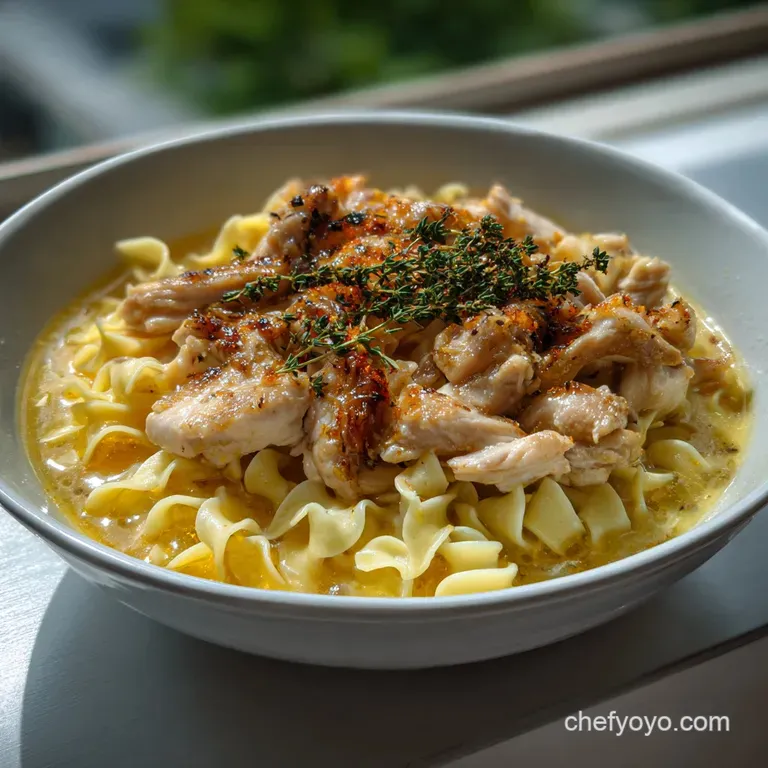
- The Bouillon Boost: Don't skip the 1 tablespoon of chicken bouillon. Even with good broth, the bouillon provides a concentrated punch of salt and savory "chicken ness" that mimics a 24 hour simmer. I prefer the "Better Than Bouillon" paste for a cleaner taste.
- The "Slow Sauté" Technique: When cooking your mirepoix (onion, carrot, celery), do not rush it. Use a medium low heat. You want the onions to be translucent and "sweated," not browned. This releases the natural sugars and creates a gentle sweetness that balances the salty broth.
- The Acid Zip: Right before serving, if the dish feels a bit "heavy" or one-note, add a tiny teaspoon of fresh lemon juice or white wine vinegar. You won't taste the lemon, but the acid will "cut" through the fat and make the flavors pop. It’s like turning the brightness up on a photo.
How to Make Chicken and Noodles: step-by-step Instructions
To make this chicken and noodles recipe, start by melting 4 tablespoons of unsalted butter in a large Dutch oven over medium heat, then sautéing your diced onion, carrots, and celery until softened.
You will then simmer the frozen noodles in a seasoned broth before finishing with shredded chicken and a cream based slurry for thickness.
Mastering the Stovetop Method
- Sauté the Aromatics: In a heavy bottomed pot (I love a 6 quart Lodge Enameled Cast Iron Dutch Oven), melt your 4 tbsp of unsalted butter. Add 1 diced yellow onion, 2 sliced carrots, and 2 sliced celery stalks. Sizzle them for 5 7 minutes until the onions are soft and fragrant.
- Bloom the Spices: Stir in 3 cloves of minced garlic, 1 tsp dried thyme, 1/2 tsp crushed dried rosemary, and 1/2 tsp black pepper. Let them cook for 60 seconds. You’ll smell the herbs "wake up" in the butter.
- The Liquid Base: Pour in 6 cups of low sodium chicken broth and stir in 1 tbsp of chicken bouillon. Add the whole bay leaf. Bring this mixture to a rolling boil.
- The Noodle Plop: Carefully add the 24 oz of frozen thick egg noodles. Don't worry if they are clumped together; they will separate as the broth heats up. Turn the heat down to medium low and simmer, uncovered, for about 20 25 minutes. Taste a noodle it should be tender but still have a firm "bite."
- The Finish: Stir in your 4 cups of shredded cooked chicken. In a small jar, whisk 2 tbsp cornstarch with 2 tbsp cold water until smooth. Pour this into the pot along with 1/2 cup of heavy cream. Stir constantly for 2 3 minutes as the sauce thickens into a velvety glaze. Remove the bay leaf.
- Garnish and Serve: Fold in 1/4 cup of fresh chopped parsley. The green adds a "shatter" of freshness against the rich, creamy noodles.
Set It and Forget It: Slow Cooker Adaptations
If you want to turn this into an easy chicken and noodles recipe crockpot version, add everything except the noodles, cream, and slurry into the slow cooker. Cook on low for 6 7 hours. In the last 45 60 minutes, add the frozen noodles.
Once the noodles are tender, stir in the cream and slurry, then let it sit on high for 15 minutes to thicken.
This method is perfect for those days when you're out of the house but want to return to a kitchen that smells like a dream. Just be careful not to overcook the noodles, or they will lose their distinct shape and become a porridge like consistency.
Fast and Flavorful Pressure Cooker Variations
For a chicken and noodles recipe instant pot version, use the sauté function for the veggies and herbs. Add the broth, bouillon, chicken, and frozen noodles. Seal and cook on High Pressure for 5 minutes, followed by a Quick Release.
Stir in the cream and cornstarch slurry at the end using the sauté function for 2 minutes to thicken it up. It’s a literal lifesaver on a Wednesday night.
Common Mistakes and How to Avoid Them
| Common Mistake | Root Cause | The Fix | Pro Protocol |
|---|---|---|---|
| Mushy Noodles | Overcooking or using dried pasta instead of frozen. | Reduce simmer time; only cook until "al dente." | Use an Instant read Digital Thermometer; the internal temp of the pot should be around 200°F when adding the slurry. |
| Thin, Watery Sauce | Not enough starch or skipping the slurry. | Add an extra tablespoon of cornstarch mixed with water. | Allow the dish to "rest" for 10 minutes off the heat; the starches will naturally set and thicken the sauce further. |
| Lack of Flavor | Skipping the bouillon or under seasoning the mirepoix. | Add a pinch of salt or a splash of Au Jus Recipe: Easy Savory Sauce for Prime Rib. | Bloom your dried herbs in the butter for at least 60 seconds to maximize oil extraction. |
Common Myths
Myth: You must cook the noodles separately to avoid a "starchy" taste. Truth: Cooking the noodles in the broth is essential for this chicken and noodles recipe because that released starch is what creates the creamy sauce texture.
Myth: Frozen noodles take hours to cook. Truth: While they take longer than dried pasta, frozen egg noodles are typically ready in 20 25 minutes of simmering.
Myth: You can't freeze cream based dishes. Truth: You absolutely can, provided you reheat them slowly. If the sauce separates, a quick whisk and a splash of broth will bring the emulsification back together.
Storage, Freezing, and Reheating
Properly storing this chicken and noodles recipe is the key to enjoying it all week long. As the dish sits, the noodles will continue to absorb the liquid. Don't be alarmed if it looks "thicker" the next day it’s actually becoming more flavorful.
How to Store Leftovers
Transfer the cooled noodles to an airtight container (I prefer glass Pyrex for easy reheating). It will stay fresh in the refrigerator for up to 3 4 days. When you go to eat it, you might need to add a tablespoon or two of water or broth to loosen the sauce back up to its original "velvety" glory.
Freezing Instructions
To freeze, let the dish cool completely. Place it in a heavy duty freezer bag, squeezing out as much air as possible to prevent freezer burn. It will keep for up to 3 months. To serve, thaw it in the fridge overnight before reheating.
Best Reheating Methods
The microwave works, but for the best texture, reheat on the stovetop over low heat. Add a splash of chicken broth or even a little bit of my Bang Bang Sauce: Copycat Bonefish Recipe if you want a spicy, creamy twist. Stir frequently to ensure the cream doesn't scorch on the bottom of the pan.
Serving Suggestions
What do you serve with something this hearty? I usually opt for something with a bit of "crunch" or acidity to balance the richness. A simple side salad with a Greek Dressing: Authentic Homemade Vinaigrette Recipe provides a sharp, vinegar based contrast that cleanses the palate between bites of creamy noodles.
If you’re going for the full "Sunday Dinner" vibe, serve this alongside some warm, crusty sourdough bread or even a small bowl of Crab Dip Recipe: Classic Baked Hot Chesapeake Delight as an appetizer. It’s a meal that celebrates the best of American home cooking: simple, satisfying, and deeply comforting.
Trust me, once you master this chicken and noodles recipe, your family will be asking for it every time the temperature drops below 60 degrees. It’s a classic for a reason. Happy cooking!
Recipe Overview
- Yield: 6 servings
- Prep Time:15 minutes
- Cook Time:30 minutes
- Total Time:45 minutes
Ingredients
- 4 tbsp unsalted butter
- 1 medium yellow onion, finely diced
- 2 medium carrots, peeled/sliced
- 2 stalks celery, sliced
- 3 cloves garlic, minced
- 6 cups low sodium chicken broth
- 1 tbsp chicken bouillon
- 1 tsp dried thyme
- 1/2 tsp dried rosemary, crushed
- 1/2 tsp black pepper
- 1 whole bay leaf
- 4 cups cooked chicken, shredded
- 24 oz frozen thick egg noodles
- 1/2 cup heavy cream
- 2 tbsp cornstarch + 2 tbsp cold water
- 1/4 cup fresh parsley, chopped
Instructions
- Sauté onion, carrots, and celery in butter until soft.
- Add garlic, thyme, rosemary, and pepper; cook for 1 minute.
- Pour in broth, bouillon, and bay leaf; bring to a boil.
- Add frozen noodles; simmer for 20 25 minutes until tender.
- Stir in shredded chicken, heavy cream, and cornstarch slurry.
- Simmer for 2 3 minutes until thickened; garnish with parsley.
Nutrition (Per Serving)
- Calories: 593 kcal
- Protein: 39.7 g
- Fat: 28.2 g
- Carbohydrates: 52.5 g
- Fiber: 2.8 g
- Sugar: 3.1 g

Recipe FAQs
How do I make chicken and noodles on the stove?
The standard stovetop method involves simmering the chicken, creating a broth, and then thickening it with a slurry before adding noodles. This method allows for excellent temperature control, crucial for achieving the velvety sauce described in the main recipe.
Ensure your broth is flavorful before thickening:
- Sauté aromatics (onion, celery) in butter.
- Simmer chicken breasts/thighs until cooked (about 20 minutes).
- Shred chicken and return to the pot.
- Whisk flour or cornstarch with cold water, then slowly whisk into boiling liquid.
Why is the sauce in my chicken and noodles recipe sometimes runny?
The sauce is runny because the ratio of liquid to starch (flour or cornstarch) is incorrect, or the liquid was not fully brought to a boil when thickening. Starch requires gelatinization, which happens at boiling temperatures. To thicken immediately:
- Create a thin slurry using one tablespoon of cornstarch mixed with two tablespoons of cold water.
- Slowly pour the slurry into the simmering liquid while whisking constantly.
- Allow the mixture to boil rapidly for 60 seconds to ensure the starch activates fully.
Can I make chicken and noodles in a crock pot?
Yes, a crock pot is excellent for tenderizing the chicken, but you must thicken the sauce separately. Cooking on LOW for 6-8 hours ensures the chicken is fall apart tender. However, crock pots do not reach a rolling boil necessary for proper starch activation for the creamy sauce.
For the creamiest result after shredding the chicken, transfer the liquid to a saucepan on the stove, bring it to a boil, and create your slurry as detailed in the stovetop method. This ensures texture integrity, similar to thickening a rich stock for a dish like Gumbo: Classic Dark Roux Chicken and Sausage Recipe.
How do I make chicken and noodles creamy without using actual cream?
The velvety texture comes from the high starch release of thick egg noodles, not necessarily added dairy cream. The starch molecules swell and hydrate, binding the broth. To maximize creaminess:
- Use thick, dense egg noodles (like Amish style).
- Do not rinse the noodles after cooking, as the surface starch is needed.
- Finish the dish with a tablespoon of butter, whisked in off the heat, which helps create a smooth, stable emulsion.
What is the best type of noodle for this recipe?
Thick, wide egg noodles are mandatory for this specific recipe's success. These noodles have a high gluten and egg content, which releases more starch into the cooking liquid than standard dried pasta.
The resulting starch release is the key factor that allows the broth to thicken into a luxurious sauce naturally, mimicking the texture achieved through a slow reduction or the use of a classic roux.
If I use leftover roasted chicken, how much liquid should I add?
If using already cooked chicken, start with 4 cups of high-quality, low-sodium chicken broth, then taste before adding more. Leftover roasted chicken is drier, so it will absorb more liquid during the reheat phase. The primary concern shifts from cooking the meat to building the sauce base.
Remember that the concentration of the flavor base is vital. If you are building a quick broth, using a concentrated bouillon base, like those sometimes used in recipes like Homemade Dog Food: Vet-Approved Chicken Rice Veggie Stew (when adjusted for human consumption), can deepen flavor quickly.
Can I freeze leftover chicken and noodles?
Yes, chicken and noodles can be frozen, but expect some texture change upon reheating. The sauce, which relies heavily on starch, may thin out significantly when thawed because the starch molecules break down during the freezing and thawing process.
To store long term (up to 3 months), use an airtight container or a FoodSaver vacuum sealer. When reheating, slowly add reserved chicken broth or milk while gently simmering until the desired consistency returns.
Do I need to pre-boil the egg noodles separately?
No, you should cook the noodles directly in the seasoned broth. This is a technique known as "one-pot cooking." Cooking them in the broth ensures they absorb the savory flavor directly while simultaneously releasing their starch into the liquid.
If you boil and drain them separately, you wash away the necessary starch, guaranteeing a thin, watery sauce base, even if you use the correct thickening agent later.
Quick Chicken And Noodles Recipe
Ingredients:
Instructions:
Nutrition Facts:
| Calories | 593 kcal |
|---|---|
| Protein | 39.7 g |
| Fat | 28.2 g |
| Carbs | 52.5 g |
| Fiber | 2.8 g |
| Sugar | 3.1 g |
| Sodium | 895 mg |
