Classic Sage and Sausage Stuffing Recipe
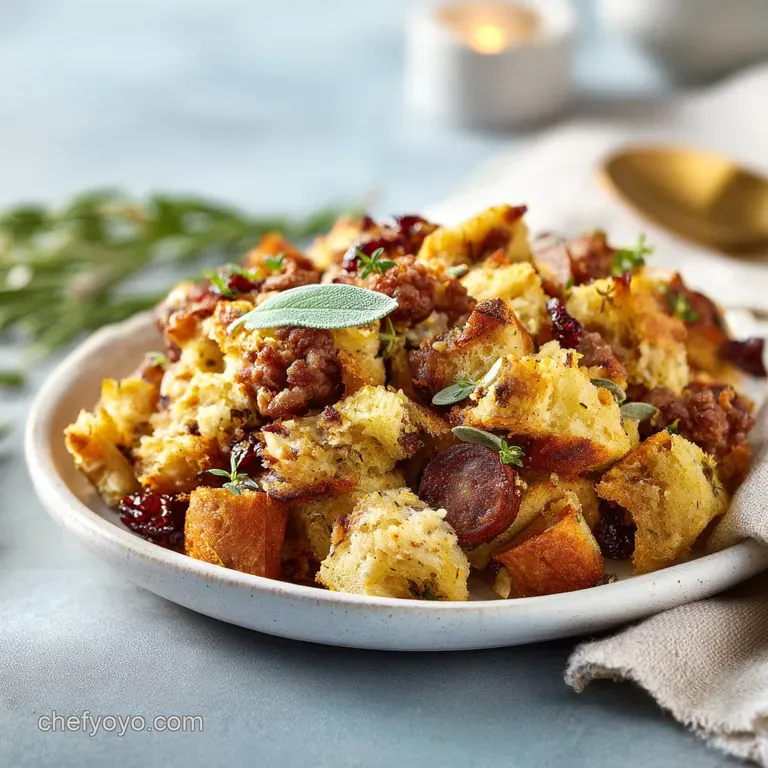
- Master the Classic Sage and Sausage Stuffing Recipe
- Vibrant Flavors and Bold Textures
- The Physics of the Crunch
- Essential Stats for Success
- The Bold Flavor Inventory
- Essential Tools for Searing
- Step by Step to Perfection
- Troubleshooting Your Holiday Bake
- Creative Twists and Vibrant Swaps
- Storage and Zero Waste Tips
- Perfect Pairings for This Dish
- Myths about Stuffing
- Classic Sage and Sausage Stuffing Recipe FAQs
- 📝 Recipe Card
Master the Classic Sage and Sausage Stuffing Recipe
Picture the sizzle of pork sausage hitting a hot pan and that instant, earthy hit of fresh sage. I remember my first solo Thanksgiving when I served a stuffing so mushy it could have been wallpaper paste. It was a disaster.
I realized then that stuffing isn't just a side; it's a texture game where bread meets fat and aromatics.
We're moving past the bland, soggy bread cubes of the past. This recipe is about bold colors and high contrast textures. You’ll get that shatter crisp top and a velvety, savory center that actually holds its own on the plate.
Trust me, the sourdough makes all the difference here, providing a tangy backbone that cuts right through the richness of the pork.
Vibrant Flavors and Bold Textures
This dish is a masterclass in color balance. We aren't looking for a uniform brown mush. We want the silver green of the sage, the vibrant emerald of the parsley, and the deep, caramelized bronze of the sausage. It looks like a celebration before you even take the first bite.
The sourdough isn't just for show. It has a structural integrity that white bread lacks. When you pour that warm chicken stock over the cubes, sourdough stays punchy and distinct. You want those 1 inch cubes to look like a mosaic in your baking dish, not a flattened slab.
The Physics of the Crunch
Retrograded Starch: Stale sourdough develops a rigid crystalline structure that prevents the bread from dissolving into a slurry when liquid is added. This ensures a bouncy, custood like interior rather than a grainy, wet mess.
| Component | Science Role | Pro Secret |
|---|---|---|
| Sourdough | Structural Foundation | Dry it in a low oven; don't just leave it on the counter. |
| Pork Sausage | Fat Distribution | Brown it deeply for the Maillard reaction flavor. |
| Large Eggs | Emulsifying Binder | Whisk into warm stock to create a creamy coating. |
Using the right liquid ratio is also a technique I learned the hard way. Too much, and you lose the "shatter" of the top layer. Just enough, and the bread hydrates perfectly. For more holiday inspiration, you might enjoy my Gumbo recipe which also relies on a deep, savory foundation.
Essential Stats for Success
Knowing when the bake is finished is the difference between a dry brick and a vibrant side dish. Use these checkpoints to stay on track.
| Thickness | Internal Temp | Rest Time | Visual Cue |
|---|---|---|---|
| 2-3 inches | 160°F | 10 mins | Top cubes turn golden and crackling |
| 4 inches | 165°F | 15 mins | Edges pull away from the pan |
| Individual cups | 160°F | 5 mins | Surface feels firm and springy |
Don't rush the rest time. Letting the dish sit for ten minutes allows the starches to set, making it much easier to scoop without it falling apart. It’s similar to how we let the flavors meld in a Béarnaise Sauce Recipe before serving.
The Bold Flavor Inventory
- 1 lb sourdough bread: Cut into 1 inch cubes.
- Sub: French bread.Why this? Sourdough's acidity balances the heavy pork fat perfectly.
- 1 lb bulk pork sausage: high-quality or spicy.
- Sub: Italian sausage.Why this? Provides the primary savory punch and essential cooking fat.
- 4 tbsp unsalted butter: To sauté the aromatics.
- Sub: Ghee.Why this? Adds a rich, creamy mouthfeel to the vegetables.
- 2 cups yellow onion: Finely diced.
- Sub: Shallots.Why this? Builds the aromatic base layer of flavor.
- 1.5 cups celery: Diced for texture.
- Sub: Fennel.Why this? Adds a necessary vegetal crunch and brightness.
- 3 cloves garlic: Minced.
- Sub: 1 tsp garlic powder.Why this? Deepens the savory profile of the sausage.
- 1/4 cup fresh sage: Finely chopped.
- Sub: 1 tbsp dried sage.Why this? The signature aromatic that defines the holiday scent.
- 1 tbsp fresh thyme leaves: Stripped from stems.
- Sub: 1 tsp dried thyme.Why this? Adds a subtle, earthy floral note.
- 1 tsp kosher salt: To season.
- 1/2 tsp cracked black pepper: For a bold bite.
- 2.5 cups chicken stock: Warm it up first.
- Sub: Vegetable broth.Why this? Hydrates the bread while adding layers of umami.
- 2 large eggs: Beaten well.
- Sub: Flax eggs.Why this? Holds the stuffing together so it’s sliceable.
- 1/4 cup fresh parsley: Chopped for garnish.
- Sub: Chives.Why this? Provides a vibrant green pop and fresh finish.
Essential Tools for Searing
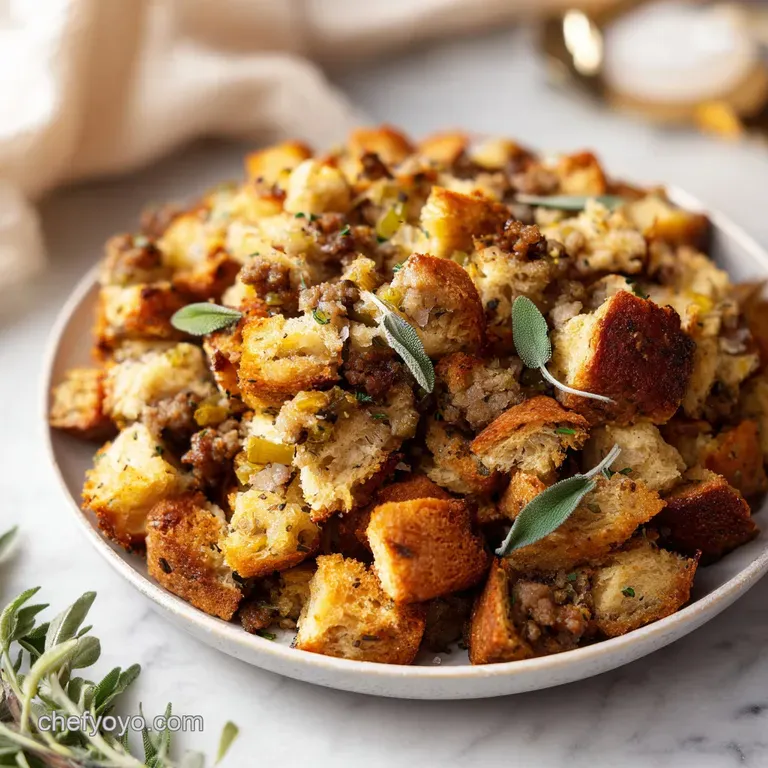
You don't need a professional kitchen, but a heavy bottomed skillet is non negotiable for browning that sausage. A cast iron pan works wonders. You'll also need a large mixing bowl bigger than you think because tossing bread cubes takes up a lot of space.
Finally, a 9x13 inch baking dish will give you the best ratio of crispy top to soft middle.
Chef's Tip: Freeze your butter for 10 minutes then grate it into the bread mixture if you want tiny pockets of steam that make the stuffing even fluffier.
| Fresh Sourdough | Pre bagged Cubes | Flavor Impact |
|---|---|---|
| High acidity, chewy | Neutral, very dry | Fresh has a bolder, tangier profile |
| Requires 25 mins drying | Ready to use | Bagged can sometimes feel "dusty" |
step-by-step to Perfection
- Dry the bread. Spread sourdough cubes on a tray. Bake at 300°F (150°C) for 20 minutes until they feel like croutons. Note: This prevents sogginess.
- Brown the meat. Cook the pork sausage in a large skillet over medium high heat. Break it up into small bits until deeply browned and crispy.
- Sauté the aromatics. Melt the butter in the same skillet. Add onions and celery, cooking for 8 minutes until soft and translucent.
- Add the garlic. Stir in the minced garlic and cook for 1 minute until fragrant and golden.
- Herbal infusion. Add the sage, thyme, salt, and pepper. Stir for 30 seconds to wake up the oils in the herbs.
- Combine the base. In your largest bowl, toss the dried bread cubes with the sausage and vegetable mixture.
- Temper the eggs. Whisk the eggs into the warm chicken stock. Slowy pour this over the bread.
- The Big Mix. Toss everything gently. Let it sit for 5 minutes until the liquid is fully absorbed.
- The Golden Bake. Transfer to a greased 9x13 dish. Cover with foil and bake at 350°F (180°C) for 30 minutes.
- Final Crisp. Remove foil and bake another 20 minutes until the top is shattered and bronze.
Troubleshooting Your Holiday Bake
Fixing a Soggy Center
If you find the middle is too wet, it usually means the bread wasn't dry enough or there was too much stock. Remove the foil and increase the oven heat to 400°F (200°C) for 10 minutes to evaporate excess moisture.
Heating the Cold Center
For a deep dish, sometimes the middle stays cold while the top burns. Use a thermometer to check for 160°F. If it's cold, cover it back up with foil to trap steam and keep baking.
| Problem | Root Cause | Solution |
|---|---|---|
| Greasy texture | Sausage fat wasn't drained | Drain all but 1 tbsp of fat after browning. |
| Dry and crumbly | Not enough egg or stock | Drizzle 1/4 cup warm stock over the top and rest. |
| Burnt herbs | Added too early to high heat | Stir herbs in at the very end of the sauté. |
Common Mistakes Checklist ✓ Pat the celery and onions dry after washing to avoid steaming them. ✓ Use warm stock, not cold, to help the bread absorb liquid evenly. ✓ Don't over mix the bread or you'll break the cubes into a paste.
✓ Always grease your baking dish with butter for a crispy bottom crust.
Creative Twists and Vibrant Swaps
Scale Down for Two
Cut all ingredients in half. Use an 8x8 inch pan. Reduce the covered baking time to 20 minutes and the uncovered time to 15 minutes. Use one whole egg and one extra yolk for richness.
Scale Up for a Crowd
Double the recipe using two separate 9x13 pans. Do not crowd one giant pan or the middle will never cook. For the spices, only use 1.5x the amount so the sage doesn't become overpowering.
Decision Shortcut If you want a vibrant, fresh look, add 1/2 cup of fresh pomegranate seeds as a garnish just before serving. If you want a spicy kick, swap the pork sausage for bulk chorizo and add diced jalapeños to the onion mix.
If you want a nutty crunch, fold in 1/2 cup of toasted pecans during the big mix.
Storage and Zero Waste Tips
Fridge and Freezer: Store leftovers in an airtight container in the fridge for up to 4 days. You can freeze the baked stuffing for up to 3 months. To reheat, sprinkle with a little stock and bake at 350°F (180°C) until the internal temp hits 165°F.
Zero Waste: Don't throw away the sourdough crusts or the celery leaves. Pulse the crusts into breadcrumbs for future recipes. The celery leaves are incredibly flavorful; chop them up and mix them into the parsley garnish for an extra punch of color.
Perfect Pairings for This Dish
To make this a truly bold meal, you need a garnish strategy. I recommend three color accents: the forest green of the parsley, the silvery sheen of fresh sage leaves, and a scattered handful of ruby red pomegranate seeds. Add these right before the dish hits the table so they stay vibrant.
The tang of this sourdough stuffing pairs beautifully with a rich gravy or a bright cranberry sauce. If you’re looking for other savory sides that bring the heat, check out how the spices work in our The Monday Classic recipe.
Myths about Stuffing
Stale bread is the same as dried bread. This is false. Leaving bread out to get "stale" often just makes it tough and leathery. Drying it in a low oven removes the moisture while keeping the structure crisp, which is exactly what we need for this Classic Sage and Sausage Stuffing Recipe.
You must cook stuffing inside the bird for flavor. Actually, "dressing" cooked in a pan allows for much better texture control. You get the crispy bits on top that you simply can't get inside a turkey.
Plus, it’s much safer as you don't have to worry about the bread reaching a safe temp before the turkey dries out.
Fresh herbs are always better than dried. While I love fresh sage for its vibrant color, dried sage is actually more potent. If you're out of fresh, use a third of the amount of dried, but add it earlier in the sauté process to let the flavors bloom in the butter.

Classic Sage and Sausage Stuffing Recipe FAQs
Can I substitute white bread for the sourdough?
No, stick with sourdough. Sourdough’s acidity provides a necessary structural backbone that balances the richness of the pork sausage, preventing the final product from tasting overly heavy.
What is the proper internal temperature for finished stuffing?
The target is 160°F. Cover the dish and bake until it reaches this temperature, then remove the foil for the final crisping stage.
How to ensure the top layer is shatteringly crisp?
Bake the stuffing uncovered for the final 20 minutes at 350°F (180°C). This drives off surface moisture, achieving that contrast with the custardy interior.
Is it necessary to dry the bread cubes before mixing?
Yes, this step is essential for texture. Spread the cubes on a tray and bake at 300°F (150°C) for 20 minutes to create a rigid crystalline structure that prevents sogginess.
How do I fix stuffing that tastes too greasy after baking?
Drain the rendered sausage fat aggressively. After browning the pork, remove the meat and drain all but one tablespoon of fat from the skillet before sautéing your aromatics.
How to incorporate sausage into a different holiday side?
If you enjoyed controlling the deep savory flavor development here by browning the pork thoroughly, you can apply that same high heat searing technique when building the base for our Authentic Shrimp and recipe.
What if I don't have fresh sage?
Use dried sage, but reduce the quantity significantly. Use only one tablespoon of dried sage for every quarter cup of fresh required, as dried herbs are far more potent.
Sage Sausage Stuffing Recipe
Ingredients:
Instructions:
Nutrition Facts:
| Calories | 268 calories |
|---|---|
| Protein | 12 g |
| Fat | 14 g |
| Carbs | 24 g |
| Fiber | 2 g |
| Sugar | 3 g |
| Sodium | 585 mg |
