The Ultimate Nigerian Party Jollof Rice Smoky and Spicy
- Moving Beyond the Debate: What Makes Nigerian Jollof Rice King?
- Unlocking the Elusive Smoky Depth (The ‘Party Rice’ Flavour)
- Gathering Your Arsenal: Core Ingredients for Authentic Jollof
- Decoding the Secret Flavour Agents
- Step-by-Step Mastery: Transforming Rice into Nigerian Jollof
- Avoiding Common Jollof Catastrophes
- Culinary Pairings: How to Serve Traditional Nigerian Jollof Rice
- Navigating the Global Jollof Landscape and Nutrition
- Recipe FAQs
- 📝 Recipe Card
Moving Beyond the Debate: What Makes Nigerian Jollof Rice King?
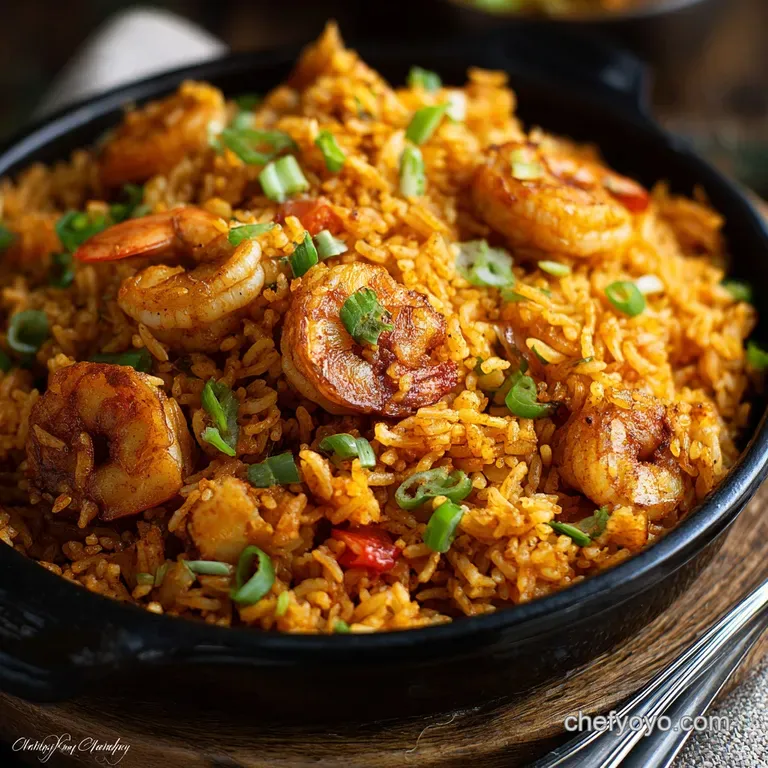
There are few dishes in the world that inspire the fierce loyalty and culinary contention quite like Jollof Rice. While the geographical debate spanning the West African coastline is often playful, for those who grew up enjoying the authentic preparation, there is no ambiguity: the undisputed champion of flavor is Nigerian Jollof Rice .
This isn't just a side dish; it is the ultimate centerpiece of any celebration, be it a large party or a cozy Sunday Dinner . The mastery of this West African Food hinges not on the quantity of spice, but on the precise management of moisture and heat, transforming simple ingredients into a deeply smoky, vibrant red, flavour saturated rice dish.
Unlike its counterparts, the Nigerian version prioritizes the rich depth achieved through a long, slow steam a technique crucial for developing the beloved 'party rice' signature.
Unlocking the Elusive Smoky Depth (The ‘Party Rice’ Flavour)
The secret weapon of the best Jollof is undoubtedly the complex, smoky aroma that permeates the rice. Often referred to as "party rice," this elusive flavour results from careful technique rather than adding smoke flavouring.
Defining the Jollof Signature: Smoke vs. Sweetness
The primary culinary challenge is moving beyond a simple tomato flavored rice towards a mature, balanced flavour profile. If the tomato element is not handled correctly, the finished dish can taste metallic or overly sweet.
We achieve the depth by forcing the rice at the bottom of the heavy bottomed pot to caramelize slightly a controlled, gentle scorch. This process generates steam that infuses the upper layers of rice with that characteristic smokiness.
Why This Recipe is Guaranteed Party Rice Perfection
The success of this particular Nigerian Jollof Rice Recipe lies in a high commitment to two stages: reducing the stew and sealing the pot. While the process demands careful heat management, placing the dish at a medium difficulty level, the effort results in distinct, tender grains rather than a soft, homogenous mush.
This is truly the ultimate One Pot Meals triumph, perfectly suited for large gatherings where the dish needs to hold up under scrutiny.
The Essential Triad: Tomatoes, Peppers, and Onions
The foundational structure for Jollof Rice is built on the ata (pepper base). We use a rich combination: approximately 900g of large Roma tomatoes, 450g of large red bell peppers for sweetness and colour saturation, and half a red onion, all complemented by 2 to 4 Scotch bonnet peppers for controllable heat.
This triad ensures the base is thick, intensely red, and ready to envelop the rice.
The Role of Time: Why Patience is the Ultimate Jollof Ingredient
Achieving that signature depth requires time. The total cook time clocks in at about 75 minutes, but nearly 40 minutes of that is dedicated solely to reducing the pepper purée. This initial reduction is vital.
We must evaporate excess water before the rice is added; otherwise, the final Jollof will be pale, watery, and lack the required richness.
Gathering Your Arsenal: Core Ingredients for Authentic Jollof
To execute truly authentic Nigerian Jollof Rice Easy preparation, you must have the specific components designed to withstand the extended cooking process. Beyond the pepper base, key supporting actors include 4 cups (900g) of parboiled long grain rice, 6oz (170g) of double concentrated tomato paste, and a generous 1 cup (240 ml) of vegetable or canola oil.
Aromatics, including minced garlic, fresh ginger, bay leaves, dried thyme, and Nigerian curry powder, work in harmony to build complexity beneath the heat of the Scotch bonnets.
Decoding the Secret Flavour Agents
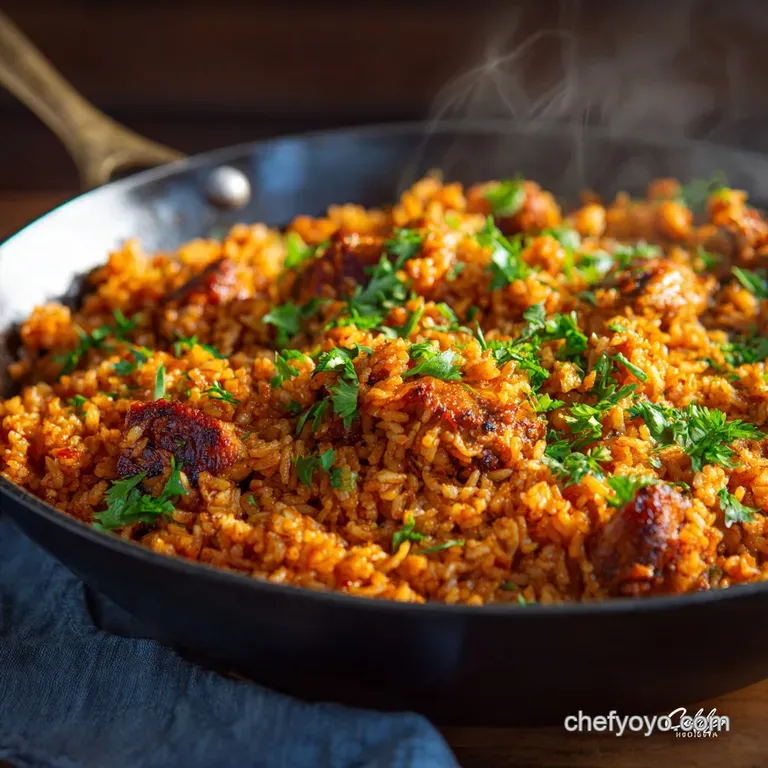
Mastering Jollof means understanding how each ingredient interacts chemically during the long steam.
Selecting the Right Grain: Parboiled Rice is Non-Negotiable
For this recipe, parboiled long grain rice (often called converted rice) is absolutely essential. Standard white rice varieties like Basmati or Jasmine will disintegrate under the intense heat and moisture of the stew.
Parboiled rice has been partially boiled in its husk, which pre-gels the starches, resulting in highly resilient grains that remain separate and fluffy even after steaming for over half an hour.
The Pepper Mix Ratio: Building the Base Stew (Obe Ata)
The consistency of the ata is critical. When blending the core vegetables tomatoes, bell peppers, and onion it is crucial to use minimal liquid. Only 1/2 cup (120 ml) of water should be added to the blender to help the blades move, ensuring the resulting purée is thick and ready for the intensive reduction phase.
This ratio is non-negotiable for achieving a robust stew base.
Essential Tools for Perfect Jollof Steaming
The right equipment facilitates the signature smoky flavour. A large, heavy bottomed pot, ideally a Dutch oven or cast iron pot, is required because it retains and distributes heat evenly, allowing the controlled scorching at the bottom to occur without outright burning.
A sheet of kitchen foil, used to create a tight seal under the lid, is another essential item, trapping the steam needed to cook the rice thoroughly.
Maggi Cubes and the Umami Factor
The rich, savoury base of the stew is heavily reliant on three crumbled bouillon cubes (Knorr or Maggi). These cubes, along with measured amounts of salt, pepper, and 2 tsp each of dried thyme and curry powder, contribute the required depth and umami that defines classic Nigerian Jollof Rice Ingredients .
This heavy seasoning ensures the rice, once added, is flavour packed.
Oil Choice: Achieving Maximum Colour Saturation
The Nigerian Jollof Rice requires a specific amount of oil (1 cup / 240 ml) to function as a flavour carrier. It serves two purposes: first, frying the tomato paste directly in the oil for 5– 7 minutes allows the paste to caramelize, shedding its metallic taste and deepening the vibrant red colour.
Second, it coats the pepper purée during the reduction phase, preventing scorching and maximizing the glossy finish of the final dish.
Related Recipes Worth Trying
- The Monday Classic Proper Louisiana Red Beans and Rice Recipe — Forget the tinned stuff Our traditional Louisiana Red Beans and Rice recipe is slowcooked for rich smoky depth and that essential creamy texture Pure...
- Creamy Louisiana Red Beans and Rice Recipe The Monday Tradition — This authentic Southern Red Beans and Rice Recipe delivers deep smoky flavour and the ultimate creamy texture without fuss Pure New Orleans comfort food...
- How to Make Fluffy Cilantro Lime Rice The Restaurant Style Recipe — Stop settling for stodgy rice Our essential Cilantro Lime Rice recipe shows you the secret to fluffy grains and intense zesty flavour just like the Chipotle...
step-by-step Mastery: Transforming Rice into Nigerian Jollof
The preparation process involves methodical steps. Begin by rinsing the 4 cups of parboiled rice under cold water until the water runs clear a necessary step to remove surface starch.
While the pepper base is blending, the flavour foundation begins by heating the oil and sautéing half a diced red onion, followed by the garlic and ginger. Once the tomato paste is fried until dark, the smooth pepper purée is introduced, seasoned with the stock cubes and spices, and allowed to simmer, uncovered, for 30– 40 minutes until visibly thickened and the oil has separated and risen to the surface.
Only then is the rinsed rice folded in, ensuring every grain is coated in the rich red stew before the liquid is added.
Avoiding Common Jollof Catastrophes
Success in Jollof preparation often comes down to avoiding key pitfalls related to consistency and texture.
Blending and Reducing the Ata (The Stew Base)
A common mistake is rushing the reduction phase. If the blended ata (pepper base) is too thin, the rice will absorb excess water and turn mushy. After incorporating the purée into the sautéed aromatics and fried tomato paste, it must be simmered until it reaches a consistency where it holds its shape when drizzled, signalling that sufficient moisture has evaporated.
Incorporating the Parboiled Rice Gently
Once the stew is perfectly reduced, the rinsed rice is added. It is crucial to stir the mixture gently but thoroughly. The goal is complete colour saturation every grain should turn deep red. Vigorous stirring should be avoided at this stage to prevent breaking the grains.
The Crucial Steam and Smoke Phase (Achieving the Bottom Scorch)
After adding the 3 cups (720 ml) of heated chicken stock (which should just barely cover the rice), the pot is sealed. A large sheet of aluminium foil is placed directly over the rice and tightly secured by the heavy lid. The heat is reduced to the absolute lowest setting.
The rice steams undisturbed for 25– 30 minutes. To achieve the coveted smoky flavour, the pot should remain on the low heat for an additional 5 minutes after the rice is cooked, allowing the bottom layer to caramelize and subtly scorch, releasing the 'party rice' aroma.
Diagnosing and Fixing Undercooked Rice
If, after the initial 30 minutes of steaming, the rice near the surface is still hard or crunchy, it signifies insufficient steam or liquid. Do not stir! Instead, sprinkle a small amount of additional hot stock over the top (about 1/4 cup), replace the foil and lid quickly, and continue steaming for another 5– 10 minutes.
Preventing Mushy Jollof: Controlling the Liquid Level
The key to preventing mushy rice is the precise ratio of 4 parts rice to 3 parts stock (1:0.75 ratio), keeping in mind that the reduced stew already holds significant moisture. The liquid level should stop right where the rice surface begins.
Over hydrating the dish guarantees a porridge like texture, which is the antithesis of perfect Jollof.
Culinary Pairings: How to Serve Traditional Nigerian Jollof Rice
Jollof is the gravitational centre of any meal, and the accompaniments must be rich and complementary to its fiery, savory nature.
Navigating the Global Jollof Landscape and Nutrition
Understanding how Jollof Rice fits into the global culinary scene, along with its nutritional context, adds another layer of appreciation for this complex dish.
Perfect Proteins: Chicken, Beef, or Fish?
The most traditional and popular pairing is Nigerian Jollof Rice and Chicken , where the chicken (or beef) is usually fried or grilled separately and often tossed into the pot at the end or served atop the rice. Stewed protein is equally popular, adding richness.
For fish lovers, whole fried Tilapia or Mackerel are delicious choices, contrasting beautifully with the deeply spiced rice.
Adding Heat and Garnish: Plantain and Coleslaw
Balance is achieved through contrasting textures and temperatures. The sweetness of Dodo (fried plantain) provides a necessary counterpoint to the spice. This is traditionally served alongside a simple, creamy coleslaw or a fresh chopped salad, whose cooling crispness cuts through the rich, heavy stew.
Storage and Reheating Tips for Leftovers
Because this recipe yields 8 generous servings, leftovers are likely. Store the Nigerian Jollof Rice in an airtight container in the refrigerator for up to four days.
To reheat, sprinkle a few tablespoons of water or stock over the portion, cover, and microwave or heat gently on the stovetop to refresh the moisture without drying out the grains.
Ghanaian Jollof vs. Nigerian: Key Regional Differences
While we focus on the superiority of the Nigerian method, it is important to acknowledge regional variations. Ghanaian Jollof often incorporates ingredients like tomato purée and relies less heavily on the smoky caramelization technique.
Ghanaian versions tend to be slightly less spicy and sometimes favor Basmati rice, whereas the hallmark of the Nigerian version is the dominance of bell peppers for colour and the deliberate achievement of that deep, smoky scorch using parboiled rice.
Dietary Considerations and Nutritional Breakdown
Per serving (excluding external proteins), the estimated breakdown for this Jollof is approximately 520 kcal, with 75g of carbohydrates and 20g of fat, reflecting the generous use of oil required to build the stew base.
For a vegan adaptation, the delicious umami can be maintained by swapping the chicken stock and stock cubes for quality vegetable stock and mushroom seasoning powder, ensuring this African Food staple remains accessible to all.
Recipe FAQs
Why does my Jollof always turn out sticky and mushy?
Ah, the classic Jollof tragedy turning lovely rice into a bit of a soggy mess! The main culprits are usually using the wrong kind of rice (standard long grain releases too much starch) or too much liquid. You must use parboiled rice, and crucially, rinse it thoroughly before starting.
The technique relies on trapping steam, not drowning the rice; ensure the liquid just barely covers the grains before sealing the pot.
What's the secret to getting that amazing, smoky "party rice" flavour in Nigerian Jollof Rice?
That elusive flavour, often referred to as "party rice," comes from deliberate caramelisation and heat management. The trick is using a heavy bottomed pot, like a trusty Dutch oven, and ensuring the rice gently scorches on the very bottom layer during the final minutes of cooking on low heat.
Sealing the pot tightly with foil also traps the smoky essence, infusing it back into the rice as it steams.
I can't find parboiled rice or scotch bonnets can I make substitutions?
When it comes to the rice, parboiled rice is truly non-negotiable for texture, as standard rice tends to break down under the long cooking time in the stew. If you can’t get Scotch Bonnets, you can substitute with Habanero peppers for a similar heat profile, or use half a teaspoon of cayenne pepper if you just need warmth.
Just be careful not to skimp on the heat; Jollof is meant to have a proper kick!
My Jollof is more orange than a deep, vibrant red. What did I do wrong?
This usually means your flavour foundation wasn't developed enough! The secret to that vibrant red hue lies in frying the tomato paste separately in oil for 5 7 minutes until it darkens and caramelizes.
Additionally, ensure your pepper purée is reduced significantly it should be very thick before adding the rice. A well reduced sauce equals intensely coloured and flavoured rice.
Can I make Nigerian Jollof Rice ahead of time, and how should I store the leftovers?
Absolutely, Jollof is brilliant for batch cooking, and many seasoned cooks agree that it actually tastes better the next day once the spices have properly mingled! You can store leftovers in an airtight container in the fridge for 3 to 4 days.
If you've made a massive batch, Jollof also freezes remarkably well for up to three months; just reheat gently on the stovetop with a splash of stock to prevent drying out.
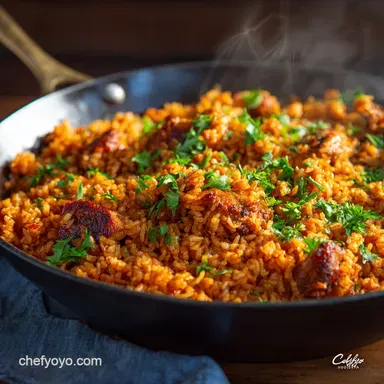
Ultimate Nigerian Jollof Party Rice
Ingredients:
Instructions:
Nutrition Facts:
| Calories | 683 kcal |
|---|---|
| Protein | 7.3 g |
| Fat | 5.2 g |
| Carbs | 41.6 g |
| Fiber | 20.4 g |
| Sodium | 379 mg |
