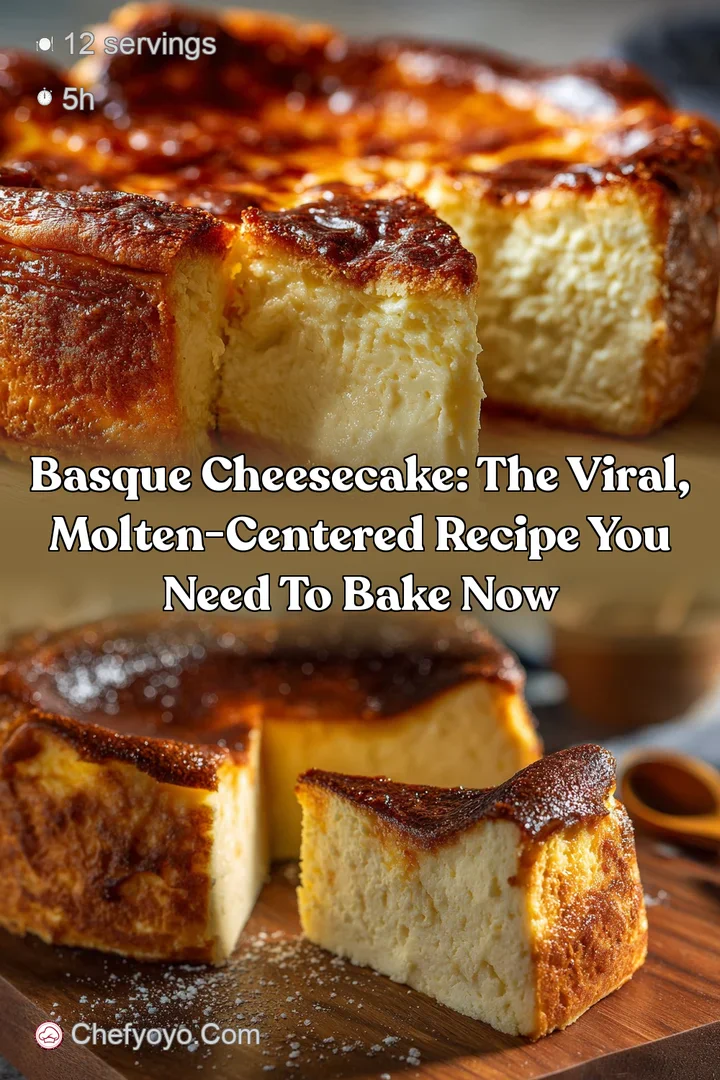
Basque Cheesecake: the Rustic, Ultra-Creamy San Sebastian Recipe
- The Glorious History of Authentic Basque Cheesecake
- The Science of the 'Burnt' Beauty: Achieving Molten Texture
- Essential Ingredients for Your Basque Cheesecake Batter
- Step-by-Step Guide to the Rustic Perfection
- Mastering the High Heat: Expert Tips and Troubleshooting
- Cooling, Storing, and Freezing Your Basque Cheesecake
- How to Serve Basque Cheesecake: Pairings and Presentation
- Recipe FAQs
- 📝 Recipe Card
The Glorious History of Authentic Basque Cheesecake
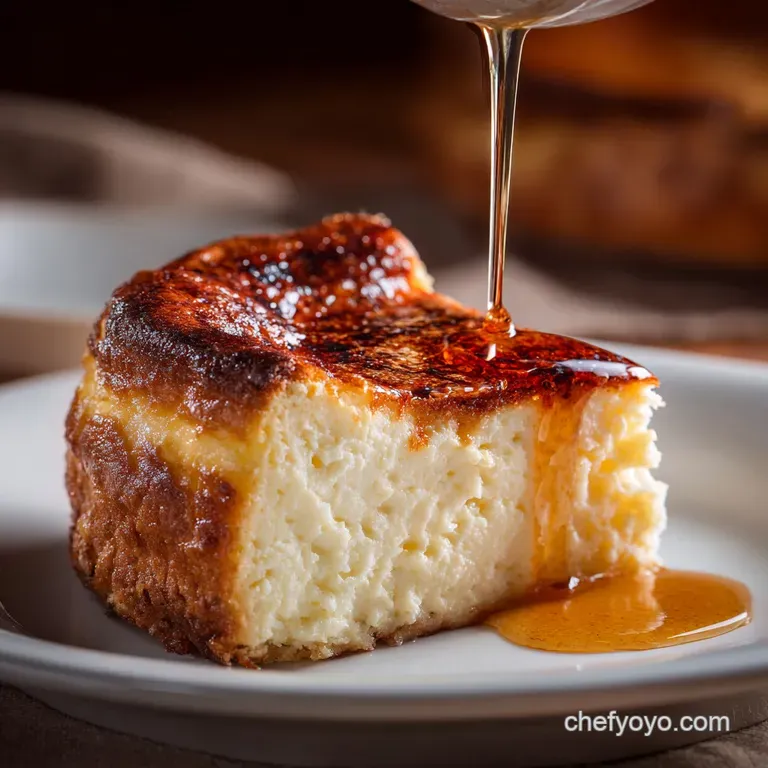
That incredible aroma of dark, almost bitter caramel mingling with sweet, warm vanilla hits you before you even see the cake. This is the Basque Cheesecake , straight from the famous La Viña restaurant in San Sebastián, Spain. It’s not just a dessert; it’s an attitude.
Forget everything you learned about preventing cracks or achieving a uniform white surface. We are baking aggressively, and that deeply caramelized, nearly burnt top is the whole point.
Honestly, this recipe is a lifesaver because it’s ridiculously forgiving. You don’t need a fussy water bath. You don't need a crust made of delicate crumbs. You basically just throw everything in a mixer, blast it with high heat, and wait for the magic to happen.
It’s sophisticated, rustic, and cheap to make, which is why it's my go-to when I need a guaranteed showstopper fast.
I’ve made mistakes, like chilling it too fast and making the center too firm, but I’ve learned the essential tricks. We’re going to achieve that molten, intensely creamy center perfectly.
Let’s grab our springform pan and get to work on the best version of [Authentic Basque Cheesecake] you’ll ever bake.
The Science of the 'Burnt' Beauty: Achieving Molten Texture
La Viña’s Legacy: Tracing the San Sebastián Origin
The original recipe came from Santiago Rivera at La Viña, a small bar in San Sebastián. His idea was genius: take the basic components of cheesecake and treat it like a custard, not a baked good you need to protect. This simplicity changed dessert forever.
Rivera’s approach requires massive heat and zero pretension. That's why the results are so fantastic, consistently.
How Basque Cheesecake Differs from New York Style
The core difference is temperature and texture. New York style is often baked low and slow, aiming for a dense, smooth, perfect dome. It relies heavily on a crust for structure. Basque Cheesecake vs normal cheesecake is a battle between perfection and personality.
We are using extreme heat (400°F 425°F) to rapidly caramelize the surface sugars and create a defensive shell. If you want something more structured with a graham crust, maybe look at my recipe for [Peach Cobbler Cheesecake: Ultimate Showstopper Summer Dessert] but stick around; this method is way easier.
Why the 'Burn' is Intentional: Flavor Profile Breakdown
The intense browning, often referred to as the ‘burn,’ is actually deep caramelization. This process transforms the granulated sugar, lending an incredible, slightly bitter, smoky note. This bitterness is absolutely critical.
It cuts through the extreme richness of the cream cheese, preventing the whole dessert from tasting flat and heavy.
The Role of High Heat in Rapid Caramelization
When you bake at 425°F, two things happen very quickly. First, the high surface temperature browns the exterior in about 20 minutes, setting up that thick crust.
Second, the heat drives the interior ingredients into a rapid boil, which creates the massive puff and then the dramatic collapse upon cooling. This heat shock is non-negotiable for achieving the correct texture.
Understanding the Custard Like Interior (No Water Bath Needed)
Since the outer crust forms so quickly, it insulates the center. We deliberately pull the cake while the middle is still wobbly. The interior structure remains loosely set because the heat only penetrates it partially.
This is why you end up with that signature creamy, custardy, almost molten texture once it’s properly chilled.
Ideal Internal Temperatures for the Perfect Center
If you want to get really technical, the perfect internal temperature for a creamy center is between 155°F and 165°F (68°C 74°C). The edges will be much hotter and fully set.
Don't worry if you don't have a thermometer; the visual cue is simple: when you shake the pan, the outer two inches should be set, but the inner circle should wobble vigorously like thick gelatin.
Essential Ingredients for Your Basque Cheesecake Batter
The Importance of Full Fat Cream Cheese (Temperature Matters)
You need to use full fat cream cheese, period. Don't skimp here. The higher fat content is what gives this cake its decadent, silken mouthfeel. If the label says "reduced fat," put it back. Crucially, the cream cheese must be genuinely at room temperature.
If it’s even slightly cold, you will end up with frustrating lumps and a grainy texture, no matter how long you mix.
Heavy Cream vs. Whipping Cream: Making the Right Choice
I use Heavy Whipping Cream (often called Double Cream outside the US) that is at least 35% milkfat. This high fat content helps set the custard without requiring extra starch. It provides richness and structure. Make sure you don't grab something like half and half, as the water content is too high.
Ingredient Substitutions: When Dairy Types Vary
I know buying five blocks of cream cheese can sometimes be a mission, and maybe you need a gluten-free swap. Here are my tried and true substitutions.
| Ingredient | My Recommended Substitute | Why It Works |
|---|---|---|
| Cream Cheese | Mascarpone (up to 50% total weight) | Adds richness and a smoother mouthfeel. |
| Granulated Sugar | Caster Sugar (Fine Sugar) | Dissolves faster, ensuring smooth batter (but equal weight). |
| Heavy Cream | Creme Fraiche (thinned with a splash of milk) | Adds tanginess and high fat structure. |
| All-Purpose Flour | Cornstarch (half the measure) | Creates a gluten-free binder without changing texture much. |
Chef's Note: If you want a slightly tangier flavor reminiscent of classic cheesecake, whisk in 2 teaspoons of lemon juice with the heavy cream. It's a small tweak that adds brightness.
Selecting the Right Size Springform Pan
A 9 inch or 10 inch springform pan works best. The size dramatically affects cook time. A 9 inch pan results in a thicker cake that needs closer to 60 minutes. A 10 inch pan will be thinner and might finish in 50 minutes.
Whatever you use, ensure it’s a springform ; trying to lift this beauty out of a regular cake tin is a disaster waiting to happen.
step-by-step Guide to the Rustic Perfection
Prepping the Pan: The Crumpled Parchment Technique
This step is mandatory for that iconic, craggy, rustic look. Take two sheets of parchment paper that hang over the pan sides by at least two inches. Now, literally crumple them into a tight ball. Unfurl them gently and press them into the springform pan, overlapping slightly.
The creases allow the batter to set into those lovely, uneven folds.
Mixing the Batter: Avoiding Overmixing the Eggs
- Cream the Base: Combine the room temperature cream cheese, sugar, and salt in your mixer bowl. Beat on medium speed for about two minutes until it is truly, genuinely silky smooth. Stop and scrape down the sides frequently.
- Add Eggs one-by-one: Add the large, room temperature eggs one at a time, mixing just until the yolk disappears before adding the next. This is the main trap: mixing too long after the eggs are in incorporates too much air. Too much air means it balloons too high and collapses too harshly.
- Finish Strong: Mix the flour into the heavy cream separately until it’s lump free. Pour this mixture and the vanilla extract into the cream cheese batter while the mixer is running on low. Stop the mixer the second the batter looks homogeneous. It should look like a thick milkshake.
Baking Schedule: Timings for a Runny vs. Set Center
Place the pan straight into the oven preheated to 425°F (220°C). We are aiming for a total cook time of 50 to 60 minutes.
- For a Molten, Runny Center: Bake for 50– 55 minutes. The center will wobble fiercely.
- For a Creamy, Set Center (Easier to slice): Bake for 58– 62 minutes. The center will still wobble, but gently, like soft jello.
I like mine right at the 55 minute mark. The surface should be a deep mahogany brown, almost black, and dramatically puffed up.
Critical Cooling Process: Achieving the Famous Collapse
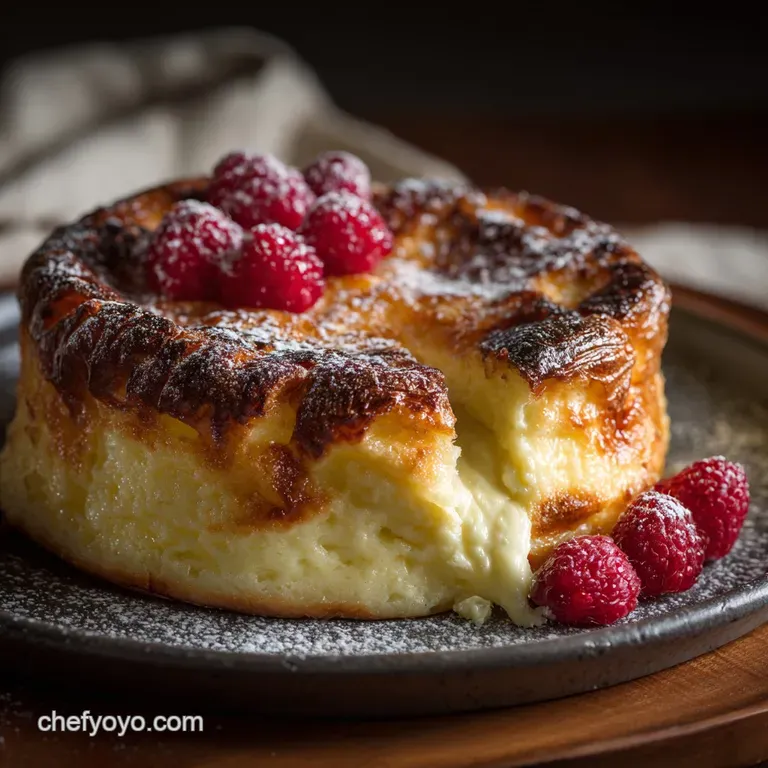
When the cake comes out, it looks like a proud, scorched soufflé. Do not worry! Leave it on the counter, still in the pan, for 1– 2 hours. It must cool down slowly. It will deflate significantly, sinking and wrinkling into its famous craggy shape. This collapse is a sign of success.
Once it’s cool to the touch (not warm), cover the pan loosely and transfer it to the fridge for at least 4 hours, or better yet, overnight.
Mastering the High Heat: Expert Tips and Troubleshooting
Common Mistakes: Undercooking the Center vs. Over Browning
People usually panic about the color. Over browning (too dark, too bitter) usually happens if your oven runs hot or you used too much sugar. To fix this, drop the oven temperature by 25 degrees the next time. Undercooking the center means you pulled it too early.
If the cake doesn’t collapse dramatically or if the center is still liquid after 4 hours of chilling, it needed another 5– 8 minutes in the oven. Trust the wobble test!
Dealing with Cracks: Why They Are Desired and Not Defects
Unlike traditional cheesecakes, the cracks are features, not bugs. They happen because the extreme heat causes the exterior to set before the interior is done, creating massive tension when the center deflates.
If your cake is smooth and crack free, you probably didn't bake it hot enough, which is fine, but you missed the trademark rustic look!
Adjusting Oven Temperature for Different Cookware
If you are using a dark metal springform pan, it absorbs heat rapidly, so stick to the lower end of the temperature range (400°F/200°C). If you are using a lighter aluminum pan, you might need to bump the temperature up to 425°F (220°C) to ensure rapid caramelization.
Cooling, Storing, and Freezing Your Basque Cheesecake
Room Temperature vs. Fridge: When to Cut and Serve
Do not attempt to slice this cake until it has been chilled completely overnight. The center needs that time to transition from a wobbly liquid to a creamy, firm enough-to-cut custard.
For the best flavour experience, let the chilled cake sit at room temperature for about 30 minutes before serving. This softens the center just slightly.
Best Practices for Wrapping and Refrigeration
This cake keeps beautifully! Wrap the remaining cake (or the entire cake, if you didn't finish it) tightly in plastic wrap, still attached to the springform base if possible. Store it in the refrigerator. It will last easily for 5 to 7 days. I often snack on leftovers all week.
Freezing Slices (And How to Thaw Correctly)
Does [Basque Cheesecake] freeze well? You bet. If you have leftovers (what even are leftovers?), slice the cake first. Wrap each slice individually and tightly in plastic wrap, then seal those in a freezer safe bag or container. It will keep for up to three months.
To thaw, simply unwrap the slices and let them sit in the fridge overnight, or for about two hours on the counter. Do not try to reheat it in the oven; that will ruin the texture.
How to Serve Basque Cheesecake: Pairings and Presentation
Basque cheesecake is so rich and sweet, it demands a counterpoint. I love serving it with something sharp and tangy.
- A simple, unsweetened raspberry compote is fantastic. The tartness cuts the cream perfectly.
- My absolute favorite pairing is a small drizzle of high-quality chestnut honey or fig jam.
- If I’m feeling really indulgent, I serve it alongside mini desserts like my [Cookies n Cream Mini Cheesecakes: The Ultimate No-Fuss Recipe] it provides a great contrast in texture and flavor profile for a dessert bar!
Enjoy this spectacular, ugly beautiful masterpiece. It truly is the best cheesecake out there.
Recipe FAQs
Why didn't my cheesecake achieve the signature 'burnt' top?
Likely your oven temperature was too low or the bake time was insufficient. This cheesecake relies on extremely high heat (often 400°F or higher) to achieve rapid caramelization and browning before the center overcooks.
Ensure your oven thermometer is accurate and position the rack slightly higher in the oven to maximize exposure to direct heat.
My center is still very jiggly and seems underbaked. Is this normal?
Yes, a significantly wobbly center is absolutely normal and desired; it is the hallmark of the authentic La Viña style. It will continue to set substantially as it cools at room temperature and will fully firm up once chilled in the refrigerator for at least six hours.
Do not confuse this jiggly movement with completely liquid batter.
How should I store Basque Cheesecake, and can I freeze leftovers?
Store leftover cheesecake, tightly wrapped or covered, in the refrigerator for up to 4 days. While the cheesecake is technically freezable, the high moisture and dairy content mean the texture may become slightly grainy upon thawing, especially in the creamy center.
If freezing, wrap it very securely and ensure it thaws slowly overnight in the fridge.
Can I use low-fat or Neufchâtel cream cheese instead of full fat?
It is strongly recommended to use full fat block cream cheese for the best results and structure. Lower fat varieties contain significantly more water, which can destabilize the custard and result in a less creamy final texture. The intense heat required for this recipe demands the richness of full fat dairy.
The recipe requires a large amount of parchment paper that wrinkles up the sides. Is this necessary?
Absolutely. The intentionally crumpled and tall parchment paper is essential for both functionality and aesthetics. It prevents the high sugar batter from sticking to the pan sides during the high heat bake, and critically, it guides the signature, rustic collapse and cracking as the cheesecake cools, creating the desired aesthetic.
Can I use heavy cream instead of whipping cream for this recipe?
Yes, you can use either heavy cream or whipping cream interchangeably, provided the fat content is high (at least 35% is ideal). The high percentage of butterfat is essential for achieving the ultra rich, smooth, and molten texture associated with authentic Basque cheesecake.
Avoid half and-half or milk, as they will result in a much thinner, more eggy custard.
Why did my cheesecake collapse drastically after removing it from the oven?
The dramatic collapse is not a failure; it is actually a sign of success in achieving the souffléd, airy interior before it sets. The air incorporated into the batter expands rapidly in the high heat, only to deflate as the internal temperature drops.
This deflation is what creates the characteristic deep center and rugged, curved sides.
Authentic San Sebastian Basque Cheesecake
Ingredients:
Instructions:
Nutrition Facts:
| Calories | 604 kcal |
|---|---|
| Protein | 9.0 g |
| Fat | 48.0 g |
| Carbs | 37.0 g |
