The Best Ever Herb and Citrus Turkey Wet Brine
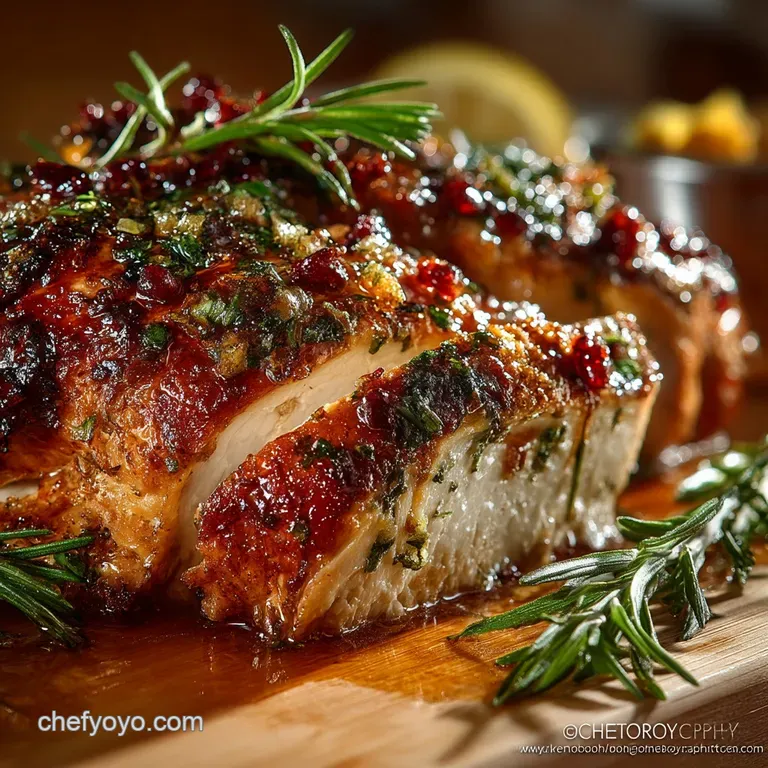
Mastering Moisture: The Essential Prep for a Legendary Roast
If you are tired of serving a beautifully roasted bird that is frustratingly dry inside, then incorporating the step of a comprehensive Turkey Brine into your holiday preparations is non-negotiable.
Brining is the single most effective method for guaranteeing a beautifully juicy, Moist Turkey . The process works by drawing saltwater into the meat fibers through osmosis.
The dissolved salts slightly alter the protein structure of the meat, allowing the muscle fibers to retain moisture better during the high heat cooking process. This crucial preparation elevates the entire standard of your Holiday Turkey , turning a common roast into a truly memorable event.
Beyond Salt: The Power of Aromatic Infusion
While hydration is the primary mechanical function of a brine, the true magic of the process lies in flavor delivery. A simple saltwater bath will moisten the bird, but adding fragrant aromatics ensures that your centerpiece is infused with deep, complex notes that reach the very core of the meat.
Our chosen Herb and Citrus Turkey Brine uses a sophisticated combination of fresh produce and pungent herbs that permeate the skin and muscle. This foundational step is why we consider this blueprint the Best Turkey Brine —it addresses both texture and flavor simultaneously.
The Essential Difference Between Wet and Dry Brining
There are two common paths to achieving a perfectly seasoned bird: wet brining and dry brining. Wet brining, which this comprehensive guide details, involves fully submerging the turkey in a liquid solution.
This method provides the maximum possible hydration and is ideal for infusing large quantities of flavor from spices, sugars, and herbs. The downside? It requires ample refrigeration space and a large, food safe container a logistical challenge often referred to as the "brine faff." In contrast, dry brining involves rubbing the turkey with a salt based seasoning blend, which is much less cumbersome but focuses more on seasoning and crispy skin development than pure water retention.
For maximum moisture and deeply integrated flavor, however, the traditional wet Turkey Brine reigns supreme.
Demystifying the Turkey Brine Process
The complexity of the Turkey brine recipe is minimal; the challenge lies in planning ahead. The entire process requires approximately 14 to 28 hours, most of which is passive cooling and brining time.
For a medium-to-large bird (around 12 16 lbs), we recommend a minimum of 12 hours, extending up to a maximum of 24 hours. This duration allows the salt sufficient time to penetrate the thick muscle fibers and initiate the flavor exchange, resulting in an incomparably juicy and flavorful outcome.
Gathering Your Flavor Foundation: The Essential Components of a Quality Turkey Brine
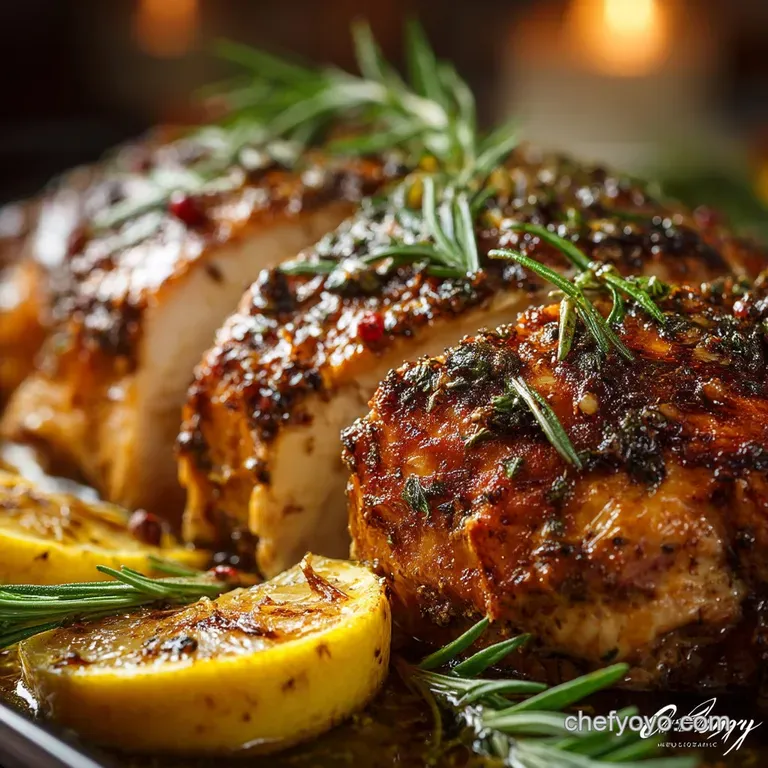
Creating the foundation for the ultimate roast requires attention to the specific Turkey brine ingredients and adherence to a reliable Turkey brine ratio .
This mixture uses hot liquid to dissolve the salt and sugar and steep the aromatics, which is then diluted with cold water to ensure safety and temperature control.
The Aromatic Ensemble: Selecting Fresh Herbs and Zest
The fragrant core of our Herb and Citrus Turkey Brine comes from high-quality, fresh produce. For this solution, you will need to quarter one large fresh orange and one large fresh lemon the zest and oils are vital for brightness.
Complementing the citrus are classic poultry herbs: a large bunch of fresh sage (roughly 30 grams) and six sprigs of fresh rosemary, slightly crushed to release their oils. We round out the profile with six cloves of smashed garlic (no need to fully peel), two tablespoons of whole black peppercorns, and four dried bay leaves.
Using fresh herbs is highly recommended, as their potency transfers far more effectively than dried alternatives.
Sourcing the Correct Salt Type (and Why It Matters)
The effectiveness of any Turkey Brine hinges entirely on the salt. For this recipe, we specify one cup (240 grams) of Kosher Salt. It is crucial not to substitute fine table salt, as its smaller grain size means one cup of table salt contains roughly double the amount of sodium as one cup of Kosher salt, potentially resulting in an unpalatably salty bird.
Beyond the salt, we incorporate a half cup of packed light brown sugar (100 grams). The sugar serves two purposes: balancing the saltiness and, more importantly, aiding in the caramelization of the skin during roasting, yielding that desired deep mahogany color.
Necessary Kitchen Tools for Brine Preparation
While the steps for this Easy Turkey Brine are straightforward, managing the sheer volume of liquid requires specific equipment. You will need a large stockpot, ideally eight quarts (7.5 Litres) or larger, to prepare and infuse the concentrate.
Most importantly, you need a food safe brining vessel large enough to fully submerge a 12 to 16-pound turkey and the liquid a large, clean cooler, a dedicated brining bucket, or an extra large oven bag will suffice.
Finally, a crucial safety tool is a reliable kitchen thermometer, necessary for confirming the brine temperature before the turkey is added.
Related Recipes Worth Trying
- Creamy Spinach Turkey Meatballs in Silky Parmesan Sauce — Upgrade your weeknight meal with these Creamy Spinach Turkey Meatballs Lean turkey stays moist beneath a luscious homemade cream sauce A proper comfort food...
- Sunshine on a Tortilla Ultimate California Turkey Club Wraps — Ditch the dry sandwich These vibrant California Turkey Club Wraps upgrade the classic with herby aioli and creamy avocado Perfect healthy turkey wraps for lunch
- The Ultimate Christmas Dinner Roast Turkey All the Trimmings — Dreaming of the perfect Christmas dinner This roast turkey recipe with stuffing gravy crispy potatoes is inspired by classic British traditions Get the recipe
Crafting the Solution and Safely Submerging Your Turkey
The construction of the brine is a two-phase process: first, extracting the potent flavors in a hot concentrate, and second, ensuring the solution is perfectly chilled for food safety.
Phase One: Extracting Maximum Flavor from Aromatics
Begin by creating the brine concentrate. In your large stockpot, combine one quart (one Litre) of water with the specified amounts of Kosher salt and light brown sugar. Bring this mixture to a rolling boil over high heat, stirring continuously until all salt and sugar granules are completely dissolved.
Once dissolved, immediately remove the concentrate from the heat. This is the moment to add your entire aromatic ensemble: the quartered citrus, fresh herbs, smashed garlic, peppercorns, and bay leaves. Allow this potent mixture to steep, uncovered, for ten minutes.
This short infusion time maximizes the flavor transfer into the liquid.
Ensuring Food Safety: Rapid Brine Cooling Protocol
Food safety dictates that poultry must never be placed in liquid warmer than 40°F (4°C). To accelerate the cooling process efficiently, pour the remaining three quarts (2.8 Litres) of ice-cold water directly into the steeped concentrate. Stir thoroughly. This dilution rapidly drops the temperature.
Use your kitchen thermometer to confirm the brine is entirely cold, ideally below the critical 40°F mark. Skipping this crucial cooling step can create a hazardous environment for bacteria growth, making this requirement non-negotiable in the Turkey brine recipe .
The Big Dunk: Positioning the Turkey Correctly
Before the plunge, remove the turkey from its packaging, ensuring all giblets, organs, and the neck are removed from both cavities, then give the bird a thorough rinse under cold water.
Place the turkey into your brining vessel, ideally breast side down this positioning ensures the thickest, driest part of the bird gets maximum exposure to the salt solution. Pour the completely cooled brine, including all the herbs and aromatics, over the bird. It must be fully submerged.
If the liquid level is insufficient due to the shape of your vessel, simply top it up with a small amount of extra cold water.
Recommended Duration for Brining Different Sized Birds
For the 12 to 16-pound turkey catered to by this Turkey brine ratio , the recommended brining time is 12 to 24 hours. If your turkey is smaller (say, 8 to 10 pounds), opt for the shorter end of that window, around 12– 16 hours, to prevent the meat from becoming too salty.
If you are preparing a massive 20+ pound bird, you may extend the time closer to the full 24 hours, ensuring the salt has adequate time to penetrate the dense structure.
Next Steps and Flavor Customization for Your Feast
The brining process doesn't end when the clock runs out; the post brine preparation is equally critical for achieving that perfect, crispy skin and overall flavor balance.
Post Brine Prep: Rinsing and Patting Dry for Crispier Skin
Once the brining time is complete, remove the turkey from the liquid and discard the brine and all its contents never reuse brine. Rinse the turkey thoroughly, both inside and out, under cold running water to remove any residual surface salt and herbs.
The most vital step that follows is patting the bird entirely dry with kitchen paper towels. A dry surface is the golden rule for achieving crisp skin; any surface moisture turns to steam in the oven, leading to a rubbery texture.
For an even better result, place the dry turkey uncovered back in the refrigerator for a few hours (or even overnight) to allow the skin to air-dry further before roasting.
Scaling Down: Adapting the Brine for Chicken or Breast Roasts
The beauty of this aromatic base is its versatility. You can easily adapt this classic Turkey brine recipe for smaller poultry cuts. For a whole chicken (3 4 lbs), simply scale the liquid and ingredients down by half and reduce the brining time significantly to about 6 to 8 hours.
If you are preparing a boneless turkey breast, only a quarter of the recipe may be necessary, and the time should be reduced to 4 to 6 hours, as the density is lower and the salt penetrates much faster.
Advanced Tip: Utilizing Pre-Brined Birds (and How to Adjust)
It is crucial to check the label of your turkey. If the bird is labeled "Kosher," "enhanced," or "self basting," it has already been treated with a saline solution. Using this heavy wet Turkey Brine on a pre-salted bird will result in a dish that is far too salty to eat.
If you find yourself with a pre-brined turkey, skip the wet brine entirely and instead focus on surface seasonings, perhaps employing the aromatic ingredients in a butter rub placed under the skin.
Creative Swaps: Integrating Different Spices and Sugars
While our Herb and Citrus Turkey Brine is a crowd pleaser, you can easily customize the flavor profile. If you are preparing a Turkey brine for smoking , you might swap the brown sugar for a richer sweetener like molasses or dark maple syrup, which creates a better surface for smoke absorption and bark development.
For a savory twist, exchange the citrus and traditional herbs for dried chillies (Guajillo or Ancho), cumin seeds, and a few cloves for a vibrant, Mexican inspired seasoning. Alternatively, using honey instead of brown sugar provides a cleaner, subtly floral sweetness.
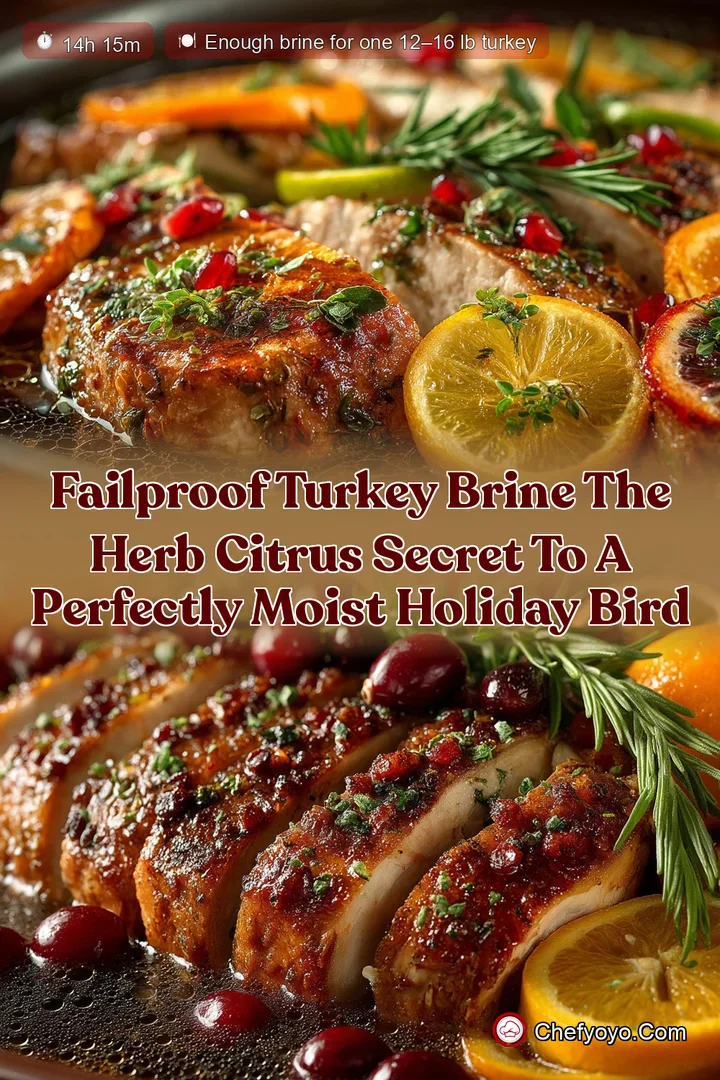
Recipe FAQs
How long can I leave the bird in the Turkey Brine before it gets too salty?
For a standard 12 16 lb turkey, 24 hours is the absolute maximum soaking time. Any longer, and the meat will begin to “cure,” resulting in a rubbery, almost ham-like texture, which is definitely not what you want for your proper cracking roast dinner.
If you are working with a smaller bird (under 10 lbs), stick strictly to 12 16 hours to ensure it doesn't become overwhelmingly salty.
If I use a wet brine, how do I stop the skin from being flabby and chewy?
This is the greatest culinary faff of the wet brine process, but the secret is all in the drying. After removing the turkey from the liquid, rinse it thoroughly and then pat the entire surface bone dry with kitchen paper towels this step is non-negotiable!
For truly superb, crackling skin, leave the turkey uncovered in the refrigerator for 4 8 hours after drying. This crucial air-drying period removes surface moisture, guaranteeing a beautifully golden and crispy result.
Can I use standard table salt instead of Kosher salt in this Turkey Brine recipe?
Absolutely not and skipping this advice would be a culinary disaster! Standard fine table salt (iodized) is significantly denser than coarse Kosher salt.
If you substitute cup-for-cup, the resulting brine will be far too potent, guaranteeing an inedible, over salted bird. If you must substitute, use coarse sea salt at the same volume, or weigh out 240g of any suitable coarse salt.
My fridge is tiny! What’s the easiest way to brine a huge turkey when space is tight?
Finding fridge space for a full bucket is the bane of every holiday chef. The best alternative is using a large, clean, food grade cooler (or chilly bin).
Place the turkey and the cooled brine inside, then fill the remaining space with frozen two-litre bottles of water or large ice packs. Ensure you check the temperature every 8 hours to confirm it stays below the food safety limit of 40°F (4°C).
Do I need to rinse the turkey after brining, and should I add seasoning before roasting?
Yes, always rinse! A quick but thorough rinse removes excess salt and aromatics clinging to the surface, preventing an overly salty flavour in the final product. Discard the spent brine immediately after rinsing.
Because the brine has already penetrated the meat with salt, avoid adding salt or salty rubs before roasting. You can add pepper, butter, or dried herbs on the skin, but keep any additional sodium seasoning off until the carving stage.
Best Herb And Citrus Turkey Brine
Ingredients:
Instructions:
Nutrition Facts:
| Calories | 563 kcal |
|---|---|
| Protein | 3.8 g |
| Fat | 7.1 g |
| Carbs | 21.2 g |
| Fiber | 5.1 g |
| Sodium | 338 mg |
