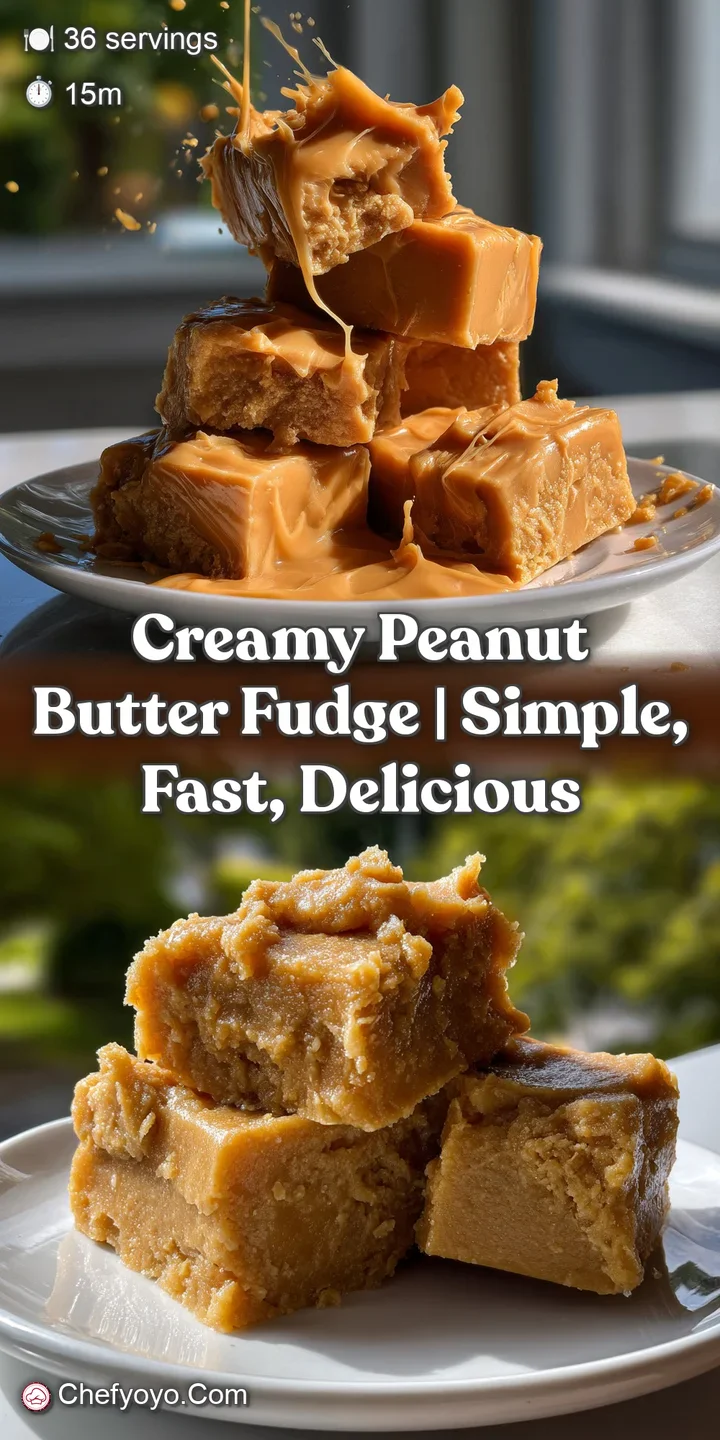
Creamy Peanut Butter Fudge: 15-Minute Perfection
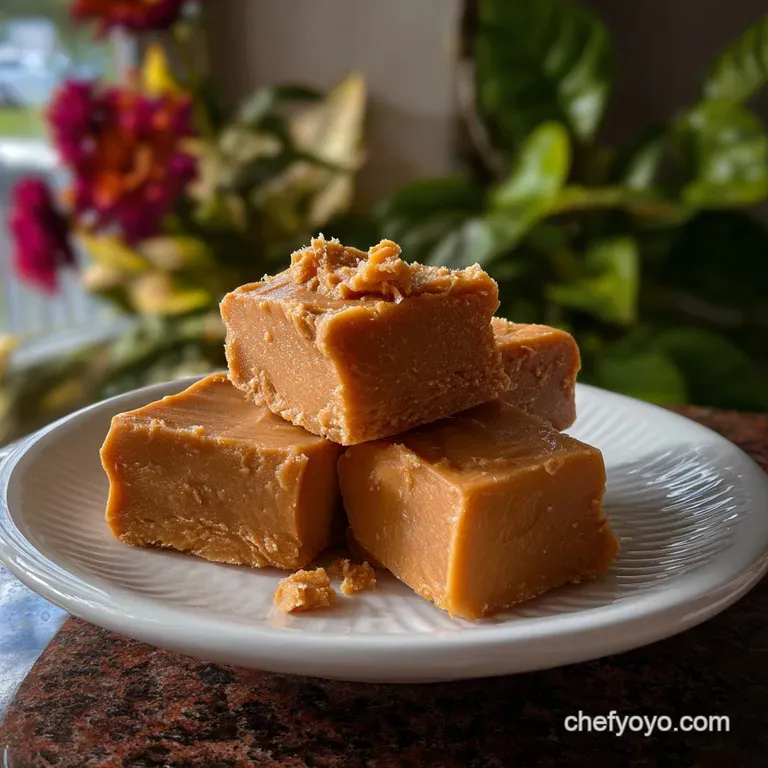
- Effort/Time: Low-effort, 15 minute assembly.
- Flavor Hook: Deeply roasted nuttiness balanced by aggressive salinity and semi-sweet chocolate.
- Perfect for: Last-minute holiday gifting, grab-and-go treats, or make-ahead dessert platters.
- Achieving Velvety Texture and Structural Stability in Minutes
- The Science of Fast-Set Lipid Emulsions
- Thermal Requirements and Yield Metrics
- The Chemistry of Concentrated Milk and Peanut Solids
- Essential Tools for Temperature Management
- Precision Execution for a Flawless Set
- Why Your Fudge Breaks or Remains Gritty
- Architecture for Flavor Customization
- ⚗️ The Scaling Lab: The Physics of Quantity
- Preservation of Moisture and Crystalline Structure
- Optimization of Palate Sensation and Portioning
- Recipe FAQs
- 📝 Recipe Card
Achieving Velvety Texture and Structural Stability in Minutes
There is nothing worse than spending money on premium ingredients only to end up with a grainy, oil-slicked disaster that shatters when you try to slice it. Most home cooks have experienced the "seized fudge" nightmare, where the fat separates from the sugar, leaving you with a gritty mess that feels like wet sand on the tongue.
This textural failure usually stems from a breakdown in the lipid-to-sugar syrup ratio, turning a potentially luxurious treat into an expensive waste of pantry staples.
I destroyed at least five batches of fudge during my early years of blogging because I refused to respect the thermodynamics of cooling. I used to think I could rush the process by sticking a piping hot pan directly into the freezer, only to realize the thermal shock caused massive sugar crystals to form.
It took me years of testing to realize that the secret to that "melt-in-your mouth" finish isn't about how much you stir, but how you manage the moisture-to-fat ratio.
The scientific revelation here lies in the Protein Stabilization provided by the condensed milk. By using a pre-emulsified sugar solution, we bypass the volatility of boiling sugar to 235°F (112°C), ensuring the peanut butter fudge achieves a velvety, uniform crumb.
This recipe relies on the interaction between peanut solids and concentrated milk proteins to lock in moisture, resulting in a fudge that is both firm enough to hold its shape and soft enough to yield under the slightest pressure.
The Science of Fast Set Lipid Emulsions
- Maillard Synergy: The pre-caramelized sugars in the Eagle Brand Sweetened Condensed Milk amplify the roasted notes of the peanut solids.
- Lipid Encapsulation: Mixing the fats at a controlled temperature prevents oil separation, keeping the texture homogenous.
- Sugar Crystallization Control: The high glucose content in the milk prevents large sucrose crystals from forming, ensuring a smooth mouthfeel.
- Hygroscopic Balancing: The 1/4 tsp of fine sea salt suppresses bitter notes in the nuts while drawing out the latent sweetness of the dairy.
Thermal Requirements and Yield Metrics
| Metric | Value |
|---|---|
| Prep Time | 10 minutes |
| Cook Time | 5 minutes |
| Total Time | 15 minutes |
| Yield | 36 servings |
| Target Setting Temp | 40°F (4°C) |
The Chemistry of Concentrated Milk and Peanut Solids
Selecting your elements is about more than just grabbing what's on sale; it's about understanding the moisture content of your fats and the protein density of your binders. For this peanut butter fudge, we are looking for high stability ingredients that won't break under mild heat.
- 16 oz Jif Creamy Peanut Butter: Why this? High stabilizer content prevents oil separation during the melting phase.
- 14 oz Eagle Brand Sweetened Condensed Milk: Why this? Provides a concentrated sugar protein matrix for structural integrity.
- 1 tsp Pure Vanilla Extract: Adds aromatic complexity through vanillin molecules.
- 1/4 tsp Fine Sea Salt: Manages osmotic pressure within the fat globules.
- 1/2 cup Ghirardelli Semi Sweet Chocolate Chips: High cocoa butter content ensures a smooth melt for the marbling.
- 1 tsp Maldon Flaky Sea Salt: Provides a textural "crunch" and immediate sodium hit to contrast the sugar.
| Ingredient | Chemical/Physical Role (Science) | The Pro Secret (Why This Matters) |
|---|---|---|
| Sweetened Condensed Milk | Casein protein stabilization and sugar saturation | Prevents graininess by inhibiting large crystal growth |
| Creamy Peanut Butter | Lipid suspension and protein structure | The fat content provides the "snap" when chilled |
| Sea Salt | Flavor suppression and enhancement | Blocks "bitter" receptors to make the nuttiness pop |
Essential Tools for Temperature Management
You don't need a professional laboratory, but precision tools prevent the "hot spots" that cause this peanut butter fudge to seize.
- Lodge 2 Quart Cast Iron Saucepan: Provides superior heat retention and distribution.
- USA Pan 8x8 Square Cake Pan: The aluminized steel and corrugated surface allow for even airflow and quick chilling.
- Rubbermaid Silicone Spatula: over High heat resistance ensures you can scrape the bottom of the pan to prevent scorching.
- Reynolds Kitchens Parchment Paper: Essential for creating a "sling" to lift the fudge without it sticking or breaking.
Precision Execution for a Flawless Set
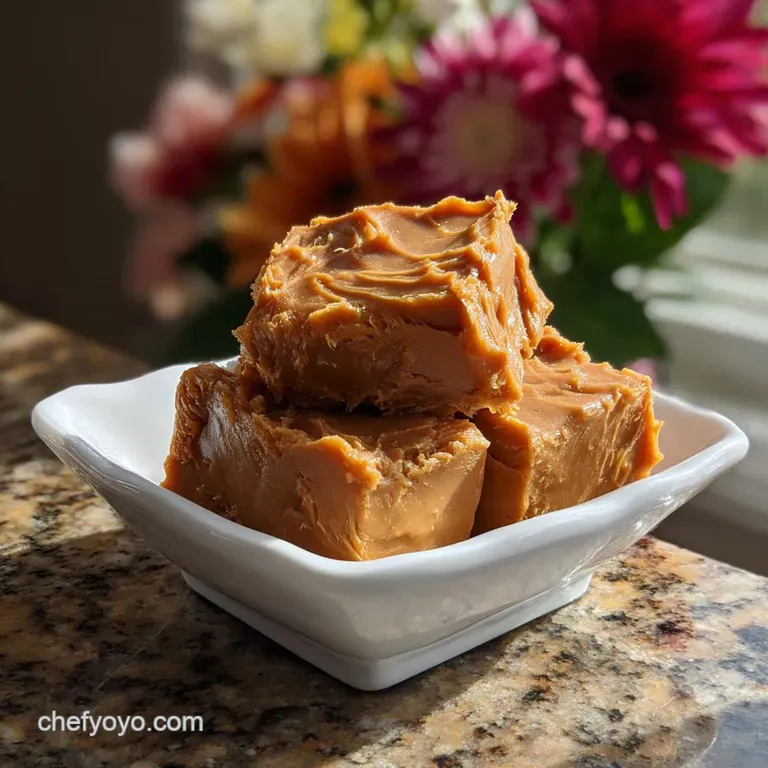
- Line the USA Pan 8x8 with parchment paper, leaving 2 inches of overhang until the edges are secure and flat.
- Combine 16 oz Jif Creamy Peanut Butter and 14 oz Eagle Brand Sweetened Condensed Milk in the Lodge Saucepan.
- Heat on low for 4 minutes, stirring constantly until the mixture is glossy, smooth, and smells like toasted nuts.
- Remove from heat immediately until the bubbling at the edges subsides completely.
- Fold in 1 tsp vanilla extract and 1/4 tsp fine sea salt until the liquid is fully incorporated and the sheen is uniform.
- Spread the mixture into the prepared pan until the surface is level and reaches all four corners.
- Sprinkle 1/2 cup chocolate chips over the top until they begin to soften and glisten from the residual heat.
- Swirl a knife through the chips until a marbled pattern emerges across the entire surface.
- Press 1 tsp Maldon Flaky Sea Salt gently into the top until the flakes are partially embedded in the fudge.
- Chill for 2 hours in the refrigerator until the center feels firm and resistant to a light finger press.
Chef's Note: If your fudge looks "oily" while mixing, add 1 tablespoon of the condensed milk and stir vigorously. This re-establishes the emulsion by adding more water based proteins to trap the excess oil.
Why Your Fudge Breaks or Remains Gritty
Success with this peanut butter fudge depends on controlling the rate of cooling and the stability of the emulsion. If the lipids separate, the texture will be greasy rather than velvety.
Why Your Fudge Is Too Soft
If the mixture remains tacky after two hours of chilling, the moisture content was likely too high or the temperature didn't reach the required threshold to "bond" the milk proteins and peanut fats. This usually happens if you use an "all-natural" peanut butter that lacks stabilizers.
| Problem | Root Cause | The Fix | Pro Protocol |
|---|---|---|---|
| Grainy Texture | Sugar crystallization | Don't scrape the sides of the pan too hard | Use a wet pastry brush to wash sugar crystals off the sides |
| Oil Separation | Overheating the fats | Keep heat on the lowest setting | If it breaks, whisk in a teaspoon of room temp milk |
| Tacky/Sticky | High humidity or low-fat | Chill for an extra 1 hour | Always use full fat condensed milk, never fat-free |
Architecture for Flavor Customization
While the base recipe is technically optimized, you can adjust the inclusions without compromising the structural integrity of the peanut butter fudge. If you’re looking for other high fat treats to gift alongside this, consider my Butter Cookie Recipe which uses a similar ratio of fat-to-flour for that classic crumbly texture.
| Original Ingredient | Substitute | Why It Works |
|---|---|---|
| Creamy Peanut Butter | Almond Butter (no-stir) | Similar fat-to-protein ratio. Note: Results in a milder, more floral flavor profile. |
| Semi sweet Chips | Dark Chocolate (70%) | Cuts the sweetness with higher tannin levels. |
| Sweetened Condensed Milk | Coconut Condensed Milk | Vegan friendly binder. Note: Adds a distinct tropical undertone and slightly softer set. |
Chocolate Marble Twist
To deepen the contrast, melt the chocolate chips separately with a tablespoon of the peanut butter before swirling. This ensures a "fudgier" marble rather than discrete chocolate chunks.
Crunchy Texture Add-in
Fold in 1/2 cup of crushed pretzels or roasted peanuts after removing from heat. This increases the "solid" ratio, making the peanut butter fudge denser and more satisfying.
⚗️ The Scaling Lab: The Physics of Quantity
When you decide to double this peanut butter fudge for a large gathering, you cannot simply multiply every factor by two and expect the same results.
- Thermal Mass & Surface Area: A double batch in a standard pot has a much larger thermal mass. The center will stay hot significantly longer than a single batch, which can cause the milk proteins to scorch or the vanilla to evaporate before it can be fully incorporated. Use a wider pot (like a Lodge Dutch Oven) to increase surface area.
- The Evaporation Paradox: In a larger volume, less water evaporates per minute of heating. You may need to cook the mixture for an extra 2 minutes to ensure enough moisture is removed for a firm set.
- Flavor Saturation (Salt): When doubling, scale the fine sea salt to only 1.5x (3/8 tsp). Salt's impact on the palate is non-linear; 2x salt can often taste 3x as salty in a dense lipid environment like this.
- Carry Over Heat: A larger mass of fudge will melt the chocolate chips much faster. Wait an additional 3 minutes before topping with chips if you want them to hold their shape rather than melting into a puddle.
Preservation of Moisture and Crystalline Structure
Because this is an emulsion based treat, it is highly sensitive to the air. Oxygen will dry out the edges, turning a velvety treat into a crumbly one within 24 hours. Just as with a Garlic Butter recipe, the high fat content means it will absorb odors from the fridge if not sealed properly.
- Fridge: Store in an airtight container with parchment paper between layers for up to 2 weeks.
- Freezer: Wrap individual squares in plastic wrap, then place in a heavy duty freezer bag. It stays stable for 3 months.
- Reheating: Do not microwave. Allow the peanut butter fudge to sit at room temperature for 15 minutes before serving to let the fats soften slightly.
💡 ZERO WASTE PHILOSOPHY: Don't discard the crumbs at the bottom of the pan! Transform: Toss them into a blender with vanilla ice cream for a "Fudge Ripple" milkshake.
Science: The concentrated fats and sugars act as a natural thickener and flavor bomb for the dairy base.
Optimization of Palate Sensation and Portioning
To get those clean, professional edges, use a hot knife. Run your blade under boiling water, wipe it dry, and make one decisive cut. Repeat the cleaning process between every single slice. This prevents the fudge from dragging and tearing the delicate crumb.
This best peanut butter fudge recipe is exceptionally rich, so I recommend cutting it into 1 inch squares. The 36 serving yield is designed for high intensity flavor delivery in small doses.
If you're building a dessert board, pair these squares with tart green apples or a sharp cheddar cheese to provide an acid or savory counterpoint to the dense, sweet lipids. Trust me, the contrast between the velvety peanut butter fudge and a crisp apple is the ultimate sensory payoff.
- Myth
- You must boil the mixture to a specific temperature.
- Truth
- Because we are using condensed milk, the "cooking" is simply to homogenize the ingredients and activate the milk proteins. No thermometer is required.
- Myth
- Natural peanut butter works just as well.
- Truth
- Natural varieties often lack the emulsifiers (like palm oil or mono and diglycerides) needed to keep the fudge from leaking oil as it sets. Stick to the commercial "no-stir" brands for this specific application.
Whether you're making this as a quick fix treat or the star of your holiday platter, the science remains the same: respect the emulsion, control the heat, and never skip the salt. This peanut butter fudge is the ultimate proof that sometimes, the simplest methods yield the most sophisticated results.
Recipe FAQs
how to make peanut butter fudge?
Melt peanut butter and condensed milk gently; spread and chill. This fast method relies on the concentrated milk proteins to stabilize the fat matrix. Ensure you use commercial creamy peanut butter for best results.
how to make peanut butter fudge with condensed milk?
Condensed milk acts as the sugar and protein binder. It provides a pre-emulsified, high sugar solution, eliminating the need for temperature sensitive boiling stages common in traditional fudge. If you enjoyed mastering the stable emulsion here, see how the same principle works in controlling texture for our The Flaky Foolproof AllButter Pie Crust Recipe The Classic.
how to make peanut butter fudge in the microwave?
Microwave methods increase the risk of seizing and oil separation. The rapid, uneven heating creates hot spots that instantly denature the proteins, causing texture failure. This recipe avoids the microwave by using low, consistent stovetop heat.
how to make peanut butter fudge with icing?
Myth: Using pre-made icing creates the same dense texture. Reality: Icing is primarily powdered sugar and liquid; it lacks the high concentration of milk solids necessary for the fudge structure. This recipe requires condensed milk for structural integrity.
how to make peanut butter fudge with marshmallow fluff?
Marshmallow fluff provides aeration rather than density. Fluff, being mostly meringue, introduces excessive air and moisture, resulting in a lighter, fluffier candy, not true dense fudge. Fluff is better suited for lighter treats, like a peanut butter dessert paired with something crispy, similar to the textures achieved in Fresh Spring Rolls with Peanut Sauce Ultimate Satay Dipping.
Should I use salted or unsalted butter?
Use unsalted butter for maximum recipe control. Salted varieties vary widely in sodium content, affecting the final flavor profile and the chemical interaction with the sugar matrix. Unsalted butter allows you to precisely balance the sweetness using the added flaky sea salt.
Why is my fudge grainy after setting?
Cooling too rapidly causes large sucrose crystal formation. Temperature shock forces the sugar molecules out of solution unevenly, creating a gritty mouthfeel instead of a smooth emulsion.
- Use room temperature mixing bowls
- Stir until just glossy, then remove from heat
- Chill slowly on the counter, then refrigerate
Best Peanut Butter Fudge Recipe
Ingredients:
Instructions:
Nutrition Facts:
| Calories | 120 calories |
|---|---|
| Protein | 3.7g |
| Fat | 7.8g |
| Carbs | 10.3g |
| Fiber | 0.8g |
| Sugar | 8.3g |
| Sodium | 84mg |
