Bonein Rib Roast: Reverse-Sear Standing Rib Roast
Introduction & Overview
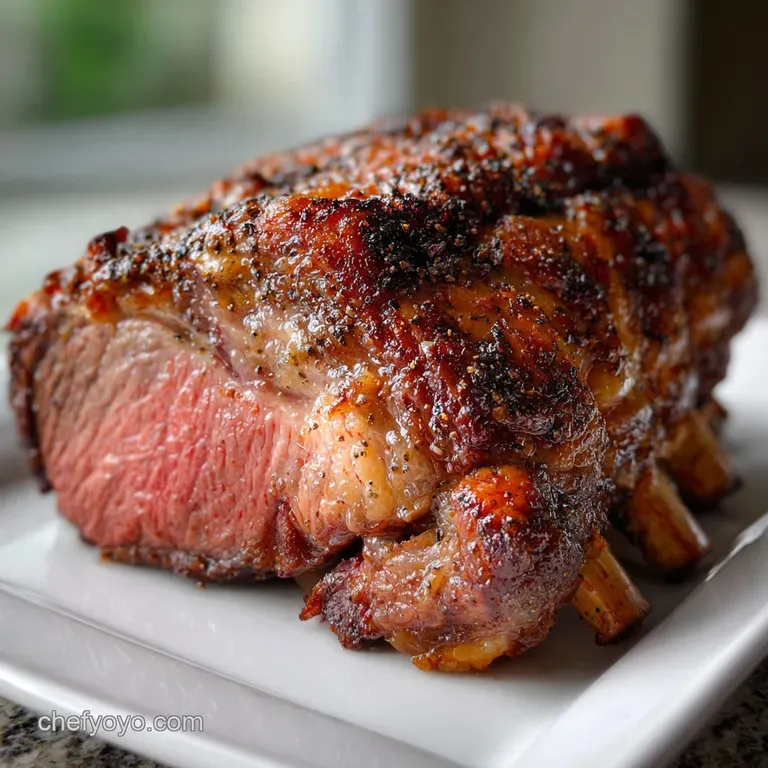
BoneIn Rib Roast
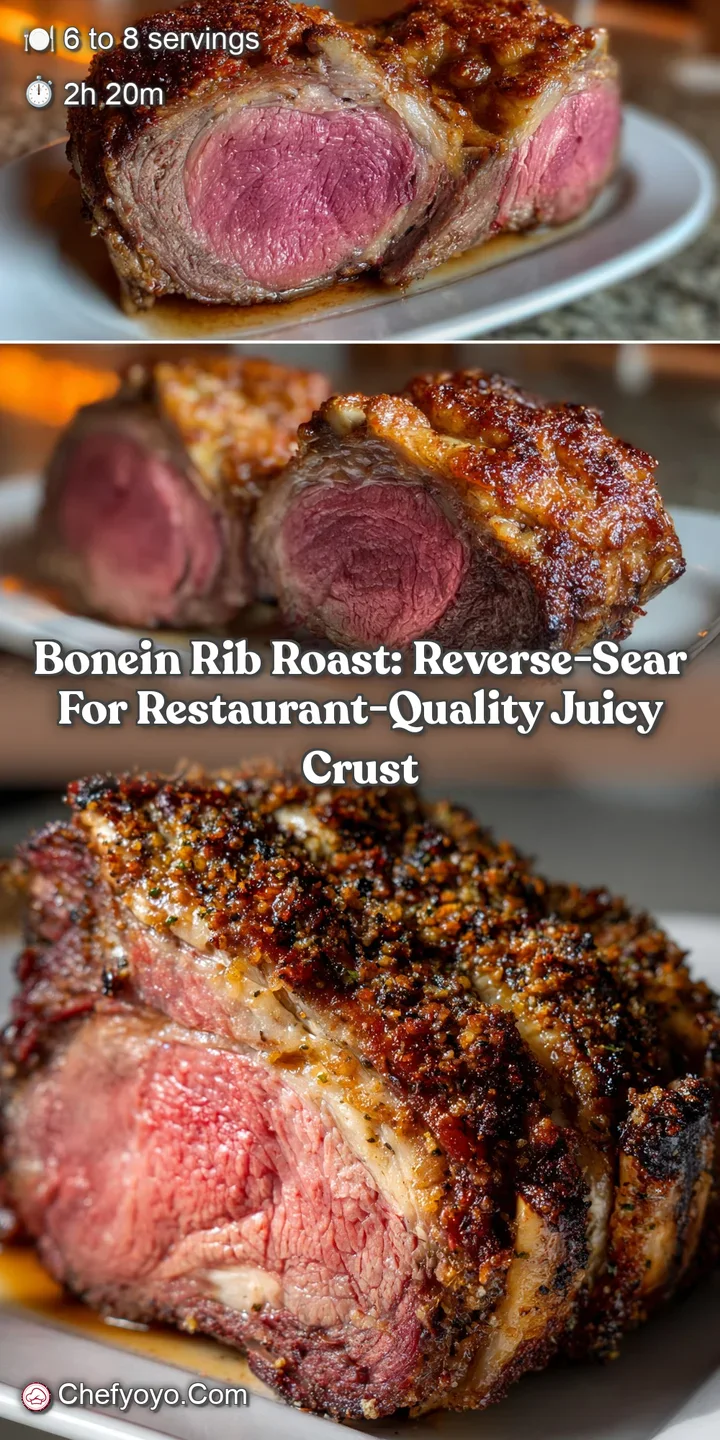
fills the house with a deep, nutty aroma as the crust caramelizes and the fat crisps; the sound of that crust as you slice it is ridiculously satisfying.
I love how the meat stays silky and juicy near the bone, while the exterior gives you that shatter crust moment.
This BoneIn Rib Roast is a lifesaver when you want a show stopping centerpiece without pretending you're a restaurant chef.
It’s surprisingly hands off: a little patience, a thermometer, and the reverse sear trick get you salon level results at home.
So let's crack on. Below is the full method, tips I learned the hard way, and exact timings for a 5 lb (2.3 kg) roast so you can nail it the first time.
Why This Recipe Works
BoneIn Rib Roast
loves slow, gentle heat first and then a hot finish.
The reverse sear method lets the internal temperature climb evenly, so you get a consistent pink from edge to bone while rendering fat slowly.
Fat equals flavor. As the roast warms, collagen starts to relax and melt, keeping the meat juicy.
Then the final high heat creates Maillard browning those dark mahogany bits that smell like pure dinner triumph.
Introduction Detail 1
Using lower oven temps melts the fat without overcooking the outer layer.
And when you finish at high heat, the crust gets that crunchy, toasty note that balances the buttery interior.
Introduction Detail 2
I like rubbing with a mix of garlic, rosemary, and Dijon because it clings and toasts beautifully.
The mustard also helps the herbs stick and gives an extra umami lift when caramelized.
Ingredients & Substitutions (for a Bone-In Rib Roast)
BoneIn Rib Roast
(the ingredient list below is scaled for a 5 lb / 2.3 kg roast).
If your roast is a different weight, scale salt and seasoning proportionally (see salt note).
-
1 standing bone-in rib roast (~5 lb / 2.3 kg), frenched or un-frenched
- Substitute: ask butcher for a tied standing rib roast if you want easier carving
-
2 tbsp (30 ml) olive oil
- Substitute: avocado oil or light vegetable oil
-
2 tbsp (30 g) kosher salt
- Substitute: table salt (use about half the kosher amount)
-
2 tsp freshly ground black pepper
- Substitute: 1.5 tsp coarse ground pepper
-
1 tbsp Dijon mustard (optional)
- Substitute: 2 tbsp olive oil (if you dislike mustard)
-
4 cloves garlic, minced
- Substitute: 1 tsp garlic powder (use sparingly)
-
2 tbsp fresh rosemary, chopped
- Substitute: 1 tsp dried rosemary
-
2 tbsp fresh thyme leaves
- Substitute: 1 tsp dried thyme
-
2 tbsp (28 g) unsalted butter, softened (optional for finishing)
- Substitute: ghee or extra olive oil
-
Vegetables for pan: onion, carrots, celery
- Substitute: shallots and parsnips (if you like sweeter jus)
-
1 cup (240 ml) low-sodium beef stock
- Substitute: low-sodium chicken stock or water + bouillon cube
-
1/2 cup dry red wine (optional)
- Substitute: extra stock or a splash of balsamic for acidity
Chef's Note: If you dry-brine overnight, reduce the sprinkle of finishing salt. The roast will already be seasoned through.
| Ingredient | Substitute |
|---|---|
| Dijon mustard | Olive oil |
| Fresh herbs | Dried herbs (1/3 volume) |
| Kosher salt | Table salt (half amount) |
| Red wine | Extra stock or balsamic splash |
Ingredients Detail 1
If you dry-brine with kosher salt, the roast browns better and the interior seasons through.
But if you forget to dry-brine, just salt well 1–
2
hours before cooking and you’ll still be fine.
Ingredients Detail 2
Fresh herbs toast and release aromatic oils during the sear.
If you must use dried, crush them in your palm so they wake up before applying.
step-by-step Instructions for a Bone-In Standing Rib Roast (Reverse Sear)
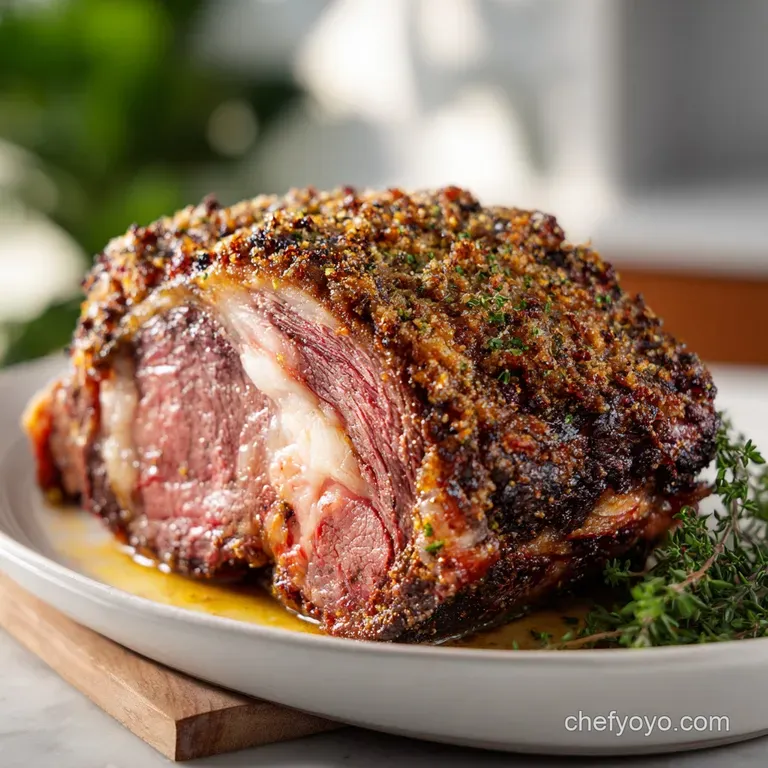
BoneIn Rib Roast
prefers patience. Start early and let your thermometer be your best friend.
Follow these numbered steps for a foolproof reverse sear.
Instructions Detail 1
-
(Optional) Dry-brine overnight: Pat roast dry. Sprinkle kosher salt evenly (about 1 tsp per pound Diamond Crystal; 1.5 tsp per pound Morton). Place on a rack, uncovered, in the fridge 12–
24
hours.
- The surface will firm and the salt will draw moisture out then reabsorb, improving flavor and browning.
-
Bring to room temp: Remove roast 1–
2
hours before cooking. Pat dry again with paper towels. Preheat oven to 275°F (135°C).
- Warm meat cooks more evenly; cold centers make timing unpredictable.
-
Season: Rub roast with oil then spread Dijon if using. Press garlic, rosemary, thyme, and pepper into the surface. Tie bones if loose.
- You want the rub to form a thin paste that clings; this will brown into a glossy crust.
-
Low-temperature roast: Place roast fat-side up on a rack over a roasting pan with veggies under to catch drippings. Insert instant read thermometer into the thickest part, not touching bone. Roast at 275°F until internal temp is 10 15°F below desired final temp (see timing below).
- Expect about 20– 25 minutes per lb, but ovens vary. Look for an internal temp of 115°F for medium rare before sear.
-
over High heat sear: Increase oven to 500°F (260°C) or preheat a cast iron skillet until screaming hot. Sear roast 10–
15
minutes until deep mahogany crust forms and internal temp reaches final target (about 130 135°F for medium rare).
- The smell here is intoxicating caramelized, herby, savory. Watch closely; crust can develop fast.
-
Rest: Transfer to a board, tent loosely with foil, and rest 20–
25
minutes. Internal temp will rise 5 10°F.
- Resting keeps juices from running out when you slice. You’ll hear a soft sigh as the meat relaxes.
- Make pan sauce: Sauté vegetables in pan drippings, deglaze with wine, reduce, add stock, reduce, and finish with butter. Strain if you like a silky jus.
- Carve and serve: Slice between bones for single rib portions or remove bones and slice parallel for steaks. Serve with au jus or horseradish.
Instructions Detail 2
Timing chart (estimate for 5 lb roast using reverse sear):
- Roast at 275°F to 115°F internal: ~1 hr 45 min to 2 hrs
- Sear at 500°F: 10 15 min
- Rest: 20 25 min
Use the thermometer, not the clock. The roast’s shape and your oven change everything.
Chef's Tips & Common Mistakes
BoneIn Rib Roast
benefits most from a thermometer and patience.
Trust the temp, not the timer, and you’ll avoid dry edges.
- Mistake 1: Searing too early. If you sear before the low roast, you’ll have uneven doneness. Fix: Reverse sear as instructed.
- Mistake 2: Thermometer touching bone. This reads high and can ruin timing. Fix: Insert into the thickest part of the meat, level with the bone but not touching it.
- Mistake 3: Not resting. Slice too soon and juices run out. Fix: Tent for 20– 25 minutes to let juices redistribute.
Bold tip: Use a probe thermometer with alarm so you can step away without losing your nerve.
Storage & Freezing
BoneIn Rib Roast
fridge life: cooked roast keeps 3 4 days in the refrigerator.
Store in airtight container or tightly wrapped in foil or plastic to prevent drying.
Freezing instructions:
- Cool completely, slice if you like, then wrap tightly in plastic and place in freezer bags or vacuum seal.
- Freeze up to 3 months for best quality. Label with date.
Reheating (best method for retaining juiciness):
- Preheat oven to 250°F (120°C). Place roast or slices on a rack in a tray, cover loosely with foil.
- Heat until internal temp reaches 120 125°F (about 20– 30 minutes for slices; longer for whole roast).
- If you want crust, finish with a quick 1 2 minute sear per side in a hot skillet or under a broiler.
- Microwave? Skip it unless you want rubbery edges.
Serving Suggestions
BoneIn Rib Roast
pairs brilliantly with rich sauces and bright sides.
Here are some combos I love.
- Classic: roasted potatoes, creamed spinach, and a silky red wine jus. Try my pan sauce steps or pair with this Brown Gravy: The Ultimate Rich and Silky Sunday Roast Recipe .
- Bright contrast: chimichurri or a tart Christmas Salad: Roasted Beets Pomegranate to cut the richness.
- Fun side: serve with a creamy corn dip for smoky sweetness ( Corn Dip: Ultimate Creamy Roasted Elote Style Recipe ).
Additional_Info Detail 1
If you want a more hands off, long resting roast, dry-brine it overnight.
It deepens flavor and gives you a crust that snaps when you cut it.
Additional_Info Detail 2
If you like the texture closer to a steak, carve between bones for single rib servings.
And if you want an alternate method, check my reverse sear primer for other cuts like the
Prime Rib Roast: Reverse Seared for Ultimate Perfection
.
This BoneIn Rib Roast will be the easiest thing that looks fancy on your table. Trust me, people will ask for the recipe and now you’ll have it.
rib roast recipe bone in oven try this once and you’ll never fear a dinner party again.
Recipe FAQs
How do I know when the roast is done?
Use an instant read thermometer and aim for internal temperatures of about 115 120°F for rare, 125 130°F for medium rare, and 135 140°F for medium. Remove the roast from the oven 5 10°F below your target temperature because carryover heat (especially near the bone) will raise the internal temperature as it rests.
Why did my standing rib roast turn out dry?
Dry roast is usually caused by overcooking, insufficient resting, or cooking at too high a temperature without the reverse sear timing. Prevent dryness by monitoring internal temperature closely, letting the roast rest 20 30 minutes, and using the reverse sear method to preserve juices and develop a crust without overcooking the interior.
Can I make this recipe with a boneless rib roast or a different cut?
Yes boneless rib roast (ribeye roast) will work and benefits from the same reverse sear approach, though cooking times will be slightly shorter without the bone. Keep in mind that the bone adds flavor and slows cooking near it, so check temperature in the thickest part for doneness rather than relying on time alone.
How long should I rest the roast before carving?
Rest the roast 20 30 minutes loosely tented with foil so juices redistribute and the internal temperature evens out. Proper resting ensures juicier slices and makes carving easier while preserving the crisp crust you developed with the sear.
How should I store and freeze leftovers?
Refrigerate leftover sliced roast in an airtight container for 3 4 days, or freeze for up to 2 3 months for best quality. For easier thawing and reheating, slice before freezing and reheat gently in a low oven (about 250°F) or sous vide to retain moisture and avoid overcooking.
My crust didn't caramelize properly what can I do to fix it?
Insufficient crust is usually caused by excess surface moisture or not finishing with a high heat sear; always pat the roast dry before seasoning. To rescue the crust, sear in a very hot cast iron pan or use the broiler for a couple of minutes, watching closely to prevent burning.
Can I make this roast vegan or replicate it for non-meat eaters?
You can't make the beef roast itself vegan, but you can recreate the flavors and presentation with a dense seitan, lentil mushroom loaf, or whole roasted portobello or king oyster "roast." Use the same herb garlic rub and a reverse sear or high heat finish to develop a flavorful crust and serve it as an
impressive plant based centerpiece.
Bonein Rib Roast
Ingredients:
Instructions:
Nutrition Facts:
| Calories | 586 kcal |
|---|---|
| Protein | 44.5 g |
| Fat | 44.3 g |
| Carbs | 3.8 g |
