Brown Sugar: Golden Treacle Tarts Recipe
- Elevating the Classic: An Ode to Molasses-Rich Sweets
- Sourcing the Essentials: Detailed Notes on Tart Components
- The Method: Constructing Your Golden Treacle Tarts
- The Chemistry of Goo: Achieving the Perfect Caramel Center
- Troubleshooting the Bake: Expert Tips for Home Bakers
- Preservation Guide: Storing Your Treacle Tarts Safely
- Optimal Pairings: Enhancing the Richness of the Butter Tart
- Recipe FAQs
- 📝 Recipe Card
Elevating the Classic: An Ode to Molasses Rich Sweets
That aroma, right? The moment that dark, sticky scent of molasses and butter hits your nose, you know magic is happening. When it comes to baking truly comforting sweets, nothing beats the deep, complex richness delivered by quality Brown Sugar . It is the absolute core of warmth in the kitchen.
I used to think treacle tarts were complicated, some mysterious British pastry only professional bakers could master. Nope. This foundational recipe for Golden Treacle Tarts is fast, shockingly easy, and uses ingredients you probably already have lurking in your pantry.
It delivers pure, gooey satisfaction without the fuss and makes the most of that incredible molasses flavor found only in true Brown Sugar .
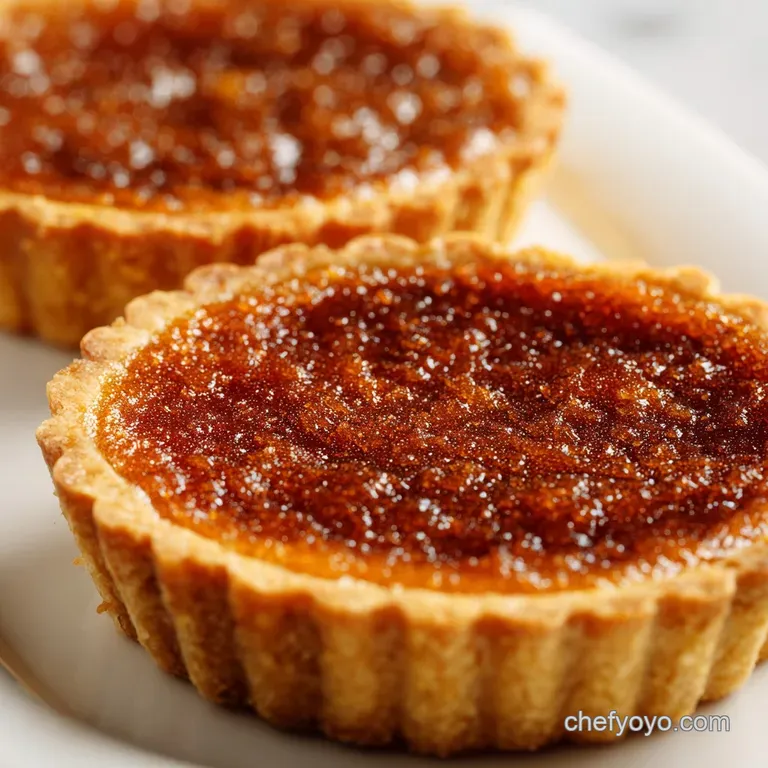
We’re going to achieve that perfect, gooey, deeply caramelized center, cradled in flaky shortcrust. This is not just a sugar tart; this recipe is my love letter to depth of flavor. Get ready for the best Brown Sugar tart experience of your life.
What Makes a Tart Truly 'Treacle'? Defining the Deep Caramel Flavor
The secret to achieving that rich, almost smoky depth, often called "treacle" flavor, lies entirely in the concentration of molasses. Light Brown Sugar has a subtle caramel note, but dark Brown Sugar is where the magic lives.
That extra molasses isn't just color; it’s moisture, acidity, and a complex mineral profile that simple white sugar can never touch. By relying entirely on dark Brown Sugar here, we create a filling that is fudgy, deeply golden, and tastes expensive even though it’s incredibly simple to prepare.
Equipment Checklist for the Perfect Flaky Pastry
Baking is chemistry, but it’s also about having the right tools. You don't need a stand mixer for this shortcrust, but a few basics are non-negotiable. Always use a standard 12 cup muffin tin; those deep wells are perfect for holding a generous amount of that sticky Brown Sugar filling.
- Standard 12 cup muffin tin (well greased)
- Rolling pin
- 4 inch (10 cm) round pastry cutter (or a drinking glass)
- Crucial: Ceramic baking beads or dried beans for blind baking
- A sturdy whisk for the filling (no need to overmix here!)
Understanding the Role of Dark vs. Light Muscovado Sugar
Muscovado sugar is simply a less refined form of Brown Sugar that retains more of its natural molasses. Dark muscovado is intensely smoky and sticky, perfect for this application if you want maximum depth. Light muscovado is milder and often has a finer texture.
If you choose to substitute all the dark Brown Sugar with muscovado, you may need to reduce the added cream slightly, as muscovado is naturally wetter. I prefer the standard packed dark Brown Sugar because it provides a reliable moisture level every single time, making the final filling texture absolutely perfect.
Sourcing the Essentials: Detailed Notes on Tart Components
The golden rule of baking is that high-quality ingredients matter, especially when the list is short. We’re making a Brown Sugar tart, so every single component must work hard. Don't skimp on the butter or the vanilla.
Swapping Molasses Based Sugars: When to Use Demerara or Turbinado
This is where bakers often go wrong, trying to substitute out the star ingredient. While Demerara and Turbinado are also unrefined sugars, they are crunchier, have a lower molasses content, and are drier.
They are great for finishing a cookie or adding texture to a streusel topping, but they are a disaster in this gooey filling. They lack the necessary moisture and acidity, and you risk a gritty, crystallized mess instead of a smooth caramel center.
Stick to packed dark Brown Sugar for the filling. If you absolutely must, you can swap a quarter of the dark Brown Sugar for light Brown Sugar for a slightly milder flavor profile.
| Ingredient | My Recommendation | Viable Substitution | Why the Substitute Works |
|---|---|---|---|
| Dark Brown Sugar | Packed, fresh | Light Brown Sugar (max 50%) | Retains moisture and molasses content. |
| Heavy Cream | Double Cream (High Fat) | Full fat Coconut Cream | Provides necessary viscosity and richness. |
| Unsalted Butter | European Style (Higher Fat) | Salted Butter (Omit the ¼ tsp added salt) | Fat is essential for flaky crust and smooth filling. |
| Lemon Juice (Fresh) | Mandatory | Apple Cider Vinegar (1/4 tsp) | Provides the acid needed to prevent crystallization. |
The Best Fats for a Tender, Shortcrust Pastry
The perfect pastry should be tender, flaky, and delicate enough to melt in your mouth, which means we must use cold, high-quality butter. Using fats like margarine or shortening will give you a crisp crust, yes, but it won’t deliver that rich, nutty flavor that complements the deep caramel notes of the Brown Sugar filling.
Keep your butter ice cold. I cube mine and pop it into the freezer for 15 minutes before I start mixing the dough.
Quality Control: Identifying Optimal Brown Sugar Freshness
A quality Brown Sugar should be soft, slightly moist, and easily packable. If you open your bag and find a rock hard block, it has dried out. While you can revive it (I share my secrets below!), starting with fresh, pliable Brown Sugar ensures accurate measuring and a consistently moist filling.
When you press it into the cup, it should hold its shape perfectly. If it crumbles loosely, it might be too dry.
The Unsung Heroes: Salt and Vanilla's Role in Balancing Sweetness
I know, I know we're making a sweet tart, so why the salt? That tiny pinch of salt in both the crust and the filling is an absolute game changer. It doesn’t make the tart salty; it acts as an amplifier, highlighting the caramel notes and preventing the deep flavor of the Brown Sugar from becoming flat.
And please, use proper pure vanilla extract. The imitation stuff gets lost entirely behind the intensity of the molasses.
The Method: Constructing Your Golden Treacle Tarts
Let’s crack on with the construction. Remember: Pastry hates heat and the filling hates air bubbles.
Preparing the Dough: Chilling and Resting Times for Maximum Tenderness
When mixing the shortcrust, your hands are too warm. I use a pastry cutter or a food processor pulsed rapidly to integrate the cold butter into the flour until it resembles coarse, pea-sized crumbs. The key is to see those little butter pieces; those are the steam pockets that will puff up and make your pastry flaky.
Once you add the egg yolk and ice water, mix only until the dough just comes together. Overworking the dough develops gluten, leading to tough, chewy tarts, which is a major crime. Chill the disc for a minimum of 60 minutes.
The Filling Fusion: Achieving a Homogeneous, Smooth Mixture
The filling is truly a dump and whisk job, which is why I love it. Melt your butter first, then let it cool slightly. In a separate bowl, lightly whisk the eggs. Add the packed dark Brown Sugar , the cooled butter, heavy cream, vanilla, salt, and lemon juice.
Whisk everything gently until combined. You might see a few minor lumps of Brown Sugar , which is perfectly fine they will melt beautifully in the oven.
The critical error here is over whisking, which incorporates too much air, causing the filling to balloon rapidly and deflate messily.
Blind Baking and Finishing the Bake Cycle
Blind baking is non-negotiable for a liquid filled tart. It sets the structure and guarantees you won't end up with a soggy bottom. Prick the pastry shells with a fork, line them with paper/foil, and fill with weights.
Bake for 10 minutes, remove the weights, and bake for another 3 minutes until the pastry looks dry and set. Now, reduce the oven to 350°F (175°C). Pour the Brown Sugar filling into the warm shells, filling them about ¾ full.
Bake for 12– 15 minutes. The tarts are done when the edges are set and golden, but the center still has a slight wobble.
The Chemistry of Goo: Achieving the Perfect Caramel Center
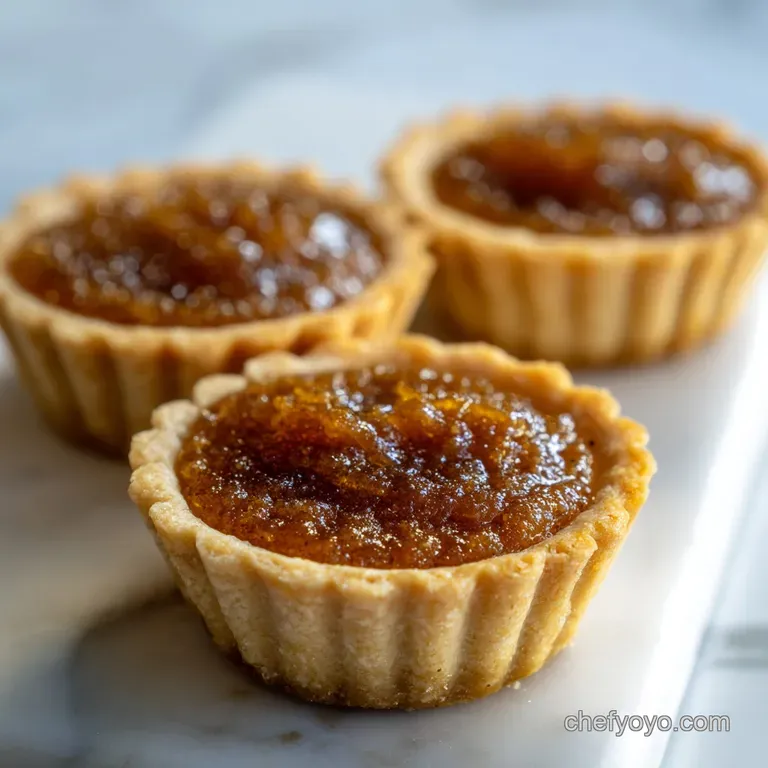
The magic of this treacle tart is the intense, gooey, but firm center, achieved thanks to the specific ratio of cream, egg, and Brown Sugar . When heated, the molasses content in the Brown Sugar liquefies and caramelizes.
The eggs act as a gentle binder, thickening the cream around the sugar without creating a dense custard. The brief, hot blind bake followed by a slightly lower temperature for the filling ensures the pastry base is fully cooked before the sugar filling sets, giving us that perfect, sticky texture we are craving.
Troubleshooting the Bake: Expert Tips for Home Bakers
I have burned, spilled, and crystallized more tarts than I care to admit, so learn from my mistakes!
The Maillard Reaction in Brown Sugar Baking
The beautiful golden color of the final filling is thanks to the Maillard reaction, sped up significantly by the molasses content in the Brown Sugar . The reaction creates hundreds of new flavor compounds.
To optimize this, ensure your oven temperature is accurate and that you are using dark Brown Sugar . If you pull the tarts out too soon, they will be pale and taste only of simple sugar.
Professional Baking Secrets for Preventing Soggy Bottoms
Soggy bottoms are the bane of my existence. This happens when the moisture from the filling seeps into the uncooked pastry before it has fully set. Solution? Blind bake until the shells are genuinely dry. Use hot baking stones or a preheated baking sheet placed underneath the muffin tin to deliver maximum heat directly to the base of the tarts. This is a technique I use for everything, including my savory Hashbrown Casserole Recipe: Ultra Crispy Cheesy Bake .
Why Did My Filling Crystallize? Preventing a Gritty Texture
A gritty texture is almost always caused by one of two things: substituting the correct Brown Sugar for something drier (like white sugar) or boiling the filling too rapidly. Remember, the lemon juice helps prevent this, but you must keep the final bake temperature moderate.
If the caramel gets too hot too fast, the sugar molecules seize up and crystalize instead of dissolving smoothly. If you suspect crystallization, you can try placing the filling bowl over a pot of simmering water (bain marie) and whisking slowly to redissolve the sugar before filling the shells.
Dealing with Over Browning Edges Mid-Bake
Sometimes, the delicate pastry edges brown before the center is set. If this happens around minute 8 of the final bake, gently tent the entire muffin tin with a piece of aluminum foil.
This deflects the direct heat away from the edges while allowing the heat inside the oven to finish setting the gooey Brown Sugar center.
Preservation Guide: Storing Your Treacle Tarts Safely
These tarts are ridiculously tempting, so sometimes you need to hide them away for later.
Keeping the Pastry Crisp: Countertop vs. Refrigerated Storage
If you plan to eat these within 2 3 days, store them in an airtight container at room temperature. The pastry will stay beautifully crisp. If you absolutely must keep them longer, refrigeration will technically prolong their life to about 5 days, but the pastry will inevitably soften due to the high moisture content of the Brown Sugar filling.
I suggest making a half batch if you are worried about leftovers!
Freezing Baked Tarts: Best Practices for Thawing and Reheating
Yes, they freeze brilliantly! Let the tarts cool completely on a wire rack. Place them on a baking sheet and flash freeze them for about an hour until they are solid. Transfer the solid tarts into a large freezer bag, separating layers with parchment paper. They will last for up to 3 months.
When you’re ready to indulge, thaw them overnight in the refrigerator or right on the counter for a couple of hours. To crisp up the pastry, reheat them in a preheated 300°F (150°C) oven for about 8– 10 minutes.
The gentle reheat warms the Brown Sugar back into that perfect, molten state.
Optimal Pairings: Enhancing the Richness of the Butter Tart
The rich, deep flavor imparted by the molasses in the Brown Sugar filling requires a bold pairing.
I love serving these slightly warm with a massive dollop of clotted cream it’s the classic approach for a reason. For something a little darker, a sprinkling of toasted pecans or walnuts offers a nice texture contrast.
If I’m feeling fancy, I drizzle a tiny amount of high-quality dark Brown Sugar simple syrup on top just before serving. That is next level richness.
If you’re hosting dessert and want to balance this intensely sweet tart, I highly recommend checking out my recipe for Black Bean Brownies: The Best Fudgy, gluten-free Recipe . The slightly earthy, fudgy notes of the brownies contrast beautifully with the pure caramelized flavor of the treacle tarts.
And finally, for a proper cuppa, make sure your tea is strong. A bold English Breakfast or an Assam cuts through the sweetness beautifully. There is truly nothing better than a perfect tart full of warm Brown Sugar goo and a steaming hot drink.
Recipe FAQs
Why did my treacle tart filling turn out dry and crumbly instead of gooey?
Dryness often occurs from over baking or insufficient moisture (like butter or syrup). Ensure you bake only until the edges are set and the center still has a slight wobble, as it will continue to firm up as it cools completely.
For added moisture assurance, double check that your brown sugar is soft and fresh before mixing.
Can I substitute light brown sugar for dark brown sugar in this recipe?
Yes, but the resulting flavor and color will be milder. Dark brown sugar contains a higher percentage of molasses (about 6.5% versus 3.5%), which provides a deeper caramel flavor and a more intense color crucial to the "Golden Treacle" namesake.
If you must use light brown sugar, consider incorporating a teaspoon of blackstrap molasses for enhanced complexity.
How should I properly store leftover Golden Treacle Tarts, and can they be frozen?
Store leftover tarts in an airtight container at cool room temperature for up to 3 days, or refrigerate for up to a week. While they can be frozen for up to two months, be aware that freezing may compromise the crispness of the pastry; wrap them tightly and thaw them overnight in the refrigerator before gently reheating.
My tart crust often has a soggy bottom. How can I prevent this with this sticky filling?
To combat a soggy bottom, always blind bake the pastry shell completely before adding the wet filling. A crucial sealing step is to brush the pre-baked crust with an egg wash (one beaten egg mixed with a teaspoon of water) and return it to the oven for 2 minutes to create a waterproof barrier before pouring in the treacle mixture.
The edges of my tart filling started burning before the center was set. What went wrong?
High sugar fillings caramelize and burn quickly, particularly around the edges where the metal tart tin conducts heat rapidly. If you notice the edges darkening too fast, gently tent the entire tart with aluminum foil for the remainder of the baking time.
Always ensure your oven temperature is accurate using an independent thermometer.
Should these tarts be served warm or cold? Does the texture change significantly?
These tarts are exquisite served warm, which enhances the gooey, fluid nature of the treacle filling and softens the butter components, making them truly decadent. However, allowing them to cool completely will result in a firmer, sliceable texture that is preferred for clean presentation and serving.
Can I successfully adapt this recipe to be entirely dairy-free or vegan?
Yes, substitution is straightforward by replacing the traditional butter with a high-quality vegan butter substitute, ensuring a high fat content for the best pastry texture. If the recipe calls for eggs in the filling, use a flax egg replacer (1 tablespoon ground flaxseed mixed with 3 tablespoons water) or commercial vegan binder.
Always check that your brown sugar does not use bone char in its processing if aiming for strict vegan status.
Brown Sugar Treacle Tarts
Ingredients:
Instructions:
Nutrition Facts:
| Calories | 706 kcal |
|---|---|
| Protein | 2.6 g |
| Fat | 48.3 g |
| Carbs | 65.4 g |
