Christmas Main Courses: the Herb-Crusted Sirloin Roast Recipe
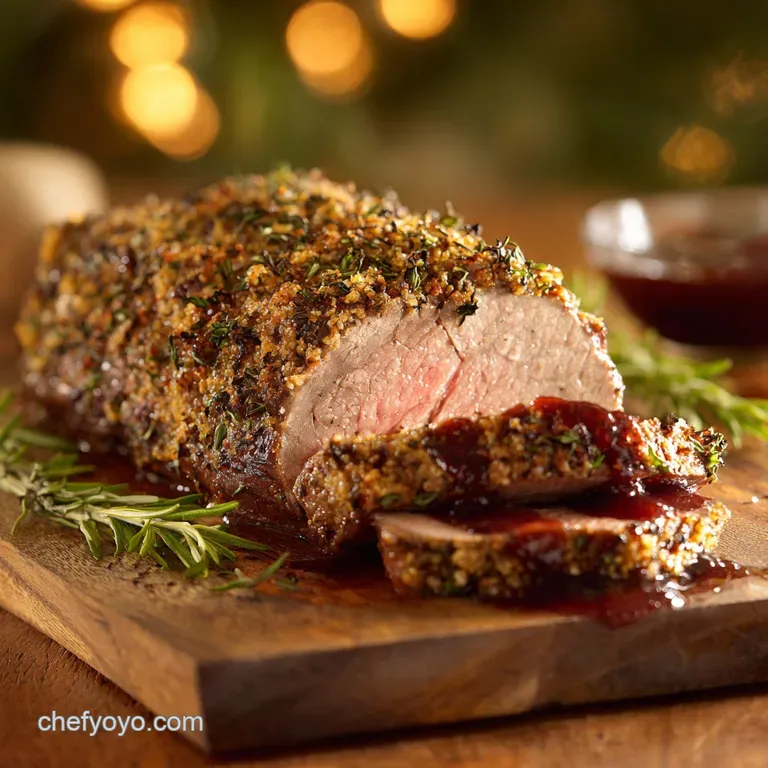
- Elevating Your Christmas Main Courses: The Sirloin Centrepiece
- Culinary Science: Achieving the Perfect Crust and Tender Roast
- Essential Components for Your Festive Sirloin Roast
- Mastering the Method: Step-by-Step Festive Roast Preparation
- Expert Tips for Flawless Christmas Main Courses
- Post-Feast Guide: Safely Storing Leftover Sirloin and Jus
- Completing the Feast: Perfect Pairings for This Christmas Main Course
- Recipe FAQs
- 📝 Recipe Card
Elevating Your Christmas Main Courses: The Sirloin Centrepiece
That moment when the main dish hits the table? It’s pure magic. I’m talking about that rich, savory aroma of rosemary and garlic mingling with the sharp, warm scent of Port and cranberries, creating the definitive smell of Christmas Dinner.
This herb crusted sirloin roast is deeply satisfying, showcasing that beautiful caramelized crust and the promised pink centre.
Frankly, Christmas Day is hectic enough without babysitting a huge, drying turkey for seven hours. This magnificent sirloin is your holiday lifesaver; it cooks faster, requires far less fuss, and delivers ten times the glamour for a fraction of the stress.
It’s high impact, low-maintenance cooking, perfect for when you have a million other things demanding your attention (like refilling the mulled wine).
We aren't just making a roast tonight; we are developing layers of flavour using simple techniques that guarantee juicy results every time. Grab your twine and your best bottle of Port, even if you just use a splash of it!
This is hands down one of the best Christmas Main Course Recipes you’ll ever try.
Culinary Science: Achieving the Perfect Crust and Tender Roast
Why Choose Sirloin Over Traditional Roasts
Sirloin is the ultimate choice for a festive Christmas Main Course Meat because it provides a wonderful balance of flavour, texture, and speed. It offers that classic roast look without the long, unpredictable cooking time of a whole leg of lamb or a massive turkey. A good sirloin roast gives you gorgeous marbling, which translates directly to tenderness. If you are debating alternative Christmas dinner dishes , you might consider my famous Christmas Main Dishes: The Best Clementine Clove Glazed Ham Recipe , but for beef lovers, this sirloin is unbeatable.
Defining the Herb Crust and Port Jus Flavour Profile
The brilliance of this dish lies in the contrast. The crust is savory, pungent, and fatty thanks to the butter, fresh herbs, and Dijon, which essentially locks in moisture and prevents the meat from drying out.
The Port and cranberry jus, conversely, is deeply rich, tart, and slightly sweet, providing the essential bright counterpoint that cuts through the richness of the beef. It’s a marriage made in holiday heaven.
Effortless Elegance: Preparing Ahead for Christmas Day
The beauty of this Festive Christmas Dinner centerpiece is how much you can do in advance. You can truss the beef, pat it dry, and apply the entire herb paste up to 24 hours ahead of time. Just wrap it tightly and keep it chilled.
Will doing this make Christmas Day easier? Absolutely. That means less scrambling on the morning itself! This advance prep is critical for reducing holiday stress.
The Maillard Reaction: Searing for Maximum Depth of Flavour
Searing the roast on the stovetop before it hits the oven is non-negotiable, seriously. That dark, beautifully caramelized exterior is the result of the Maillard reaction, which creates hundreds of complex flavour compounds you simply cannot get from roasting alone. If you skip this step, your roast will taste flat.
Herb Paste Integrity: Binding Agents for a Secure Crust
Our herb crust is held together by two key binding agents: softened butter and Dijon mustard. Butter provides fat and moisture, while the Dijon adds acidity and acts like a powerful glue. Trust me, the tablespoon of Dijon is vital.
It prevents the herbs from sliding off during the sear and ensures the crust stays put, insulating the meat as it roasts.
Understanding Internal Temperature: Resting the Roast for Juiciness
When you remove the sirloin from the oven, the meat’s muscle fibers are tense, and the juices are concentrated in the centre. Resting the beef for a full 20 minutes allows the muscle fibers to relax, redistributing those delicious juices throughout the entire roast.
If you cut too early, those wonderful juices will flood your board, leaving you with dry slices.
Essential Components for Your Festive Sirloin Roast
Selecting the Ideal Sirloin Cut: Weight and Marbling Notes
When shopping for your Christmas Main Course , ask your butcher for a boneless sirloin roast, sometimes labeled as sirloin tip or top sirloin. Look for a cut that is evenly shaped and has good internal marbling (streaks of fat). Marbling melts into the meat during cooking, keeping it tender.
If you see any tough silver skin, make sure that is meticulously trimmed before you start.
Crafting the Aromatic Herb Rub: Fresh vs. Dried Herbs
For this recipe, you must use fresh herbs. Dried rosemary and thyme taste dusty and lack the potent volatile oils required for that intense, fragrant crust. The aroma of freshly chopped rosemary mixed with garlic is truly what transforms this from a standard roast into a dazzling Christmas Main Course .
Port and Cranberry Jus: Sourcing the Best Reduction Wines
Don't use that questionable bottle of "cooking Port" that's been sitting in the cupboard for two years. A good Ruby Port is affordable and makes all the difference here, adding a deep, nutty sweetness and robust body to the jus. If you wouldn't sip it, don't use it in your sauce.
The same rule applies to your beef stock; splurge on a high-quality, low-sodium version.
Mastering the Method: step-by-step Festive Roast Preparation
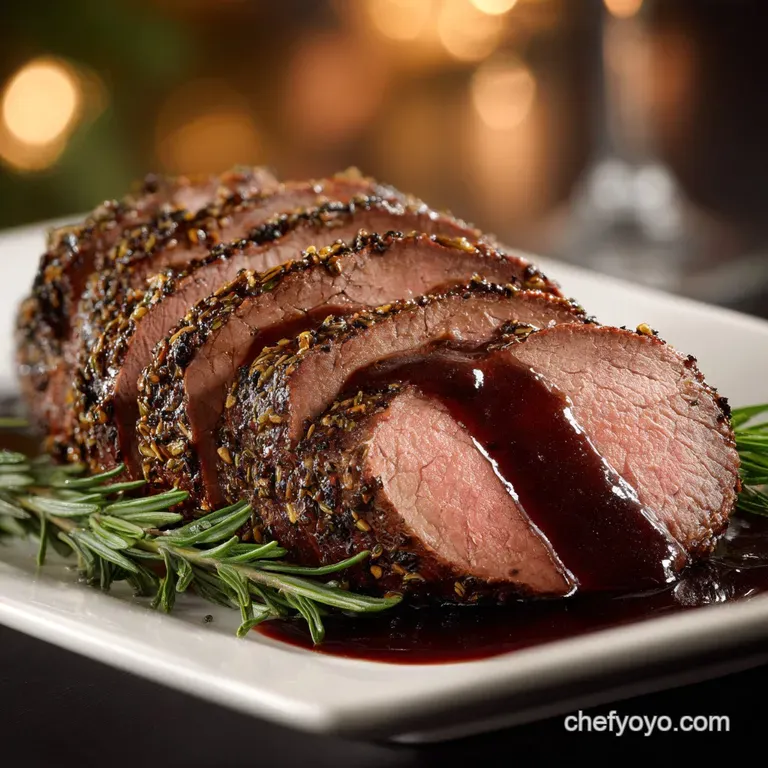
| Stage | Action Step | Sensory Cue/Tip |
|---|---|---|
| Prep | Bring the sirloin to room temperature (1 hour). Pat it completely dry. | This ensures an even, consistent cook. |
| Crust | Rub the herb butter mixture firmly over the entire surface of the beef. | Get it in every crevice; don't be shy. |
| Sear | Sear the beef in hot oil for 2 minutes per side until dark brown. | The kitchen should smell nutty and fragrant. |
| Roast | Cook at 400°F (200°C) for 15 mins, then drop to 350°F (175°C) until desired temp. | Use your thermometer! |
| Rest | Remove from oven, cover loosely, and rest for 20 minutes. | Juices will redistribute, guaranteeing a tender slice. |
| Jus | Deglaze the pan with shallots and Port, scraping up the dark fond . | The brown bits are essential flavour deposits. |
Expert Tips for Flawless Christmas Main Courses
Precise Roasting Times for Rare, Medium, and Well Done Results
This is the most common failure point for home cooks, so pay attention. Use an instant read thermometer inserted into the thickest part of the roast. Remember, the temperature will rise 5 10 degrees while resting.
- Rare: Remove at 120°F (49°C)
- Medium Rare (Recommended): Remove at 125°F (52°C)
- Medium: Remove at 135°F (57°C)
Constructing the Rich Port and Cranberry Reduction
The sauce starts with the roast drippings. Make sure your heat is medium when you add the shallots, letting them soften gently before pouring in the Port. The key to a beautiful, complex jus is reducing the wine until it's syrupy before adding the stock. This concentrates the flavor dramatically.
The Ultimate Rest: Why 20 Minutes is Non-Negotiable
Seriously, I once sliced a roast five minutes early because my guests were starving. The result? A perfectly cooked, medium rare roast that bled all its wonderful moisture onto the cutting board, resulting in dry, graying slices. Do not cut into the beef before the timer goes off.
Use this time to finish off your side dishes or sneak a moment of peace.
Troubleshooting a Grainy Jus or Broken Sauce
If your jus looks cloudy or grainy after thickening, you probably added the cornstarch slurry too quickly, or the sauce wasn't simmering gently. The fix? Strain it through a fine mesh sieve to remove the clumps.
If your jus looks broken (fat separated from the liquid), take it off the heat and vigorously whisk in 1 tablespoon of ice-cold butter until the sauce emulsifies and becomes glossy.
Chef's Note: When reducing the Port, stand back! The alcohol needs to burn off, creating a momentary, potent aroma. This concentrates the wine's flavor without leaving a harsh, alcoholic edge.
Calibrating Oven Temperature: Preventing Crust Burn
I start hot (400°F) to ensure the herb crust sets and the outside gets a quick sear, then drop the temperature to 350°F for the remainder of the cook. This two-stage method prevents the delicate herbs (especially the rosemary) from scorching and turning bitter before the internal temperature is reached.
Post Feast Guide: Safely Storing Leftover Sirloin and Jus
Maximising Shelf Life in the Refrigerator
Leftover sirloin is fantastic, but needs careful storage. Slice any remaining meat, transfer it to an airtight container, and cover it lightly with leftover jus or stock to retain moisture. Stored properly, the cooked sirloin will last safely for 3 to 4 days in the refrigerator. The Port jus will last 5 days.
Reheating Sliced Roast Without Drying It Out
Never microwave beef if you want it to remain juicy. The best way to reheat sliced sirloin is low and slow. Place the slices in an oven safe dish, drizzle them with a tablespoon of jus or beef stock, cover tightly with foil, and warm in a 300°F (150°C) oven for 10– 15 minutes until just warm through.
This gently steams the meat back to life.
Freezing the Cooked Sirloin and Herb Crust (Do's and Don'ts)
You can definitely freeze the cooked sirloin, but the crust texture will suffer slightly upon thawing (it gets a little soggy). For the best results, slice the cold leftover sirloin, place the slices tightly in a vacuum sealed bag or freezer safe container with a tablespoon of jus, and freeze for up to 3 months.
Thaw overnight in the fridge.
Completing the Feast: Perfect Pairings for This Christmas Main Course
Recommended Root Vegetable Accompaniments
You need rich, hearty sides to stand up to the sirloin and the deep Port jus. I always serve traditional roast potatoes cooked in duck fat until they are incredibly crispy. Other great options include parsnips and carrots roasted with a drizzle of honey and thyme, or a velvety sweet potato mash.
Wine Pairing Guide: Bold Reds that Complement Port Jus
Because the jus contains Port, which is sweet and fortified, you need a robust red wine with some age and structure. A classic Bordeaux (Claret) is perfect, or perhaps a hearty Cabernet Sauvignon or a high-quality Argentine Malbec.
Look for wines that have bold tannins and a hint of dark fruit to complement the complexity of the sauce.
Utilizing Roasting Drippings for Gravy Enhancement
Don't waste a single drop of those precious pan drippings! Even after you've made your Port jus, any remaining fat and fond can be used to enrich other gravies or vegetable sauces. Use them to fry the shallots for the jus, or even whisk them into a batch of cheesy garlic bread, like my Cheesy Pull Apart Christmas Bread: Ultimate Garlic Showstopper , which is always a festive crowd pleaser.
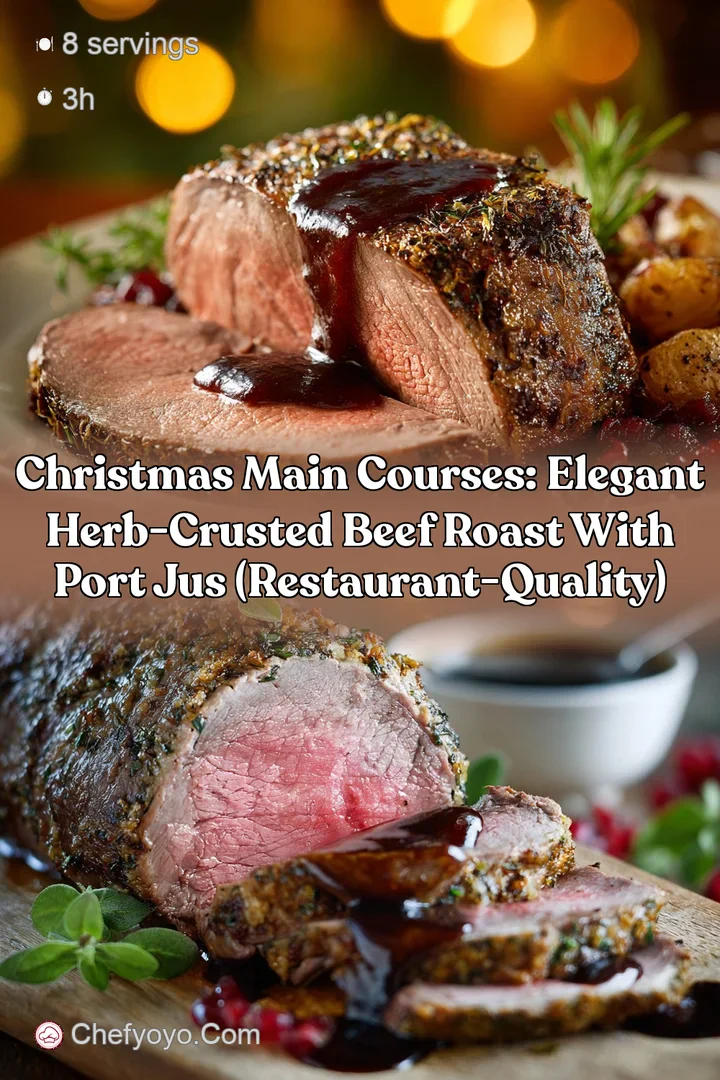
Recipe FAQs
Why did my sirloin turn out dry and tough after roasting?
Dryness is nearly always a result of overcooking past your target internal temperature. Use a reliable meat thermometer and pull the roast when it is about 5 degrees below your desired doneness, as carryover cooking will increase the temperature outside the oven.
It is also absolutely vital to rest the beef, tented loosely in foil, for a minimum of 15 minutes before carving to allow the juices to redistribute.
Can I use a different cut of beef, or substitute the meat for a non-beef option?
This recipe works beautifully with other tender cuts like Beef Tenderloin or Ribeye, although you must adjust cooking times significantly based on the shape and fat content of the new cut. For a successful non-beef option, a large, thick pork loin roast provides excellent flavor pairing with the Port and cranberry jus.
Alternatively, a mushroom and lentil Wellington provides a sophisticated vegetarian centerpiece.
My Port and cranberry jus is too thin. How can I thicken it quickly?
The easiest way to thicken your jus is to create a cornstarch slurry. Mix one tablespoon of cornstarch with one tablespoon of cold water until smooth, and then whisk it gradually into the simmering sauce.
Allow the mixture to boil gently for 30 seconds after each addition to ensure the starch fully activates and avoids a powdery taste.
Can I prepare the herb crust the day before Christmas?
Yes, preparing the herb paste in advance is an excellent time saver. You can rub the paste onto the sirloin up to 24 hours before cooking, storing it uncovered in the refrigerator overnight. This helps slightly dry the surface of the beef, which aids in forming a crispier crust during the roasting process.
My herb crust fell off the beef while resting. What went wrong?
This usually happens if the surface of the beef was too moist before the crust was applied, or if the crust mixture contained too much oil or liquid. Ensure you pat the sirloin completely dry with paper towels before applying the rub, pressing it firmly and evenly onto the meat.
During the resting period, be sure only to tent the roast loosely to prevent condensation from softening the crust.
How long do the cooked beef leftovers last, and can I freeze the jus?
The cooked and cooled sirloin leftovers should be stored in an airtight container in the refrigerator and are safe to consume for 3 to 4 days. The Port and cranberry jus freezes exceptionally well; transfer it to a freezer safe container, leaving some headspace, and use it within three months for best quality.
Can I substitute the Port in the jus recipe if I prefer to avoid alcohol?
Certainly. To maintain the necessary richness and tartness, you can substitute the Port with a mixture of half beef stock and half high-quality balsamic vinegar. Another effective replacement is unsweetened cranberry juice concentrate, which will enhance the natural berry notes in the sauce.
Remember to adjust seasonings slightly, as the alcohol free versions may lack the Port’s inherent sweetness.
Christmas Main Course Sirloin Roast
Ingredients:
Instructions:
Nutrition Facts:
| Calories | 293 kcal |
|---|---|
| Protein | 38.9 g |
| Fat | 11.4 g |
| Carbs | 8.6 g |
