The Classic Boston Cream Donut: Fluffy Filled
- The Classic: Pillowy Boston Cream Doughnuts
- Welcoming the Royalty: What Makes This Boston Cream Donut Legendary?
- Essential Components and Sourcing Your Pantry
- The Definitive Method for Building Your Boston Cream Doughnut
- Mastering the Layers: The Science Behind Perfect Textures
- Troubleshooting the Fryer and Filling: Expert Tips
- Longevity and Preservation: Storing Filled Doughnuts
- Elevating the Experience: Perfect Pairings and Presentation
- Recipe FAQs
- 📝 Recipe Card
The Classic: Pillowy Boston Cream Doughnuts
Welcoming the Royalty: What Makes This Boston Cream Donut Legendary?
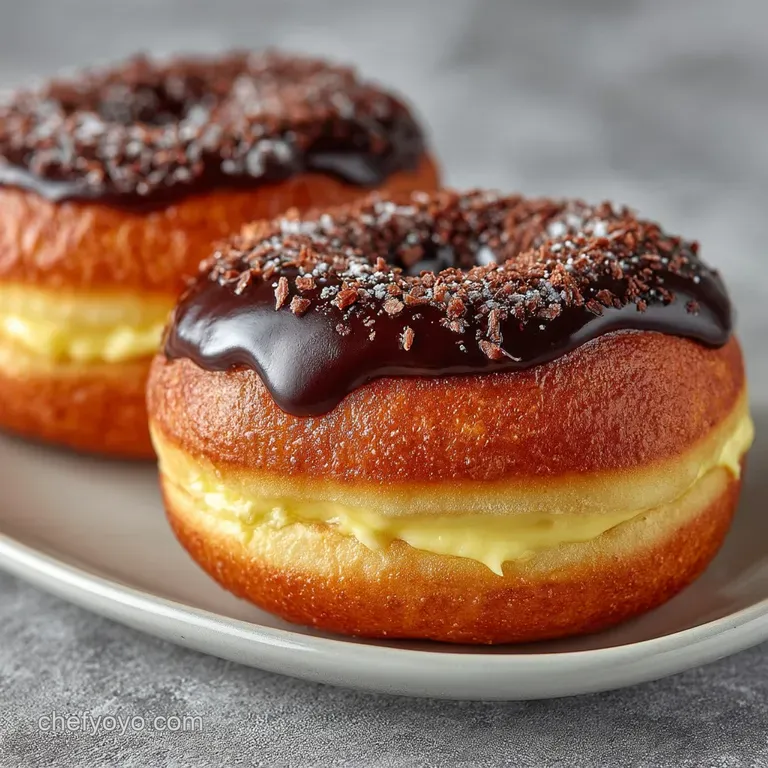
Picture this: You sink your teeth past a slick, dark chocolate glaze, through a cloud soft, golden crust, and then— BAM! —you hit the core of cool, vanilla scented pastry cream.
That perfect intersection of textures and temperatures is why the Boston Cream Donut isn’t just a dessert; it’s an experience. It’s rich, it’s comforting, and honestly, biting into a fresh one makes you momentarily forget every life decision you’ve ever regretted.
Listen, I know what you’re thinking: Frying dough at home sounds like a monumental disaster waiting to happen. But stick with me! While this recipe has a few steps, none of them are truly difficult, and the payoff is a homemade bakery item that costs a fraction of the price of the fancy doughnut shops.
Plus, the smell of proofing yeast and simmering custard in your kitchen is, frankly, unbeatable.
We’re not making basic ring doughnuts here; we are aiming for the ultimate trifecta of fluffy brioche, silky crème pâtissière, and high shine ganache. This Boston Cream Donut requires organization, yes, but I promise that following these specific steps ensures success.
Let's crack on and elevate your home baking game.
A Brief History of the Boston Cream Hybrid
It’s hilarious that we call this a doughnut, because its lineage actually traces back to the celebrated Boston Cream Pie. That pie, invented in 1856, was really a cake two layers of sponge separated by custard and topped with chocolate.
When the pastry world started making filled, yeasted dough pockets popular, this classic flavor profile was simply injected into the doughnut form. It quickly became an American icon, and for good reason!
The evolution of the Boston Cream Donut from pie to portable treat is a culinary stroke of genius.
Defining the Three Core Components (Dough, Cream, Glaze)
To achieve true bakery level results with your homemade Boston Cream Donut , you have to treat each component with respect. The doughnut dough must be rich and light, meaning we use a brioche style dough loaded with butter and eggs; this keeps it pillowy soft after frying, not heavy and dense like a cake doughnut.
Then there’s the pastry cream, the creamy heart of the operation it needs to be stable enough to hold its shape but smooth enough to melt in your mouth. Finally, the glaze must be a true ganache, not just powdered sugar and water, providing a depth of chocolate flavor that stands up to the rich custard.
Patience Pays Off: Why Yeasted Dough Is Essential
If you've ever tried a cake doughnut recipe and wondered why it tasted like a fancy muffin that fell into a deep fryer, it’s because it lacked the yeast structure. Yeasted dough is what creates those incredible air pockets that expand rapidly when they hit the hot oil.
This expansion prevents the dough from absorbing too much grease, resulting in that wonderfully light, airy texture we crave in a high-quality Boston Cream Donut . Yes, it takes time we have two separate proofing periods but the clock is doing all the work for you.
Essential Components and Sourcing Your Pantry
Making a superb Boston Cream Donut relies on high-quality basics. Don't skimp on the vanilla or the chocolate. This is the time to splurge slightly on the good stuff, trust me.
| Ingredient | Why it Matters | Smart Substitution |
|---|---|---|
| All-Purpose Flour | Provides structure for the brioche base. | Bread Flour (will make the dough slightly chewier). |
| Active Dry Yeast | The crucial leavening agent for fluffiness. | Instant Yeast (reduce proofing time slightly, no need to bloom first). |
| Whole Milk/Heavy Cream | Essential richness for both the dough and the crème pâtissière. | Any full fat non-dairy milk (like soy or oat) for the dough. |
| Cornflour (Cornstarch) | Our key thickening agent for stable custard. | Plain Flour/All-Purpose Flour (must cook longer to eliminate starch taste). |
| Dark Chocolate | For a deep, rich glaze. | Semi Sweet Chocolate Chips (add 1 tsp butter for gloss). |
The Brioche Base: Flour and Dairy Specifications
We use all-purpose flour because it provides the right balance of gluten development; too high, and your doughnuts are tough; too low, and they collapse. When adding the dairy and eggs, make sure they are at room temperature. Cold ingredients shock the yeast, slowing down the rising process dramatically.
This step is non-negotiable for a perfect Boston Cream Donut.
For the Velvety Pastry Cream: Egg Yolks, Vanilla, and Thickening Agents
A successful Boston Cream Donut lives or dies by its filling. We rely heavily on egg yolks for both the rich color and the thickening power. Seriously, don't throw away those whites you can use them later for meringues!
The vanilla bean is highly recommended here, as it infuses a deep, authentic flavor into the milk that extract just can't match. If you must use extract, add it after you remove the cream from the heat, otherwise the heat kills the flavor.
Crafting the Glaze: Achieving Richness Without Excessive Sweetness
Many recipes call for a simple confectioner's sugar glaze, but we are elevating this. We are making a ganache, a simple mixture of melted chocolate and hot cream, which sets beautifully and delivers intense chocolate flavor.
Using dark chocolate (55 70% cocoa) is key to balancing the sweetness of the pastry cream and the dough. Adding that final tablespoon of butter, whisked in off the heat, is the secret to getting a mirror like shine on your Boston Cream Donut .
The Definitive Method for Building Your Boston Cream Doughnut
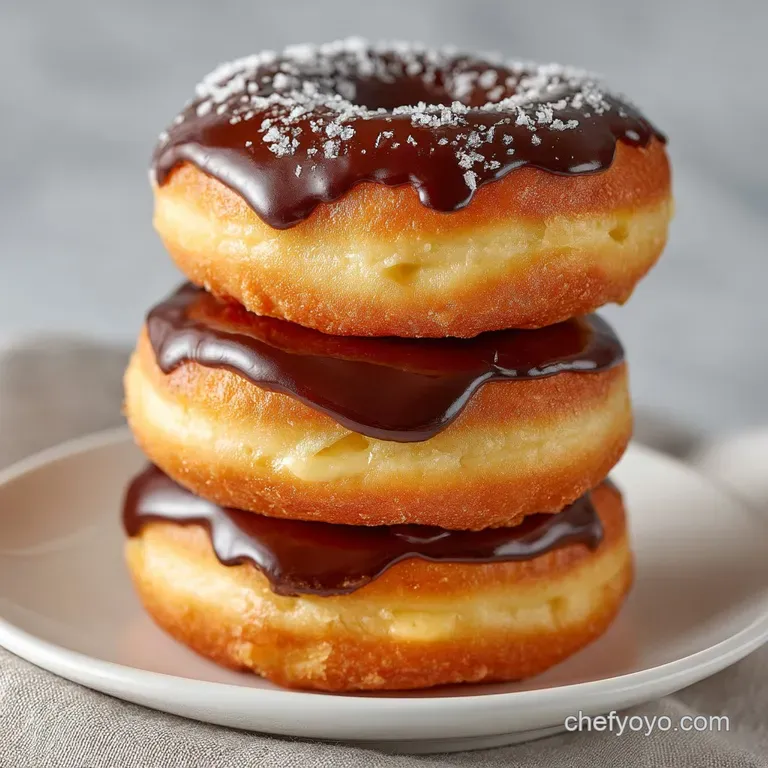
This process involves juggling three stages, so I highly recommend making the pastry cream first. It needs a full hour or more to chill and firm up properly, which buys you time to manage the dough’s rising schedule.
Mastering the Layers: The Science Behind Perfect Textures
Phase I: Mixing, Proofing, and Cutting the Dough Rounds
Start by waking up your yeast! Warm milk (like bathwater warm, 105°F-115°F) is crucial for yeast activation. Once it foams, we know the yeast is happy and alive. Mix your dry ingredients, then add the room temperature eggs.
You'll knead this mixture until it starts to form a rough dough, usually about five minutes in a stand mixer. Then, incorporate the butter slowly. My biggest mistake when I first attempted a Boston Cream Donut years ago was dumping all the butter in at once; the dough never came together correctly.
Add it cube by cube, waiting until the previous one is fully absorbed. This process builds the beautiful, rich brioche structure we need.
Phase II: Deep Frying to Golden Perfection
This step is where most home cooks panic, but you won't, because you have a thermometer. Oil temperature management is the key to a non-greasy Boston Cream Donut. You need to maintain a steady 350°F (175°C).
If the oil drops (which it will when you add dough), increase the heat briefly, then back off. If the oil gets too hot, the outsides burn fast. If it’s too cool, the dough drinks the oil like a sponge.
Chef's Note: Always use small parchment squares when moving the proofed dough to the fryer. It protects the shape. If you touch the side of the fully proofed dough, it might deflate, ruining the airiness. The parchment paper will release naturally in the hot oil.
Phase III: Cooking and Chilling the Vanilla Pastry Cream
When cooking the pastry cream, you must whisk constantly and fearlessly once the mixture goes back on the heat. Tempering the eggs (mixing in the hot milk slowly) prevents scrambling. Once it thickens, keep whisking hard for one to two minutes after it begins to bubble. Why?
Because you are cooking out the raw starch taste from the cornflour. If you don't cook it long enough, your Boston Cream Donut filling will taste vaguely metallic. Whisking in the cold butter right at the end adds luxurious gloss and stops the cooking process instantly.
Phase IV: Glazing and Filling the Finished Doughnuts
Make sure your doughnuts are completely cool before you attempt to fill or glaze them. If they are warm, the pastry cream will melt, and the glaze will slide right off. Use a long, thin tip (sometimes called a Bismarck tip) for filling. Insert it gently into the side of the doughnut, making a small cavity.
Squeeze the piping bag until you feel the doughnut become visibly heavier and slightly puffed. Then, dip the tops into the warm (not hot!) ganache glaze. The sheer satisfaction of seeing the shiny top of your homemade Boston Cream Donut is unparalleled.
Achieving the Airiest Dough: The Role of the Double Rise
The double rise is fundamental to making truly pillowy doughnuts. The first proof (the bulk fermentation) develops the complex flavor and strength of the gluten network. The second proof, after cutting and shaping, is called the "final proof" and introduces the delicate airiness needed for a light fry.
Skipping or rushing either rise will result in a heavy, dense finished product. We want air, we want light, we want the best darn Boston Cream Donut anyone has ever tasted.
Emulsification Secrets: Preventing a Runny Crème Pâtissière
A major failing point for the Boston Cream Donut filling is a runny texture. This often happens if the eggs were not whisked with the cornflour and sugar vigorously enough (creating the roux for the custard), or if it wasn't cooked long enough.
If, after chilling, your cream is still too soft, you can try reheating it very gently and whisking in a slurry of 1 Tbsp cornflour mixed with 2 Tbsp cold milk, then cooking until it bubbles and thickens again.
Troubleshooting the Fryer and Filling: Expert Tips
Preventing Blowouts: Maintaining Oil Temperature Consistency
Blowouts when your dough tears dramatically in the fryer are usually a result of either the dough being over proofed or the oil being too hot .
Over proofed dough has stretched its gluten structure to the max, and the sudden heat causes the internal steam pressure to burst the seams. If you see signs of blowouts, slightly lower your oil temperature to 345°F (170°C) and reduce the final proofing time on the next batch.
The Art of the Injection: Filling Techniques for Clean Results
If you don't have a specific long filling tip, you can still fill your Boston Cream Donut with a standard star tip or even just a snip in the corner of a sturdy piping bag. The key is inserting the tip far enough so the cream fills the center, not just the outside layer.
Also, be sure to scrape down the sides of the piping bag as you work; air pockets will cause spurts of filling, leading to a messy, uneven result.
Fixing a Lumpy or Grainy Custard Base
A lumpy custard usually means the milk was poured in too quickly during the tempering stage, scrambling the eggs. If this happens, don't panic! You can save it. Pass the warm cream through a fine mesh sieve into a clean bowl. Whisk it well after straining. If it’s still slightly grainy due to overcooked flour, an immersion blender can rescue the texture, making it smooth and velvety again. This trick is also great for ensuring your creamy Arroz con Leche: The Ultimate Creamy Citrus Cinnamon Rice Pudding is perfectly smooth.
Longevity and Preservation: Storing Filled Doughnuts
Best Practices for Refrigerated Storage (The 1 2 Day Rule)
Because the Boston Cream Donut is filled with real dairy based pastry cream, it absolutely needs to be refrigerated. Store them in a single layer in an airtight container. The unfortunate reality of yeasted doughnuts is that they start to lose their perfect pillowy softness relatively quickly.
They are truly best enjoyed the day they are made, but they will keep well in the fridge for up to two days. After that, they start getting a bit sad and chewy.
Can You Freeze Boston Cream Doughnuts? (A Component Specific Guide)
The short answer is: don't freeze the filled, glazed Boston Cream Donut . The pastry cream contains cornflour and dairy, which tends to separate and get grainy when thawed, completely ruining the texture.
However, the doughnuts themselves (unfilled and unglazed) freeze exceptionally well! Place cooled, unfried doughnuts in a freezer bag, squeezing out the air. Thaw overnight, then reheat briefly before filling. The chocolate glaze also freezes beautifully on its own.
Reactivating Freshness: The Best Way to Serve Day-Old Treats
If you have a leftover Boston Cream Donut from the fridge, you can breathe life back into it. Pop it in the microwave for 10 15 seconds. This warms the pastry cream slightly and softens the dough just enough to mimic that fresh fried texture.
Be careful not to overheat it, or the glaze will run all over your plate. A slightly warm Boston Cream Donut is still a glorious thing.
Elevating the Experience: Perfect Pairings and Presentation
A treat as rich and decadent as the Boston Cream Donut needs a good foil. I love serving these with something acidic or bitter. A strong, dark roast coffee cuts through the richness beautifully, making each bite feel fresh.
For an unexpected dinner party close, serve a mini Boston Cream Donut alongside a small glass of ice-cold milk and a shot of rich espresso. It’s heaven.
If you are looking for other creamy, comforting, layered desserts that require precision, you know I always fall back on Arroz con Leche: The Ultimate Creamy Citrus Cinnamon Rice Pudding — it demands the same attention to slow cooking the dairy base, just like our pastry cream.
This homemade Boston Cream Donut is absolutely worth the effort. It’s a classic for a reason. Go forth and conquer the fryer! You’ve totally got this.

Recipe FAQs
Why are my yeasted donuts absorbing too much oil and tasting greasy?
This is nearly always a temperature control issue during frying. If your oil is too cool (below 350°F/175°C), the dough cooks slowly and soaks up the fat before the exterior sets.
Ensure the oil temperature remains consistently between 360°F and 375°F (182°C-190°C), testing frequently with a reliable thermometer, and avoid overcrowding the pot.
My Crème Pâtissière (pastry cream) filling is lumpy or too runny. What went wrong?
If the cream is lumpy, it means the flour/cornstarch mixture wasn't fully incorporated, or it wasn't whisked constantly while heating. If your cream is already cooked and lumpy, simply press the warm mixture through a fine mesh sieve into a bowl before chilling to achieve a perfectly smooth consistency.
Runny cream indicates it was removed from the heat too soon; it must come to a full boil and cook for at least 60 seconds to activate the starches fully.
How should I store leftover Boston Cream Donuts, and can I freeze them?
Due to the dairy based Crème Pâtissière filling, finished Boston Cream Donuts must be stored in an airtight container in the refrigerator for up to 3 days. It is strongly discouraged to freeze the assembled donuts, as the high moisture custard filling tends to weep, separate, and become grainy upon thawing.
Can I prepare parts of the Boston Cream Donut recipe in advance?
Yes, the Crème Pâtissière is best made a day in advance, as it needs at least 4 hours to chill completely before filling. You can also mix the brioche dough, allow it to complete its first proof, and then refrigerate it overnight for a cold proof, developing deeper flavor; just be sure to let it sit at room temperature for 30 minutes before shaping.
My yeasted dough isn't rising properly (proof failure). What should I check?
The two main culprits for proof failure are inactive yeast or temperature extremes. Ensure your milk was warmed only slightly, between 105°F and 110°F (40°C-43°C), as anything hotter will kill the yeast entirely.
Also, make sure your dough is proofing in a consistently warm, draft free spot, as a cold environment drastically slows fermentation.
How can I achieve a crisp edge on the donut that allows for easy filling injection?
A crisp surface requires the oil to be at the proper temperature (360°F-375°F) so the exterior immediately sets, locking in moisture. For easy filling, use a piping tip with a wide opening and inject the custard through the side of the donut, wiggling the tip gently to create a nice pocket without tearing the structure.
Can I make the Boston Cream Donut vegan or dairy-free?
A successful vegan adaptation is achievable by substituting the dairy ingredients with high-quality alternatives. Use full fat canned coconut milk or rich oat milk for the Crème Pâtissière and vegan butter in both the custard and the brioche dough.
Ensure your chocolate glaze uses a suitable non-dairy milk and is made with vegan friendly chocolate chips or cocoa powder.
Classic Boston Cream Donut Recipe
Ingredients:
Instructions:
Nutrition Facts:
| Calories | 375 calories |
|---|---|
| Fat | 24 g |
| Fiber | 2 g |
