The Ultimate Puff Classic Lemon Sugar Dutch Baby Pancake
- The Grand Reveal: Why the Dutch Baby Pancake Demands Attention
- Gathering Your Arsenal: Essential Ingredients & Tools
- Mastering the Heat: Step-by-Step Preparation
- Troubleshooting & Creative Customizations for Your Dutch Baby
- Extending the Menu: Savory Twists and Storage Solutions
- Recipe FAQs
- 📝 Recipe Card
The Grand Reveal: Why the Dutch Baby Pancake Demands Attention
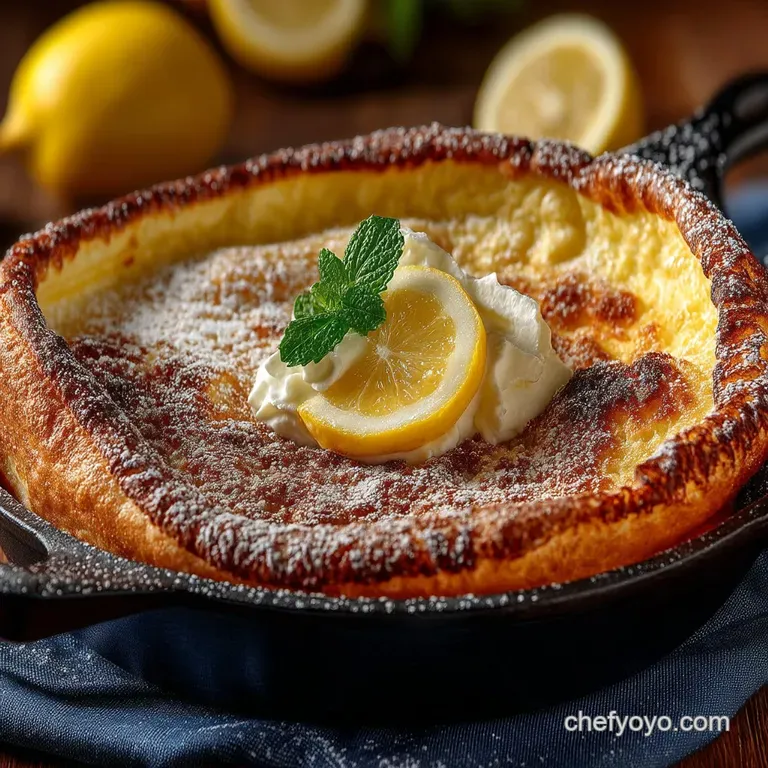
The Dutch Baby Pancake is not just a meal; it is a piece of culinary theatre. Unlike standard flat cakes or griddle pancakes, this magnificent oven baked skillet creation offers an explosive combination of textures: impossibly crisp, buttery edges leading into a warm, custardy interior.
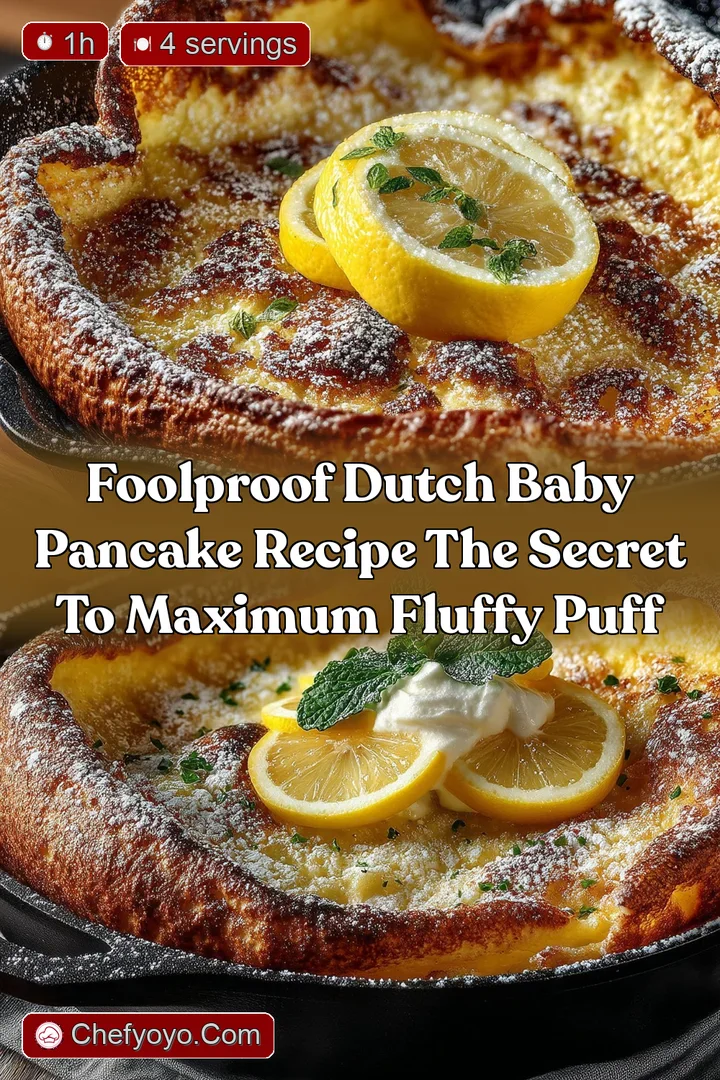
When pulled from the oven, its towering, golden brown walls inspire immediate applause, making it the definitive showstopper brunch item. A simple yet precise recipe transforms humble ingredients eggs, milk, and flour into something spectacular, capturing the light richness of a crêpe while delivering the impressive dramatic rise of a well executed Yorkshire Pudding.
If you are looking for a Dutch Baby Pancake Recipe that is both reliable and spectacular, look no further; the secret lies entirely in the technique.
Unpacking the Name: Neither Dutch Nor Baby
One might assume this unique dish hails from the Netherlands, but the history is far more localized. The Dutch Baby Recipe was actually popularized in the United States, specifically in Seattle, Washington, at Manca’s Cafe in the first half of the 20th century.
The dish is believed to be an American adaptation of the German Pfannkuchen (a thick, sweet pancake). Legend suggests that one of the owner’s daughters, attempting to pronounce "Deutsch" (German), mispronounced it as "Dutch," and the name stuck.
The "baby" part simply refers to the smaller portion size initially served though our classic version yields four modest servings making this skillet pancake a true culinary misnomer that has transcended its origins.
The Science of the Signature Puff
The defining characteristic of the Dutch Baby is its signature, gravity defying puff. This is not achieved by yeast or baking powder, but through pure, glorious steam power. When the egg-rich batter is poured into a 10 inch cast iron skillet that has been preheated to a blistering 425°F (220°C), the moisture in the batter instantly converts to steam.
Since the batter cooks rapidly against the sides of the hot pan, it forms rigid walls that trap the steam, forcing the pancake upward sometimes two to three inches high in a dramatic volcanic eruption.
This intense thermal shock is absolutely critical to achieving the light, airy structure and the prized crisp edges.
Showstopper Brunch: Better Than Traditional Breakfast Casseroles
While many classic breakfast dishes require lengthy overnight preparation or involve dense layers of bread and cheese, the Dutch Baby demands far less time for a far greater payoff in presentation. The active prep time is just ten minutes, followed by a crucial half hour rest for the batter.
Compare this rapid effort to the often heavy, predictable nature of standard breakfast casseroles. The Dutch Baby offers a clean, sophisticated flavor profile balanced by the traditional topping of powdered sugar and fresh lemon.
It provides elegance and spectacle, transforming a weekend morning into a gourmet event with minimal fuss.
Gathering Your Arsenal: Essential Ingredients & Tools
Success in preparing this remarkable Dutch Baby Recipe starts with having the right components ready and properly tempered. Our recipe hinges on a few simple pantry staples: three large, room temperature eggs, 1/2 cup of whole milk, 1/2 cup of all-purpose flour, a tablespoon of sugar, and a pinch of salt and vanilla extract.
For the actual cooking, you will require 4 tablespoons of cold unsalted butter. Crucially, all liquid components the eggs and the milk must be at room temperature; this is foundational for maximizing the rise.
The Cast Iron Advantage: Sourcing the Right Skillet
While other heavy bottomed pans might suffice, the 10 inch cast iron skillet is non-negotiable for the true Dutch Baby Pancake . Cast iron excels at heat retention and distribution, which is precisely what is needed to generate the immediate, powerful burst of steam necessary for the puff.
The pan must be preheated along with the oven for at least 30 minutes. If you are preparing a large format meal, a specialized dutch baby pancake recipe 9x13 pan can be adapted, but be warned: the classic, dramatic, curled edges are most easily achieved in the round, deep sides of a standard skillet.
Room Temperature Eggs: The Secret to Maximum Lift
The role of the three large eggs in this preparation cannot be overstated. They provide the structural integrity and the majority of the moisture that turns into steam. Using eggs (and the 1/2 cup of whole milk) straight from the refrigerator will cool the batter, which subsequently slows down the initial reaction when it hits the hot pan.
By allowing your ingredients to warm up for about thirty minutes before blending, you ensure the batter is ready to absorb the immense heat quickly, guaranteeing an optimal, high reaching puff.
Flour Power: Choosing the Best Blend for Crispy Edges
We rely on 1/2 cup of standard all-purpose flour for the structural frame of the pancake. While you can certainly experiment with a Sourdough Dutch Baby Pancake or a Discard Dutch Baby to introduce a complex tang and utilize starter discard, the classic AP flour yields the lightest texture.
The secret to avoiding a dense, bread like pancake lies in the resting period. After blending the flour with the liquids, the batter must rest for 30 minutes.
This essential step allows the gluten strands to relax and the flour to fully hydrate, resulting in those desired ethereal, crispy edges rather than a heavy chew.
Related Recipes Worth Trying
- Cloud Nine Cottage Cheese Pancakes HighProtein Breakfast Recipes — Tired of boring Cottage Cheese Breakfast Recipes These fluffy blended flapjacks are packed with protein for a healthy breakfast upgrade
- Cheeky Syn Free Fiery Babybel Fritters Recipe — Make these delightfully crispy Syn Free Fiery Babybel Frittersa surprisingly light lowcalorie snack thats better than any pub classic Easy steps inside
- Cottage Cheese Dreamcakes My ProteinPacked Pancake Secret — Looking for good healthy desserts These baked cottage cheese pancakes Dreamcakes are light fluffy packed with protein Easy delicious and ready in minutes...
Mastering the Heat: step-by-step Preparation

The actual cooking process of the Dutch Baby Pancake is remarkably fast, but it demands precise timing and technique. We move from a resting batter to a finished dish in under 20 minutes, provided the oven has done its job.
Preheating Perfection: Setting the Stage for the Puff
Setting up the oven correctly is arguably the most crucial step. Position an oven rack in the middle and place your empty 10 inch cast iron skillet on it. Preheat the oven and the pan to 425°F (220°C).
Allow a full 30 minutes for the pan to come to temperature; a lukewarm pan will cause the Dutch Baby to fail to rise. When the oven is ready, the stage is perfectly set for the drama to begin.
The High Speed Blend: Achieving a Smooth, Aerated Batter
For the smoothest finish and maximum air incorporation, a high speed blender or food processor is highly recommended. Combine the room temperature eggs, milk, sugar, salt, and vanilla extract first, blending for 30 seconds until light and frothy.
Next, stop the machine, add the 1/2 cup of flour, and blend for another 45 60 seconds until the mixture is perfectly uniform and airy the consistency should resemble thin cream. Transfer this mixture to a jug for easy pouring and let it rest for the non-negotiable 30 minutes.
The Critical Transfer: Pouring into the Sizzling Butter
When the oven timer signals 30 minutes of preheat, you must act swiftly. Using heavy duty oven mitts, carefully remove the screaming hot skillet and place it on a safe, heatproof surface. Immediately drop in the 4 tablespoons of cold butter. It should melt and foam instantaneously.
Swirl the pan until the butter coats the sides and bottom, achieving a slightly nutty aroma. Pour the rested batter directly into the centre of the sizzling butter, return the skillet to the oven, and bake immediately for 18– 20 minutes.
Crucially, resist the urge to open the oven door during this baking phase, as any temperature drop will jeopardize the puff.
Troubleshooting & Creative Customizations for Your Dutch Baby
The beauty of the Dutch Baby is that while the primary recipe is exacting, the possibilities for customization are vast. Once you have mastered the basic technique, you can explore textural and flavor additions.
The primary classic presentation is simply dusting the hot pancake with powdered sugar and adding a generous squeeze of fresh lemon juice a classic contrast that cuts beautifully through the richness of the butter and eggs. However, the versatility of this dish allows for numerous delightful deviations.
When the Puff Collapses: Quick Fixes and Expectations
If your impressive rise dramatically deflates the moment it leaves the oven, do not despair this is completely normal and expected. The pancake’s structure relies on the internal steam pressure, and once exposed to cooler air, that pressure is immediately released.
The finished product should still possess gorgeously crispy edges and a warm, soft, custardy centre. A true failure, where the pancake barely rises, usually points back to one of three issues: the skillet wasn't hot enough, the ingredients were cold, or the batter wasn't adequately rested.
Always double check your oven temperature and ensure that thirty minute rest.
Extending the Menu: Savory Twists and Storage Solutions
The rich, slightly sweet base of the classic Dutch Baby makes it an excellent canvas for both sweet and dutch baby pancake savory applications.
From Sweet Puff to Savory Quiche Style Meal
To transform this dramatic brunch puff into a substantial savory centerpiece, simply omit the vanilla extract and granulated sugar from the batter. Instead, whisk in flavorings like 1/4 cup of finely grated Parmesan and 1 teaspoon of fresh thyme leaves before blending.
Once baked, this savory base is spectacular topped with smoked salmon, capers, crème fraîche, and fresh chives, turning it into an elegant, quiche style meal.
The Lemon & Sugar Standard: Popular Topping Variations
While the powdered sugar and lemon juice standard is timeless, there are wonderful sweet variations to explore. To prepare a delicious dutch baby pancake apple variant, slice one small apple and sauté it briefly in the melted butter with brown sugar and cinnamon for two minutes before pouring in the batter.
This creates a deeply flavored, comforting treat akin to a baked apple pie. For a sweeter indulgence, simply sprinkle mini chocolate chips over the surface immediately after pouring the batter into the hot pan.
Making Ahead: Storing the Batter and Reheating Leftovers
If you want to save time on brunch day, you can mix the batter up to 24 hours in advance and store it, tightly covered, in the refrigerator. Just remember to take the batter out at least 30 minutes prior to baking to allow it to return to room temperature a cold batter poured onto a hot pan will significantly hinder the rise.
Leftover Dutch Baby slices can be gently reheated in a 350°F oven until crispy again; avoid the microwave, which will result in a soggy texture.
Cheesy Delight: Incorporating Gruyère or Parmesan into a Savory Dutch Baby Pancake
Taking the dutch baby pancake savory approach to the next level involves enriching the batter itself. When preparing a savory version, consider substituting a portion of the flour with finely grated Gruyère or Parmesan cheese.
The high fat content in these cheeses helps maintain a tender crumb while providing a sharp, delicious counterpoint to the buttery crust. Adding about 1/4 cup of cheese directly into the batter before blending ensures perfect distribution and beautiful, browned edges.
Nutrition Breakdown: Analyzing the Classic Serving
For those tracking intake, the classic preparation of this Dutch Baby Pancake Recipe , based on four modest servings and excluding extensive toppings, is a relatively rich, protein forward breakfast.
Each serving is estimated to contain approximately 320 calories, providing a solid 10 grams of protein thanks to the three large eggs, along with 20 grams of fat and 25 grams of carbohydrates.
While the total sugar content (8g) is low, remember that this estimate drastically increases with heavy additions of maple syrup, chocolate, or excessive powdered sugar.
Recipe FAQs
My Dutch Baby Pancake flopped flatter than a crêpe, what went wrong?
Don't fret, this is the most common issue! A catastrophic lack of puff usually boils down to temperature. Ensure your eggs and milk are fully at room temperature, as cold ingredients inhibit the necessary steam expansion.
Most importantly, your cast iron skillet must be absolutely screaming hot (425°F/220°C) before the batter goes in, and you must resist the urge to open the oven door during the 20-minute bake time.
Can I whip up the Dutch Baby batter the night before to save time?
Yes, you can absolutely make the batter ahead; it’s a brilliant time saver, provided you understand the trade offs. While fresh batter generally guarantees the best height, resting the batter in the fridge overnight allows the gluten to relax wonderfully.
Just give it a very quick whisk before baking to reincorporate any settled flour, and let it sit at room temperature for 15 minutes while your oven preheats.
I haven't got a cast iron skillet, is there a suitable substitute for this recipe?
The cast iron skillet is crucial because it retains intense heat, which is key to the dramatic puff. However, if you're in a pinch, you can use any heavy bottomed, oven safe pan, such as a thick Pyrex dish or a heavy ceramic pie plate.
You must ensure the substitute pan preheats for the full 30 minutes in the oven, or the pancake simply won't get the initial thermal shock it needs.
What are the best toppings if I'm bored of just classic lemon and sugar?
Lemon and sugar is a cracking classic, but feel free to get adventurous! For a sweet treat, try sautéing thinly sliced apples and cinnamon in the butter before adding the batter, or go all-out with seasonal berries, whipped cream, and a generous drizzle of maple syrup.
For a posh brunch, omit the sugar from the batter and top the finished pancake with smoked salmon, crème fraîche, and a scattering of fresh dill.
How should I handle leftovers? Will it go completely soggy the next day?
As soon as you remove it from the oven, the glorious puff will deflate, and sadly, no amount of reheating will restore that height. However, the flavour and texture of the dense, custardy centre hold up quite well!
Wrap any cooled leftovers tightly in foil or place them in an airtight container and refrigerate for up to two days. To reheat, pop pieces back into a 350°F (175°C) oven until warmed through.
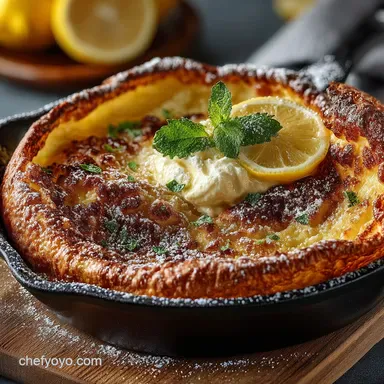
Classic Puff Dutch Baby Pancake
Ingredients:
Instructions:
Nutrition Facts:
| Calories | 450 kcal |
|---|---|
| Protein | 12.0 g |
| Fat | 10.4 g |
| Carbs | 63.7 g |
| Fiber | 0.5 g |
| Sodium | 10245 mg |
