The Velvet-Gold Standard: Classic Deviled Eggs
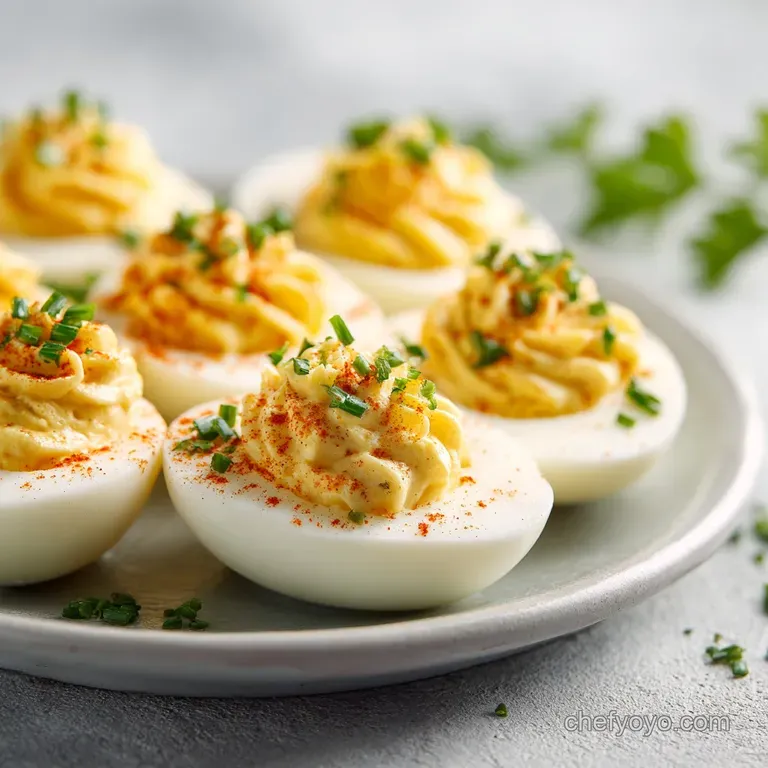
- Time: Active 20 minutes, Passive 12 minutes, Total 32 minutes
- Flavor/Texture Hook: Silky, tangy, and vibrantly creamy
- Perfect for: Festive spreads, innovative appetizers, or holiday brunches
- Mastering This Vibrant Deviled Eggs Recipe
- Why Standard Boiling Fails You
- Ingredient Component Deep Dive
- The Vibrant Ingredient Shopping List
- Necessary Tools for Velvety Fillings
- Executing the Precision Steaming Method
- Fixing Common Filling Texture Issues
- Rules for Scaling Your Batch
- Debunking Common Preparation Myths
- Preserving Freshness and Vibrant Texture
- Perfect Pairings for Festive Spreads
- Innovative Flavor Fusion Variations
- Recipe FAQs
- 📝 Recipe Card
Mastering This Vibrant Deviled Eggs Recipe
Forget everything you have heard about needing "old eggs" to get that clean, satisfying peel. It is a total myth that has kept home cooks frustrated for decades. I used to save eggs for two weeks just to make a party tray, but it turns out the secret is not age - it is the thermal shock of steam hitting a cold shell.
When you use this vibrant deviled eggs recipe, you are using physics to your advantage.
The moment you lift the lid after that 12 minute timer, the aroma is unmistakable. It is not that heavy, sulfurous smell we often associate with overcooked eggs. Instead, it is clean and light, almost like fresh rain on a spring morning. That is the first sign you have nailed it.
We are looking for yolks that are creamy, not crumbly, and whites that have a tender snap rather than a rubbery chew.
We are going for a fusion of textures here. Imagine a velvety yolk mousse that melts the second it hits your tongue, punctuated by the tiny, fresh crunch of minced chives. This is not just another side dish - it is an innovative take on a classic that focuses on the balance of sharp acids and rich fats.
You want people to take one bite and immediately ask what that secret "spark" is. Spoiler: it is the pickle juice.
Why Standard Boiling Fails You
The Vapor Advantage: Steam surrounds the egg at a constant temperature of 212°F, providing a more gentle and even heat transfer than turbulent boiling water which can knock eggs against each other. This prevents the shells from cracking and ensures the whites stay tender.
Centering the Yolk: By starting the eggs in a small amount of water and covering them, the steam pressure helps stabilize the yolk in the center of the white, which is vital for that symmetry we want in a top tier appetizer.
The Peeling Paradox: The rapid heat of the steam causes the egg membrane to contract away from the shell instantly. This creates a tiny air pocket that makes the shell shatter and slide right off once they hit the ice bath.
| Method | Time | Texture | Peeling Ease |
|---|---|---|---|
| Precision Steam | 12 minutes | Silky, tender | effortless |
| Rolling Boil | 10-15 minutes | Rubbery, tough | often sticks |
| Cold Start | 15-20 minutes | Dense, dry | hit or miss |
This comparison highlights why we choose the steam method for this specific dish. While the cold start method works for some, it often leads to that unsightly green ring around the yolk because the timing is so hard to track. Steaming gives you a definitive "start" and "stop" point for perfect results every time.
Ingredient Component Deep Dive
| Ingredient | Science Role | Pro Secret |
|---|---|---|
| Large Eggs | Protein Structure | Use them straight from the fridge for better thermal shock. |
| high-quality Mayo | Fat Emulsifier | Choose a brand with high egg yolk content for maximum silkiness. |
| Dijon Mustard | Acidic Stabilizer | The white wine in Dijon adds a vibrant depth that yellow mustard lacks. |
| Sweet Pickle Juice | Sugar & Acid Balance | It thins the filling to a pipeable consistency while adding "zing." |
The synergy between these four components is what creates that signature mouthfeel. Without the acid from the Dijon and pickle juice, the fat in the mayonnaise would feel heavy and greasy. Instead, it feels light and vibrant on the palate.
The Vibrant Ingredient Shopping List
To get these results, you need to be specific about what goes in your cart. We are using 12 Large Eggs as our foundation. Don't go for the jumbo ones here, as the cook times will shift and you might end up with runny centers. For the fat, 1/2 cup (115g) high-quality mayonnaise is non negotiable.
Look for a brand that does not use too much added sugar; we want the richness to come from the oil and eggs.
The "kick" comes from 1.5 tbsp (22g) Dijon mustard. Dijon has a much more complex profile than standard mustard, offering a spicy, vibrant heat that lingers. We balance that with 1 tbsp (15ml) sweet pickle juice. This is my secret weapon.
It provides both the sweetness and the vinegar needed to brighten the yolk mixture.
For the dry seasonings, you will need 1/4 tsp (1.5g) garlic powder for a savory backbone and 1/8 tsp (0.75g) smoked paprika. We also use 2 tsp Kosher Salt in the steaming water to help season the shells and make peeling even easier.
Finally, we finish with salt and pepper to taste, plus 1 tbsp (4g) fresh chives for that herbal pop and extra smoked paprika for a gorgeous garnish.
Necessary Tools for Velvety Fillings
You do not need a kitchen full of gadgets, but two things will change your life when making this recipe. First, a large pot with a tight fitting lid is essential for the steaming process. If the lid lets too much steam escape, your eggs won't cook through in the 12 minute window.
Second, if you want that truly professional, velvety finish, a fine mesh sieve or a small food processor is the way to go. Smashing yolks with a fork always leaves tiny lumps. If you push the yolks through a sieve with the back of a spoon, you break down the proteins into a fine "dust" that incorporates into the mayo instantly. It makes the difference between a "good" egg and a "wow" egg. You can see more about the physics of this in my how to steam eggs guide where I talk about heat distribution.
Executing the Precision Steaming Method
The Precision Boil: Pour about 2 inches of water into your pot and bring it to a rolling boil. Carefully lower your 12 eggs into the water using a slotted spoon. Don't just drop them in! Cover immediately and turn the heat to medium low. Steam them for exactly 12 minutes.
Note: This prevents the exterior from overcooking while the center reaches the ideal creamy state.
The Thermal Shock: While the timer ticks, fill a bowl with 50% ice and 50% cold water. As soon as the 12 minutes are up, move the eggs to the ice bath. Let them chill for at least 10 minutes.
Note: This stops the cooking process instantly and prevents that sulfur smell.
The Clean Peel: Crack the shells all over and peel them under the water or a running tap. The water helps lubricate the space between the white and the membrane.
Slicing Technique: Use a sharp, non serrated knife to slice the eggs lengthwise. Wipe the blade between each cut for a clean, vibrant look on every half.
Extract the Yolks: Gently pop the yolks into a bowl. If you followed the perfectly hard boiled eggs method, they should come out cleanly with no residue.
Refine the Texture: Push the yolks through a fine mesh sieve or pulse in a food processor until they look like yellow sand. This is the key to the "mousse" texture.
The Emulsification: Stir in the 1/2 cup mayo first. This coats the yolk particles in fat. Then add the 1.5 tbsp Dijon, 1 tbsp pickle juice, 1/4 tsp garlic powder, and 1/8 tsp smoked paprika.
Season to Perfection: Taste it! Add your salt and freshly cracked black pepper. It should be tangy, vibrant, and rich.
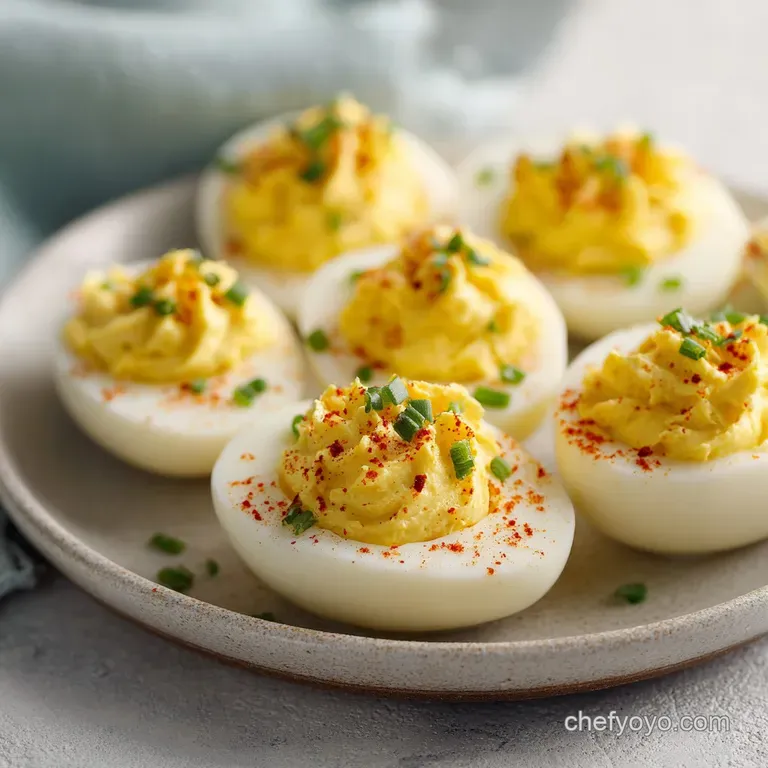
The Final Assembly: Load the filling into a piping bag with a star tip. Pipe generous mounds into each white. Note: Piling it high makes the dish look much more innovative and professional.
The Finishing Touch: Sprinkle the 1 tbsp minced chives and a light dusting of smoked paprika over the top. The green and red against the yellow is visually stunning.
Fixing Common Filling Texture Issues
Why is my filling runny?
Usually, this happens if the eggs were warm when you mixed in the mayo or if you added too much liquid too fast. Mayonnaise is an emulsion, and if it gets too warm, it loses its structure. To fix this, put the filling in the fridge for 30 minutes to firm up the fats before piping.
Why do my shells stick?
This is almost always due to the eggs not being shocked in ice water long enough. If the egg is still warm inside, the membrane stays bonded to the white. Give them the full 10 minutes in the ice bath.
Also, try peeling them while they are completely submerged in water; the buoyancy helps separate the shell.
| Problem | Root Cause | Solution |
|---|---|---|
| Grainy filling | Yolks mashed with a fork | Use a fine mesh sieve or food processor. |
| Rubbery whites | Cooked at too high a heat | Ensure the water is simmering, not a violent boil. |
| Gray/Green ring | Overcooked yolks | Stick to the 12 minute steam time exactly. |
The key to a vibrant appearance is avoiding that green ring. That ring is a chemical reaction between the sulfur in the white and the iron in the yolk, triggered by excessive heat. Keeping the time precise and the cooling rapid is your best defense.
Common Mistakes Checklist:
- ✓ Do not skip the ice bath; it is essential for the "clean peel."
- ✓ Always wipe your knife between egg slices to keep the whites pristine.
- ✓ Use "sweet" pickle juice, not dill, for the best flavor balance.
- ✓ Press the yolks through a sieve; do not just mash them.
- ✓ Wait to garnish until right before serving to keep the paprika from bleeding.
Rules for Scaling Your Batch
If you are hosting a huge party and need to double the recipe to 48 servings, do not just double everything blindly. For the eggs and mayo, 2x works perfectly. However, for the spices (garlic powder and paprika) and the pickle juice, start with 1.5x and taste.
Liquids and potent spices can easily overwhelm a larger batch if they aren't scaled carefully.
For a smaller batch (6 eggs), you can cut the ingredients in half exactly. The cook time remains 12 minutes because the steam environment stays the same regardless of whether you have 6 eggs or 12 in the pot. Just ensure they are in a single layer so the steam can circulate freely around each shell.
Debunking Common Preparation Myths
Myth: Vinegar in the water makes peeling easier. This doesn't actually help with the peeling itself. The vinegar is meant to coagulate the whites if an egg cracks during boiling, preventing a "mess" in the pot. Since we are steaming, cracking is much less likely, making vinegar unnecessary.
Myth: You must use eggs that are a week old. With the steam to ice bath method, you can use eggs purchased that same morning. The thermal shock is what creates the separation between the membrane and the shell, not the pH change that happens as an egg ages.
Myth: You should boil the water with the eggs in it. Starting eggs in cold water makes the timing impossible to track accurately because every stove heats at a different rate. Always add the eggs once the water is already producing steam to ensure consistent results.
Preserving Freshness and Vibrant Texture
Storage: Store your deviled eggs in a single layer in a sealed container. They will stay fresh in the fridge for up to 2 days. To prevent the filling from drying out, you can lightly press a piece of plastic wrap directly onto the surface of the filling if you have not garnished them yet.
Zero Waste: Don't throw away those leftover egg whites if you have a few that tore during peeling! Chop them up and mix them into a quick egg salad for lunch the next day.
The leftover pickle juice from the jar can also be used as a marinade for chicken or added to a potato salad for an extra vibrant kick.
Freezing: Please do not freeze deviled eggs! The whites become extremely rubbery and watery upon thawing, and the mayo based filling will likely break and separate. This is a dish meant to be enjoyed fresh.
Perfect Pairings for Festive Spreads
These eggs are the ultimate "fusion" starter. They pair brilliantly with salty, cured meats like prosciutto or crispy bacon. If you are serving a full brunch, they sit beautifully next to a smoked salmon platter. The acidity in the eggs cuts right through the richness of the fish.
For a drink pairing, look for something with high carbonation and crisp acidity. A dry Prosecco or a sharp Gin and Tonic with a squeeze of lime works wonders. The bubbles scrub the palate, making each creamy bite of the egg feel as vibrant as the first.
If you want a non alcoholic option, a sparkling apple cider provides the perfect sweet tart balance.
Chef's Tip: If you want to take the presentation to an innovative level, fry up some tiny sage leaves in a bit of butter until they are "shatter" crisp. Place one on top of each egg. The earthy, nutty aroma of the sage combined with the smoky paprika is absolutely divine.
Innovative Flavor Fusion Variations
While the classic is hard to beat, you can easily tweak this recipe to suit different tastes. If you want a "Southern Style" vibe, swap the Dijon for yellow mustard and add a teaspoon of sugar to the filling. This makes it much sweeter and milder.
For a "Spicy Kick," add a few dashes of your favorite hot sauce or a finely minced jalapeño into the yolk mousse. The fat in the mayo will temper the heat, leaving you with a vibrant warmth that doesn't overwhelm the palate.
If you are feeling really adventurous, try a "Miso Mayo" fusion by replacing half the mayo with white miso paste. It adds an incredible savory depth that is completely unexpected but totally addictive.
| Variation | Key Change | Flavor Impact |
|---|---|---|
| Southern Style | Yellow mustard + Sugar | Sweeter, more traditional taste |
| Bacon Crunch | Add crumbled bacon | Adds salt and a "shatter" texture |
| Spicy Fusion | Add Sriracha or Jalapeño | Vibrant heat that lingers |
No matter which path you choose, the foundation remains the same: precision steam, thermal shock, and a finely sieved filling. When you nail those three things, you are not just making a snack; you are creating a masterpiece of texture and taste that will disappear from the platter in minutes.
Trust me, make a few extra you're going to want them.

Recipe FAQs
What are the ingredients in deviled eggs?
This recipe requires 12 large eggs, 1/2 cup high-quality mayonnaise, 1.5 tablespoons Dijon mustard, and 1 tablespoon sweet pickle juice. You will also need 1/4 teaspoon garlic powder, 1/8 teaspoon smoked paprika, salt, freshly cracked black pepper, and 1 tablespoon minced fresh chives for garnish.
What is the secret ingredient for the best deviled eggs?
Sweet pickle juice is the essential component for a high definition flavor profile. It balances the richness of the mayonnaise and the sharp tang of the Dijon mustard, providing the distinct "spark" that distinguishes professional grade deviled eggs from standard versions.
What are the five golden rules of deviled eggs?
Follow these principles: steam for exactly 12 minutes, use a 50% ice-water bath for thermal shock, sieve the yolks for a velvet texture, emulsify the mayonnaise thoroughly, and store components separately. If you enjoyed mastering the stable emulsion technique used here, you can apply that same whisking method to create a perfect batch of homemade mayonnaise.
What is the best method for deviled eggs?
Steam the eggs for 12 minutes rather than boiling them to ensure consistent results and easy peeling. This precision steam method keeps the whites tender and prevents the yolks from developing that rubbery, sulfurous texture caused by overcooking.
Is it true I must use old eggs to get a clean peel?
No, this is a common misconception. The ability to peel an egg cleanly depends on thermal shock from a 50% ice-water bath immediately after steaming, not the age of the egg.
How to achieve the signature velvet filling texture?
Press the cooked yolks through a fine mesh sieve before mixing in the other ingredients. This mechanical step breaks down the proteins completely, creating a smooth, mousse like consistency that is impossible to achieve with a fork alone.
How to store deviled eggs if I am making them ahead of time?
Keep the peeled whites and the yolk mousse in separate airtight containers in the refrigerator for up to 24 hours. Assemble and garnish them as close to serving time as possible to ensure the whites remain firm and the filling stays vibrant.
Classic Steamed Deviled Eggs
Ingredients:
Instructions:
Nutrition Facts:
| Calories | 70 kcal |
|---|---|
| Protein | 3.2 g |
| Fat | 6 g |
| Carbs | 0.5 g |
| Fiber | 0.1 g |
| Sugar | 0.2 g |
| Sodium | 110 mg |
