Old Fashioned Creamed Chipped Beef

- Time: Active 10 minutes, Passive 15 minutes, Total 25 minutes
- Flavor/Texture Hook: Savory, creamy gravy with shatter crisp toasted sourdough
- Perfect for: Lazy Sunday mornings or a budget-friendly weeknight comfort meal
- Enjoy This Traditional Creamed Chipped Beef
- Quick Recipe Specifications and Timing
- The Core Elements for Success
- Tools Required for Simple Cooking
- Step-by-Step Cooking and Texture Cues
- Fixing Common Gravy Texture Problems
- Adjusting Portions for Groups Large and Small
- Creative Ways to Customize Flavor
- Smart Storage and Reheating Tips
- Best Ways to Plate Comfort
- Very High in Sodium
- Creamed Chipped Beef FAQs
- 📝 Recipe Card
Enjoy This Traditional Creamed Chipped Beef
Have you ever walked into a kitchen and just knew, by that specific aroma of melting butter and toasted bread, that something soul warming was on the way? That is the magic of this recipe.
It is a humble dish, often called "S.O.S." in military circles, but when you make it from scratch, it becomes something truly special. I remember the first time I tried making this without soaking the beef; it was so salty I could barely finish a bite. We are not doing that today.
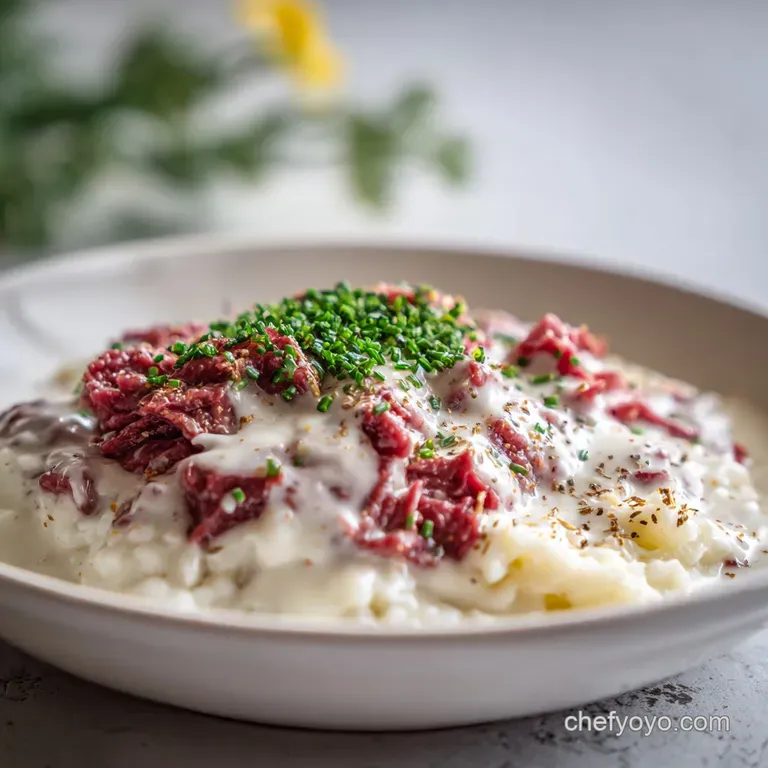
We are going for a texture that is silky and rich, coating the beef without becoming a thick paste. It is about that contrast between the velvety sauce and the crunch of thick cut sourdough. Honestly, skip the thin white bread here.
You want something with a bit of heart that can stand up to the weight of the gravy without turning into a soggy mess within seconds.
This version is all about the reliable steps. We are using minimal tools just a skillet and a whisk to get the job done. It's a foolproof way to bring a bit of nostalgia to the table without spending hours over a hot stove.
Trust me, once you see how those tiny bubbles sizzle in the butter as the flour toasts, you'll know you're on the right track to comfort food heaven.
Quick Recipe Specifications and Timing
Before we start the stove, let's look at how this dish comes together. This recipe is designed to be efficient, moving from the pantry to the plate in under half an hour. It is a fantastic option for those mornings when you want a "big" breakfast but don't want to deal with the complexity of hollandaise or dozens of separate pans.
The Science of Why it Works: Starch gelatinization occurs as the flour granules swell and absorb the milk, creating a stable, thickened network. Osmosis allows the warm water to draw out concentrated salt from the dried beef, ensuring the final gravy is seasoned rather than overwhelming.
| Cook Method | Time | Texture | Best For |
|---|---|---|---|
| Standard Skillet | 15 minutes | Velvety and thick | Traditional morning texture |
| Slow Simmer | 25 minutes | Deeply infused flavor | Enhancing dried herb notes |
| Shortcut Prep | 10 minutes | Thinner consistency | Busy weekday mornings |
Choosing the right bread makes a significant difference in the final experience. While sourdough is our go to for its tangy structure, you could use thick brioche for a richer, sweeter contrast. Just ensure the toast is firm enough to provide that satisfying "shatter" when your fork hits it.
The Core Elements for Success
The beauty of this meal lies in its simplicity, but that means every component needs to pull its weight. We are using 4.5 oz of dried beef, which is the star of the show. If you haven't used it before, it's usually found in a small jar or pouch.
It's very salty and quite lean, which is why the butter and milk are so necessary to balance it out.
| Ingredient | Science Role | Pro Secret |
|---|---|---|
| Unsalted Butter | Fat medium | Use unsalted to control the final sodium levels |
| All Purpose Flour | Thickening agent | Toast it just until fragrant to avoid a raw taste |
| 2% Reduced Fat Milk | Liquid base | Add it cold to the hot roux for a lump free sauce |
| Dried Beef | Protein & Salt | Coarsely chop it to ensure beef in every bite |
A quick note on the milk: while we use 2% milk here for a slightly lighter feel, you can use whole milk if you want something even more decadent. Similar to the way we balance the sauce in a Creamy Homemade Beef recipe, the goal is a coating consistency that isn't too heavy.
Essential Ingredients and Substitutions
- 4.5 oz dried beef: Coarsely chopped Why this? Provides the signature cured, salty flavor of the dish.
- Substitute: Thinly sliced deli roast beef (Add 1/4 tsp salt to compensate).
- 2 cups warm water: For soaking Why this? Vital for removing excess brine from the cured meat.
- 3 tbsp unsalted butter: Why this? Creates the fat base for our blonde roux.
- Substitute: Salted butter (Omit any extra pepper until the very end).
- 1/4 cup all purpose flour: Why this? The foundation of the gravy's thickness.
- 3 cups 2% reduced fat milk: Why this? Provides a creamy body without too much heaviness.
- Substitute: Whole milk for a richer, more luxurious mouthfeel.
- 1/4 tsp ground black pepper: Why this? Adds a necessary punch of heat to cut through the dairy.
- 1/8 tsp ground nutmeg: Why this? The "secret" ingredient that rounds out white sauces.
- 1/2 tsp dry mustard powder: Why this? Adds a subtle tang that mimics the complexity of cheese.
- 8 slices thick cut sourdough bread: Why this? Provides a sturdy, tangy base that won't collapse.
- 1 tbsp fresh parsley: Why this? Adds a pop of color and freshness to the finish.
Tools Required for Simple Cooking
You don't need a kitchen full of gadgets for this. A good 10 inch or 12 inch skillet preferably stainless steel or cast iron is your best friend here. You want something with enough surface area so the milk heats evenly and the flour can toast without crowding.
A sturdy whisk is also non negotiable; it is the only way to ensure your gravy is velvety rather than lumpy.
Chef's Tip: Use a whisk with a flat bottom (a "pan whisk") if you have one. It reaches the corners of the skillet better than a balloon whisk, preventing those annoying little flour pockets from hiding in the edges.
Beyond that, you just need a small bowl for the beef soak and a toaster. I like to use a serrated knife for the sourdough to keep those beautiful air pockets intact while slicing. Keeping the tools minimal means less cleanup, which is exactly what we want for a relaxed meal.
step-by-step Cooking and Texture Cues
1. The Desalination Rinse
Place your 4.5 oz of coarsely chopped dried beef into a small bowl and cover it with 2 cups of warm water. Let it sit for about 10 minutes. This is the most important step! If you skip it, the dish will be aggressively salty.
After 10 minutes, drain the beef thoroughly and pat it dry with a paper towel.
2. Building the Blonde Roux
In your skillet over medium heat, melt the 3 tbsp of unsalted butter. Once it starts to sizzle and foam, sprinkle in the 1/4 cup of all purpose flour. Whisk this constantly for about 2 minutes.
You are looking for a "blonde" roux it should smell slightly nutty but shouldn't turn brown.
3. Incorporating the Dairy
Slowly pour in the 3 cups of milk. I like to do this in three stages. Add a splash, whisk until a thick paste forms, then add more. This prevents lumps. Continue whisking as the mixture comes to a gentle simmer. You’ll see it begin to thicken and turn velvety as it coats the back of a spoon.
4. The Flavor Infusion
Stir in the 1/4 tsp black pepper, 1/8 tsp nutmeg, and 1/2 tsp dry mustard powder. Now, add your soaked and dried beef into the gravy. Let everything simmer together for 3 to 5 minutes on low heat. This allows the beef to soften and its flavor to permeate the sauce.
5. Toasting and Serving
While the gravy simmers, toast your 8 slices of sourdough bread until they are golden and firm. Place two slices on each plate. Ladle the hot creamed chipped beef over the toast, making sure to get plenty of beef in every spoonful. Finish with a sprinkle of 1 tbsp finely chopped fresh parsley for a burst of color.
Fixing Common Gravy Texture Problems
Gravy can be temperamental, especially if the heat is too high or the proportions are slightly off. The most common issue people run into is a sauce that feels more like library paste than a silky topping. This usually happens if the roux is cooked too long or if the milk is added too quickly without enough whisking.
Why Your Gravy is Lumpy
If you see small white balls of flour in your sauce, it means the flour didn't hydrate properly. This happens when milk is dumped in all at once. To fix this, you can try to whisk vigorously, or if it's really bad, pour the sauce through a fine mesh strainer into a clean pan and continue cooking.
| Problem | Root Cause | Solution |
|---|---|---|
| Too Thick | Over reduction of milk | Whisk in an extra 2-4 tbsp of milk until smooth |
| Too Thin | Flour didn't cook enough | Simmer for 2 extra mins or add a tiny cornstarch slurry |
| Way Too Salty | Skipped the beef soak | Double the gravy volume or add a splash of heavy cream |
Similar to how we manage the sauce consistency in a Proper Homemade Beef recipe, patience is key. If the sauce breaks (oily separation), a tablespoon of cold milk and some fast whisking can often bring it back together.
Common Mistakes Checklist
- ✓ Always use unsalted butter to maintain total control over the seasoning.
- ✓ Do not skip the 10 minute warm water soak for the beef.
- ✓ Add the milk gradually; never dump it all in at once.
- ✓ Toast the sourdough until it is quite firm so it doesn't get mushy.
- ✓ Keep the heat at medium low once the milk is added to avoid scorching the bottom.
Adjusting Portions for Groups Large and Small
Scaling this recipe is fairly straightforward because the ratios are simple. If you are cooking for a crowd, you can easily double the batch. Just remember that a larger volume of milk takes longer to come to a simmer, so don't be tempted to crank up the heat, or you might burn the dairy on the bottom of the skillet.
For a smaller household, you can halve the recipe. Use 1.5 tbsp of butter and 2 tbsp of flour with 1.5 cups of milk. If you find yourself with half an egg from another recipe, don't bother adding it here; this gravy relies entirely on the flour and milk for its structure.
When scaling up, I recommend toasting the bread in batches and keeping it in a low oven (about 200°F) so it stays warm and crisp while you finish the large pan of gravy. This ensures everyone gets that perfect contrast of hot sauce and "shatter crisp" bread at the same time.
Creative Ways to Customize Flavor
While the old-fashioned way is a classic for a reason, sometimes you want to mix things up. I've found that adding a handful of frozen peas right at the end adds a nice pop of sweetness and color. It turns it into more of a "complete" meal if you aren't serving anything else on the side.
Chef's Tip: For a deeper flavor, try freezing your butter for 10 minutes before starting the roux. Grating it into the pan helps it melt more evenly and prevents any chance of browning the milk solids too early.
1. The "Farmer's Style"
Add sautéed mushrooms and onions to the butter before you add the flour. This adds an earthy depth that pairs beautifully with the salty beef. It reminds me a bit of the flavor profile in a Beef Chow Mein recipe, where the savory notes are layered.
2. The Spicy Kick
If you like heat, add a pinch of cayenne pepper or a dash of hot sauce to the gravy. The acidity in the hot sauce helps cut through the richness of the milk and butter. You can also swap the sourdough for jalapeño cheddar bread for a modern twist on this vintage dish.
Smart Storage and Reheating Tips
Creamed chipped beef is best enjoyed fresh, but leftovers can be kept in the fridge for up to 3 days. Store the gravy in an airtight container separately from the bread. If you store them together, you will wake up to a soggy mess that even a toaster can't save.
To reheat, put the gravy back in a small saucepan over low heat. It will likely have thickened significantly in the fridge. Whisk in a tablespoon or two of milk to loosen it back up to that velvety consistency. Avoid using the microwave if possible, as it can cause the sauce to separate or become rubbery.
For a zero waste approach, if you have leftover dried beef that didn't make it into the pot, you can finely mince it and use it as a salty garnish for baked potatoes or even mix it into an omelet the next morning. The water used for soaking can be discarded; it’s too salty to be used for much else!
Best Ways to Plate Comfort
Presentation for a dish like this should be "rustic chic." Instead of just pouring the gravy over the bread, try placing the toast slightly overlapping in the center of the plate and ladling the beef specifically over the middle, leaving the edges of the sourdough visible and crunchy.
1. The "Modern SOS" Look
Use a wide, shallow bowl instead of a flat plate. This keeps the gravy contained and makes it easier to scoop up every last bit. Garnish with a heavy hand of fresh parsley and a final crack of fresh black pepper. The green against the white sauce looks vibrant and appetizing.
2. Debunking the Salt Myth
A common misconception is that rinsing the beef removes all the flavor. This isn't true! The beef is deeply cured; a 10 minute soak only removes the surface brine that would otherwise ruin the sauce. The internal flavor remains perfectly intact. Another myth is that you need heavy cream for a rich sauce.
As we've shown, a proper roux with 2% milk is plenty luxurious if cooked correctly.
| Original Ingredient | Substitute | Why It Works |
|---|---|---|
| Dried Beef (4.5 oz) | Chopped Ham (1 cup) | Similar salty profile. Note: Ham is less intense; increase mustard powder. |
| Sourdough Bread | English Muffins | The nooks and crannies hold the gravy beautifully. |
| All Purpose Flour | Cornstarch (2 tbsp) | gluten-free option. Note: Results in a glossier, more translucent sauce. |
Right then, you are all set to tackle this childhood favorite. It is simple, it is traditional, and it is exactly what a slow morning requires. Just remember: soak that beef, whisk that roux, and don't skimp on the nutmeg. Happy cooking!

Very High in Sodium
1361 mg mg of sodium per serving (59% of daily value)
The American Heart Association recommends limiting sodium intake to no more than 2,300mg per day for most adults.
Tips to Reduce Sodium in Your Creamed Dried Beef:
-
Reduce Dried Beef-25%
Dried beef is the primary source of sodium in this recipe. Reduce the amount of dried beef used from 4.5 oz to 3 oz, and increase other ingredients proportionally. This will significantly reduce the sodium content while maintaining flavor.
-
Rinse & Soak Beef-15%
Before soaking, thoroughly rinse the chopped dried beef under cool water to remove excess surface salt. After soaking in warm water for the directed time, drain the beef well. These steps help draw out even more sodium.
-
Choose Bread Wisely-10%
Sourdough bread can vary greatly in sodium content. Opt for a low-sodium sourdough bread, or consider using another type of bread with lower sodium levels. Check the nutrition label!
-
Omit the Mustard Powder-5%
Mustard powder contributes to the overall sodium content, however, it may not be worth the impact to flavor; it can safely be omitted or reduced.
-
Flavor with Herbs & Spices
Enhance the flavor with sodium free herbs and spices! Experiment with garlic powder (not garlic salt!), onion powder, smoked paprika, or a pinch of cayenne pepper to add depth and complexity.
Creamed Chipped Beef FAQs
Why is creamed chipped beef called SOS?
It stands for "Shit on a Shingle." This slang term originated in the military, referring to the dried beef served over toast, resembling a simple, no-frills meal.
What is the difference between creamed and chipped beef?
Chipped beef is the dried, cured meat itself. Creamed chipped beef is the dish made by simmering this beef in a white sauce, often a béchamel, to create a gravy.
Is cream chipped beef good for you?
Not typically, it's a comfort food. It's high in sodium due to the dried beef and fat content from the creamy sauce, making it more of an occasional treat than a health focused meal.
What goes with creamed chipped beef?
Toast is traditional, but other sides work. The classic pairing is thick slices of toasted sourdough or rye bread, but it's also delicious served over biscuits, hash browns, or even baked potatoes.
Can I use fresh beef instead of dried?
No, the flavor profile would be entirely different. Dried chipped beef provides a unique salty, cured taste that is fundamental to the dish's identity. Fresh beef lacks this concentrated flavor and texture; for a similar creamy beef dish, explore our Perfect Beef Wellington Recipe My Foolproof Guide.
How do I prevent my creamed chipped beef from being too salty?
Soak the dried beef in warm water first. This crucial step draws out excess salt before you add the beef to the sauce, ensuring a balanced flavor. Follow this with a proper blonde roux, as detailed in our guide.
Can I make a dairy-free version?
Yes, with plant based alternatives. Substitute unsweetened almond or oat milk for dairy milk and use a dairy-free butter alternative for the roux. This allows you to enjoy the comfort of the dish while adhering to dietary needs.
Creamed Chipped Beef
Ingredients:
Instructions:
Nutrition Facts:
| Calories | 494 kcal |
|---|---|
| Protein | 24.6 g |
| Fat | 14.8 g |
| Carbs | 62 g |
| Fiber | 3 g |
| Sugar | 9.3 g |
| Sodium | 1361 mg |
