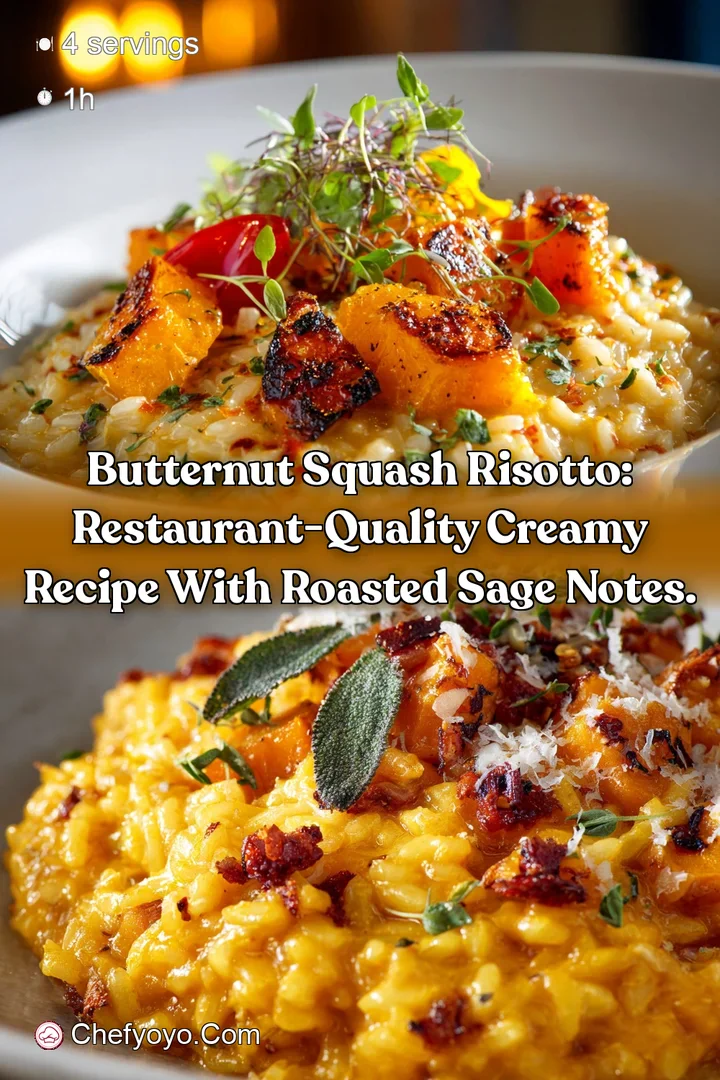
Butternut Squash Risotto: Ultra-Creamy with Roasted Squash and Sage.

- The Ultimate Guide to Creamy Butternut Squash Risotto
- Flavor Depth: The Science Behind the Perfect Autumn Risotto
- Master List: Essential Ingredients for Butternut Squash Risotto Success
- The Classic Method: Step-by-Step Cooking Your Butternut Squash Risotto
- Expert Techniques and Troubleshooting Common Risotto Mistakes
- Practical Guide: Storing and Reheating Leftover Butternut Squash Risotto
- Complementary Pairings and Serving Suggestions
- Recipe FAQs
- 📝 Recipe Card
The Ultimate Guide to Creamy Butternut Squash Risotto
The aroma alone is pure, autumnal magic, isn't it? As the shallots soften in butter and the roasted butternut squash melts into the simmering broth, your kitchen will start smelling like the coziest place on earth.
Trust me, the final texture is what we are really after silky, loose, and rich, exactly how classic Italian all’onda risotto should always be.
Who doesn't need a gorgeous dish that looks incredibly fancy but actually uses simple, seasonal ingredients? Yes, this recipe requires some active stirring, but the process is meditative, and the total cook time is under an hour.
It’s a lifesaver when you want restaurant quality comfort food without spending three hours fussing in the kitchen.
Let's stop talking and start cracking on with this creamy dream. I’m going to walk you through all the tiny hacks I’ve learned over the years especially the secret to getting that deep flavor and perfect al dente bite every single time.
Get ready for your new favorite Butternut Squash Risotto Recipe .
Flavor Depth: The Science Behind the Perfect Autumn Risotto
Why the Roasted Method Elevates Flavor
This step is honestly non-negotiable for maximum flavour impact. Simply boiling or steaming the squash results in a watery, mild ingredient, and we deserve better than that. Tossing the butternut cubes with olive oil, salt, and a dash of nutmeg, then roasting them until deeply golden, maximizes that natural, concentrated sweetness . Roasting creates caramelisation, which is the savory depth that prevents the final dish from tasting bland or watered down. If you want to see how I take roasted squash to the next level, check out my recipe for Holiday Side Dishes: Show Stopping Maple Glazed Butternut Squash .
Decoding All’Onda: Achieving the Perfect Risotto Texture
All’onda translates to "like a wave," and it describes a creamy risotto that flows gently, not one that stands up stiffly like concrete. We achieve this divine flow not just through continuous stirring, but through two specific technical moves.
First, the puréed roasted squash acts as a natural thickener. Second, the final, vigorous mantecatura (that’s the fancy word for finishing) with cold butter and Parmesan emulsifies the fats and starches.
This is why the risotto must be stirred hard off the heat at the very end.
Essential Equipment for a Stress Free Risotto Experience
You absolutely need a heavy bottomed pot or a Dutch oven for this recipe. That heavy base distributes heat evenly, preventing the rice from scorching in the center which is my worst kitchen nightmare, and I’ve had it happen!
A wide pot is also key because it allows the liquid to evaporate quickly and consistently, speeding up the process and ensuring even starch release.
Caramelization Magic: Roasting the Squash for Concentrated Sweetness
The slight char you get on the edges of the squash cubes when roasting is where the true flavor lives. That slightly nutty, complex sweetness contrasts beautifully with the sharp saltiness of the Parmesan and the earthiness of the sage.
By puréeing half of the roasted squash, we integrate that intense sweetness directly into the broth base, thickening it naturally without requiring any cream whatsoever.
The Starch Factor: Why Arborio (or Carnaroli) is Non-Negotiable
You cannot use standard long grain white rice for risotto it simply won't work. Risotto rice, like Arborio or the superior Carnaroli, contains high levels of amylopectin, a soluble starch that releases when cooked slowly and consistently.
This is the starch that dissolves into the broth, creating that thick, velvety sauce we crave. If you try using basmati, you’ll end up with flavored boiled rice, not risotto.
The Brown Butter and Sage Infusion: The Final Flavor Layer
This is my secret weapon; it adds another layer of nutty depth. Once the risotto is done, you should melt a few tablespoons of butter with some reserved sage leaves until the butter turns golden brown and smells like hazelnuts. Drizzle this right over the top just before serving.
That tiny change transforms the entire dish from simply good to utterly magnificent.
Master List: Essential Ingredients for Butternut Squash Risotto Success
Selecting and Preparing Your Butternut Squash
Pick a squash that feels heavy for its size and has a uniform, matte skin. Peeling butternut squash can be a serious workout, but it’s worth the effort for the clean texture. I always recommend using a good quality vegetable peeler. If you want to make life easier on the front end, you can actually slightly soften the squash in the microwave before peeling; it’s a trick I use when making Microwave Spaghetti Squash: Perfectly Fluffy Strands in Under 20 Minutes , and it applies here too!
Broth Quality and Choosing the Right Risotto Rice
Use low-sodium stock, whether chicken or vegetable. If your stock is too salty, the entire risotto will become oversalted as the liquid reduces. Remember: taste your stock before you start.
As for rice, while Arborio is standard, if you see Carnaroli, grab it it’s the "King of Rice" and produces an even creamier, more forgiving texture.
Elevating the Mantecare: Parmesan and Butter Notes
Do not, under any circumstances, use pre-grated Parmesan from a shaker. It contains anti caking agents that make it melt poorly and result in a grainy texture. You need fresh, high-quality Parmesan or a similar aged, salty cheese, like Grana Padano.
Using cold, cubed butter for the final stir creates a much better, smoother emulsion than adding melted or room temperature butter.
Smart Swaps: Alternative Fats and Vegetable Broths
Sometimes we’re missing ingredients, but that’s fine; we're adaptable home cooks! Here are some tried and true substitutions that won't compromise the final dish's integrity:
| Ingredient | Substitution Tip | Why it Works |
|---|---|---|
| Dry White Wine | Dry Vermouth or Quality White Grape Juice | Adds necessary acidity to balance the squash sweetness. If using juice, add a splash of lemon juice later. |
| Unsalted Butter | Ghee or high-quality Olive Oil | Ghee provides nutty flavor; olive oil keeps it creamy, though less rich. |
| Shallots | Yellow Onion (Use half the amount) | Shallots are milder; if using onion, ensure it is finely minced and cooked longer. |
The Classic Method: step-by-step Cooking Your Butternut Squash Risotto

Phase 1: Roasting and Puréeing the Butternut Squash Base
- Roast: Toss the 1 inch squash cubes with oil, salt, pepper, and nutmeg. Spread them out on a sheet pan don't crowd the pan! Roast at 400°F (200°C) until tender and deeply caramelised, about 35 minutes.
- Purée: Scoop out half of the roasted squash and blend it completely smooth with an immersion blender. If it’s too stiff, add a tiny splash of the hot stock. Set this purée aside; this is your secret thickening weapon.
Phase 2: Toasting the Rice (Tostatura) and Building the Sofrito
- Heat Stock: Get your stock simmering in a separate pan and keep it hot. Never let it drop below a gentle simmer.
- Aromatics: In your heavy bottomed pot, melt the butter over medium heat. Add the diced shallots and chopped fresh sage. Cook gently until the shallots are completely translucent and soft (4– 5 minutes). Add the minced garlic and cook for 1 minute until fragrant don't let it brown!
- Tostatura: Add the Arborio rice. Stir constantly for 2– 3 minutes until the edges of the grains become translucent and you smell a distinct, delicious nuttiness. This toasts the starch and helps the grains stay separated.
- Deglaze: Pour in the white wine. Stir until the wine is totally absorbed and evaporated (about 1 minute).
Phase 3: Gradual Liquid Addition and Achieving the Creamy Core
- The Slow Feed: Add about 1 cup of hot stock to the rice. Stir constantly until the liquid is nearly absorbed; you should be able to drag your spoon across the bottom of the pot and see the bottom for a second.
- Repeat: Repeat this process, adding stock one ladleful at a time, for 18– 20 minutes. It takes patience, but this method ensures the slow, even release of starch.
- Al Dente Check: After 20 minutes, taste the rice. It should be tender, creamy on the outside, but still have a firm, satisfying resistance in the very center.
Phase 4: The Final Stir Integrating Purée, Parmesan, and Brown Butter
- Off the Heat: Remove the pot completely from the heat source. This is important!
- Mantecatura: Stir in the reserved squash purée, the set-aside roasted squash cubes, the cold, cubed butter, and the grated Parmesan cheese. Stir vigorously for 1– 2 minutes; this emulsifies everything into that beautiful, glossy sauce.
- Rest: Cover the pot and let the risotto rest for exactly 3 minutes. Serve immediately.
Expert Techniques and Troubleshooting Common Risotto Mistakes
Why Hot Broth is Crucial for Consistent Cooking
This is a mistake I made for years! If you add cold stock, the temperature of the rice drops immediately. This shocks the starch, causing it to seize up and resulting in a chewy, inconsistent, or outright gluey risotto. Always keep the stock at a bare simmer in a separate pot.
Avoiding Glue: Knowing When Your Risotto is Truly Done
The risotto is done the moment it reaches al dente , which is slightly sooner than you might think. When it’s done, it should pour somewhat like thick porridge; if it piles up on the plate, it’s overcooked.
Pull it off the heat when it still looks slightly too loose, because the final resting period (the 3 minutes under a lid) will absorb the last bit of moisture and perfect the texture.
Layered Seasoning: When and How to Add Salt and Pepper
Never dump all your salt in at the beginning! Broth and Parmesan are both salty, and as the liquid reduces, the salt concentrates. I season the squash before roasting, lightly season the sofrito (shallots), and then make my final salt adjustment after the Parmesan is fully incorporated .
This prevents over salting the dish. I prefer white pepper for the final seasoning, as it blends visually into the creamy color.
Chef’s Note: If your risotto tastes flat, it needs one of two things: salt or acid. If you’ve seasoned it well, add a tiny squeeze of fresh lemon juice at the end to brighten the flavour.
Practical Guide: Storing and Reheating Leftover Butternut Squash Risotto
Bringing Leftovers Back to Life (Avoiding a Dry Texture)
Risotto looks tragically stiff and dry the next day, right? That’s because the starches continue to absorb liquid as they cool. Risotto stores beautifully in an airtight container in the fridge for up to 3 days. When reheating, do it on the stovetop.
Put the risotto in a pan over medium low heat and continuously stir in a splash of water, milk, or stock (about 2 3 tablespoons per serving) until the creamy consistency returns. Microwaving yields rubbery rice; avoid it!
Can You Freeze Risotto? Best Practices for Batch Cooking
You can freeze risotto, but the texture will never be exactly the same as fresh. If you plan to freeze, undercook the rice slightly (by about 2 minutes). Let it cool completely, then portion it into airtight freezer bags, pressing out all the air. It lasts up to 2 months.
Thaw overnight in the fridge and reheat using the stovetop method, adding more liquid than usual to regain creaminess.
Complementary Pairings and Serving Suggestions
This butternut squash risotto is rich, earthy, and satisfying, meaning we need contrasting textures and acidity to cut through the richness.
The Ideal Wine Pairing for Butternut Squash and Sage
Look for an acidic, slightly aromatic white wine. An Italian Soave Classico works beautifully, offering almond notes that complement the squash without overpowering it. Alternatively, an unoaked, crisp Chardonnay or a dry Italian Pinot Grigio would be fantastic.
Textural Contrast
I always serve this with a vibrant green salad something peppery like rocket (arugula) dressed simply with lemon juice and high-quality olive oil. The sharp, clean crunch is the perfect foil for the creamy risotto.
Elegant Main Course Alternatives
While this risotto is often a hearty main course on its own, it also works wonderfully as a luxurious side. If you're hosting a dinner party and want to continue the elegant risotto theme, but maybe with a fish component, my recipe for Alternative Christmas Dinner Recipes: Elegant Monkfish Risotto Showstopper uses similar techniques to achieve fantastic results!
Recipe FAQs
Why isn't my risotto creamy, and instead it tastes sticky or dry?
This usually means you added too much liquid too quickly, or you failed to stir adequately, preventing the starch from releasing properly. Ensure the stock is always hot when added, and stir continuously while scraping the bottom of the pot to release the starch gradually; the final addition of butter and Parmesan (the mantecatura) off the heat is critical for achieving maximum creaminess.
Can I substitute the Arborio rice, and what are the best alternatives?
While Arborio is standard, Carnaroli rice is often considered superior for risotto due to its higher amylopectin content, providing exceptional creaminess while holding its shape better.
Alternatively, Vialone Nano is an excellent choice, especially if you prefer a slightly shorter cooking time and a looser final texture.
How can I make this Butternut Squash Risotto vegan or dairy-free?
Easily replace the butter with olive oil or a plant based butter substitute, and use nutritional yeast or a high-quality vegan Parmesan substitute in the final mantecatura. For extra richness, incorporate a spoonful of cashew cream or plant based cream cheese when you add the squash purée.
What is the best way to store and reheat leftover risotto?
Risotto is best eaten immediately, but leftovers can be stored tightly sealed in the refrigerator for up to three days. To reheat, add the risotto to a saucepan with a splash of hot stock or water, stirring gently over low heat until warmed through; be aware that the texture will not be as perfect as fresh.
Do I absolutely need to roast the butternut squash first?
Roasting is highly recommended because it caramelizes the natural sugars in the squash, creating a deeper, more concentrated flavor profile that boiling or steaming cannot achieve. This process also ensures the squash is perfectly soft for puréeing, which is essential for naturally thickening the risotto base.
I want that perfect "all’onda" texture. How do I know when the risotto is done?
All’onda translates to "like a wave" and describes the ideal finished texture: loose, flowing, and creamy, not stiff. Stop adding stock when the rice is al dente (firm to the bite), then remove the pot from the heat and vigorously stir in the final butter and cheese (the mantecatura), ensuring the finished risotto relaxes into a soft mound that slowly spreads on the plate.
Why is dry white wine essential in the risotto process?
The dry white wine serves two crucial purposes: first, its acidity cuts through the richness of the butter, stock, and squash, balancing the overall flavor profile. Second, the alcohol evaporates quickly when added to the toasted rice (the tostatura), releasing necessary aromatic compounds that are locked into the final dish.
Creamy Butternut Squash Risotto Recipe

Ingredients:
Instructions:
Nutrition Facts:
| Calories | 531 kcal |
|---|---|
| Protein | 21.9 g |
| Fat | 17.1 g |
| Carbs | 72.6 g |
