Creamy Scalloped Potatoes Recipe: Two Potato Layers
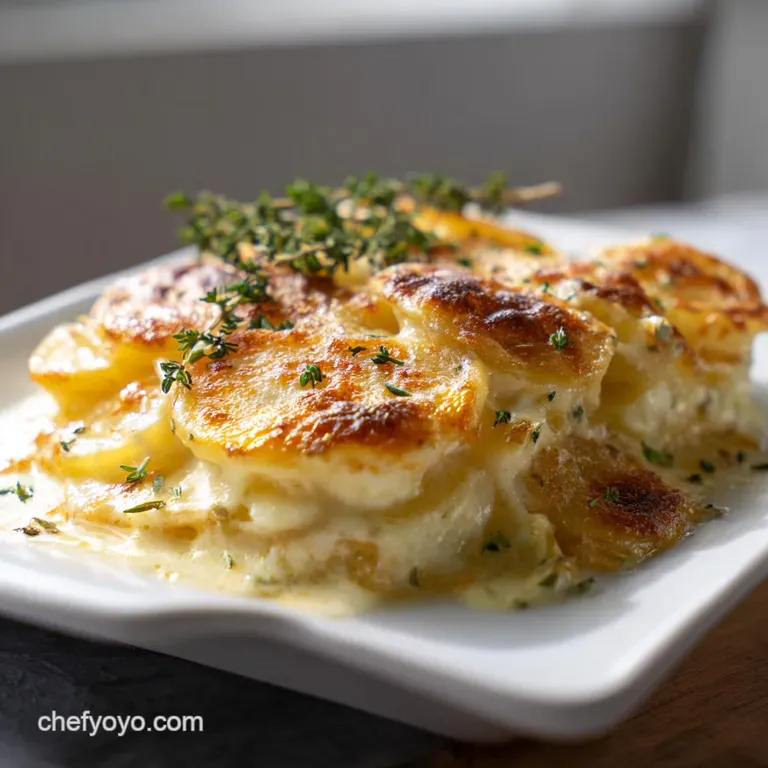
- Time: Active 20 minutes, Passive 1 hours 15 mins, Total 1 hours 35 mins
- Flavor/Texture Hook: Nutty Gruyère crust over velvety, thyme scented layers
- Perfect for: Holiday centerpieces or a comforting Sunday roast side
- Mastering This Velvety Homemade Scalloped Potatoes Recipe
- Science Behind the Silky Sauce
- Elements of a Better Bake
- Tools for a Flawless Result
- Steps for Layering Flavor Profiles
- Fixing Common Potato Baking Issues
- Swaps and Creative Fusion Ideas
- Scaling for Large Groups
- Kitchen Myths Debunked
- Smart Storage and Reheating Tips
- The Best Sides for Serving
- Common Questions About Scalloped Potatoes
- Troubleshooting Common Issues
- Scalloped Potatoes Recipe FAQs
- 📝 Recipe Card
Mastering This Velvety Homemade Scalloped Potatoes Recipe
The first time I attempted a scalloped potatoes recipe, it was a complete disaster. I remember pulling the dish out of the oven only to find a watery, broken mess where the cream had curdled and the potatoes were still weirdly crunchy in the middle.
My kitchen smelled like burnt milk, and honestly, I nearly gave up on potatoes altogether that night. But that failure sparked an obsession with the chemistry of the "perfect" bake, leading me to realize that great scalloped potatoes aren't just about slicing and stacking: they are about managing starch and infusion.
Now, whenever I slide this dish into the oven, the house fills with the warm, woody aroma of fresh thyme and the unmistakable sweet nutty scent of melting Gruyère. You'll hear that satisfying sizzle as the cream bubbles up around the edges, forming a golden, crusted perimeter that shatters under your fork.
It's a dish that feels like a warm hug, but with the refined edge of a contemporary bistro. We aren't just making a side dish here; we're creating a centerpiece that often outshines the main protein.
Science Behind the Silky Sauce
Starch Hybridization: Using a 50/50 mix of Russets and Yukon Golds provides enough amylose for thick sauce bonding while keeping the slices intact. The Russets break down slightly to thicken the cream, whereas the Yukons maintain their buttery, waxy shape.
| Slicing Thickness | Oven Temp | Rest Time | Visual Finished Cue |
|---|---|---|---|
| 1/8 inch (3mm) | 350°F (180°C) | 15 minutes | Deep golden brown, bubbling edges |
| 1/4 inch (6mm) | 350°F (180°C) | 20 minutes | Knife slides through with zero resistance |
| 1/2 inch (12mm) | 375°F (190°C) | 25 minutes | Top is dark amber, sauce is thick |
Choosing the right potato is half the battle won. If you love the texture of mashed potatoes but want them in slice form, you might also enjoy the technique used in this Cloud Nine Creamy recipe, which focuses on maximum fluffiness. However, for our layered bake, we need that specific starch balance to prevent the dish from becoming a casserole of mashed spuds.
Elements of a Better Bake
Component Analysis
| Ingredient | Science Role | Pro Secret |
|---|---|---|
| Whole Milk & Cream | Fat emulsification | Steep the thyme in the warm liquid first |
| All Purpose Flour | Viscosity control | Cook the roux until it smells like toasted nuts |
| Fresh Nutmeg | Flavor bridge | Grate it fresh to release volatile oils |
| Gruyère Cheese | Structural fat | Shred it cold for even melting later |
When selecting your ingredients for this scalloped potatoes recipe, don't skimp on the dairy quality. The interplay between the 480ml of whole milk and 240ml of heavy cream creates a luxurious mouthfeel that lower fat versions simply cannot replicate.
Ingredients & Substitutes
- 1.5 kg Potatoes: Half Russet, half Yukon Gold. Why this? Blends starchy thickening power with waxy structural durability.
- Substitute: All Yukon Golds for a firmer, waxier texture.
- 60g Unsalted butter: Used for the roux and greasing. Why this? Adds rich flavor without the risk of over salting.
- Substitute: Ghee for a higher smoke point and nuttier aroma.
- 35g All purpose flour: The thickener. Why this? Essential for creating a stable, pourable béchamel base.
- Substitute: Cornstarch (use half the amount) for a gluten-free option.
- 480ml Whole milk: Provides the bulk of the liquid. Why this? Keeps the sauce light enough to flow between slices.
- Substitute: 2% milk (sauce will be thinner).
- 240ml Heavy cream: Adds richness. Why this? Higher fat content prevents curdling during the long bake.
- Substitute: Full fat coconut milk (note: adds distinct tropical flavor).
- 150g Gruyère cheese: The primary flavor. Why this? Melts beautifully with a sophisticated, salty sweet profile.
- Substitute: Sharp White Cheddar for a more aggressive, tangy finish.
- 3 cloves Garlic: Smashed. Why this? Infuses the cream with a mellow, aromatic depth.
- Substitute: 1 tsp garlic powder whisked into the flour.
- 2 sprigs Fresh thyme: Why this? Adds an earthy, floral note that cuts through the heavy fat.
- Substitute: 1/2 tsp dried thyme (use less as it's more potent).
- 30g Parmigiano Reggiano: Why this? Creates a crispy, umami rich top crust.
- Substitute: Pecorino Romano for a saltier, sharper bite.
Chef Tip: Freeze your block of Gruyère for about 10 minutes before shredding. This prevents the cheese from clumping or softening in your hands, ensuring you get those long, beautiful strands that melt evenly across the potatoes.
Tools for a Flawless Result
You don't need a professional kitchen, but a mandoline slicer is honestly a life changer for this recipe. If you've ever tried to hand slice 1.5 kg of potatoes into uniform 1/8 inch discs, you know the struggle. A mandoline ensures every slice is identical, which means every slice cooks at the exact same rate.
No more biting into one soft potato and one hard one.
You'll also want a heavy bottomed saucepan for the sauce and a 9x13 inch ceramic or glass baking dish. Avoid thin metal pans if you can, as they tend to scorch the bottom layer of cream before the center is fully tender. A sturdy whisk is also non negotiable for keeping that roux based sauce smooth and lump free.
Steps for Layering Flavor Profiles
- Prepare the oven. Preheat to 350°F (180°C). Note: This moderate temperature allows the potatoes to soften before the cheese burns.
- Sling the slices. Peel and slice 1.5 kg potatoes into 1/8 inch discs using a mandoline.
- Infuse the dairy. In a saucepan, combine 480ml milk, 240ml cream, 3 smashed garlic cloves, and 2 thyme sprigs. Heat until steaming, then remove from heat to steep for 10 minutes.
- Create the base. Melt 60g butter in a separate pot, whisk in 35g flour, and cook for 2 minutes until it smells toasted and pale gold.
- Build the sauce. Slowly whisk the infused milk mixture (discard garlic and thyme) into the roux. Simmer until the sauce coats the back of a spoon.
- Season the mix. Stir in 1 tsp salt, 1/2 tsp pepper, and 1/2 tsp freshly grated nutmeg.
- Layer the dish. Grease your pan with 1 tbsp butter. Arrange a third of the potatoes in an overlapping pattern.
- Add the cheese. Pour a third of the sauce over the potatoes and sprinkle with 50g of shredded Gruyère. Repeat layers twice more.
- Finish the top. Sprinkle the remaining 30g Parmigiano Reggiano over the final layer.
- Bake the masterpiece. Cover with foil and bake for 45 minutes. Remove foil and bake another 30 minutes until the top is bubbling and deep mahogany.
| Fresh Ingredients | Shortcut Swaps | Flavor Impact |
|---|---|---|
| Fresh Garlic & Thyme | Powdered Aromatics | Less depth, more "pantry staple" taste |
| Homemade Roux | Cream of Mushroom Soup | Saltier, thicker, lacks subtle nutmeg notes |
| Block Gruyère | Pre shredded Mix | Grainier texture due to anti caking agents |
If you find yourself running short on time and need a faster sauce solution, you can adapt the thickening method from my Country Gravy Recipe, which is designed for speed and silkiness. Just remember that for the oven, we need that extra fat from the heavy cream to maintain stability over the long bake.
Fixing Common Potato Baking Issues
Why Your Sauce Curdled
This is the most common heartbreak in a scalloped potatoes recipe. Curdling usually happens because of two things: high acidity or too much heat too fast. If your potatoes aren't fresh, or if you added a splash of wine that was too acidic, the proteins in the milk will clump together.
To prevent this, always use full fat dairy. The fat acts as a buffer, protecting the proteins from denaturing and separating into that "cottage cheese" look.
Fixing Crunchy Centers
If you pull the dish out and the center still feels like a raw apple, your slices were likely too thick or your oven has cold spots. You can fix this by adding a splash more warm milk around the edges, covering it tightly with foil, and popping it back in for 15 minutes.
The steam trapped by the foil will act like a pressure cooker to soften those stubborn middle layers.
| Problem | Root Cause | Solution |
|---|---|---|
| Greasy surface | Cheese separated | Reduce oven temp; use aged Gruyère |
| Bland flavor | Under seasoned layers | Salt the sauce more than you think; it must season the potatoes |
| Sauce too thin | Potatoes released water | Use Russets for starch; rest dish 20 mins after baking |
Common Mistakes Checklist
- ✓ Never soak sliced potatoes in water (you need that surface starch for the sauce).
- ✓ Pat the potato slices dry if they seem moist before layering.
- ✓ Whisk the milk into the roux very slowly at first to avoid lumps.
- ✓ Don't skip the nutmeg - it's the bridge between the cream and the earthy potato.
- ✓ Always let the dish rest; the sauce thickens significantly as it cools slightly.
Swaps and Creative Fusion Ideas
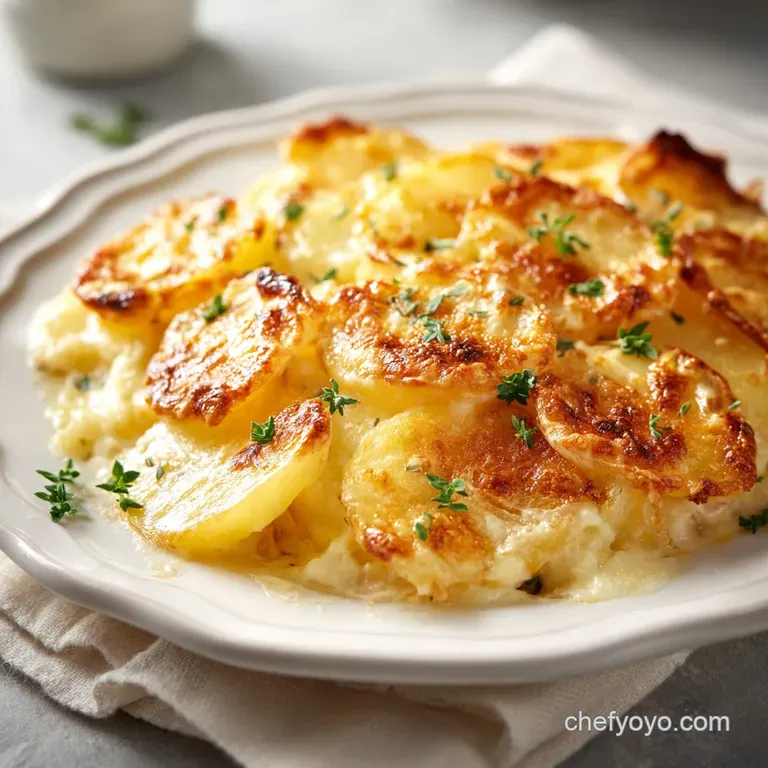
If you want to take this scalloped potatoes recipe into a different flavor territory, think about "fusion" additions. For a smoky, contemporary twist, I love adding a teaspoon of smoked paprika to the flour or layering in some very thinly sliced pancetta between the potato levels.
It adds a salty crunch that contrasts beautifully with the velvety interior.
Adapting for the Slow Cooker
You can actually make this in a crockpot! Grease the insert well, layer the potatoes and sauce as usual, but skip the final cheese topping until the end. Cook on low for 4 to 5 hours.
About 30 minutes before serving, sprinkle the cheese on top and leave the lid slightly ajar to let excess moisture escape.
Swapping the Dairy
For those looking for a lighter touch, you can swap half the milk for a high-quality chicken or vegetable stock. This results in a "Potatoes Boulangère" style dish. It won't be as creamy, but the potato flavor will be much more pronounced.
If you go this route, increase the garlic and thyme to compensate for the lost richness.
Scaling for Large Groups
Scaling Down (2-4 people): Use a smaller 8x8 square pan. Reduce the baking time by about 15 minutes. Since you can't easily use half an egg (not that we use them here, but for future reference!), focus on keeping the ratio of sauce to potato the same.
Scaling Up (15-20 people): When doubling the recipe for a big party, don't just double the salt and spices. Use 1.5x the salt first, then taste. You'll likely need to bake in two separate dishes rather than one giant deep one, as the center of a very deep dish will take forever to cook, leading to burnt edges and raw middles.
Chef Tip: If you are doubling the recipe, increase the liquid slightly (about 10%) because more surface area in a larger pan means more evaporation during that 1 hours 15 mins bake time.
Kitchen Myths Debunked
Many people believe you must peel potatoes for a scalloped potatoes recipe. That is simply not true! If you use Yukon Golds, the skins are so thin they practically disappear during the long bake, adding a bit of rustic texture and extra nutrients. Just give them a very good scrub first.
Another myth is that you need to boil the potatoes before baking. This actually ruins the texture. Pre boiling makes the potatoes waterlogged, meaning they won't absorb the seasoned cream sauce as they bake. You want the potatoes to "drink" the cream while they soften in the oven.
Smart Storage and Reheating Tips
Storage: This dish keeps beautifully in the fridge for up to 4 days. In fact, many people (myself included) think it tastes even better on day two because the flavors have had time to truly meld and the starch has fully set.
Zero Waste: Don't throw away those potato peels! Toss them with a little olive oil, salt, and smoked paprika, then air fry them at 400°F (200°C) for 8 minutes. You get a crispy, nutritious snack while your main dish bakes.
Also, if you have leftover sauce, it makes a stellar base for a quick potato leek soup the next day.
Reheating: To avoid the sauce breaking when reheating, skip the microwave. Place a portion in a small oven safe dish, add a tiny splash of milk to loosen the sauce, cover with foil, and heat at 325°F (160°C) until hot.
This preserves that silky texture we worked so hard to achieve.
The Best Sides for Serving
This scalloped potatoes recipe is quite rich, so you want to pair it with something that has a bit of acidity or brightness. A simple roasted chicken with lemon and rosemary is a classic for a reason. The citrus cuts right through the Gruyère and cream.
If you’re looking for a vegetable pairing, a crisp green salad with a sharp vinaigrette or some blanched green beans with toasted almonds works wonders. You want to avoid other heavy, creamy sides. Trust me, the potatoes are the star of the show here: let them have the spotlight!
Common Questions About Scalloped Potatoes
Troubleshooting Common Issues
| Issue | Solution |
|---|---|
| Use red potatoes for this recipe | Red potatoes are waxy and will hold their shape very well, but they don't release enough starch to thicken the sauce on their own. If you use them, make sure your roux is slightly thicker (add an extr |
| Stop the top from burning | If your oven runs hot and the Parmigiano Reggiano is browning too quickly, simply tent the dish loosely with foil. This reflects the direct heat while allowing the steam to continue cooking the potato |
| Is this recipe gluten-free | As written, it contains all purpose flour. However, you can easily make it gluten-free by using a 1:1 gluten-free flour blend for the roux or by thickening the infused cream with a cornstarch slurry ( |
| What is the difference between scalloped and au gratin | Traditionally, scalloped potatoes are cooked in a simple cream sauce with herbs, while au gratin potatoes involve layers of cheese. This recipe is technically a hybrid, giving you the best of both wor |
| Sauce watery | If the sauce is watery, the potatoes might have been too wet when they went in, or you didn't cook the roux long enough. Make sure the sauce is thick enough to coat a spoon before you start layering. |
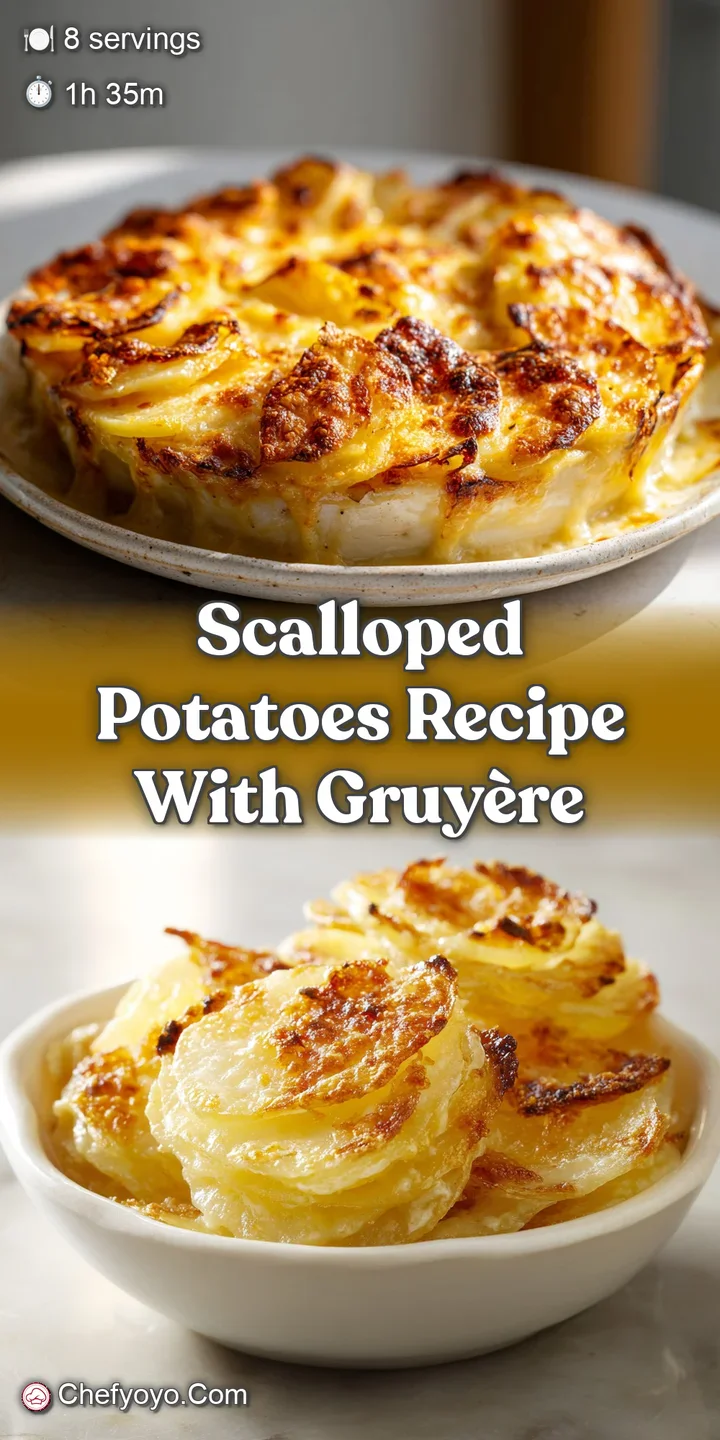
Scalloped Potatoes Recipe FAQs
What are some common mistakes to avoid when making scalloped potatoes?
Avoid soaking the sliced potatoes in water. You need the surface starch on the slices to help thicken your cream sauce during the bake; soaking washes this vital component away.
What are the ingredients in scalloped potatoes?
Potatoes, dairy (milk/cream), butter, flour, aromatic seasoning (garlic, thyme, nutmeg), and cheese (Gruyère/Parmesan). The flour creates the roux base for the sauce, while the specific potato blend balances starch release for thickening and structural integrity.
What is the difference between scalloped and au gratin potatoes?
Scalloped traditionally omits cheese in the layers, while au gratin always includes it. Au gratin often features a topping of breadcrumbs or cheese, whereas classic scalloped relies purely on the rich cream sauce for moisture and flavor.
Are you supposed to boil potatoes for scalloped potatoes?
No, absolutely do not pre-boil the potatoes. Boiling waterlogs the starch, preventing the potato slices from absorbing and thickening the seasoned cream sauce properly while they bake.
How do I prevent my cream sauce from curdling during the long bake time?
Use high fat dairy and avoid adding acidic ingredients too early. The fat in the heavy cream acts as a stabilizer; a lack of fat or the addition of high acid (like wine) too quickly causes the milk proteins to separate.
What is the secret to getting a smooth, lump free sauce?
Whisk the cool, infused milk mixture into the hot roux very slowly. If you rush this step, the roux clumps immediately; mastering this initial incorporation technique is key to a seamless sauce, a principle also vital in making a good Garlic Butter recipe base.
Why do my potatoes have crunchy spots in the middle after baking?
The slices were not uniform in thickness, or the dish was under baked. Use a mandoline to ensure all slices are the same thinness (about 1/8 inch) so they absorb moisture and cook evenly throughout the baking period.
Creamy Gruyere Scalloped Potatoes
Ingredients:
Instructions:
Nutrition Facts:
| Calories | 459 kcal |
|---|---|
| Protein | 13.5 g |
| Fat | 27.9 g |
| Carbs | 40.3 g |
| Fiber | 2.6 g |
| Sugar | 2.5 g |
| Sodium | 465 mg |
