Easy Peach Cobbler with Canned Peaches: Crisp Top
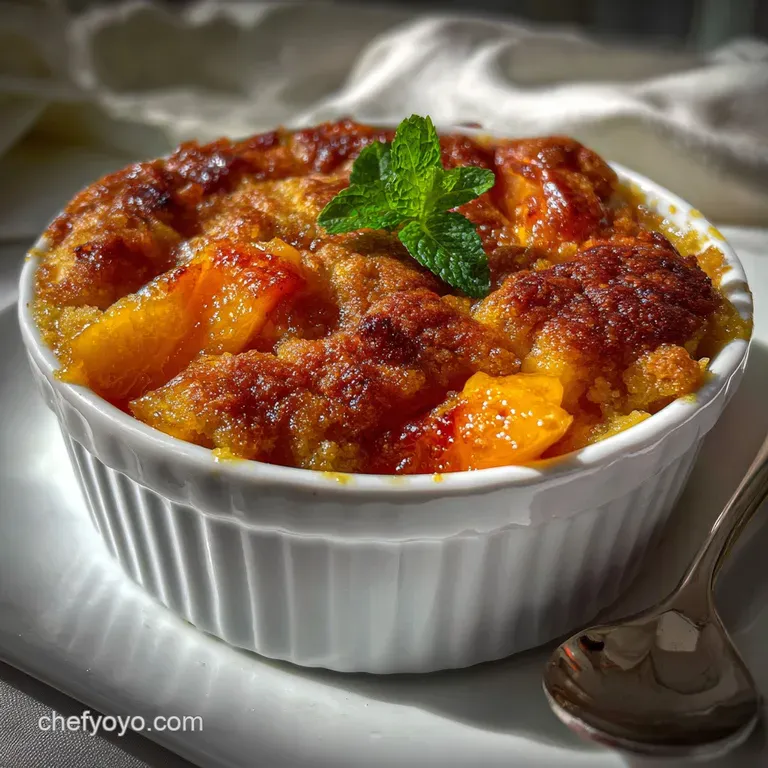
- Effort/Time: 15 minutes prep; 1 hour total.
- Flavor Hook: Concentrated fruit sugars paired with a warm, nutmeg-infused buttery crumb.
- Perfect for: Year-round entertaining and shelf-stable-pantry desserts.
- The Best Southern Peach Cobbler with Canned Peaches (Easy & Classic)
- Why This Recipe Works: The Science of a Perfect Bake
- Essential Ingredients and Simple Substitutions
- Step-by-Step Instructions for the Perfect Cobbler
- Pro Tips for Success and Common Mistakes to Avoid
- Storage, Freezing, and Reheating Guidelines
- Creative Serving Suggestions for Your Southern Cobbler
- Common Myths About Peach Cobbler
- Recipe FAQs
- 📝 Recipe Card
The Best Southern Peach Cobbler with Canned Peaches (Easy & Classic)
Few things are more frustrating than a dessert that looks like a masterpiece but tastes like a wet sponge. I spent years trying to make peach cobbler with canned peaches work, only to end up with a floury, pale mess that lacked the soul of a Southern kitchen.
I realized I was treating canned fruit like fresh fruit, which is a fundamental mistake in moisture management.
My breakthrough came when I stopped draining all the juice and started focusing on the chemistry of the crust. This recipe leverages the pre-softened texture of canned peaches to create a dessert that is ready in under an hour.
You get the crunch of a biscuit, the silkiness of a custard, and the intense sweetness of a summer harvest.
We are going to use a specific layering technique that allows the batter to migrate through the fruit during the bake. This isn't just a "dump cake"; it’s a calculated interaction of fats and leavenings.
Let’s get into the science of why this peach cobbler with canned peaches actually works.
Why This Recipe Works: The Science of a Perfect Bake
Yes, this peach cobbler with canned peaches succeeds because we use controlled starch gelatinization and specific thermal layering to prevent a gummy texture. By melting the butter directly in the dish, we create a non-stick, high fat environment that fries the bottom of the batter while the top steams against the fruit.
- Starch Gelatinization: The 1 tbsp cornstarch binds with the peach syrup at 175°F, transforming thin liquid into a stable, glossy glaze.
- Maillard Reaction: Amino acids in the 1 cup whole milk react with the 1.25 cups granulated sugar at high heat to create a deep, golden brown crust and nutty aromatic compounds.
- Leavening Expansion: The 1 tbsp baking powder releases CO2 twice once when hitting the milk and again in the oven heat forcing the batter to rise through the peaches.
- Pectin Stability: Canned fruit has already undergone heat processing, meaning the pectin is stabilized and won't release excess water mid-bake like fresh peaches often do.
Why This Easy Peach Cobbler Recipe Works Every Time
Consistency is the primary benefit when you make a peach cobbler with canned peaches. Fresh fruit varies in acidity and water content based on the season, which can ruin your ratios.
By using 2 cans (15 oz each) of canned sliced peaches, you are working with a calibrated sugar-to-acid profile that ensures the 1.25 cups of sugar doesn't become cloying.
The Secret to a Golden Brown Buttery Crust
Most people mix the butter into the flour, but for the best peach cobbler with canned peaches, we melt the 1/2 cup unsalted butter in the pan first. This creates a "frying" effect for the batter.
As the batter expands, it absorbs the butter, resulting in a texture that mimics a shortbread biscuit hybrid.
Why Canned Fruit Guarantees Consistent Results
Canned fruit provides a reliable texture that is essential for a 45 minute bake. Because the peaches are pre-cooked, they reach the "shatter" point of the sugar syrup at the exact same time the batter finishes its crumb set.
This synchronization is why this peach cobbler with canned peaches is a staple for busy home cooks.
Balancing Spices for a Deeply Flavored Filling
The 1 tsp ground cinnamon and 1/4 tsp ground nutmeg are not just for aroma; they provide a bitter counterpoint to the heavy syrup. Adding 1 tbsp lemon juice is the "secret" technical move it brightens the pH levels, which cuts through the fat of the butter and makes the fruit flavors pop.
Essential Ingredients and Simple Substitutions
The Science Behind Canned Sliced Peaches
- What They Do
- Provide the structural and flavor base of the dessert.
- The Chemistry
- Pre-gelatinized pectin within the fruit cells prevents the cobbler from becoming watery during the secondary baking phase.
- Why This Matters
- It ensures a consistent "bite" and prevents the fruit from disintegrating into mush under the batter weight.
The Science Behind Baking Powder
- What It Does
- Acts as the primary chemical leavener for the crust.
- The Chemistry
- A base (sodium bicarbonate) and an acid (cream of tartar) react when hydrated to produce carbon dioxide gas.
- Why This Matters
- This gas creates the "velvety" crumb structure and allows the batter to float above the fruit layer.
The Science Behind Whole Milk
- What It Does
- Hydrates the flour and provides the proteins needed for browning.
- The Chemistry
- Emulsification occurs between the milk fats and the melted butter, creating a smooth, homogenous batter.
- Why This Matters
- Higher fat content in whole milk leads to a more tender, less "bread like" crust.
Ingredients & Substitutions Table
| Original Ingredient | Substitute | Why It Works |
|---|---|---|
| 1/2 cup Unsalted Butter | Salted Butter | Adds savory depth; omit the 1/2 tsp salt from the batter if using. |
| 1 cup Whole Milk | Full fat Oat Milk | Maintains the creamy mouthfeel but adds a slight toasted grain note. |
| 1.25 cups Granulated Sugar | Light Brown Sugar | Adds molasses notes; Note: Resulting crust will be softer and darker. |
| 1 tbsp Cornstarch | Arrowroot Powder | Same thickening power at lower temperatures; results in a clearer glaze. |
Choosing Between Peaches in Heavy Syrup vs. Juice
When making peach cobbler with canned peaches, I recommend [Del Monte Sliced Peaches] in heavy syrup for a traditional Southern "sticky" finish. If you use peaches in juice, you may need to increase the cornstarch by 1/2 tsp to account for the lower sugar viscosity.
Pantry Staples for a Foolproof One-Bowl Batter
You likely have [Gold Medal All-Purpose Flour] and [Domino Granulated Sugar] in your pantry right now. This recipe relies on these basic building blocks because their predictable protein and crystal sizes ensure the batter rises evenly across the [Lodge Cast Iron Skillet] or baking dish.
Modifying the Spices for a Custom Flavor Profile
If you want to deviate from the classic cinnamon nutmeg profile, try adding a pinch of ground ginger or cardamom. These spices interact with the 1 tbsp lemon juice to create a more "bright" and floral peach cobbler with canned peaches.
Easy gluten-free and dairy-free Swaps
For a gluten-free version, use [King Arthur Measure for Measure] flour. The xantham gum in the blend will mimic the gluten network needed to support the peaches. If you’re looking for a savory dinner before this sweet treat, my Taco Soup Recipe: The Dump and Simmer Classic with Ranch Secret uses similar pantry friendly logic.
step-by-step Instructions for the Perfect Cobbler
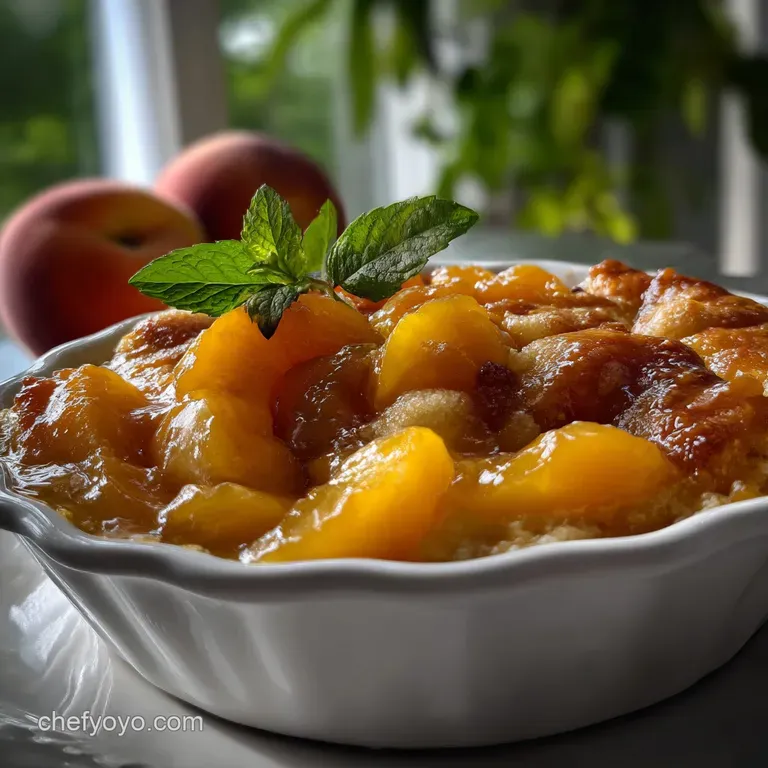
Preparing the Spiced Canned Peach Base
1. Preheat the oven to 375°F (190°C). Note: High initial heat is required to trigger the leavening gases before the batter becomes too heavy with fruit moisture.
2. Combine peaches, syrup, sugar, and spices. In a [Farberware Saucepan], mix 2 cans (15 oz each) canned peaches (with syrup), 1/4 cup granulated sugar, 1 tsp cinnamon, 1/4 tsp nutmeg, 1 tbsp lemon juice, and 1 tbsp cornstarch.
Note: Dissolving the sugar and spices in a saucepan ensures the flavors penetrate the fruit slices thoroughly.
3. Simmer for 5 minutes. Heat the mixture until it thickens slightly and the cornstarch loses its cloudy appearance. Note: This pre-cook step prevents the filling from remaining "runny" after the cobbler leaves the oven.
Mixing Your Simple Cobbler Batter
4. Melt the 1/2 cup unsalted butter. Place the butter in a 9x13 [Pyrex Glass Baking Dish] and put it in the oven until melted and sizzling. Note: Bubbling butter creates a thermal barrier that prevents the batter from sticking to the glass.
5. Whisk the dry ingredients. In a [KitchenAid Mixing Bowl], combine 1 cup all-purpose flour, 1 cup granulated sugar, 1 tbsp baking powder, and 1/2 tsp salt. Note: Aerating the flour with a whisk ensures the baking powder is evenly distributed for a uniform rise.
6. Incorporate the 1 cup whole milk. Stir the milk into the dry ingredients until just combined. Note: Over mixing develops gluten, which will turn your cobbler crust tough instead of velvety.
The Proper Way to Layer Your Ingredients
7. Pour batter over the melted butter. Do NOT stir. Note: Maintaining the butter as a separate layer allows the batter to "fry" as it expands upward.
8. Spoon the peach mixture over the batter. Again, do NOT stir. Note: The weight of the peaches will naturally push some batter to the top, creating the characteristic "cobbled" look.
Baking Until Bubbling and Golden Brown
9. Sprinkle with 1 tbsp turbinado sugar.Note: The large crystals of [C&H Turbinado Sugar] don't dissolve easily, providing a distinct "shatter" crunch on the surface.
10. Bake for 45 minutes. The cobbler is done when the top is golden brown and the fruit juices are bubbling around the edges. Note: The internal temperature should reach 200°F to ensure the center batter is fully set.
Pro Tips for Success and Common Mistakes to Avoid
Managing the "syrup-to-batter" ratio is the most common failure point when making peach cobbler with canned peaches. If you use too much liquid, the batter can't overcome the surface tension and remains submerged.
Common Mistakes Table
| Problem | Why It Happens | The Fix | Pro Protocol |
|---|---|---|---|
| Gummy Batter | Over mixing or under baking. | Stir until just moistened; bake until 200°F. | Use a [ThermoPro Digital Thermometer] to verify the center is set. |
| Soggy Bottom | Too much peach syrup used. | Use 1.5 cans of syrup or increase cornstarch. | Drain 1/4 cup of the liquid if the peaches seem excessively watery. |
| Pale Crust | Oven temperature too low. | Increase to 375°F and use the top rack. | Switch to "Convection" for the last 5 minutes to accelerate the Maillard reaction. |
Storage, Freezing, and Reheating Guidelines
Yes, you can store leftover peach cobbler with canned peaches in the refrigerator for up to 4 days when covered tightly with plastic wrap or [Reynolds Kitchens Aluminum Foil].
- Freezing: This cobbler freezes well for up to 3 months. Wrap individual portions in plastic wrap and store in a [Ziploc Freezer Bag].
- Reheating: To maintain the "shatter" of the crust, reheat in a 350°F oven for 10 15 minutes. Avoid the microwave if possible, as it will make the crust rubbery through rapid protein denaturation.
- make-ahead: You can prep the dry batter mix and the peach mixture 24 hours in advance, but do not combine them until you are ready to bake.
Creative Serving Suggestions for Your Southern Cobbler
While many people serve this plain, the richness of the peach cobbler with canned peaches calls for a temperature contrast. If you're planning a full menu, this pairs excellently after a lighter meal like an Asparagus Egg and Bacon Salad with Dijon Vinaigret: Classic Spring Lunch.
How to Prevent a Soggy Peach Cobbler with Canned Peaches
The key is the cornstarch. Without it, the sugar in the canned syrup will pull even more moisture out of the batter, creating a soggy layer. Always ensure your peach mixture reaches a simmer before it hits the baking dish to activate the thickening agents.
Adjusting Bake Times for Different Baking Dishes
If you use a [Lodge Cast Iron Skillet], the cobbler may cook 5 minutes faster because the metal conducts heat more efficiently than glass. If you use a deep dish ceramic baker, you might need to add 5 10 minutes to the bake time to ensure the center isn't raw.
Storing Leftovers to Maintain Optimal Texture
When storing, leave a small corner of the container open until the cobbler reaches room temperature. Trapping steam while the dish is hot will turn the crispy turbinado sugar topping into a sticky glaze.
Can You Freeze Baked Peach Cobbler?
Yes, but the texture of the peaches will soften further upon thawing. For the best results, reheat the frozen cobbler directly from the freezer in a 325°F oven for 25 minutes. This prevents the "mush" factor that occurs during a slow thaw.
The Classic Vanilla Bean Ice Cream Pairing
The cold, fatty cream of [Haagen Dazs Vanilla Bean] ice cream melts into the warm crevices of the cobbler, creating a self saucing effect. The fat in the ice cream also helps to coat the palate, balancing the high sugar content of the peaches.
Elevating Your Dessert with a Salted Caramel Drizzle
For a gourmet twist on this peach cobbler with canned peaches, add a drizzle of salted caramel. The salt enhances the nutmeg and cinnamon, making the dessert feel more complex. If you enjoy making your own sweets, you might also love my Chocolate Turtles: Decadent Homemade Clusters with Perfect Caramel.
Common Myths About Peach Cobbler
Myth: You must drain all the syrup from the canned peaches. Truth: Draining all the syrup removes the concentrated peach flavor and the necessary moisture that keeps the fruit from drying out. We use the syrup as a base for our spiced glaze.
Myth: Fresh peaches are always better than canned. Truth: For a cobbler, canned peaches often provide a superior, consistent texture. Fresh peaches can be stringy or mealy depending on the ripeness, whereas canned peaches are processed at peak ripeness.
Myth: You should stir the batter into the peaches. Truth: Stirring creates a homogenous cake rather than a "cobbled" texture. Leaving the layers separate is the scientific secret to the varied textures of a true Southern peach cobbler with canned peaches.

Recipe FAQs
Do I have to peel canned peaches before using them?
No. Canned peaches are pre-peeled and ready to use immediately. This feature greatly reduces preparation time compared to fresh fruit recipes.
Is cornstarch necessary for the filling?
Yes, cornstarch prevents a soggy bottom crust. It rapidly hydrates and thickens the fruit syrup during baking, creating a stable gel layer between the filling and crust.
Can I use frozen peaches instead of canned?
Use fresh or thawed fruit only if draining them completely first. Frozen fruit releases excess water during thawing, compromising the cornstarch stabilization required for this recipe structure. This contrasts with recipes like the Brussels Sprouts Butternut Squash Pasta with Sage Brown Butter Sauce where excess liquid is sometimes desired.
Can I substitute apple pie spice for cinnamon?
Apple pie spice offers a more complex flavor profile. Cinnamon provides singular warmth, whereas apple pie spice incorporates nutmeg and allspice for a richer, layered depth.
Why is the top crust sinking or becoming dense?
Oven temperature was too low during the initial 20 minutes of baking. The crust requires high initial heat to rapidly set the structure via steam expansion before the internal butter melts fully.
- Ensure oven rack is center
- Do not open the door prematurely
- Use baking powder measured precisely
Is this recipe better than one using fresh peaches?
Canned peaches offer superior textural consistency for cobbler. Fresh peaches vary widely in moisture and sugar content, leading to unpredictable syrup thickness, unlike the controlled environment of canned fruit.
Myth: Baking soda is an acceptable substitute for baking powder.
Myth: Baking soda requires an acid to activate, unlike baking powder, which contains both leavener and acid. If no acid is present, the final product will taste metallic and fail to rise properly, resulting in a flat texture similar to poorly mixed dough for items like Summer Macaroni Salad with Tomatoes: The Creamy Picnic Essential.
Easy Canned Peach Cobbler
Ingredients:
Instructions:
Nutrition Facts:
| Calories | 353 kcal |
|---|---|
| Protein | 3 g |
| Fat | 13 g |
| Carbs | 60 g |
| Fiber | 1 g |
| Sugar | 51 g |
| Sodium | 323 mg |
