Authentic Fresas Con Crema Recipe | No-Bake Dream
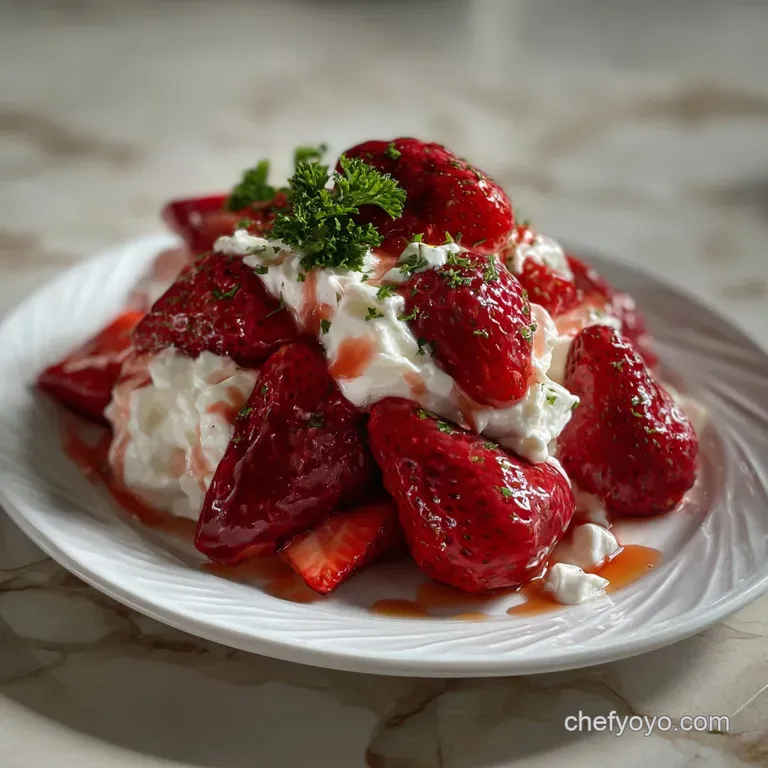
- Effort/Time: Low-effort, 45 minute total process.
- Flavor Hook: Bright, acidic berry notes stabilized by a decadent, cinnamon-flecked cream.
- Perfect for: Make-ahead summer gatherings or high-density dessert service.
- Master the Ultimate fresas con crema recipe
- The Science of Osmosis and Emulsion Stability
- Critical Logistics for the Perfect Texture Balance
- The Alchemy of Dairy: Sourcing Your Elements
- Precision Tools for Emulsifying the Crema Sauce
- The 45 Minute Protocol for Velvety Strawberry Perfection
- Why Your Sauce Separates: Expert Recovery Tactics
- ⚗️ The Scaling Lab: The Physics of Quantity
- Common Myths
- Preserving Texture and Flavor During Cold Storage
- The Final Presentation: Sensory Finishing Touches
- Recipe FAQs
- 📝 Recipe Card
Master the Ultimate fresas con crema recipe
Nothing kills a summer party faster than a bowl of limp, watery strawberries swimming in a broken, curdled sauce. We have all been there you spend $20 on organic berries only to have the sugar draw out so much juice that the entire dessert turns into a thin, pink soup within twenty minutes.
It is a frustrating waste of high-quality produce and dairy that leaves your guests with a lackluster, soggy experience.
I once served a batch of this at a catering gig where I rushed the maceration process and didn't account for the moisture content of the berries. The result was a separation of fats and water that looked more like a science experiment gone wrong than a traditional Mexican dessert.
I had to pivot and turn it into a smoothie on the fly just to save face. It taught me that the physics of moisture control is non-negotiable when building a stable cream base.
The secret to a world class fresas con crema recipe isn't just dumping milk over fruit; it’s the scientific application of maceration to strengthen the fruit's texture followed by a staged emulsion.
By utilizing Nestlé Media Crema and La Lechera Sweetened Condensed Milk, we create a lipid protein matrix that holds its structure even as the strawberries release their natural juices.
The result is a velvety, mahogany flecked dessert that shatters the expectation of what a simple "fruit and cream" dish can be.
The Science of Osmosis and Emulsion Stability
- Osmotic Extraction: Granulated sugar applied to the sliced berries creates a high solute concentration outside the fruit cells, drawing out moisture and concentrated flavor through the semi permeable cell walls.
- Lipid Scaffolding: The high fat content in Nestlé Media Crema acts as a structural stabilizer, preventing the thinner evaporated milk from breaking the emulsion when acidic berry juice is introduced.
- Pectin Preservation: Brief maceration softens the strawberry's cellulose without fully collapsing the pectin structure, maintaining a "snappy" mouthfeel rather than a mushy one.
Critical Logistics for the Perfect Texture Balance
To achieve the intended results of this fresas con crema recipe, you must adhere strictly to the timing and yields outlined below. Deviating from the ratios of the "three milks" will result in a sauce that is either cloyingly thick or too thin to coat the fruit effectively.
- Recipe Yield: 6 servings
- Preparation Duration: 15 minutes
- Stabilization/Cook Time: 30 minutes
- Total Time Commitment: 45 minutes
The Alchemy of Dairy: Sourcing Your Elements
| Ingredient | Chemical/Physical Role (Science) | The Pro Secret (Why This Matters) |
|---|---|---|
| Fresh Strawberries | Provides the acid and fiber base | Choose firm berries; overripe fruit collapses during osmosis. |
| Media Crema | High fat shelf stable cream for emulsion | Provides a unique "velvety" mouthfeel that heavy cream cannot replicate. |
| Sweetened Condensed Milk | Hygroscopic sweetener and thickener | Acts as the primary binder for the various dairy densities. |
| Mexican Crema | Cultured acidity and lactic acid | Balances the sugar levels and prevents the palate from becoming "fat-fatigued." |
- 2 lbs fresh strawberries, hulled and sliced Why this? Provides the structural volume and essential tartness.
- 1 tbsp granulated sugarWhy this? Initiates the osmotic maceration process.
- 7.6 oz Nestlé Media CremaWhy this? A shelf stable cream with a specific fat-to-protein ratio for stability.
- 14 oz La Lechera Sweetened Condensed Milk
- 0.5 cup Carnation Evaporated Milk
- 0.5 cup Cacique Mexican Crema (or sour cream) Why this? Adds necessary tang to cut through the heavy lipids.
- 1 tbsp Nielsen Massey Mexican Vanilla Extract
- 0.25 tsp ground cinnamon
| Original Ingredient | Substitute | Why It Works |
|---|---|---|
| Mexican Crema | Sour Cream + 1 tsp Lime Juice | Replicates the cultured tang and thick viscosity. |
| Media Crema | Heavy Whipping Cream | Similar fat content, though slightly less stable at room temp. |
| Granulated Sugar | Agave Nectar | Maintains sweetness; the liquid form integrates faster into the berries. |
Precision Tools for Emulsifying the Crema Sauce
Using the right tools ensures that the fats in the fresas con crema recipe don't separate. I recommend a Pyrex Glass Mixing Bowl for the berries, as glass is non-reactive and won't leach metallic flavors when the strawberry acids are released.
For the crema, a KitchenAid Stainless Steel Whisk is essential to incorporate the dense condensed milk into the lighter evaporated milk.
If you are prepping this for a large summer gathering, perhaps alongside a savory main like my burger patty recipe, having your mise en place ready is vital. Use a Victorinox Fibrox Pro Chef's Knife for clean, uniform strawberry slices; jagged cuts lead to uneven maceration and a mushy final texture.
The 45 Minute Protocol for Velvety Strawberry Perfection
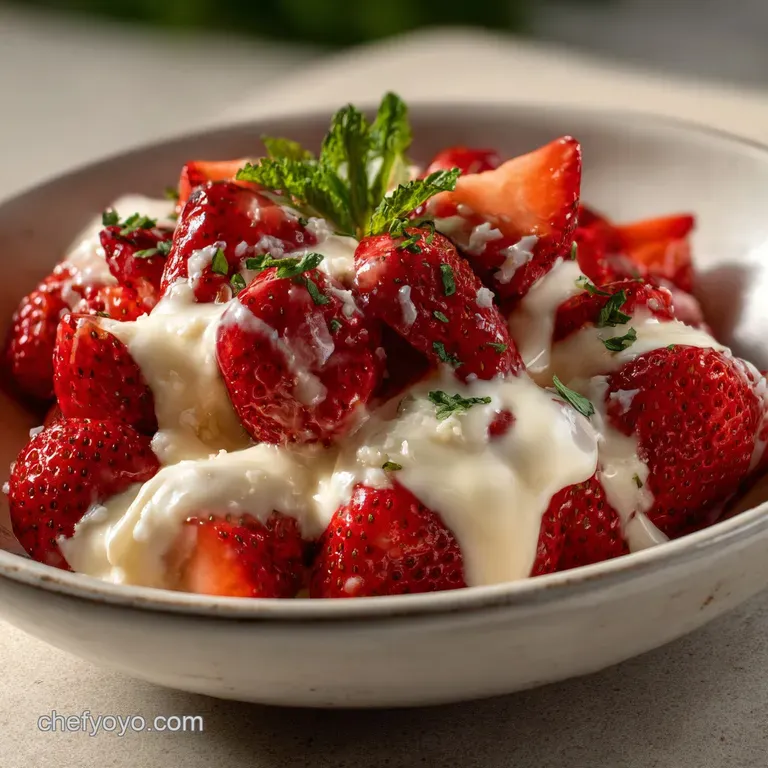
- Wash and dry the 2 lbs of strawberries thoroughly. Note: Excess water will dilute the final cream emulsion.
- Hull and slice the berries into 1/4 inch rounds until the red centers are exposed and uniform.
- Toss the berries with 1 tbsp granulated sugar in a large bowl. Note: This triggers the osmotic pressure required for flavor depth.
- Macerate for 30 minutes until a bright red syrup pools at the bottom of the bowl and the berries look glossy.
- Combine 7.6 oz Media Crema and 14 oz Sweetened Condensed Milk in a separate bowl. Note: High density ingredients must be blended first to prevent clumping.
- Whisk in 0.5 cup Evaporated Milk and 0.5 cup Mexican Crema until the mixture is completely smooth and coats the back of a spoon.
- Incorporate 1 tbsp Mexican vanilla extract and 0.25 tsp ground cinnamon until the fragrance is aromatic and the cream is flecked with brown.
- Fold the macerated berries (and their syrup) into the cream mixture gently. Note: Excessive stirring will break the delicate berry slices.
- Chill for at least 15 minutes until the sauce thickens slightly and the temperature drops.
- Ladle into individual bowls until the cream-to-berry ratio looks balanced and the cinnamon is evenly distributed.
Why Your Sauce Separates: Expert Recovery Tactics
Why Your Crema is Watery
The most common issue in this fresas con crema recipe is a thin, runny sauce. This happens through "hydrophilic interference," where too much external water (from washing the berries) or too much juice (from over macerating) enters the cream.
If the fat content isn't high enough to encapsulate the water molecules, the sauce breaks.
| Problem | Root Cause | The Fix | Pro Protocol |
|---|---|---|---|
| Grainy Texture | Cinnamon didn't hydrate | Whisk spices into the evaporated milk first | Sift spices before adding to liquid |
| Broken Emulsion | Acid shock from berries | Fold berries in last, never whisk them | Keep all dairy at the same temp |
| Cloying Sweetness | Improper dairy ratio | Add a pinch of sea salt or more Mexican Crema | Taste as you build the cream base |
⚗️ The Scaling Lab: The Physics of Quantity
When you decide to double this fresas con crema recipe for a large party, the physics of volume and surface area change significantly.
- Flavor Saturation: Do not double the cinnamon. Scale spices to 1.5x only. Cinnamon contains cinnamaldehyde, which becomes overpowering and bitter when doubled linearly in a large liquid mass.
- The Evaporation Paradox: While this isn't a cooked sauce, the "surface area" of the cream in a larger bowl means it will oxidize and form a skin faster. Keep doubled batches covered tightly with plastic wrap pressed directly onto the surface of the cream.
- Thermal Mass: A double batch of cream takes significantly longer to reach the ideal serving temperature. If a single batch chills in 15 minutes, a double batch will require at least 40 minutes to stabilize the internal thermal mass.
- Berry Crushing: In a deep bowl, the weight of the top 4 lbs of berries can crush the bottom layers, leading to a "mash" rather than slices. Mandatory instruction: Use a wide, shallow hotel pan rather than a deep stockpot for scaling.
Common Myths
- Myth: You must use heavy whipping cream for the best texture.
Truth: Heavy cream can "over whip" during mixing, leading to a buttery, greasy mouthfeel. Media Crema is chemically stabilized to remain velvety without aeration.
Myth: You should discard the liquid that pools during maceration.
- Truth: That liquid is concentrated strawberry nectar. It contains the essential acids needed to balance the fats in the fresas con crema recipe.
Preserving Texture and Flavor During Cold Storage
Fridge Storage: This dessert is best consumed within 24 hours. After that, the strawberries will continue to release water via osmosis, and the pectin will begin to break down, turning the berries soft.
Store in an airtight container at 38°F (3°C).
Freezing: Do not freeze the fully assembled fresas con crema recipe. The cell walls of the strawberries will rupture during the freezing/thawing cycle, and the cream emulsion will "split" as the fat molecules separate from the water.
💡 ZERO WASTE PHILOSOPHY: Don't discard the strawberry tops (the green calyx). Transform: Steep them in cold water for 2 hours with a slice of lemon to create a refreshing strawberry infused spa water.
Science: The leaves contain tannins and residual berry aromatics that provide a clean, astringent finish to the water.
The Final Presentation: Sensory Finishing Touches
When you're ready to serve this fresas con crema recipe, think about the contrast in textures. This velvety dessert is a fantastic follow-up to a salty, savory meal like a Chicken and Noodles Recipe, where the creaminess of the dessert echoes the comfort of the main course.
For a final sensory hit, garnish with a sprig of fresh mint. The menthol in the mint acts as a palate cleanser, making every bite of the rich fresas con crema feel as bright as the first.
If you want a bit of "shatter" to contrast the "velvety" cream, top with a few crushed granola clusters or toasted pecans right before the bowl hits the table. Trust me, the textural interplay between the soft macerated fruit and the crunchy topping is what will make your friends ask for the link to your blog.
Let's crack on and get those berries sliced!
Recipe FAQs
Can I use frozen strawberries instead of fresh?
No. Thawed frozen berries release too much free liquid, diluting the cream.
How long should I macerate the berries?
Exactly 30 minutes for optimal osmotic draw. Maceration pulls concentrated sugars out via osmosis; rushing this step results in weak flavor, while overdoing it collapses the fruit structure.
- Use firm, unblemished fruit
- Ensure sugar dissolves completely
- Fold berries into the cream base last
Is Mexican Crema interchangeable with standard heavy cream?
Mexican Crema provides necessary acidity; heavy cream offers insufficient tang. Heavy cream has a higher fat percentage but lacks the crucial lactic acid content found in crema, which balances the sweetness of the condensed milk. If you are interested in mastering other dairy emulsion techniques, see how the same acid fat balancing principle applies when building sauces like our Béarnaise Sauce Recipe: Master The Classic Steakhouse Emulsion.
Why did my finished sauce turn grainy?
Cold dairy added directly to dense liquids causes temporary protein seizing. Temperature shock denatures casein proteins, creating grainy texture instead of smooth emulsion.
- Warm evaporated milk slightly first
- Whisk condensed milk gradually
- Ensure all dairy is near room temperature
Must I use both Media Crema and Evaporated Milk?
Yes, the three milks create the required density variance. Media Crema stabilizes the fat structure, while the evaporated milk provides the necessary viscosity without adding excessive sweetness, maintaining the correct binding ratio for the emulsion.
Myth: You must discard the syrup pooling around the strawberries.
Myth: You must discard the syrup pooling around the strawberries. Reality: This liquid is concentrated strawberry nectar containing essential acids required to balance the high lipids in the cream base.
Can this be made ahead of time?
Consume within 24 hours for best textural integrity. Storing longer allows the water released from the fruit to continue osmotic activity, leading to over softening and potential separation of the cream emulsion.
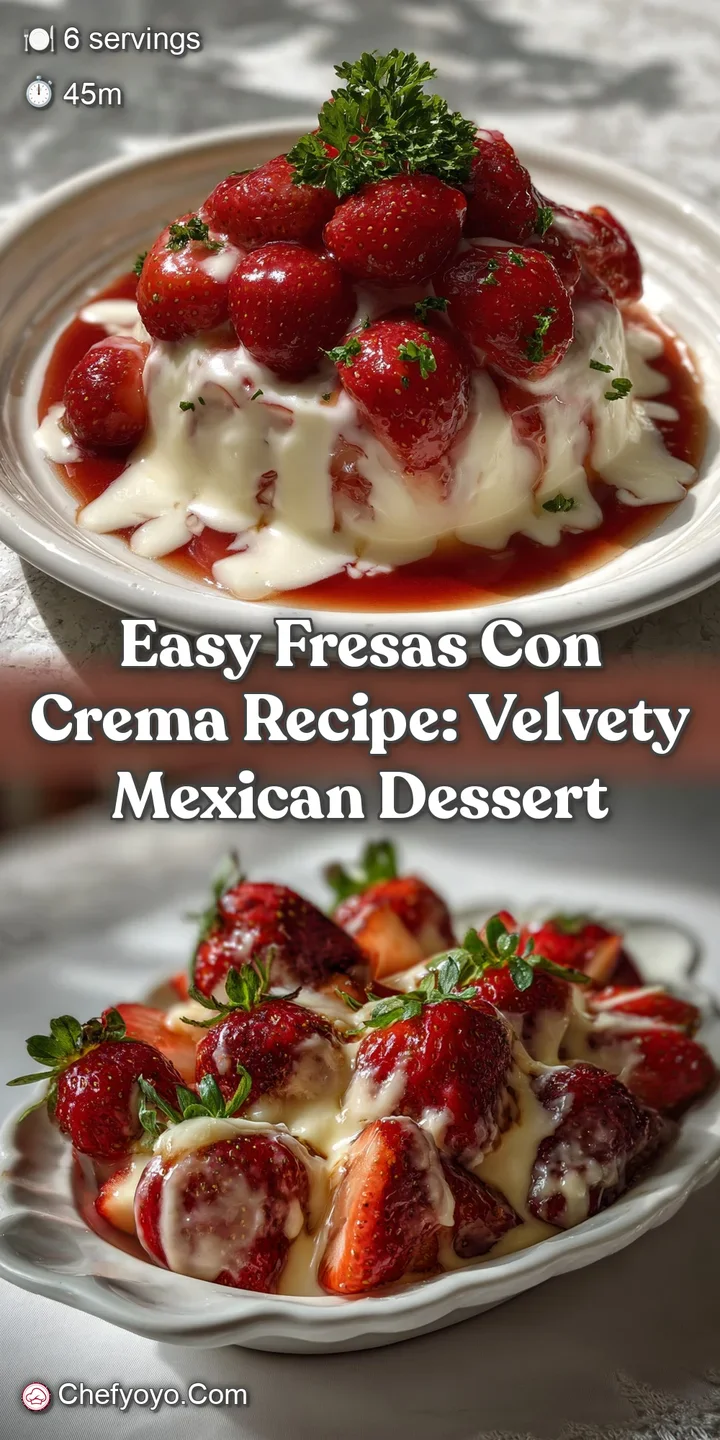
Easy Fresas Con Crema Recipe
Ingredients:
Instructions:
Nutrition Facts:
| Calories | 441 kcal |
|---|---|
| Protein | 9.4 g |
| Fat | 21.2 g |
| Carbs | 53.8 g |
| Fiber | 3.1 g |
| Sugar | 49.2 g |
| Sodium | 118 mg |
