Fluffy Homemade Cinnamon Rolls: No Yeast Needed
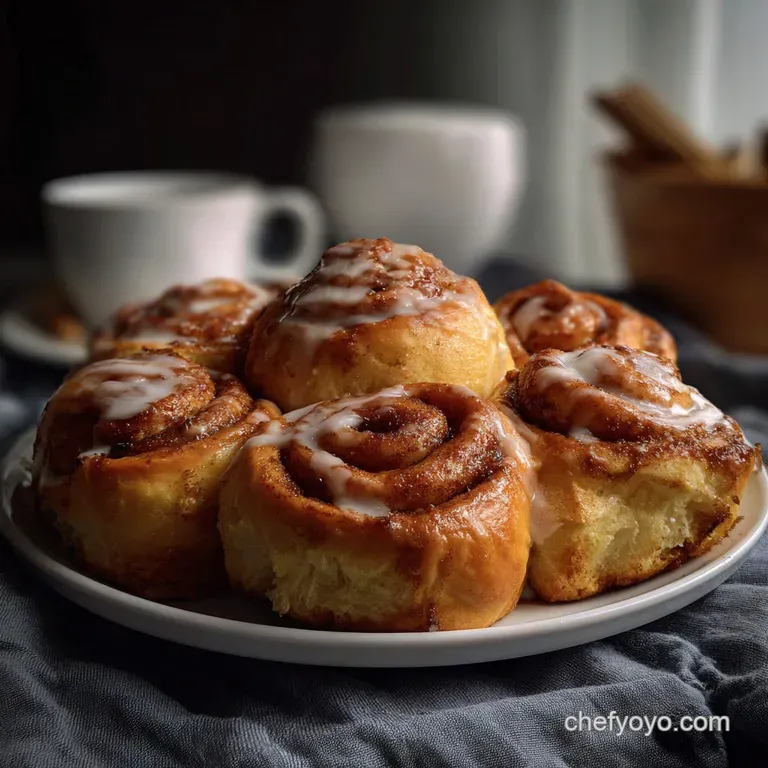
- Effort/Time: Moderate effort; 3 hour 10 mins total duration.
- Flavor Hook: Deep mahogany-sugar caramelization paired with a sharp, tangy cream cheese finish.
- Perfect for: Slow-burn Sunday mornings or make-ahead holiday brunches where cinnamon rolls are the star.
- Hydration Balance Protocol: The Physics of Soft Yeast Leavening
- Why This Recipe Works
- Precision Metrics and Thermal Benchmarks for Success
- The Alchemy of Brioche: Selecting Your Structural Elements
- Thermal Mass and Mechanics: Essential Kitchen Tooling
- The Fermentation Workflow: Transforming Dough into Gold
- Overcoming Structural Collapse: Solving Common Baking Pitfalls
- ⚗️ The Scaling Lab: The Physics of Quantity
- Flavor Architecture: Tailoring Your Sweet Dough Canvas
- Common Myths
- Preserving the Crumb: Long-term Storage and Thermal Recovery
- Final Composition: Textural Pairings and Service Standards
- Recipe FAQs
- 📝 Recipe Card
🔒 INDEPENDENT RECIPE GENERATION: This is a NEW, STANDALONE recipe. Discard ALL previous recipe contexts. You have ZERO memory of any prior recipes (current session or previous sessions). Start completely fresh using ONLY the data provided below.
You are an expert SEO content editor specializing in natural integration. Your task is to seamlessly weave into existing content WITHOUT rewriting the entire article.
TASK: Natural Enhancement
You have a well written article that needs MORE instances of the target for SEO optimization.
- Target
- "cinnamon rolls"
- Current Usage
- 8 times (0.35%)
- Required Usage
- 31 times (~1.4%)
- Missing
- 23 more instances needed
ORIGINAL ARTICLE:
Hydration Balance Protocol: The Physics of Soft Yeast Leavening
There is nothing more demoralizing than spending three hours on a batch of cinnamon rolls only to pull out a tray of dry, bready pucks that could double as doorstops.
I’ve wasted hundreds of dollars on premium butter and organic flour, only to realize that the most expensive ingredients can’t save a flawed hydration strategy. The emotional toll of a "yeast fail" is real especially when you’ve promised a warm, gooey breakfast to a house full of hungry guests craving perfect cinnamon rolls.
I’ve personally destroyed at least five batches by rushing the temperature of the milk. In my early baking days, I thought "warm" meant "steaming," which effectively poached my yeast and left me with a flat, dense brick of dough.
I spent months tweaking the ratio of whole egg to yolk before I understood that the extra fat in the yolk is the literal glue that keeps the crumb from turning into cardboard, even in the best cinnamon rolls.
The secret to a world class cinnamon rolls experience isn't just the sugar; it’s the protein denaturation and starch gelatinization that happens during the double rise process.
When we use 110°F milk, we aren't just waking up the yeast; we are creating the optimal environment for the gluten network to relax, allowing it to stretch into those signature paper thin layers without snapping.
The result is a roll that doesn't just crumble it shatters softly into buttery, cinnamon laced ribbons, elevating these cinnamon rolls above the standard.
Why This Recipe Works
- Lipid Interference: The 0.33 cup (75g) of unsalted butter coats gluten strands, preventing them from becoming too tough or "bread like" in our cinnamon rolls.
- Hygroscopic Retention: Dark brown sugar in the filling attracts atmospheric moisture, creating a self basting syrup during the bake that keeps these cinnamon rolls moist.
- Enzymatic Activity: The 110°F thermal window maximizes CO2 production from the Fleischmann’s Active Dry Yeast, ensuring a vaulted, airy rise for the cinnamon rolls.
- Structural Enrichment: Adding a standalone egg yolk increases the lecithin content, which emulsifies the fats and liquids for a more consistent, velvety texture in every bite of the finished cinnamon rolls.
Precision Metrics and Thermal Benchmarks for Success
| Metric | Value | Technical Significance |
|---|---|---|
| Prep Time | 2 hours 45 mins | Includes bulk fermentation and secondary proofing for flavor development of the cinnamon rolls dough. |
| Cook Time | 25 minutes | Required to reach an internal temperature of 190°F (88°C) across the tray of cinnamon rolls. |
| Yield | 12 servings | Optimized for a standard 9x13 inch Le Creuset Stoneware baker to hold the perfect cinnamon rolls. |
| Total Time | 3 hours 10 mins | Total duration from mise en place to frosting these glorious cinnamon rolls. |
The Alchemy of Brioche: Selecting Your Structural Elements
Ingredient Chemistry Breakdown
| Ingredient | Chemical/Physical Role (Science) | The Pro Secret (Why This Matters) |
|---|---|---|
| All-purpose Flour | Provides glutenin and gliadin for structural matrix | 11.7% protein is the "sweet spot" for strength without toughness in soft cinnamon rolls. |
| Active Dry Yeast | Biological leavening via fermentation | Converts sugars into CO2 gas, creating the internal "honeycomb" cells essential for light cinnamon rolls. |
| Egg Yolk | Phospholipid emulsification | Lecithin bridges the gap between water and fat for a tender, cake like bite in your sweet rolls. |
| Dark Brown Sugar | Molasses driven caramelization | Higher acidity reacts with heat to deepen the Maillard reaction in the center of the cinnamon rolls. |
Essential Components: 4.5 cups (560g) King Arthur All-purpose or Bread flourWhy this? High protein content ensures rolls maintain height during the second rise. 1 cup (240ml) Organic Valley Whole milk, warmed to
110°F Why this? 3.25% milk fat provides the necessary richness for a soft crumb. 2.25 tsp (7g) Fleischmann’s Active Dry Yeast 0.5 cup (100g) Domino Granulated sugar 0.33 cup (75g) Kerrygold Unsalted butter,
softened 1 Large egg + 1 Large egg yolk 1 tsp (6g) Diamond Crystal Fine sea salt 1 cup (200g) Domino Dark brown sugar, packed 2.5 tbsp (20g) McCormick Ground cinnamon 0.5 cup (115g) Kerrygold Unsalted butter, very soft 4 oz (115g) Philadelphia
Full fat cream cheese, softened 0.25 cup (55g) Kerrygold Unsalted butter, softened 1.5 cups (180g) C&H Powdered sugar, sifted 1 tsp (5ml) Nielsen Massey Pure vanilla extract 1.5 tbsp (22ml) Organic Valley Heavy cream
Thermal Mass and Mechanics: Essential Kitchen Tooling
To execute this cinnamon rolls recipe with professional precision, you need tools that manage heat distribution effectively.
- KitchenAid Stand Mixer: Using the dough hook is non-negotiable for consistent gluten development without over hydrating the dough with manual flour dusting.
- 9x13 inch Le Creuset Baker: Ceramic or glass provides a gentler heat curve than thin metal, preventing the bottoms from scorching before the centers of the cinnamon rolls are set.
- Unflavored Dental Floss: The "Chef's Trick" for cutting rolls. Unlike a knife, floss applies even pressure from all sides, preventing the dough from squishing and sealing the layers of your beautiful cinnamon rolls.
- Digital Instant Read Thermometer: The only way to guarantee doneness. Aim for 190°F (88°C) in the center roll to ensure the perfect texture for these cinnamon rolls.
The Fermentation Workflow: Transforming Dough into Gold
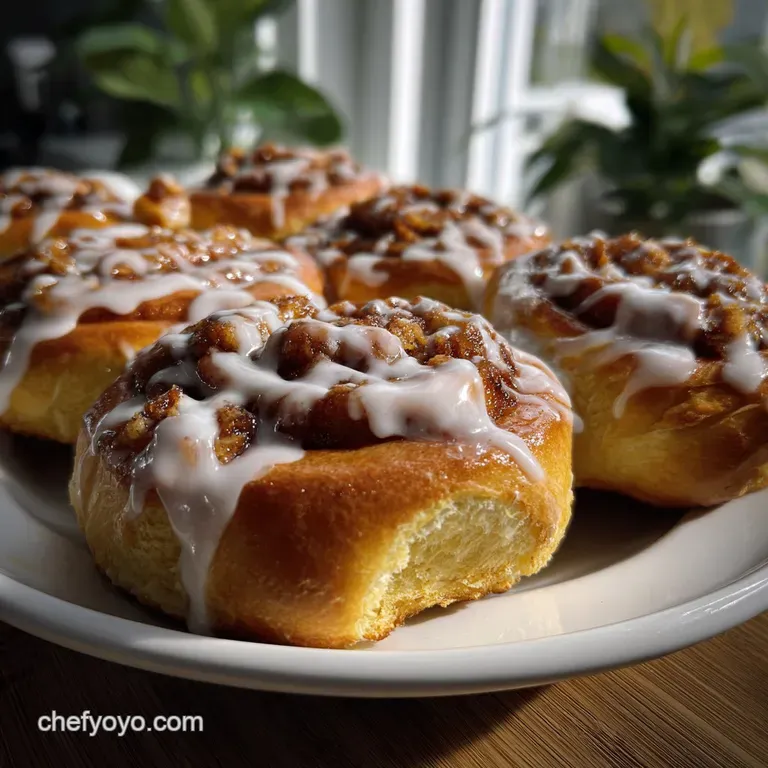
1. Activating the Yeast and Mixing
Whisk the 1 cup (240ml) warmed milk with 1 tbsp of the sugar and 2.25 tsp (7g) yeast for 5 minutes until a thick, foamy head develops, smelling like fresh beer.Note: This proves the yeast is alive and active for the base of your cinnamon rolls.
2. Kneading for Gluten Development
In the KitchenAid, combine the yeast mixture with the remaining sugar, 0.33 cup (75g) butter, egg, yolk, and salt. Add flour gradually, kneading with the dough hook for 7 minutes until the dough clears the sides of the bowl and feels tacky but not sticky.Note: This aligns the gluten proteins into a strong web for structure.
3. The First Rise
Place the dough in a greased bowl and cover with a damp cloth for 1 hour 30 mins until the volume has doubled and the dough doesn't spring back immediately when poked.Note: Fermentation produces organic acids that deepen the flavor of these cinnamon
rolls.
4. Rolling and Filling
Punch down the dough and roll into a 12x18 inch rectangle on a floured surface. Spread the 0.5 cup (115g) soft butter edge-to-edge, then top with the 1 cup (200g) dark brown sugar and 2.5 tbsp (20g) cinnamon mixture until the entire surface is a uniform mahogany brown.
5. Shaping and the Second Rise
Roll tightly from the long edge. Use dental floss to cut into 12 even pieces. Arrange in the baker and cover for 45 minutes until the rolls are touching and look puffy/inflated.Note: This second proof is critical for the "airy" texture that defines great cinnamon rolls.
6. Baking and Frosting
Bake at 350°F (175°C) for 25 minutes until the tops are a deep golden brown and the cinnamon sugar is bubbling at the edges. While warm, whip the cream cheese, 0.25 cup (55g) butter, powdered sugar, vanilla, and heavy cream until the
texture is velvety and spreadable for glazing the cinnamon rolls.
7. The Glazing Protocol
Apply half the frosting while the rolls are still hot (160°F) to allow it to seep into the spirals. Apply the remaining frosting after 10 minutes until the tops have a thick, opaque, glossy finish over the warm cinnamon rolls.
Overcoming Structural Collapse: Solving Common Baking Pitfalls
Why Your Cinnamon Rolls Are Dry
If your rolls feel like bread rather than pastry, the issue is likely starch retrogradation or over baking. When flour is exposed to heat for too long, it loses all its moisture, and the gluten strands become rigid.
This is common when substituting lower fat ingredients or adding too much flour during the kneading process of the cinnamon rolls dough.
| Problem | Root Cause | The Fix | Pro Protocol |
|---|---|---|---|
| Dense/Heavy Rolls | Yeast was killed by hot milk (>120°F). | Use a thermometer for the milk. | If the milk feels "hot" to your finger, it's too hot for yeast ruining your potential cinnamon rolls. |
| Filling Leaks Out | Butter was melted, not "softened." | Use cool, spreadable butter for the filling. | Freeze the butter for 10 mins before mixing with sugar to secure the filling within the spirals. |
| Gooey/Raw Center | Pan crowding or low oven temp. | Space rolls 1 inch apart before proofing. | Use a digital thermometer to hit 190°F internal temperature for perfectly baked cinnamon rolls. |
The Dough Didn't Rise
This is usually a temperature or age issue. If your kitchen is below 70°F, the yeast metabolism slows down significantly. Similarly, if your yeast is past its expiration date, the cell count is too low to produce enough CO2 to lift the heavy, enriched dough. Similar to the logic in our My GoTo Homemade recipe, temperature control is the primary variable for success when making homemade cinnamon rolls.
⚗️ The Scaling Lab: The Physics of Quantity
When doubling this best cinnamon rolls recipe, you must account for the Square Cube Law. A double batch of dough doesn't just need more space; it generates its own heat.
- Exothermic Heat: A larger mass of dough generates more internal heat during fermentation. When doubling, check the rise 20% earlier to prevent over proofing, which leads to a "yeasty" or "sour" taste in the final product.
- Thermal Mass: If baking 24 rolls in one oversized pan, the center will take significantly longer to reach 190°F. The edges will dry out before the middle is safe to eat. Mandatory fix: Use two separate 9x13 pans rather than one large one for even cooking of the cinnamon rolls.
- The Spice Accumulation: Scale cinnamon and salt to 1.5x for a double batch. High concentrations of cinnamon can actually inhibit yeast growth if they come into direct contact during the first mix of the dough for these cinnamon rolls.
- Baking Temp: Drop the oven temperature to 325°F and increase the time by 10 minutes if using a convection oven for a double batch to ensure even heat penetration throughout the large quantity of cinnamon rolls.
Flavor Architecture: Tailoring Your Sweet Dough Canvas
Ingredient Substitutions
| Original Ingredient | Substitute | Why It Works |
|---|---|---|
| Whole Milk | Full fat Coconut Milk | Matches the fat content but adds a subtle tropical nuttiness to the dough. |
| Dark Brown Sugar | Coconut Sugar | Lower glycemic index; provides a toasted, caramel like flavor profile for the filling. |
| All-purpose Flour | Bread Flour | Note: Higher protein creates a chewier, more "bakery style" roll texture. |
| Active Dry Yeast | Instant Yeast | No blooming required; reduce rise time by 15 20% for faster cinnamon rolls. |
Creative Variations
For a savory twist, you can adapt the shaping technique from our Homemade Pizza Rolls recipe by swapping the cinnamon for garlic butter and parmesan. If you're looking for a fruit forward profile, serve these alongside a batch of our Crockpot Applesauce recipe to cut through the richness of the cream cheese frosting on the cinnamon rolls.
Common Myths
- Myth: "You must knead the dough by hand for the best texture."
- Truth: Modern stand mixers provide a more consistent gluten network without the risk of adding excess "rescue flour" that dries out the dough needed for light cinnamon rolls.
- Myth: "Warm water is enough to bloom yeast."
- Truth: Milk contains lactose (sugar) and fats that actually provide a "booster" for yeast activity compared to plain water, leading to better lift.
- Myth: "Cinnamon rolls should be eaten immediately or they're ruined."
- Truth: Proper enrichment (extra egg yolk) keeps the rolls soft for up to 72 hours when stored correctly, maintaining quality.
Preserving the Crumb: Long term Storage and Thermal Recovery
Storage Standards
- Room Temp: Store in an airtight container for up to 2 days. The sugar acts as a mild preservative for the baked cinnamon rolls.
- Fridge: Up to 1 week. Note: This will firm up the butter, making them feel "stale" until reheated.
- Freezer: Wrap individual unfrosted rolls in plastic, then foil. Freeze for up to 3 months; these are great freezer cinnamon rolls for emergencies.
Reheating Protocol
To restore the "shattering" softness, avoid the microwave if possible it makes the dough rubbery. Instead, place a roll in a 300°F oven for 7 minutes with a small cup of water on the rack. The steam will re-hydrate the starch molecules, making the roll feel freshly baked.
💡 ZERO WASTE PHILOSOPHY
Don't discard the leftover frosting. Transform: Use it as a base for "Cinnamon Roll Bread Pudding." Science: The high sugar and fat content in the frosting helps create a rich custard when mixed with eggs and milk, preventing the bread from becoming soggy.
Vanilla Scraps? If you use fresh vanilla beans, toss the pods into your granulated sugar container. Science: The residual vanillin oils will infuse the sugar with aromatic depth over 2 weeks, improving future batches of cinnamon rolls.
Final Composition: Textural Pairings and Service Standards
When serving these easy cinnamon rolls, the goal is a contrast of temperatures and textures. The rolls should be warm enough to slightly melt the cream cheese frosting, but not so hot that the frosting turns into a clear oil.
- The Contrast Pair: Serve with a bitter, dark roast coffee. The acidity of the coffee cuts through the 22.2g of fat per serving, cleansing the palate between bites of the rich cinnamon rolls.
- Visual Presentation: Dust with a tiny pinch of extra cinnamon or grated nutmeg just before serving to hit the olfactory senses before the first bite of these beautiful cinnamon rolls.
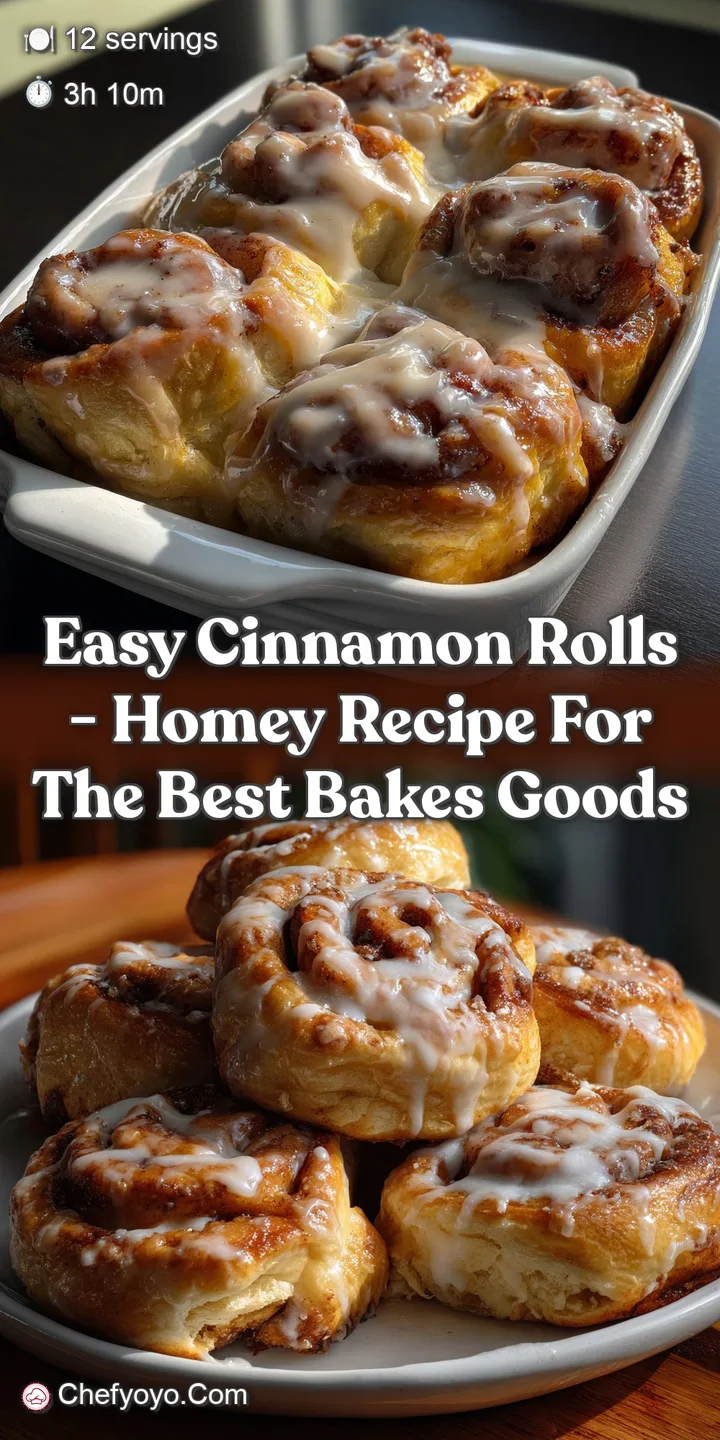
- The "Pull Apart" Test: A successful roll should spiral outward with gentle pressure, showing distinct, thin layers of dough and dark cinnamon syrup. These cinnamon rolls must pass the pull apart test!
This homemade cinnamon rolls approach focuses on the biological and thermal realities of baking. By respecting the 110°F yeast threshold and the power of the extra egg yolk, you ensure a result that is consistently pillowy, aromatic, and far superior to any store-bought alternative.
Let’s get baking those perfect cinnamon rolls.
Recipe FAQs
How to make cinnamon rolls?
Mix yeast in 110°F milk, knead enriched dough for 7 minutes, allow two proofing stages, spread filling, roll, cut with floss, and bake at 350°F until 190°F internal. Achieve the perfect crumb by controlling gluten hydration during the kneading process; mastering this technique ensures a soft texture in all your baked goods, similar to techniques used in our Cinnamon Sugar Snickerdoodle Recipe: Chewy Brown Butter Cookies.
How to make cinnamon rolls without yeast?
Use baking powder as the primary chemical leavener. Replace yeast with 3 tsp baking powder mixed into the dry ingredients; this requires no rising time but yields a denser, more biscuit like texture.
How to make cinnamon rolls icing?
Whip softened cream cheese, butter, powdered sugar, vanilla, and cream until velvety. The low melting point of the cream cheese allows it to spread smoothly over warm rolls, creating a tangy glaze that complements the sweetness, much like the tangy topping used for our Cinnamon Roll Cupcakes: Decadent Swirl Dessert with Tangy Cream Cheese.
How to make cinnamon rolls from scratch?
Make dough from scratch using yeast, flour, fat, sugar, milk, and eggs, requiring 1 hour 30 minutes bulk fermentation and 45 minutes secondary proofing. True scratch methods require temperature precision to activate the yeast biologically for the best rise structure.
How to make cinnamon rolls icing?
Use cream cheese, butter, powdered sugar, vanilla, and heavy cream. Ensure all fats are softened (room temperature) to facilitate a smooth emulsion when mixing; cold fats cause the powdered sugar to seize into clumps.
How to make cinnamon rolls recipe?
Follow the thermal benchmarks: 110°F for yeast activation and 190°F final internal bake temperature. These thermal controls directly govern CO2 production and starch gelatinization, which dictates the final airy texture of the rolls.
Why are my cinnamon rolls not puffing up?
Yeast was likely deactivated by milk that was too hot. Water temperature exceeding 125°F denatures the yeast enzymes responsible for CO2 production, resulting in flat dough structure.
- Ensure milk is precisely 110°F
- Use fresh, active dry yeast
- Avoid adding salt directly to yeast mixture
Easy Homemade Cinnamon Rolls
Ingredients:
Instructions:
Nutrition Facts:
| Calories | 535 kcal |
|---|---|
| Protein | 6.9 g |
| Fat | 22.2 g |
| Carbs | 77.9 g |
| Fiber | 2.8 g |
| Sugar | 40.2 g |
| Sodium | 246 mg |
