The Ultimate Tahini Halva: Crumbly, Sweet Sesame Fudge
- Mastering Tahini Halva: The Secret to Perfect Crumbly Texture
- The Science of Sesame Fudge: Achieving That Signature Fibrous Texture
- Essential Ingredients for Authentic Tahini Halva
- Preparing Your Homemade Tahini Halva: A Detailed Method
- Troubleshooting Your Halva: Expert Tips and Common Pitfalls
- How to Properly Store and Cure Tahini Halva
- Decadent Ways to Serve and Enjoy Tahini Halva
- Recipe FAQs
- 📝 Recipe Card
Mastering Tahini Halva: The Secret to Perfect Crumbly Texture
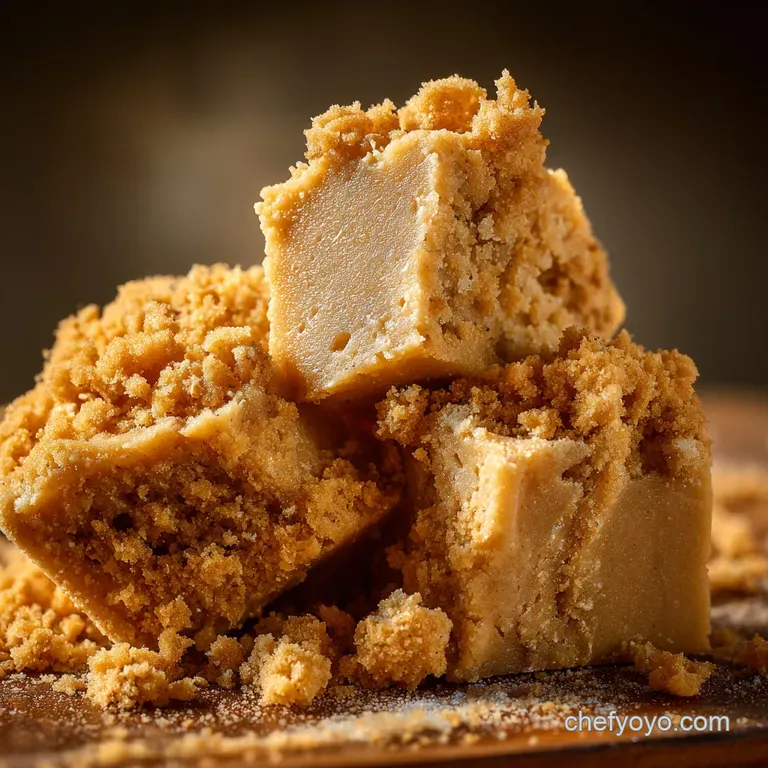
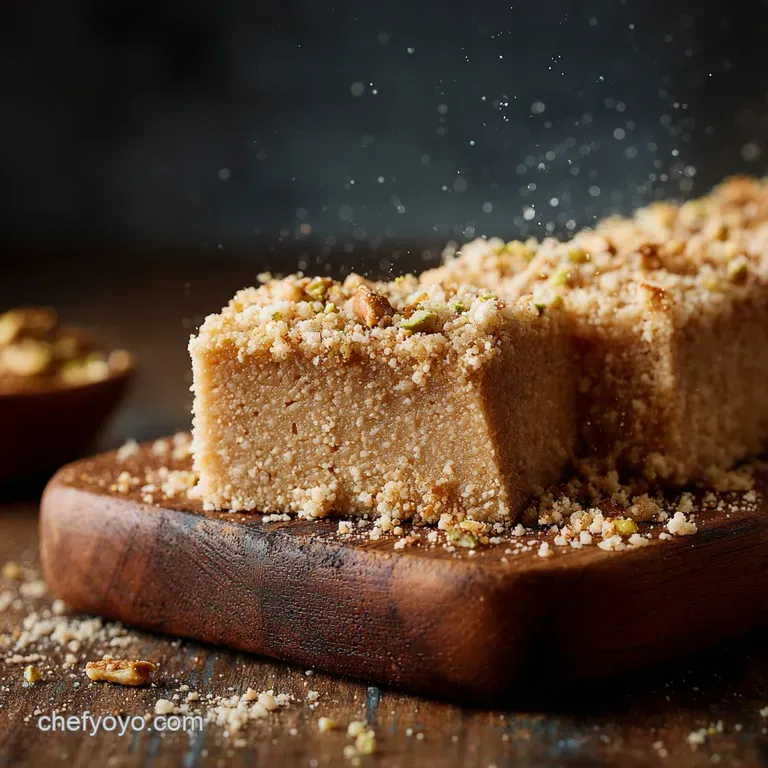
The texture of perfect Tahini Halva is completely unforgettable. It’s dense yet strangely ethereal, melting on your tongue but leaving behind those beautiful, fibrous, sesame strings that feel almost like spun sugar. When you take a bite, you get that intense, nutty sweetness followed by a dry, buttery finish.
Why bother making this stuff at home? Because honestly, the dense, sticky block you buy wrapped in plastic is a massive disappointment compared to the fresh, crumbly glory of homemade halva. This recipe uses specific temperature control to make it shatteringly light every single time.
It's shockingly fast and relies on just a few basic ingredients you probably already have stashed away.
This is not a complicated dessert, but it is one that requires focus and a trusty candy thermometer. Trust me, learning this technique is going to totally change your dessert game. Let’s dive into the secret science behind achieving that signature halva crumb.
The Science of Sesame Fudge: Achieving That Signature Fibrous Texture
What Is Halva, and Why Is Sesame the Star?
Halva is essentially a confection where a sugary syrup is kneaded vigorously into an oleaginous (oily) paste. In the Middle East and Mediterranean, the paste used for the most famous version is tahini, which is ground sesame seeds.
Sesame provides an incredible depth of flavor rich, slightly bitter, and deeply nutty that perfectly balances the intense sweetness of the sugar syrup. The high fat content of tahini (around 50 60%) is essential for holding the sugar fibers.
The History and Cultural Significance of Sesame Confections
Halva is one of the oldest recorded confections, dating back centuries! Its name literally means "sweet meat" or "sweet confection" in Arabic. Across the diverse cultures of the region, from the Balkans to India, it’s a staple dessert, usually enjoyed with strong coffee or offered as a symbolic treat during celebrations.
It might seem simple, but this dessert carries serious cultural weight.
Homemade vs. store-bought: Why Crumbly is Better
store-bought halva often relies on stabilizers and is sometimes over processed, resulting in a dense, almost waxy block. When you make it at home, you control the final crystallization. We want crystallization, but we want it fine, rapid, and fibrous.
This requires precise temperature control in the syrup and then extremely aggressive mixing into the tahini, creating those famous, delicate strands.
Understanding the Stages of Sugar Syrup (Soft Crack vs. Hard Crack)
For perfect halva, the syrup temperature is non-negotiable. We are looking for the soft crack stage, specifically 118°C (245° F). If you go too low (like thread stage), your halva will be gooey and sticky.
If you go too high (like hard crack), it will become brittle and powdery, and you won't be able to mix it properly into the tahini. That little bit of liquid glucose in the recipe is critical; it ensures the sugar crystals are small and uniform, preventing a grainy texture.
The Role of Tahini Quality in Final Texture
I cannot stress this enough: Your halva is only as good as your tahini. You need a high-quality, runny, 100% sesame paste. If you use thick, pasty tahini that feels dry, it won't mix smoothly and the final result will be oily and coarse. Good tahini means smooth mouthfeel and less separation.
Look for creamy, natural tahini that pours easily.
The Critical Rapid Mixing Phase (The Key to Fiber Formation)
This is the moment of magic. When you pour the 118°C syrup onto the tahini, the sudden drop in temperature causes the sugar to crystallize rapidly. You must mix like your life depends on it!
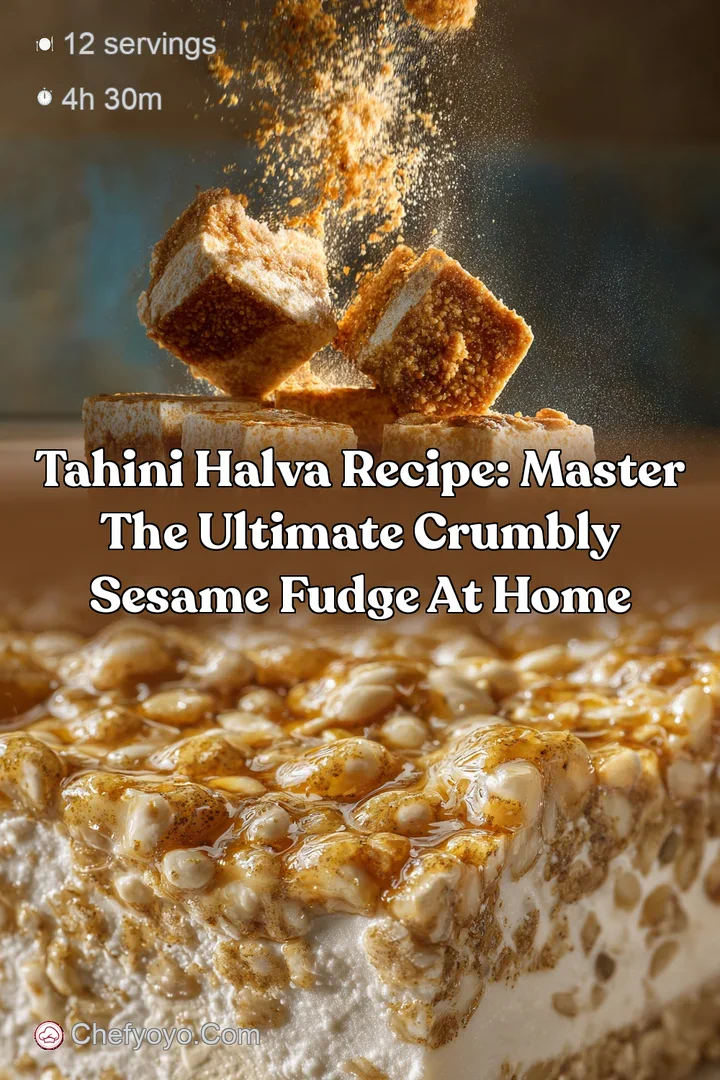
That rapid, vigorous folding forces the sugar crystals to align into those microscopic fibers, trapping the tahini fat and creating the signature crumbly texture we crave.
Essential Ingredients for Authentic Tahini Halva
This ingredient list is short, but the quality of each item matters hugely.
Choosing the Best Quality Tahini Paste
| Ingredient | Role | Substitution (If Necessary) |
|---|---|---|
| Tahini Paste (Smooth, Raw) | Base, flavor, fat structure. | No Structural Substitute. Flavor variation: Try smooth sunflower seed butter, but note the flavor change. |
| Granulated Sugar | Sweetness and crystal structure. | None Recommended. Brown sugar or substitutes disrupt the required crystallization. |
| Liquid Glucose/Corn Syrup | Prevents crystallization (Invert Sugar). | Honey (Liquid). This works well but adds a strong honey flavor and can result in slightly stickier halva. |
| Vanilla Extract | Flavor depth. | Rosewater or Orange Blossom Water. |
Sweeteners: Granulated Sugar vs. Honey/Maple Alternatives
Look, I love natural sweeteners, but classic Tahini Halva relies on the structure provided by granulated sugar reacting with the invert sugar (glucose/corn syrup). Using something like maple syrup or a sugar alcohol will dramatically change the structure and likely result in a sticky, dense mess.
Stick to the sugar for this recipe, okay?
Optional Flavor Infusions (Vanilla, Cardamom, and Pistachios)
While pure sesame halva is glorious, adding flavors is where the fun starts! A little vanilla extract enhances the nuttiness beautifully. I also love adding ½ tsp of freshly ground cardamom to the tahini base it makes the entire kitchen smell like heaven.
Don’t forget nuts; pistachios are traditional and add a perfect color contrast and crunch.
Preparing Your Homemade Tahini Halva: A Detailed Method
You’ve got your ingredients measured and your thermometer ready. Let’s make some magic.
Phase 1: Preparing the Tahini Base and Mold
- Line and Load: Line your loaf tin with parchment paper, ensuring a generous overhang; this is crucial for lifting the heavy block out later. If you are adding pistachios, sprinkle half of them right on the bottom of the tin now.
- Make the Base: In a large, sturdy mixing bowl, combine your measured tahini paste, vanilla extract, and salt. Stir this together until it is perfectly smooth and uniform. Set it right next to the stove. You must be ready to move fast.
Phase 2: Cooking the Syrup to Temperature (The Thermometer is Your Friend)
- Combine Syrup: Put the granulated sugar, water, and liquid glucose (or corn syrup) into a medium heavy bottomed saucepan.
- Dissolve Gently: Heat this over medium low heat. Stir gently only until you see all the sugar crystals dissolve and the liquid turns clear. Once it starts boiling, stop stirring immediately !
- Hit the Target: Insert your candy thermometer and boil undisturbed until the syrup reaches precisely 118°C (245° F). This usually takes 5 to 10 minutes, depending on your stovetop. If you see crystals forming on the pan walls, use a wet pastry brush to wash them down.
- Finish: Pull the pan off the heat immediately once 118°C is achieved. Quickly stir in the lemon juice (or citric acid); this further helps prevent large, gritty sugar crystals.
Phase 3: Whipping the Mixture for Maximum Crumb
- Pour and Attack: Immediately pour the entire hot syrup into the prepared tahini bowl. Do not hesitate!
- Vigorously Stir: Grab your strongest wooden spoon or spatula and start mixing and folding aggressively. You will see the mixture turn opaque and start to thicken almost instantly. Keep folding rapidly you are looking for the mixture to become incredibly dense and start developing visible, stringy fibers, like spun cotton candy. This takes about 30 60 seconds of focused work.
Chef’s Note: If your arm starts burning, you are doing it right. Stop mixing when the fibers are well defined and the mixture is too stiff to easily fold further.
Setting and Curing the Sesame Fudge Block
- Press and Cool: Immediately scrape the very stiff halva into the prepared loaf tin. Use the back of the spatula to press it down hard and smooth the top. We need it compacted.
- Chill: Sprinkle the remaining nuts/seeds on top. Cover it loosely and let it chill in the refrigerator for at least 4 hours, though overnight is ideal for the perfect crumb.
Troubleshooting Your Halva: Expert Tips and Common Pitfalls
Why Your Halva Turned Oily (Addressing Tahini Separation)
This is called tahini separation or "weeping," and it happens if you mix too long or not long enough. If you mix the tahini and syrup for too long, the friction can cause the sesame oil to leach out.
If you don't mix long enough, the sugar fibers haven't properly encapsulated the fat, allowing it to separate during setting. The fix: Use quality, fresh tahini and stop mixing the moment you see visible fibers and a dough like stiffness.
Fixing Dense or Gooey Halva (Syrup Temperature Issues)
If your finished halva is super sticky, soft, and gooey, you didn’t cook the syrup hot enough. You likely hit 112°C or 115°C instead of the required 118°C. The fix: You can sometimes salvage this by gently reheating the mixture (if it hasn't fully set) in a double boiler and stirring rapidly, though this is tricky.
The best advice? Always trust your thermometer and calibrate it first! If your halva is crumbly but tastes burnt or sandy, you went too hot, probably into the hard crack stage.
How to Properly Store and Cure Tahini Halva
Maintaining Freshness: Room Temperature vs. Refrigeration
Halva cures best and maintains the optimal crumbly texture at room temperature (if your kitchen isn't boiling hot). Once it has fully cured and set overnight in the fridge, you can wrap it tightly and keep it in an airtight container at a cool room temperature for up to two weeks.
I find the texture is best when not cold from the fridge.
Can You Freeze Halva? (A Guide to Long Term Storage)
But does it freeze well? You bet! Halva freezes beautifully. Wrap the whole block tightly in plastic wrap, then foil, and place it in a freezer bag. It will keep for 3 4 months. To thaw, just let it come back to room temperature slowly inside its wrapping; don’t try to rush it in the microwave or oven!
Decadent Ways to Serve and Enjoy Tahini Halva
Traditional Pairings: Coffee, Tea, and Fresh Fruit
The classic way is always the best. Serve thick slices alongside intensely brewed Turkish coffee or strong, hot mint tea. The bitterness of the dark drinks is the perfect contrast to the halva's concentrated sweetness. A simple platter of halva and tart fresh fruit, like sliced green apples or figs, is also perfection.
Modern Applications: Halva Ice Cream Toppings and Cake Fillings
I love using halva to add texture. Try crumbling a few spoonfuls over vanilla bean ice cream or incorporating it into a simple buttercream frosting for a Middle Eastern twist on a layer cake. If you happen to have leftover tahini from this project, don’t let it go to waste! You can easily incorporate it into savory dishes like my Beet It Arugula Salad Sweet Beets Tahini Jazz It Up for a totally different kind of flavor hit.
Variations on the Theme: Adding Cocoa or Nuts Post Mix
This recipe is super flexible for flavor variations right at the end. Once you've reached the fibrous stage (Step 8), you can quickly fold in dry additions. Try adding 2 Tbsp of sifted cocoa powder for a marbled chocolate effect, or stir in ½ cup of toasted almonds for crunch.
Remember to work quickly —you only have about 10 seconds after mixing the syrup before it gets too stiff to fold in extras.
Recipe FAQs
Why is my Halva oily or separating after mixing?
This issue, known as "weeping," usually means your tahini was not mixed thoroughly before adding the syrup, or the sugar syrup temperature was slightly too low upon combining. Ensure the tahini paste is homogenous before starting, and mix vigorously the moment the hot syrup is incorporated until the mixture seizes and pulls away from the sides of the bowl.
My Halva set too hard, almost like rock candy. What went wrong?
The sugar syrup likely exceeded the required temperature (typically 250°F / 121°C, or firm ball stage). High heat removes too much moisture from the syrup, creating a brittle rather than a light, fibrous structure.
Use an accurate candy thermometer and remove the syrup from the heat immediately when it hits the target temperature.
Can I add flavorings or inclusions to the basic Halva recipe?
Absolutely! Halva is excellent with inclusions, which should be folded in at the end of the mixing process right before pressing into the mold. Common additions include pistachios, walnuts, or almonds, or you can add vanilla extract, cardamom, or 1-2 tablespoons of sifted cocoa powder directly into the finished tahini paste.
Does the quality of the tahini truly matter for the final texture?
Yes, the quality of the tahini is crucial for achieving the classic crumbly texture. Use high-quality, raw, unhulled tahini that is freshly processed and very creamy. Older or less refined tahini can be too bitter or dense, resulting in a heavier, less fibrous finished product.
How should I store homemade Tahini Halva, and how long does it last?
Store Halva wrapped tightly in parchment paper or plastic wrap, and then place it in an airtight container at cool room temperature (ideally below 70°F). Refrigeration is acceptable but may slightly dull the flavors. Properly stored, it maintains its optimal quality for 2 to 3 weeks.
Why is my Halva sticking to the mold instead of coming out clean?
Ensure your mold is properly lined with parchment paper, leaving generous overhangs on all sides to assist with lifting. You can also lightly brush the inside of the mold and the parchment paper with a neutral oil before adding the mixture.
Halva needs several hours, or even overnight, to fully cool and firm up before unmolding.
Can I freeze Halva to extend its shelf life?
Halva generally does not freeze well, as the drastic temperature change causes the natural sesame oils to weep and separate upon thawing. This separation compromises the delicate, fibrous structure that defines high-quality Halva. It is best consumed within its recommended storage window at room temperature.
Easy Homemade Tahini Halva Recipe
Ingredients:
Instructions:
Nutrition Facts:
| Calories | 975 kcal |
|---|---|
| Protein | 19.5 g |
| Fat | 58.5 g |
| Carbs | 110.1 g |
