The Ultimate Self Rising Flour Recipe Hack
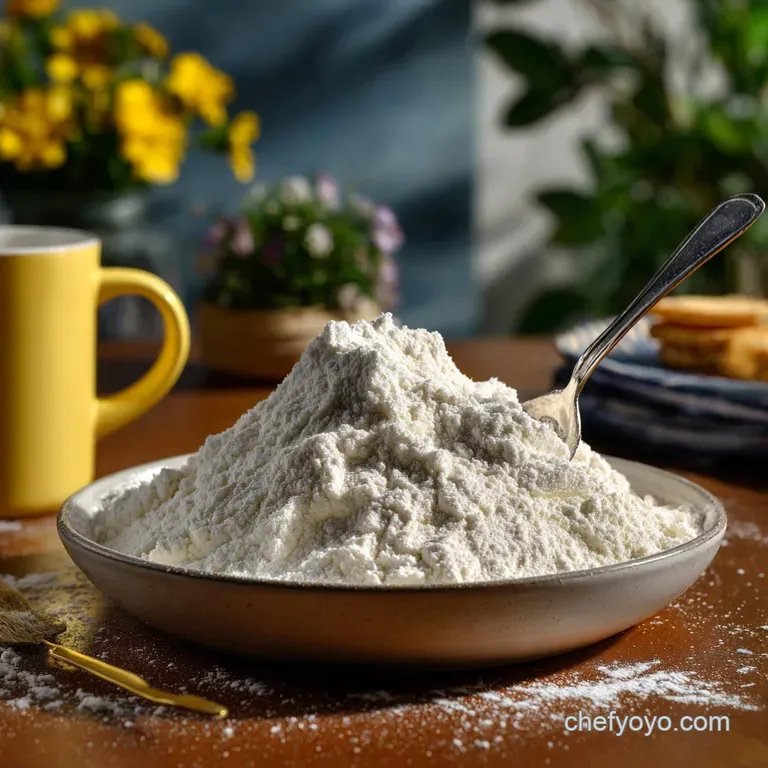
- Effort/Time: 5 minutes of active whisking.
- Flavor Hook: Clean, neutral base that lets your butter and buttermilk shine.
- Perfect for: Fluffy biscuits, cobblers, and emergency pancakes.
The Ultimate 5 Minute Self Rising Flour Recipe
Nothing kills the morning vibe faster than craving flaky biscuits only to find a vacuum at the bottom of your pre-mixed flour bag. I’ve been there staring at a pile of cold butter while my oven preheats, wondering if I can just "wing it." Spoiler: winging chemistry usually leads to leaden hockey pucks.
After a few dense disasters, I realized that mastering a self rising flour recipe isn't just a backup plan; it’s a kitchen superpower that gives you total control over your bake's lift and saltiness.
This self rising flour recipe is the exact ratio used by professional bakers to ensure a uniform rise. We aren't just mixing powders; we are creating a standardized chemical leavening system.
When you use this self rising flour recipe, you are essentially prepping a dry-storage engine that reacts the moment it hits moisture. It’s the secret to that "shatter" texture on a crust and the airy pillows inside a dumpling.
Let’s get one thing straight: the store-bought stuff often sits on shelves until the leavening loses its punch. By making this self rising flour recipe fresh, you ensure your baking powder is at peak potency. Whether you're whipping up a batch of biscuits to pair with my Country Gravy Recipe: Peppery & Lumpy Free Sauce or thickening a stew, this is the foundational skill you need.
Why This Works
- CO2 Expansion: Sodium bicarbonate reacts with acidic components to release carbon dioxide bubbles.
- Gluten Stabilization: Fine sea salt strengthens protein strands, preventing the gas bubbles from collapsing.
- Uniform Distribution: Sifting creates a homogenous mixture, ensuring no "salty spots" or "flat zones" in your dough.
The Science Behind King Arthur All-Purpose Flour
- What It Does
- Provides the structural framework via glutenin and gliadin proteins.
- The Chemistry
- Upon hydration, these proteins undergo protein denaturation and cross link to form a sturdy gluten network.
- Why This Matters
- This network traps the CO2 gas released by leaveners, allowing the bread to hold its shape instead of deflating.
The Science Behind Rumford Baking Powder
- What It Does
- Acts as the primary chemical leavening agent for this self rising flour recipe.
- The Chemistry
- This double acting agent triggers an initial acid base reaction upon wetting, followed by a second gas release when exposed to oven heat.
- Why This Matters
- It provides a sustained lift that results in a light, velvety crumb rather than a dense, crumbly texture.
The Science Behind Diamond Crystal Fine Sea Salt
- What It Does
- Regulates yeast (if used) and tightens the gluten structure.
- The Chemistry
- Ions in the salt interact with the protein chains, making them less repulsive to each other and more likely to bond.
- Why This Matters
- It enhances the mechanical strength of the dough, ensuring it can withstand the internal pressure of expanding gases.
Ingredients & Substitutions
To master this self rising flour recipe, precision is your best friend. I highly recommend using an OXO Stainless Steel Sifter to ensure the leavening agents are perfectly aerated.
| Original Ingredient | Substitute | Why It Works |
|---|---|---|
| 2 cups King Arthur AP Flour | White Lily Flour | Lower protein content results in an even softer, more cake like texture. |
| 1 tbsp Rumford Baking Powder | Baking Soda + Cream of Tartar | 1/4 tsp soda + 1/2 tsp cream of tartar equals 1 tsp powder. Note: Reacts faster; bake immediately. |
| 0.5 tsp Diamond Crystal Salt | Morton Kosher Salt | Use 1/4 tsp instead. Note: Morton is denser; using the full amount will make the flour too salty. |
step-by-step Instructions
1. Measure the King Arthur All-Purpose Flour
Aerate your flour with a spoon before leveling it off in your measuring cup. Note: Packing the flour into the cup results in too much mass, leading to dry, tough baked goods due to excessive gelatinization.
2. Integrate the Rumford Baking Powder
Add the leavening agent directly into the center of the flour mound. Note: This ensures the self rising flour recipe maintains a consistent 1.5% leavening-to-flour ratio for optimal pH balance.
3. Incorporate the Diamond Crystal Fine Sea Salt
Sprinkle the salt evenly over the surface of the dry ingredients. Note: Even distribution is critical because salt directly influences the Maillard reaction during baking by controlling sugar caramelization.
4. Sift and Whisk
Pass the mixture through an OXO Fine Mesh Strainer twice into a KitchenAid Stainless Steel Mixing Bowl. Note: Sifting breaks up clumps and introduces air, which helps the flour hydrate more evenly when wet ingredients are added.
5. Verify and Store
Give the mixture one final whisk until it looks velvety and uniform. Note: Consistent blending prevents "hot spots" where one biscuit might rise significantly higher than another.
Chef's Tip: To test if your baking powder is still active for this self rising flour recipe, drop half a teaspoon into hot water. If it doesn't sizzle and bubble violently, toss it and buy a fresh tin.
Mastering the Self Rising Flour Recipe 1 Cup Ratio
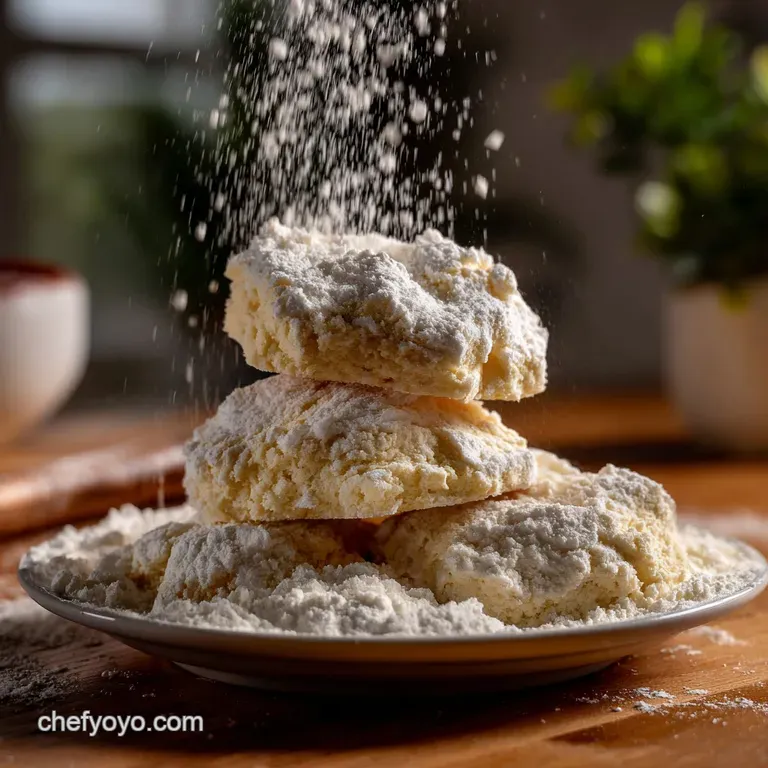
While the official data calls for a larger batch, many people search for a self rising flour recipe 1 cup version for smaller projects. To scale down, use 1 cup of flour, 1.5 teaspoons of baking powder, and 1/4 teaspoon of salt. This is perfect for a quick single serve cobbler or a small batch of dumplings to toss into my Chicken and Noodles Recipe: Velvety Sauce in 45 Mins.
When working with a self rising flour recipe 2 cups volume, you have enough to bake a standard loaf of "emergency bread" or about 8 10 medium biscuits. The beauty of this rising flour recipe is the scalability. As long as you keep the ratios exact, the chemistry remains the same.
If you are a precision geek, a self rising flour recipe by weight is the pro move: 120g flour to 5g baking powder and 1g salt.
Common Mistakes & Pro Protocol
| Problem | Why It Happens | The Fix | Pro Protocol |
|---|---|---|---|
| Flat Biscuits | Expired baking powder. | Replace leavener every 6 months. | Use a Sharpie to write the "opened date" on the lid. |
| Metallic Aftertaste | Too much baking powder. | Level your measuring spoons exactly. | Use a flat edged knife to scrape off the excess powder. |
| Gritty Texture | Salt crystals are too large. | Use fine sea salt or pulse in a blender. | Use a Lodge Cast Iron Skillet for baking; the high heat helps dissolve fine salt faster. |
Common Myths
Myth: You can swap baking soda 1:1 for baking powder in this rising flour recipe. Truth: Baking soda requires an acid (like buttermilk) to activate. Baking powder contains its own acid. Using only soda will result in a soapy taste and zero lift.
Myth: Sifting is an optional step for a self rising flour. Truth: Sifting is mandatory for mechanical aeration. It ensures the leavening agents are distributed at a molecular level, preventing uneven protein denaturation.
Storage, Freezing, and Reheating
Storage: Keep your self rising flour recipe in an airtight OXO Pop Container in a cool, dark pantry. It will stay fresh for up to 6 months, or until the expiration date of your baking powder.
Freezing: You can freeze the dry mix in a vacuum sealed bag for up to 1 year. This is a great make-ahead strategy for holiday baking. Ensure the flour reaches room temperature before mixing with liquids to avoid clumping.
Reheating: While you don't reheat the flour itself, baked goods made with this flour recipe reheat best in a 350°F oven for 5 8 minutes to restore the shatter-crisp exterior.
Creative Self Rising Flour Recipe Ideas
- Easy Peach Cobbler
- Melt butter in a dish, pour in a batter of 1 cup flour and 1 cup milk, and top with peaches.
- Two-Ingredient Pizza Dough
- Mix this flour recipe with Greek yogurt for a high protein, instant rise crust. This pairs beautifully with a side of Bang Bang Sauce: Copycat Bonefish Recipe for dipping the crusts.
- Self rising flour recipes bread
- Use this for beer bread the carbonation in the beer works with the baking powder to create a massive, craggy crust.
If you are looking for a savory application, this self rising flour recipe with baking soda (added at the time of mixing with buttermilk) creates the most incredible dumplings for stews. The extra hit of soda reacts with the buttermilk's lactic acid for a "cloud like" texture.
Whether you are making a self rising flour recipe for a quick breakfast or prepping for a big Sunday dinner, this ratio is your reliable foundation. It's the difference between a "good" bake and a "how did you make this?" bake.
Keep these three staples in your pantry, and you'll never be more than five minutes away from a sizzle in the pan and the aroma of fresh bread in the air. This self rising flour recipe truly is the ultimate kitchen hack.

Recipe FAQs
What is the standard ratio for self rising flour?
1 cup all-purpose flour, 1 ½ teaspoons baking powder, ¼ teaspoon salt. This balance ensures proper aeration and flavor stabilization for quick breads. Whisk dry ingredients thoroughly before incorporating wet elements.
Can I substitute this for commercial self rising flour?
Yes, the chemical reactions are identical. Commercial flour uses fine milling, but fresh mixing ensures active leaveners. This homemade version is excellent for batters intended for recipes like the Butter Cookie Recipe: The Best Homemade Crumbly Biscuits.
Does this mixture need refrigeration?
No. Store dry ingredients at room temperature. Baking powder degrades when exposed to humidity, causing loss of leavening power over time. Check the expiration on your baking powder before mixing.
Why are my biscuits dense after using the homemade mix?
Overmixing develops gluten, resulting in a tough crumb structure. Gluten strands tighten under mechanical stress, trapping gas bubbles inefficiently, thus preventing maximum rise.
- Use cold fat (butter or shortening)
- Mix only until just combined
- Gently pat dough, do not knead
Can I use cake flour instead of all-purpose flour?
Use all-purpose flour for standard results. Cake flour has lower protein (around 7-9%), which yields a finer crumb suitable for cakes, but it can compromise the structure needed for biscuits or scones requiring more scaffolding.
Is baking soda needed in this formula?
Myth: Baking soda is an optional booster. Reality: Baking soda requires an acid (like buttermilk or cream of tartar) to activate; standard self rising recipes rely solely on the chemical reaction of baking powder.
How does homemade self rising flour compare to pre-made?
Homemade allows for precise salt and powder control. Pre-packaged mixes often use less active powder to maintain a longer shelf life, which compromises immediate lift. Freshly mixed achieves peak lift immediately, similar to the freshness required for rich sauces like the Garlic Butter Recipe: The Ultimate Classic Herb Infused Butter.
Easy Self Rising Flour Recipe
Ingredients:
Instructions:
Nutrition Facts:
| Calories | 115 kcal |
|---|---|
| Protein | 3.1 g |
| Fat | 0.3 g |
| Carbs | 24.2 g |
| Fiber | 0.8 g |
| Sugar | 0.1 g |
| Sodium | 293 mg |
