Egusi and Fufu | Authentic African Dinner Ideas
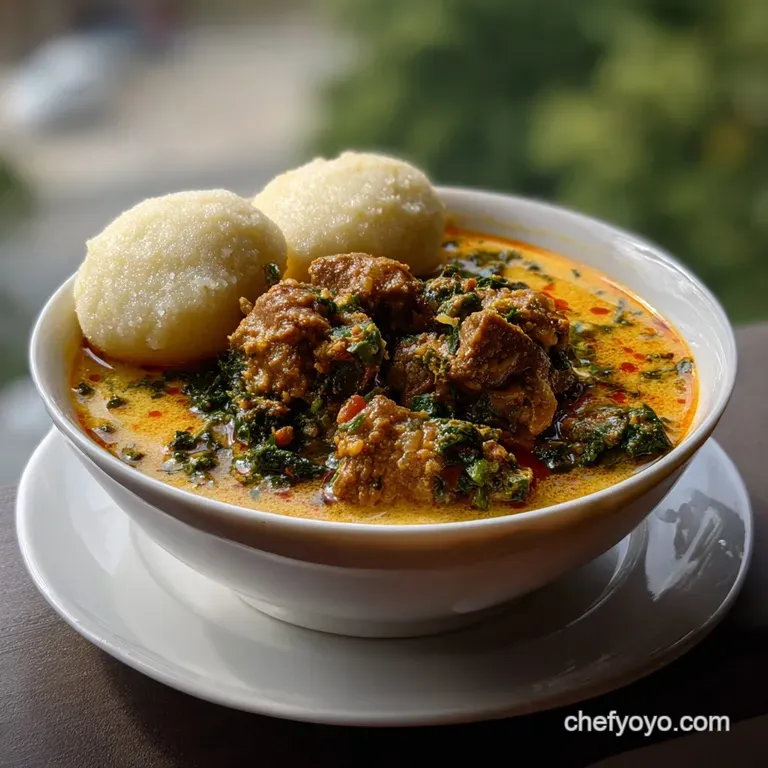
- Effort/Time: Intermediate | 1 hour 10 mins
- Flavor Hook: Nutty, umami-rich, and deeply savory with a scotch bonnet kick.
- Perfect for: Authentic family dinners and high-protein meal-prepping.
- The Science of Why it Works
- Understanding the Thermal Dynamics and Specs of This Meal
- The Alchemy of Umami: Selecting Your Elements
- Essential Tools for Achieving Traditional Nigerian Egusi Soup Consistency
- Precision Execution: Achieving the Lumpy Egusi "Cake" Texture
- Why Your Soup Separates: Mastering Emulsions and Mouthfeel
- Flavor Architecture: Creative Variations and Ingredient Substitutions
- Scaling Laws - Strict Logistics
- Common Myths
- Storage & Reheating Protocol
- Serving Suggestions
- Recipe FAQs
- 📝 Recipe Card
Master the Ultimate Egusi and Fufu with Authentic Textures
The kitchen air thickens with the scent of palm oil, a pungent, nutty aroma that signals the start of something serious. I remember my first attempt at this dish; I ended up with a watery, grainy mess where the melon seeds refused to clump, looking more like a sad porridge than the majestic, lumpy egusi and fufu I craved.
It was a texture nightmare that felt like eating wet sand. But after ruining several batches, I realized the secret isn't just in the ingredients it's in the thermal management of the fats and the hydration of the seeds.
When you get it right, the egusi and fufu experience is unparalleled. You’re looking for a "shatter" of flavor when the scotch bonnet hits, followed by the velvety "swallow" of the fufu.
The soup should have distinct, tender "cakes" of melon seed that hold their shape against the succulent 1.5 lbs chicken thighs and 0.5 lb beef chuck. This isn't just cooking; it's engineering a balanced emulsion of oil, water, and protein.
This recipe uses a specific "caking" technique that relies on the protein denaturation of ground melon seeds. By controlling the moisture content before the seeds hit the hot palm oil, we create a structure that mimics the bite of scrambled eggs but with a deep, earthy complexity.
Let's break down the physics of this Nigerian staple so you never serve a watery soup again.
The Science of Why it Works
- Protein Aggregation: Mixing ground egusi with a small amount of water creates a thick paste that, when dropped into hot oil, undergoes rapid denaturation, forming stable, chewy clumps rather than dissolving.
- Emulsification Stability: The 0.5 cup red palm oil acts as a continuous fat phase that, when simmered with the 3 cups water or beef stock, creates a thick, stable emulsion supported by the natural lecithins in the melon seeds.
- Starch Gelatinization: Cooking 2 cups fufu flour in 3.5 cups water at high heat causes starch granules to swell and burst, creating a long chain molecular network that gives the fufu its signature elastic, "stretchy" texture.
Understanding the Thermal Dynamics and Specs of This Meal
Cooking egusi and fufu requires a balance of over high heat frying and over low heat simmering. The "Cook Time" of 45 minutes is strategically divided to allow the collagen in the 0.5 lb beef chuck or tripe to soften while ensuring the 3 cups fresh spinach or ugu doesn't lose its vibrant chlorophyll.
| Specification | Value |
|---|---|
| Prep Time | 25 minutes |
| Cook Time | 45 minutes |
| Total Time | 1 hour 10 mins |
| Recipe Yield | 6 servings |
| Calories per Serving | 958 kcal |
Precision in timing the addition of the 1 cup smoked fish is critical. If added too early, the mechanical action of stirring will cause the fish to disintegrate; added too late, and the deep, smoky phenols won't fully infuse the broth.
We aim for a "velvety" finish where the soup clings to the fufu without dripping excessively.
The Alchemy of Umami: Selecting Your Elements
The foundation of egusi and fufu lies in the quality of the melon seeds and the depth of the stock. Using a Lodge Cast Iron Dutch Oven or a heavy bottomed stock pot ensures even heat distribution, preventing the palm oil from reaching its smoke point too quickly and turning bitter.
Ingredient Chemistry Breakdown
| Ingredient | Chemical/Physical Role (Science) | The Pro Secret (Why This Matters) |
|---|---|---|
| Ground Egusi Seeds | High protein/fat content for "caking" | Soaking into a paste prevents the seeds from remaining grainy or sandy. |
| Red Palm Oil | Carotenoid rich fat for flavor and color | Frying the aromatics first infuses the oil with fat-soluble spice compounds. |
| Crayfish (Ground) | Concentrated glutamates (Umami) | Acts as a natural flavor enhancer, providing a "sea-salt" depth without excess sodium. |
| Fufu Flour | Complex carbohydrate (Starch) | Proper hydration-to-heat ratio is the only way to avoid "rubbery" or lumpy swallow. |
- 1.5 lbs chicken thighs, bone-in: Why this? Thighs provide higher fat and collagen than breasts, ensuring the meat stays succulent during the 45 minute simmer.
- 0.5 lb beef chuck or tripe: Why this? These tougher cuts provide structural contrast and deep beefy notes to the egusi and fufu.
- 2 cups ground egusi seeds (melon seeds): Why this? This is the primary thickener; ensure they are finely ground to maximize surface area for oil absorption.
- 0.5 cup red palm oil: Why this? Authentic flavor comes from the unique fatty acid profile and antioxidants in unrefined palm oil.
- 2 scotch bonnet peppers: Why this? Capsaicin provides the heat, but the floral esters in scotch bonnets provide the essential "African soup" aroma.
- 2 cups fufu flour: Use cassava, yam, or plantain based on your texture preference.
Essential Tools for Achieving Traditional Nigerian Egusi Soup Consistency
To execute egusi and fufu at a masterclass level, your mise en place must include tools that can handle high heat and vigorous stirring.
- Heavy Bottomed Pot (e.g., Le Creuset or Lodge): Essential for heat retention when frying the egusi paste.
- High Speed Blender (e.g., Vitamix): For achieving a perfectly smooth consistency with the 1 small onion and 2 scotch bonnet peppers.
- Wooden Spoon (Orogun): A sturdy wooden spoon is mandatory for "kneading" the fufu against the sides of the pot to develop elasticity.
- Fine Mesh Strainer: For rinsing the 1 cup smoked fish or stockfish to remove debris without losing flavor.
Precision Execution: Achieving the Lumpy Egusi "Cake" Texture
This method focuses on the "frying" technique, which is the gold standard for egusi and fufu.
- Braise the proteins. Place the 1.5 lbs chicken thighs and 0.5 lb beef chuck in a pot with 1 large diced red onion, 2 bouillon cubes, and 1 tsp salt. Note: This starts the protein denaturation and creates a flavorful base stock.
- Simmer for 20 minutes. Add 3 cups water or beef stock and cook until the beef is tender and the chicken juices run clear.
- Hydrate the egusi. Mix 2 cups ground egusi seeds with 0.5 cup warm water and 1 small grated onion to form a thick, moldable paste. Note: Pre-hydration prevents the seeds from burning in the oil.
- Heat the palm oil. In a separate pot, heat 0.5 cup red palm oil for 3 minutes until it becomes translucent but before it starts to smoke.
- Fry the aromatics. Add the 2 blended scotch bonnet peppers and 3 tbsp ground crayfish. Sauté for 5 minutes until the oil separates from the pepper mix and the smell is intensely savory.
- Create the egusi "cakes." Drop small spoonfuls of the egusi paste into the hot oil. Do not stir for 10 minutes; let them fry until the bottoms are set and firm.
- Incorporate the stock. Gently pour the braised meat and its 3 cups of stock into the frying egusi. Stir once carefully to keep the lumps intact.
- Add the seafood. Fold in 1 cup smoked fish or stockfish. Simmer for 10 minutes until the soup thickens and the oil starts to float on top.
- Wilt the greens. Add 3 cups fresh spinach or ugu. Stir for 2 minutes until the leaves are soft but still bright green.
- Prepare the fufu. In a clean pot, mix 2 cups fufu flour with 3.5 cups water. Stir constantly over medium heat for 10 minutes until the mixture transforms from a liquid slurry into a thick, stretchy, translucent dough.
Chef's Note: If your fufu is too stiff, add 2 tablespoons of hot water and continue "kneading" with your wooden spoon. The goal is a texture that is firm enough to hold its shape but soft enough to indent with your thumb.
Why Your Soup Separates: Mastering Emulsions and Mouthfeel
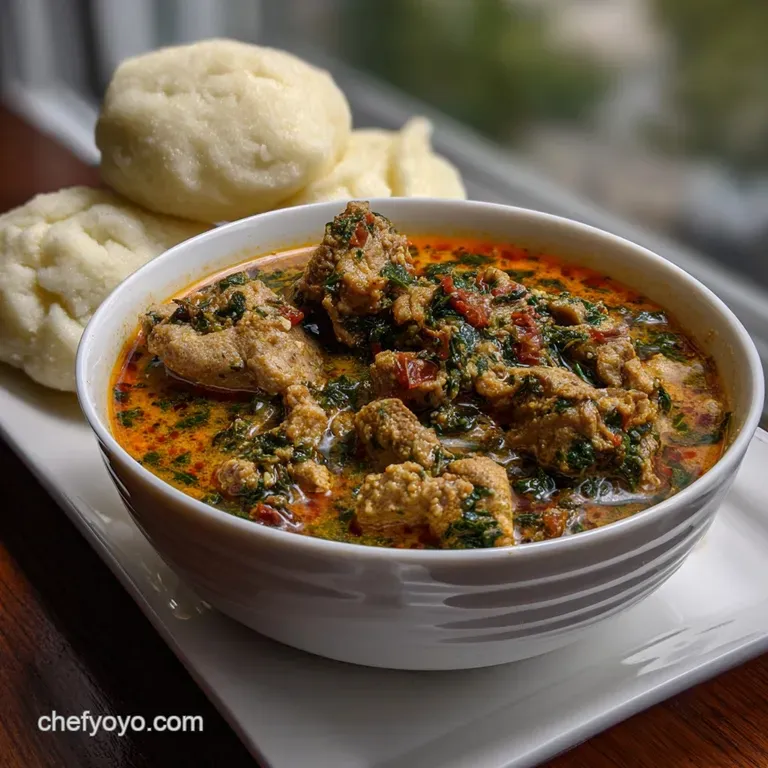
Why Your Egusi is Grainy
If the soup feels sandy, the seeds likely didn't cook long enough in the oil phase. The proteins need time to aggregate. Just like the technique used in our Gumbo recipe, the fat-to-protein ratio determines the final viscosity.
| Problem | Root Cause | The Fix | Pro Protocol |
|---|---|---|---|
| Watery Soup | Too much stock added too early. | Simmer uncovered to evaporate excess moisture. | Increase heat slightly to encourage the "oil-rise." |
| Lumpy Fufu | Flour added to boiling water too fast. | Start with cold water or whisk vigorously. | Use a silicone whisk initially before switching to a wooden spoon. |
| Bitter Aftertaste | Burnt palm oil or rancid egusi. | Add a pinch more salt or crayfish to mask. | Always taste a raw egusi seed before grinding; it should be sweet and nutty. |
Flavor Architecture: Creative Variations and Ingredient Substitutions
While the traditional egusi and fufu uses specific melon seeds, you can adapt the recipe based on availability while maintaining the scientific principles of the dish.
| Original Ingredient | Substitute | Why It Works |
|---|---|---|
| Ground Egusi Seeds | Toasted Ground Pumpkin Seeds | Similar fat/protein profile. Note: Adds a greener hue and slightly nuttier finish. |
| Red Palm Oil | Vegetable Oil + 1 tsp Turmeric | Mimics the color. Note: Lacks the authentic pungent aroma and mouthfeel. |
| Fresh Ugu (Fluted Pumpkin) | Kale or Collard Greens | High fiber content maintains "bite." Note: Requires 3 4 minutes longer to wilt. |
| Fufu Flour (Cassava) | Mashed Potato Flakes + Cornstarch | Creates a similar "swallow" texture. Note: Much lighter flavor than fermented cassava. |
Keto Friendly Swap (Diet Swap)
For those looking for a lower carb egusi and fufu experience, replace the 2 cups fufu flour with cauliflower fufu. Steam cauliflower, blend until smooth, and cook with 1 tsp of xanthan gum to replicate the elastic "stretch" of traditional dough.
Scaling Laws - Strict Logistics
When doubling this egusi and fufu recipe for a crowd, physics dictates that heat transfer becomes less efficient.
- Salt/Spices: If doubling, use 1.5x the salt and scotch bonnets (approx. 1.5 tsp salt and 3 peppers). Spices accumulate non-linearly; 2x can become overpowering.
- Thermal Mass Warning: Doubling the 3 cups water to 6 cups in the same pot will drop the temperature significantly when the egusi paste is added. Expect a 30% longer "recovery time" before the soup begins to simmer again.
- Pan Crowding: Do not double the egusi paste in the same pot if the surface area of the oil isn't large enough. Overcrowding leads to "steaming" the egusi rather than "frying" it, resulting in a mushy texture.
- Fufu Scaling: Making large batches of fufu is physically demanding. If making more than 4 cups of flour, work in batches. Large masses of starch retain heat 40% longer, which can lead to the bottom burning before the top is fully gelatinized.
Common Myths
- Myth: You must bleach the palm oil until it's clear.
- Truth: Bleaching destroys the beneficial carotenoids and antioxidants. For egusi and fufu, you only need to heat it until it's thin and translucent to remove the "raw" taste.
- Myth: Egusi soup is unhealthy because of the oil.
- Truth: This is a healthy african food staple. The melon seeds are packed with essential fatty acids and protein, and palm oil provides Vitamin A and E. The key is moderation in the 0.5 cup oil used for 6 servings.
Storage & Reheating Protocol
Storage: Egusi and fufu stores exceptionally well because the palm oil acts as a natural preservative. Store the soup in an airtight container in the fridge for up to 4 days.
The fufu should be wrapped tightly in plastic wrap to prevent the starch from dehydrating and turning into a "hockey puck."
Freezing: You can freeze the soup for up to 3 months. The high fat content prevents ice crystal formation, preserving the "velvety" mouthfeel. Do not freeze fufu; the starch retrogradation makes it crumbly and unpalatable upon thawing.
Reheating: Reheat the soup on the stovetop over low heat, adding 2 tbsp of water to loosen the emulsion. For fufu, microwave wrapped in a damp paper towel for 1 minute to re-gelatinize the starches.
💡 ZERO WASTE PHILOSOPHY: Don't discard the chicken skins or beef trimmings. Transform: Render the fat or simmer the scraps with the 1 tsp salt to create a more concentrated stock.
Science: The extra collagen from the trimmings increases the viscosity of the broth, leading to a richer soup.
Serving Suggestions
To enjoy egusi and fufu like a pro, serve the soup in a wide bowl and the fufu on a side plate or wrapped in a leaf. The "swallow" technique is essential: tear a small piece of fufu, create a small indentation with your thumb, and use it as a "spoon" to scoop up the lumpy egusi and a piece of the succulent chicken thighs.
The heat of the peppers is beautifully balanced by the neutral, cooling effect of the fufu. If you're looking for a lighter pairing, this soup also works well with rice, similar to the flavor profiles found in our Chicken and Noodles Recipe, which focuses on a savory, enveloping sauce.
This egusi and fufu recipe is more than a meal; it's a technical exercise in texture and flavor balance. By respecting the science of the melon seed and the chemistry of the starch, you’ve moved beyond a simple recipe into the realm of culinary mastery.
Enjoy the sizzle, the aroma, and the deep satisfaction of a bowl done right.

Recipe FAQs
Faqs for egusi and fufu near Montreal, QC?
Use specialty African or West Indian grocery stores. These locations stock authentic ground egusi seeds and yam/cassava fufu flour staples. Proper texture requires high-quality, freshly milled ingredients.
Faqs for egusi and fufu near Québec City, QC?
Check smaller international markets or import suppliers. Availability fluctuates seasonally; if seeds are unavailable, substitute with ground pumpkin seeds. If you enjoyed controlling the emulsion in this recipe, see how the same fat ratio logic applies to our Charcuterie and Cheese Board: Easy DIY Assembly Pairing Guide.
Nigerian faqs for egusi and fufu?
Myth: Boiling the egusi paste first makes it smoother.Reality: Boiling the paste introduces excess water, guaranteeing a thin, watery soup instead of firm clumps. Frying the paste directly in hot palm oil is crucial for texture setting.
Egusi soup near me?
Search local West African restaurants or caterers specializing in Nigerian cuisine. Use search terms like "Swallow" or "Eba" alongside "Egusi" for better local results.
Egusi seeds?
Egusi seeds are ground melon seeds from the Citrullus lanatus family. They are high in protein and oil, functioning as the primary thickener and flavor agent for the soup base.
What is the best substitute for red palm oil?
Vegetable oil with turmeric provides visual similarity. Palm oil's pungent, earthy flavor is irreplaceable, but a neutral oil mixed with turmeric powder mimics the signature orange hue. This substitution omits the unique fat-soluble flavor compounds found in authentic palm oil.
Why does my fufu become hard after cooling?
Starch retrogradation causes structural hardening upon cooling. As the gelatinized starch molecules realign during cooling, they squeeze out water, leading to a firm, brittle texture instead of elasticity.
- Reheat with small water additions
- Knead vigorously with a wooden spoon
- Ensure full cooking time (10+ minutes)
Egusi And Fufu Mastery
Ingredients:
Instructions:
Nutrition Facts:
| Calories | 958 kcal |
|---|---|
| Protein | 52g |
| Fat | 58g |
| Carbs | 68g |
| Fiber | 4.5g |
| Sugar | 3g |
| Sodium | 845mg |
