Cornish Hen: Lemon, Rosemary, and Garlic Roast
- Elevate Your Dinner: The Perfect Individual Roast
- The Science of Succulence: Why This Recipe Guarantees Crisp Skin
- Gathering Your Tools and Flavor Builders
- Mastering the Method: Roasting Your Individual Cornish Hen
- Pro Chef Insights and Troubleshooting
- make-ahead and Maximizing Freshness
- Elegant Pairings for Your Roasted Hen
- Recipe FAQs
- 📝 Recipe Card
Elevate Your Dinner: The Perfect Individual Roast
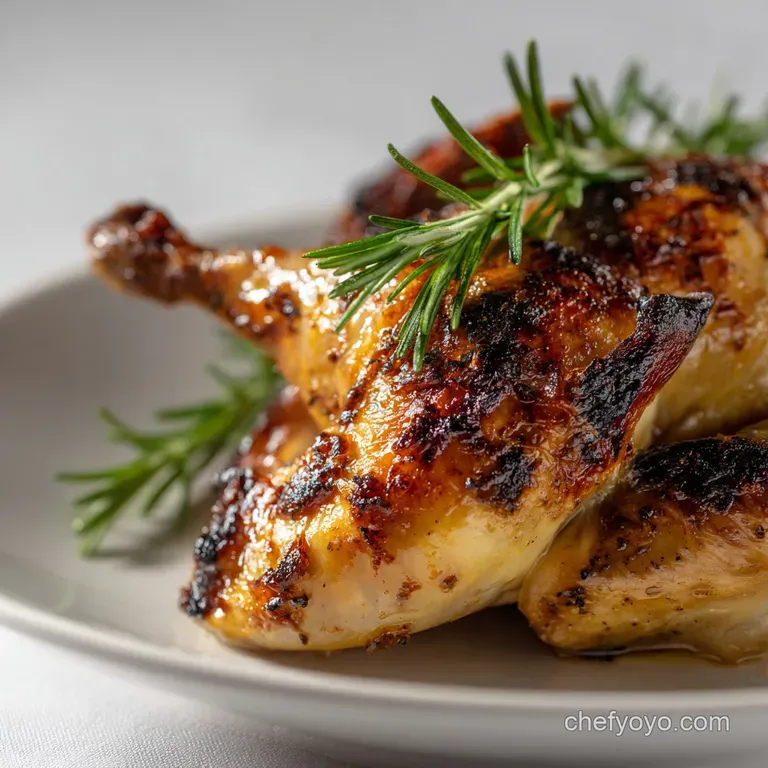
The aroma of roasting lemon, rosemary, and garlic wafting from the oven signals immediate success. You know that incredible moment when you pull a perfectly golden, individual roast out of the oven, and the skin is shatteringly crisp?
That’s exactly what we are aiming for with this incredible Cornish Hen recipe. This little bird delivers all the pomp and circumstance of a huge Sunday feast without the three hour cooking commitment.
If you’ve ever felt intimidated by roasting whole poultry, the Cornish Hen is your new best friend. They are smaller, meaning they cook incredibly fast we’re talking under an hour and they are inherently portion controlled, which solves the "how much meat do I need?" dilemma instantly.
This is the ultimate dinner party hack or weeknight lifesaver when you want something impressive, fast, and shockingly simple.
I’m going to walk you through the exact technique the one that took me years of over salted skin and dry breast meat to perfect so you can skip the failures and go straight to success. Trust me, the secret lies in where we put the butter.
This simple roast Cornish Hen recipe will change the way you think about elegant dining forever.
The Science of Succulence: Why This Recipe Guarantees Crisp Skin
The History and Appeal of the Rock Cornish Game Hen
First, let's clear up the fancy name: The Rock Cornish Hen is essentially a very young chicken, usually butchered when it weighs under two pounds. Calling it a "game hen" is really just marketing; it’s tender, mild, and absolutely ideal for absorbing powerful flavors like lemon and garlic.
They are naturally tender, which is why we treat them gently but firmly. The appeal is twofold: presentation (everyone loves their own mini roast) and speed. You can get dinner on the table in under two hours, which is practically instant gratification in the roasting world.
Defining the “Sunday Best” Flavor Profile
My goal for the best Cornish Hen is brightness and depth. We aren’t using any heavy sauces here; we are building flavor deep inside the meat. That means using strong aromatics fresh rosemary, pungent garlic, and sharp lemon zest.
This combination, married with rich butter, penetrates the muscle fibers while it roasts, resulting in a baked Cornish Hen that tastes profoundly savory and complex, not just salty.
Quick Recipe Overview and Prep Timeline
The total prep time for this easy Cornish Hen recipe is minimal, but there are two mandatory waiting periods. First, you need 20 minutes to assemble the compound butter and perform the critical technique of spatchcocking (don’t worry, it’s easy).
Second, you must chill the seasoned hens, uncovered, for at least 30 minutes. This chilling phase is non-negotiable for creating truly crisp skin, setting this apart from any other standard Cornish Hen recipe .
The Magic of Compound Butter Under the Skin
This is the secret sauce or rather, the secret butter. You need softened butter mixed with your herbs and zest, and you need to push it directly onto the breast meat, under the skin. Why? Because the skin is tough to penetrate.
By placing the flavored fat right against the muscle, as the butter melts during the roast, it bastes the meat from the inside out. This keeps the delicate breast meat incredibly juicy, which is often the biggest hurdle when cooking a proper Cornish Hen .
Why High Heat is Essential for Golden Results
We start the oven blazing hot at 425°F (220°C) for the first 15 minutes. This high heat blitz is what seals the deal on the color and the crispness. The skin begins to render quickly, achieving that deep, beautiful golden color almost immediately.
Then, we drop the temperature down to 375°F (190°C) to allow the heat to gently finish cooking the interior of the Cornish Hen without burning the exterior. It’s a dual temperature approach that yields perfect results every time.
How Lemon and Garlic Tenderize the Meat
While we are using the lemon zest and juice primarily for flavor, the acidity in the small amount of lemon juice acts as a mild tenderizer. More importantly, the garlic and rosemary are potent aromatic oils that deeply infuse the bird.
Since we spatchcock the Cornish Hen , the meat is flattened, allowing these flavors to permeate evenly and quickly.
Gathering Your Tools and Flavor Builders
Essential Equipment Check: From Roasting Pan to Twine
You don’t need much, but a few key tools make the process drastically easier. A sturdy roasting pan is a given, but if you have a wire rack that fits inside, use it! Lifting the Cornish Hen off the bottom of the pan promotes air circulation, which is crucial for achieving that 360 degree crispness.
You absolutely, positively need a digital meat thermometer. Guessing the internal temperature is the fastest route to dry meat. And finally, sharp kitchen shears are necessary if you choose to spatchcock, which I strongly recommend for this particular easy Cornish Hen recipe .
Detailed Notes on Fresh Rosemary and Lemon Zest Quality
Please, please, please use fresh herbs for this. Dried herbs won’t deliver the same punch when mixed into the cold compound butter. Fresh rosemary provides a wonderfully woodsy, intense flavor that stands up beautifully to the richness of the butter. Similarly, when zesting your lemon, go light!
Only use the bright yellow part of the rind, avoiding the bitter white pith, or it will throw off the entire delicate flavor profile of your Baked Cornish Hen .
Acceptable Ingredient Swaps (Fats and Herbs)
Don’t panic if you’re missing an item. We are home cooks; we adapt!
| Ingredient | Substitution Option | Notes |
|---|---|---|
| Cornish Hen | Whole Spatchcocked Quail or Bone-in Chicken Thighs | Adjust Cornish Hen Cooking Time down for quail; up for chicken. |
| Fresh Rosemary | Fresh Thyme or Sage | Thyme works well, providing earthiness. Use about 50% more volume than rosemary. |
| Unsalted Butter | Softened Vegetable Shortening or Ghee | These fats still melt and carry flavor efficiently. |
| Lemon Zest/Juice | Lime Zest and a dash of White Wine Vinegar | Provides the necessary acidity and brightness. |
Chef’s Note: If you want to change up the flavor profile entirely, try replacing the rosemary and lemon with a tablespoon of my Peri Peri Chicken: Authentic Grilled or oven-roasted Recipe dry rub. It’s spicy and fantastic on a Cornish Hen !
Mastering the Method: Roasting Your Individual Cornish Hen
Preparing the Vibrant Compound Butter Mixture
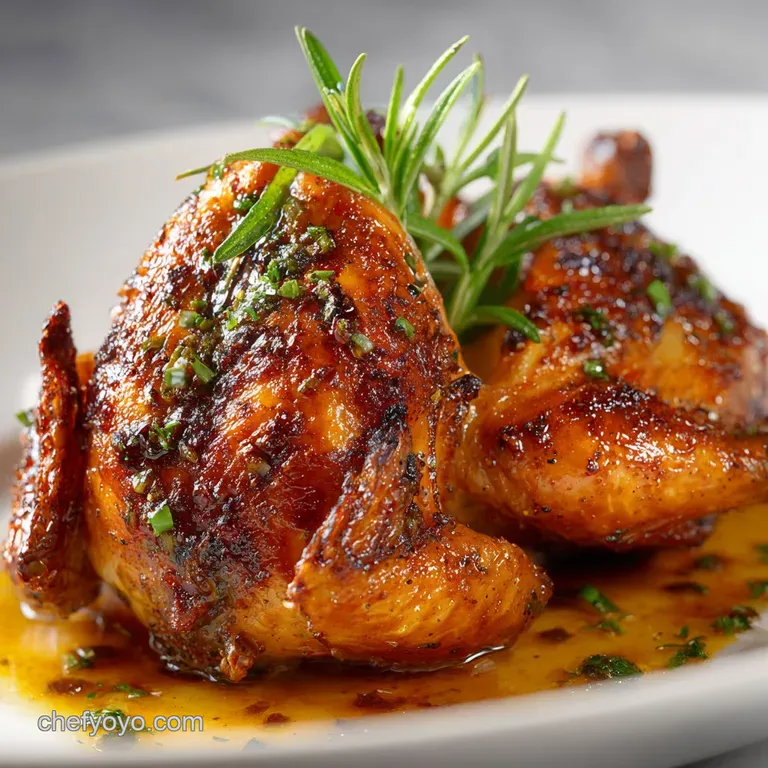
Start with butter that is truly soft not melted, but definitely spreadable. In a small bowl, combine your butter, finely chopped rosemary, minced garlic, lemon zest, lemon juice, salt, and pepper. Mix until it looks like a beautiful, pale yellow paste dotted with green flecks.
That bright scent alone is 50% of the meal enjoyment!
The Technique for Loosening and Rubbing the Skin
This is where finesse matters. Pat your Cornish Hen absolutely bone dry using paper towels. Moisture is the enemy of crisp skin. Next, gently slip your fingers under the skin covering the breast and thighs, creating a small pocket. Be careful not to tear the skin completely.
Take half the compound butter and, using the back of a spoon or your fingers, push that butter deep into the pockets you created. Once the inside is buttered, use the remaining butter to coat the exterior skin.
Season the skin aggressively with flaky sea salt and black pepper that salt is what helps the skin crisp.
Trussing for Uniform Cooking and Presentation
While spatchcocking (removing the backbone and flattening the bird) usually negates the need for full trussing, sometimes a quick tie around the legs can ensure the bird holds a compact, uniform shape.
Flattening the Cornish Hen is essential because it allows the thinner breasts and thicker thighs to be exposed to heat equally, resulting in consistent cooking across the entire Best Cornish Hens experience.
Lay the prepared hens on a rack (or directly onto a bed of rough chopped carrots and onions which will flavor your drippings). Then, into the fridge they go for the minimum 30 minute chill.
Achieving the Perfect Internal Temperature
Remember the two-temperature method: 15 minutes at 425°F (220°C), then drop to 375°F (190°C). The total Cornish Hen Cooking Time is usually 50 to 55 minutes, depending on the size of your birds and the accuracy of your oven.
You must check the internal temperature in the thickest part of the thigh, avoiding the bone. The safe internal temperature is 165°F (74°C). When you hit that number, pull them immediately. The perfect Roast Cornish Hen Recipe always involves resting.
Pro Chef Insights and Troubleshooting
Preventing Dry Breast Meat: Basting vs. Tent Technique
Because we put the butter under the skin, basting is mostly unnecessary. Basting the skin often introduces moisture, which softens the crispness you worked so hard to achieve.
Instead, if you see the skin browning too quickly during the 375°F stage, simply tent the breast loosely with a small piece of aluminum foil. This blocks direct heat while allowing the thighs to finish cooking perfectly.
What to Do If the Skin is Browning Too Quickly
I learned this the hard way: I once completely charred the top of a beautiful Cornish Hen because my oven ran hot. The fix is simple and immediate: Use a small piece of foil just to cover the breast meat, which is the most likely area to burn.
You don’t need to completely wrap the bird, just shield the main surface area.
Utilizing Pan Drippings for a Quick Sauce
Don't let those amazing, herb infused juices and rendered butter go to waste! Remove the hens after resting. Put the roasting pan over a medium burner (if it’s metal, not glass!). Pour off excess oil, leaving the flavorful remnants.
Deglaze the pan with about half a cup of dry white wine or plain chicken stock, scraping up all those sticky brown bits. Reduce this liquid by half. Stir in a small knob of cold butter off the heat to emulsify and thicken the sauce slightly.
This quick, bright sauce is the ideal complement to your Easy Cornish Hen Recipe .
make-ahead and Maximizing Freshness
Prep Steps You Can Complete 24 Hours in Advance
The great news about this Roast Cornish Hen Recipe is that it’s highly adaptable to make-ahead preparation. You can prepare the compound butter up to three days in advance.
You can also spatchcock and season the Cornish Hen completely (butter under and over the skin) and leave it, uncovered, in the refrigerator for up to 24 hours.
The long, uncovered rest actually enhances the skin drying process, leading to even crispier results when you finally cook your Baked Cornish Hen .
Safe Storage of Cooked Leftovers
A properly cooked Cornish Hen can be stored safely in an airtight container in the refrigerator for 3 to 4 days. If you anticipate eating leftovers, I recommend slicing the meat off the bone first, as this makes reheating much easier and faster. I usually serve any leftover slices cold the next day over a salad, especially one featuring bright flavors like my favorite Puerto Rican Style Beans: Authentic Habichuelas Guisadas Recipe .
Best Practices for Reheating Without Drying Out
Never reheat the whole Cornish Hen in the microwave it will turn the skin rubbery. If you want the skin to retain some crispness, place the leftover hen halves or pieces on a rack in a baking dish.
Reheat in a preheated oven at 300°F (150°C) for about 15 minutes, or until just warmed through. Low and slow prevents drying, and the rack helps re-crisp the skin slightly.
Elegant Pairings for Your Roasted Hen
For a truly memorable, elegant meal, you need sides that complement the rich, bright flavor of the Cornish Hen . We need something starchy and something green.
- The Perfect Starch: I always pair this with my incredibly popular Greek Garlic Roasted Potatoes: Authentic Lemon Garlic Recipe . The lemon garlic profile is already established in the hen, so the potatoes make a seamless pairing.
- A Crisp Side: A simple wilted spinach or sautéed green beans tossed with pine nuts and brown butter works wonders. If it’s summertime, nothing beats a vibrant, acidic side like Mexican Street Corn (Elote): Ultimate Authentic BBQ Side Dish .
- Serving: Serve the Cornish Hen whole on a plate, surrounded by the sides, with a small drizzle of the pan sauce. It instantly transforms a Tuesday night into a special occasion.
Seriously, if you’re looking for a simple, high impact recipe, stop scrolling. This Cornish Hen preparation is absolutely foolproof, provided you follow the dry skin rule and use that compound butter where it counts: right under the skin. Go get those birds!
You won't regret making the Best Cornish Hens this way.
Recipe FAQs
Why did my Cornish hen turn out dry and tough?
Dryness is almost always a sign of overcooking; ensure you pull the hens when they reach an internal temperature of exactly 165°F (74°C) in the thickest part of the thigh. It is also crucial to let the finished hens rest uncovered for at least 10 minutes before carving, allowing the internal juices to redistribute throughout the meat.
How can I guarantee truly crispy skin on my roasted hens?
For the crispiest skin, pat the entire surface of the hens thoroughly dry with paper towels before applying the compound butter. Furthermore, ensure your oven temperature is high (around 400°F/200°C) and that there is ample space between the birds on the roasting pan to allow moisture to evaporate rather than steam the skin.
Can I prepare the hens with the compound butter rub ahead of time?
Yes, prepping ahead is highly recommended as it deepens the flavor infusion into the meat. You can rub the compound butter under and over the skin, truss the hens, and store them uncovered in the refrigerator for up to 24 hours prior to roasting.
What is the safest internal temperature for a Cornish hen?
The USDA standard safe minimum temperature for poultry is 165°F (74°C). Always use an instant read thermometer inserted into the deepest part of the thigh, avoiding contact with the bone, as bone contact can give a falsely high reading.
I don't like rosemary. Can I use different herbs for this recipe?
Absolutely; the compound butter method is extremely versatile and welcomes variation. Replace the rosemary with fresh thyme, sage, or a blend of Italian herbs, and you can swap the lemon zest for orange zest or even a little truffle oil for an earthy flavor twist.
Can I cook multiple Cornish hens at once for a party?
Yes, you can cook several hens together, but you must ensure they are not crowded on the pan. If the hens are too close, they will steam instead of roast, potentially increasing the cook time and hindering skin crispiness, so utilize multiple roasting sheets if necessary.
How should I store leftover roasted Cornish hen?
Leftover roasted hen should be cooled quickly and then stored in an airtight container in the refrigerator for up to 3 to 4 days. If you plan to freeze the leftovers, strip the meat from the bone first, and it will keep well for up to 3 months, though the texture may become slightly drier upon reheating.
Lemon Rosemary Roasted Cornish Hen
Ingredients:
Instructions:
Nutrition Facts:
| Calories | 620 kcal |
|---|---|
| Fat | 40 g |
| Fiber | 1 g |
