Perfect Sugar Cookies for Decorating
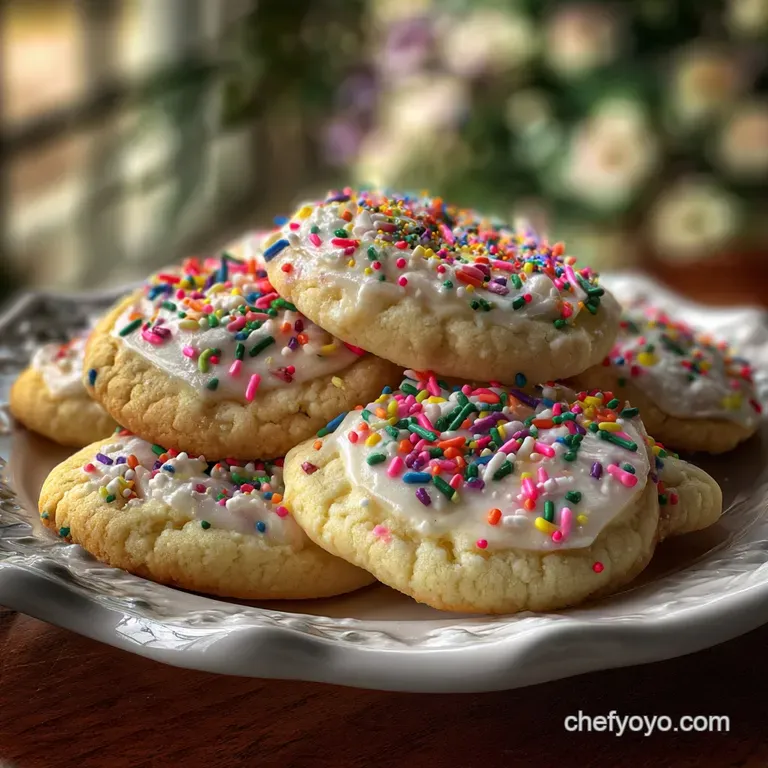
- Effort/Time: Moderate effort; 1 hour 30 mins total.
- Flavor Hook: Buttery-sweet snap with a hint of almond-scented velvet.
- Perfect for: Intricate holiday cut-outs and professional-grade decorating.
- The Architecture of a Perfect Snap: Defining Modern Sugar Cookies
- Hydration Balance Protocol: Why This Dough Holds Its Shape
- Technical Logistics: Yield, Time, and Nutritional Parameters
- The Alchemy of Pantry Staples: Selecting Your Building Blocks
- Essential Instrumentation for Precision Baking Success
- Execution Framework: The Step-by-Step Assembly Process
- Thermal Failures and Structural Collapse: Troubleshooting Your Bake
- Flavor Architecture: Creative Modifications for Every Season
- ⚗️ The Scaling Lab: The Physics of Quantity
- Bashing the Baking Myths
- Shelf-Life Preservation and Thermal Recovery Strategies
- Plating Aesthetics and Curated Flavor Pairings
- Recipe FAQs
- 📝 Recipe Card
The Architecture of a Perfect Snap: Defining Modern Sugar Cookies
There is nothing more demoralizing than spending three hours on intricate snowflake cut-outs only to pull a tray of unrecognizable, buttery puddles out of the oven. I once ruined a $40 batch of high end European butter and premium vanilla because I rushed the chilling process, thinking the freezer could cheat physics.
The result was a greasy, structural failure that tasted like heartbreak and wasted labor.
I destroyed six batches of dough over two years experimenting with everything from "sugar cookies pillsbury" hacks to over complicated "sugar cookies french" sablé techniques before I realized that the secret isn't more flour.
It's the ratio of fat-to-sugar and the specific inclusion of cornstarch to inhibit excessive gluten development. When you get this right, you aren't just baking; you're engineering a canvas.
The magic happens during the hydration rest. By allowing the 3 cups (375g) All-purpose flour to fully absorb the moisture from the Large egg, we create a dough that holds a sharp edge without becoming a tooth shattering brick.
You get that signature shattering snap on the edge followed by a velvety, melt-in-the-mouth center that holds its own under heavy sugar cookies icing.
Hydration Balance Protocol: Why This Dough Holds Its Shape
The science of a non-spreading cookie relies on two specific mechanisms:
- Starch Reinforcement: The 1 tbsp Cornstarch interferes with gluten strands, creating a "tender crisp" texture while absorbing excess moisture that usually causes spreading.
- Thermal Inertia: Using 1 cup (225g) Unsalted butter that is "softened but cool" (about 65°F/18°C) ensures the air cells created during creaming don't collapse instantly in the heat of the oven.
Technical Logistics: Yield, Time, and Nutritional Parameters
Precision in timing is the difference between a "sugar cookies walmart" generic bake and a professional grade result. We operate on a strict schedule to ensure the lipids in the butter remain stable.
- Prep Time: 1 hour 20 minutes (includes mandatory 1 hour chill)
- Cook Time: 10 minutes
- Total Time: 1 hour 30 minutes
- Yield: 24 cookies
| Metric | Value per Serving |
|---|---|
| Calories | 202 kcal |
| Fat | 7.8 g |
| Carbohydrates | 31.2 g |
| Sugar | 18.5 g |
| Protein | 1.9 g |
The Alchemy of Pantry Staples: Selecting Your Building Blocks
For these sugar cookies, your ingredient choice dictates the final crumb. I always reach for King Arthur All-Purpose Flour because its consistent 11.7% protein content provides the perfect structural framework.
For the fat, Kerrygold Unsalted Butter offers a higher butterfat percentage and lower water content than standard store brands, preventing the dreaded "steaming" effect during baking.
| Ingredient | Chemical/Physical Role (Science) | The Pro Secret (Why This Matters) |
|---|---|---|
| 1 cup Unsalted Butter | Lipid aeration and steam leavening source | Cool room temp butter holds air bubbles; too warm and they collapse. |
| 1 tbsp Cornstarch | Gluten inhibitor and moisture stabilizer | Softens the protein in the AP flour for a professional "snap." |
| 2 tsp Baking Powder | Chemical leavening via CO2 release | Provides a slight lift without distorting the stamped edges. |
| 2 tsp Light Corn Syrup | Interference agent in sugar crystallization | Creates the "gloss" and prevents the icing from cracking. |
- Unsalted Butter
- Why this? Controls sodium levels precisely and ensures a pure, creamy dairy profile.
- All-purpose flour
- Why this? The protein-to-starch ratio is optimized for structural integrity without toughness.
- Light Corn Syrup
- Why this? Prevents the powdered sugar from forming large, gritty crystals as it dries.
If you're running low on the finishing touch, check out this How To Make recipe to whip up your own sugar base in minutes.
Essential Instrumentation for Precision Baking Success
You cannot achieve "Masterclass" results with a wooden spoon and a prayer. High torque mixing and even heat distribution are mandatory.
- KitchenAid Stand Mixer: Using the paddle attachment ensures even distribution of fats without over incorporating air.
- USA Pan Half Sheet Trays: The corrugated surface allows for superior airflow under the cookie.
- Silpat Silicone Baking Mats: These provide a non-stick surface that insulates the bottom of the sugar cookies to prevent premature browning.
- Ateco Precision Rolling Pin: Use the 1/4 inch spacers to ensure every cookie is the exact same thickness for even baking.
Execution Framework: The step-by-step Assembly Process

For the Sugar Cookie Dough
- Whisk the 3 cups All-purpose flour, 2 tsp Baking powder, 1/4 tsp Salt, and 1 tbsp Cornstarch in a medium bowl until aerated. Note: Distributing the leavening agent early prevents bitter pockets.
- Cream the 1 cup Unsalted butter and 1 cup Granulated white sugar for 3 minutes until the mixture is pale ivory and significantly fluffed.
- Incorporate the Large egg, 1.5 tsp Pure vanilla extract, and 1/2 tsp Almond extract on medium speed. Note: Emulsifying the fats and liquids prevents the dough from breaking.
- Reduce mixer speed to low and gradually add the dry mixture until no streaks of white flour remain and the dough clumps.
- Divide the dough into two discs, wrap in plastic, and refrigerate for 1 hour until firm to the touch.
- Preheat your oven to 350°F (175°C) while the dough completes its hydration rest.
- Roll the chilled dough on a lightly floured surface to 1/4 inch thickness.
- Cut shapes using floured cutters, transferring them to the prepared Silpat mat until the tray is full with 2 inch gaps.
- Bake for 10 minutes until the edges are just set and the tops look matte but not browned.
- Cool on the baking sheet for 5 minutes until the structure firms up, then transfer to a wire rack.
For the Sugar Cookies Icing
- Whisk the 2 cups Powdered sugar, 2 tbsp Whole milk, 2 tsp Light corn syrup, and 1/4 tsp Vanilla extract in a small bowl.
- Adjust consistency with drops of milk until a spoonful of icing takes 10 seconds to disappear back into the bowl.
- Decorate the cooled sugar cookies using a piping bag or small spatula until the surface is smooth and glossy.
If you're looking for a different texture profile, our Peanut Butter Cookies recipe offers a thicker, chewier alternative to this crisp cut-out style.
Thermal Failures and Structural Collapse: Troubleshooting Your Bake
Why Your Cookies Spread/Lose Shape
When the butter melts faster than the flour structure can set, you lose the "sharp" edge. This is usually due to a warm kitchen or skipping the chill step.
| Problem | Root Cause | The Fix | Pro Protocol |
|---|---|---|---|
| Spread/Blurred Edges | Butter was too warm | Chill cut-out shapes on the tray for 15 mins before baking | Use a freezer for a 5 minute "flash chill" before the oven. |
| Tough/Hard Texture | Over worked gluten | Mix dry ingredients until just combined | Stop the mixer when 10% of the flour is still visible; finish by hand. |
| Brown/Burnt Bottoms | Thin baking sheets | Switch to heavy gauge pans or double stack | Use a Silpat mat to insulate against direct metal heat. |
Why Your Dough is Dry and Crumbly
This happens when the "sugar cookies recipe" measurements are off, specifically by over packing the flour. If you don't use a scale, you might be adding 20% more flour than required.
Chef's Tip: If the dough feels like sand, add 1 teaspoon of milk at a time. The moisture will trigger the protein bonds needed to hold the mass together.
Flavor Architecture: Creative Modifications for Every Season
This base is a blank canvas. While a "sugar cookies christmas" theme usually demands nutmeg or cinnamon, you can pivot the flavor profile entirely by swapping the extracts.
| Original Ingredient | Substitute | Why It Works |
|---|---|---|
| Almond Extract | Lemon Zest (1 tbsp) | Adds a bright, acidic lift that cuts through the sugar density. |
| Whole Milk | Lemon Juice | Creates a "tart" glaze that mimics a sugar cookies french lemon tart flavor. |
| Vanilla Extract | Maple Extract | Deepens the flavor profile; Note: Yields a darker, "toasty" cookie. |
For a deeper, more chocolate centric experience, try the technique used in this Crinkle Cookies recipe, which focuses on a similar moisture lock principle.
⚗️ The Scaling Lab: The Physics of Quantity
When you decide to double this batch for a party, the thermodynamics of your kitchen change instantly.
- Flavor Saturation: Scale the salt and almond extract to 1.5x (NOT 2x). These compounds become overwhelming in large volumes.
- Chemical Leavening: Scale the baking powder exactly. Too much will cause the cookies to puff into "bread" and lose their stamp detail.
- Thermal Mass & Thermodynamics: A double batch of dough has a higher thermal mass. It will take longer to chill in the center. Pro Tip: Divide the dough into four smaller discs instead of two large ones to increase the surface area for faster cooling.
- Pan Crowding: Do not overlap cookies to "save time." This creates a steam pocket that prevents the edges from getting that signature sugar cookies snap.
Bashing the Baking Myths
Myth: "You must use room temperature butter." Truth: Room temperature in a professional kitchen is often 68°F. In a home kitchen, it’s often 75°F+.
Butter should be "cool room temp" it should dent when pressed but still feel slightly chilly. This preserves the air-cell structure.
Myth: "Chilling the dough is optional if you use enough flour." Truth: No. Chilling isn't just about the fat; it’s about Hydration. The flour needs time to absorb the liquid from the egg to prevent a "gritty" texture.
Shelf Life Preservation and Thermal Recovery Strategies
Storing sugar cookies correctly prevents the transition from "crisp" to "stale."
- Room Temp: Store in an airtight container for up to 5 days. Add a piece of parchment between layers to protect the sugar cookies icing.
- Freezing (Dough): Wrap the discs in a double layer of plastic wrap and foil. Freeze for up to 3 months. Thaw in the fridge overnight before rolling.
- Freezing (Baked): Freeze undecorated cookies in a single layer before bagging. They last 2 months.
- Reheating: If they lose their snap, place them in a 300°F (150°C) oven for 2 minutes to "reset" the starches.
💡 ZERO WASTE PHILOSOPHY: Don't discard the dough scraps! Transform: Gather them, chill for 10 minutes, and re-roll. Science: The second roll will be slightly tougher due to gluten development, so use these for the "test" cookies or smaller shapes.
Leftover icing? Transform: Drizzle it over oatmeal or use it as a "glue" for a gingerbread house. Science: The corn syrup acts as a stabilizer, keeping it shelf stable and glossy for days.
Plating Aesthetics and Curated Flavor Pairings
When serving these sugar cookies, contrast is key. Since the flavor profile is high in "sweet" and "fat," pair them with something acidic or bitter.
- The Afternoon Tea: Serve with an Earl Grey tea. The bergamot oil mimics the citrus notes in the sugar.
- The Dessert Board: Pair with tart raspberries and a dark chocolate ganache dip.
- The Texture Play: Serve alongside a bowl of creamy Crockpot Applesauce recipe to provide a soft, fiber rich contrast to the cookie's snap.
These aren't just cookies; they are a structural achievement. By respecting the science of the chill and the precision of the cornstarch-to-flour ratio, you've moved past the "pillsbury" tier into true culinary artistry. Enjoy the snap!

Recipe FAQs
how to make sugar cookies?
Cream butter and sugar, add wet, then incorporate dry ingredients just until combined. Chill dough for one hour minimum before rolling and cutting. This hydration rest is crucial for structure retention.
how to make sugar cookies from scratch?
Requires flour, butter, sugar, egg, baking powder, salt, vanilla, and cornstarch for structure. Starting from basic pantry staples allows for precise control over the fat-to-starch ratio, which prevents excessive spread during baking.
how to make sugar cookies with icing?
Use a royal icing or simple powdered sugar glaze once cookies are completely cool. The corn syrup in the dough recipe helps the icing dry with a desirable glossy finish rather than a dull matte look.
how to make sugar cookies easy?
Use chilled dough and a non-stick mat to minimize extra flour dusting. If intricate shapes are intimidating, simply slice the chilled dough log into rounds for an easier "slice and-bake" method.
how to make sugar cookies without butter?
Shortening or chilled coconut oil can substitute, but texture will change significantly. Shortening yields a cakier texture because it lacks the water content of butter needed for certain steam leavening reactions, contrasting sharply with this recipe's crisp texture. For a recipe focusing on fat substitution, explore the techniques in our Easy 4-Ingredient Pumpkin Cinnamon Chip Cookies: Soft Fast.
Why do my cutout sugar cookies spread into flat puddles?
Warm butter melted before the flour structure could set caused the spread. High heat transfers too quickly to the lipids, causing them to liquefy before the starches gelatinize and lock the shape in place.
- Ensure dough chills for 60 minutes minimum
- Bake on thick, cool metal baking sheets
- Roll dough to 1/4 inch consistency
Should I use salted or unsalted butter?
Unsalted butter for precision control. Salted brands vary widely in sodium content (80-200mg per tbsp), making it impossible to standardize flavor precisely. Unsalted allows you to adjust salt based solely on the recipe requirements.
Mastering Sugar Cookies Structure
Ingredients:
Instructions:
Nutrition Facts:
| Calories | 202 kcal |
|---|---|
| Protein | 1.9 g |
| Fat | 7.8 g |
| Carbs | 31.2 g |
| Fiber | 0.4 g |
| Sugar | 18.5 g |
| Sodium | 31 mg |
