The Ultimate Charcuterie Board: Salt, Fat, Acid
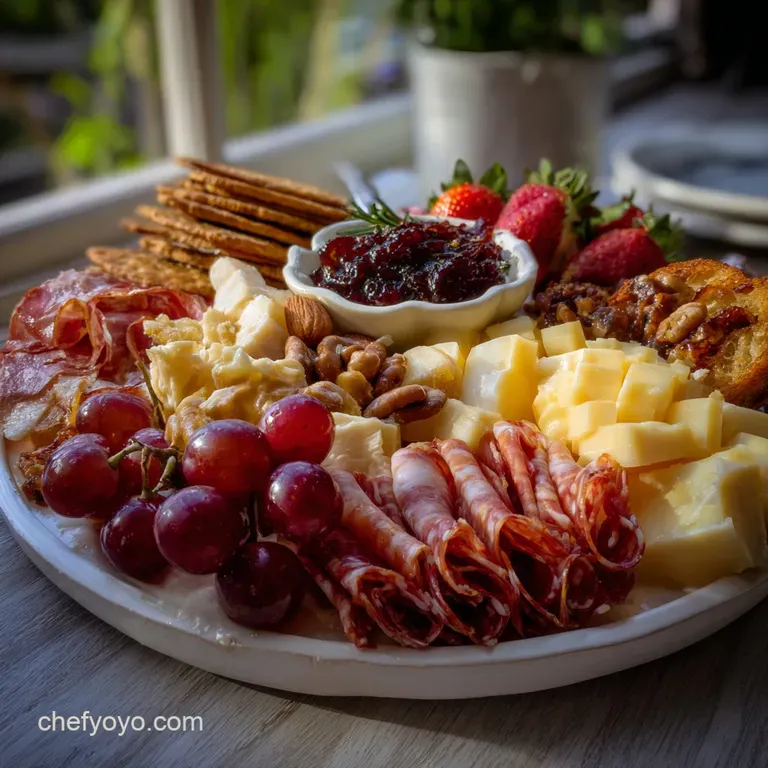
- Effort/Time: 30 minutes (Zero-cook)
- Flavor Hook: Contrast of buttery Triple Cream Brie against sharp, 12 month aged Manchego.
- Perfect for: High-impact entertaining and stress-free holiday hosting on a beautiful charcuterie board.
- The Architecture of Flavor and Texture in a charcuterie board
- The Science of Why This Recipe Works
- Ingredient Chemistry: Selecting Your Elements for a charcuterie board
- Precision Tools: The Hardware Required for Assembly
- Key Steps for Assembling Your charcuterie board
- Why Your Board Falls Flat: Troubleshooting Sensory Failure
- Variations & Substitutions for Your charcuterie board
- Storage & Reheating: Managing the Aftermath
- ⚗️ The Scaling Lab: The Physics of Quantity
- Serving Suggestions: Elevating the Experience
- Recipe FAQs
- 📝 Recipe Card
The Architecture of Flavor and Texture in a charcuterie board
There is nothing more gut-wrenching than spending $120 on premium cured meats and artisanal cheeses only to see your guests pick at a cluster of sweaty Prosciutto and limp, moisture compromised crackers.
I’ve been there hosting a housewarming where I plated the cheese straight from the fridge and watched the beautiful oils stay locked inside a cold, rubbery block while the crackers turned into cardboard under the humidity of the grapes.
It was a textural nightmare that felt like throwing money directly into the compost bin.
I once thought a "good" board just meant buying the most expensive items at the deli counter, but I quickly learned that even the finest Spanish Chorizo fails if the physics of the board are off.
I spent three holiday seasons iterating on placement and temperature before I realized that a successful charcuterie board isn't an art project; it’s an exercise in moisture management and fat volatilization.
If you don't respect the science of the ingredients, you're just serving a very expensive lunchbox. This entire framework ensures your charcuterie board stands out.
The secret to a world class charcuterie board isn't found in a specific brand, but in the transition of fats from solid to semi liquid. By allowing the 7 oz Triple Cream Brie to reach a specific ambient temperature, you trigger a sensory payoff where the lipids coat the palate, allowing the sharp acidity of the 0.25 cup Cornichons to cut through the richness.
This isn't just about "good food" it's about the molecular synergy of salt cured proteins and fermented dairy that defines this perfect charcuterie board.
The Science of Why This Recipe Works
- Lipid Volatilization: Allowing cheeses to reach room temperature softens the triglyceride structures, releasing volatile aromatic compounds that are otherwise trapped in cold fats.
- Osmotic Balance: The high salt concentration in the 4 oz Prosciutto di Parma draws moisture from the palate, which is then replenished by the high water content of the 1 cup Red and Green Grapes.
- Proteolysis and Texture: The 12 month aging process of Manchego breaks down proteins into amino acids like glutamate, providing an intense umami "shatter" that contrasts with the velvety 4 oz Gorgonzola Dolce. This careful balance is why this charcuterie board achieves perfect flavor layering.
Ingredient Chemistry: Selecting Your Elements for a charcuterie board
| Ingredient | Chemical/Physical Role (Science) | The Pro Secret (Why This Matters) |
|---|---|---|
| 7 oz Triple Cream Brie | High butterfat emulsion (75%+) | Provides a luxurious, coating mouthfeel that carries fat-soluble flavor compounds. |
| 4 oz Prosciutto di Parma | Salt cured protein denaturation | Thin slicing increases surface area, maximizing the melt-in-the-mouth "shatter" of the fat. |
| 0.25 cup Fig Jam | High viscosity sugar matrix | Acts as a bridge between salty blue mold (Gorgonzola) and savory cured meats. |
| 1 Artisanal Baguette | Starch retrogradation (if toasted) | Provides a structural, rigid vessel to support soft ripened cheese textures. |
The Protein Selection
For a balanced charcuterie board, you need a variety of curing methods. The 4 oz Prosciutto di Parma offers a delicate, air-cured saltiness, while the 3 oz Spanish Chorizo provides a punch of pimentón and fermented acidity. The 4 oz Genoa Salami acts as your reliable, fatty anchor.
Why this? Specific salt-to-fat ratios in these meats ensure they don't oxidize too quickly when exposed to air, maintaining the integrity of your charcuterie board.
The Cheese Gallery
Texture is king here. The 5 oz Extra Sharp White Cheddar provides a firm, crystalline bite due to calcium lactate crystals formed during aging. Contrast this with the 7 oz Triple Cream Brie, which uses Penicillium candidum to create its signature bloomy rind and gooey interior.
Why this? Varying moisture levels (30% in Manchego vs 50%+ in Brie) prevents sensory boredom on the finished charcuterie board.
The Accompaniments
The 0.5 cup Marcona Almonds aren't just for crunch; their high oil content and salt coating act as a palate cleanser between the funkier cheeses. The 0.5 cup Castlevetrano Olives offer a buttery, mild brine that bridges the gap between the savory 3 oz Capicola and the sweet 0.5 cup Dried Apricots, essential for a complete charcuterie board.
Precision Tools: The Hardware Required for Assembly
- 18" x 24" Boos Block Maple Cutting Board: Wood is superior to marble or slate for a charcuterie board because it doesn't conduct cold, keeping your cheeses at the ideal 68°F (20°C) longer.
- Wüsthof Cheese Knife Set: You need a perforated blade for the soft 7 oz Triple Cream Brie (to prevent sticking) and a spade shaped knife for the 6 oz 12 Month Aged Manchego to create clean, jagged shards.
- Ramekins (Small Porcelain): Use these for the 0.25 cup Fig Jam and 0.25 cup Cornichons to prevent liquid migration into your 4 oz Water Crackers.
- KitchenAid Mandoline: Essential for getting the 1 Artisanal Sourdough Baguette into uniform 1/4 inch rounds.
Key Steps for Assembling Your charcuterie board
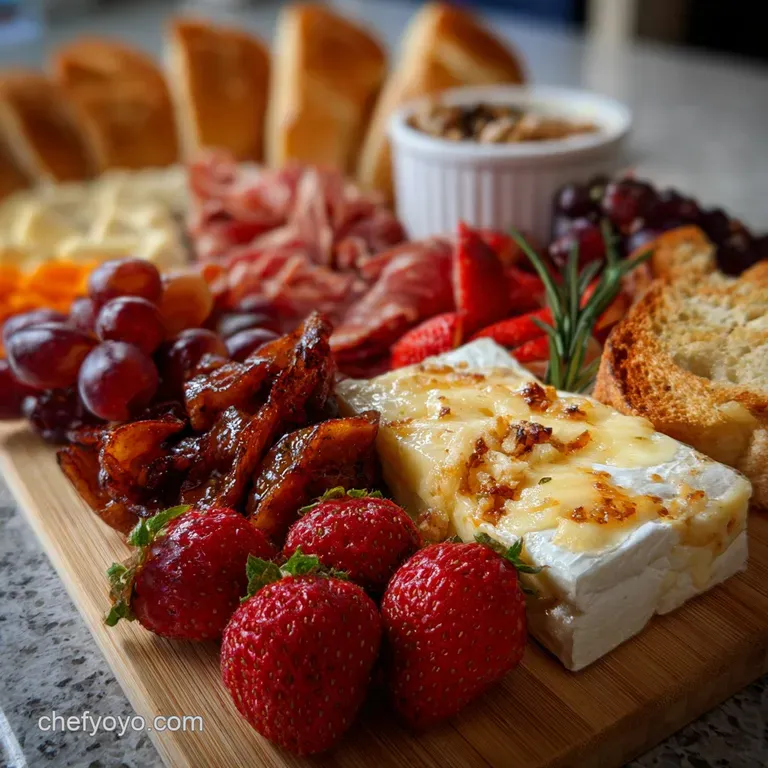
- Temperate the dairy 1 hour before assembly until the 7 oz Triple Cream Brie yields to gentle pressure. Note: Cold fat masks the complex flavor of aged cheeses.
- Anchor the board with the 7 oz Triple Cream Brie, 6 oz Manchego, 5 oz White Cheddar, and 4 oz Gorgonzola Dolce in four distinct quadrants. Note: Placing heavy items first establishes the structural skeleton of the display.
- Place ramekins containing 0.25 cup Fig Jam and 0.25 cup Cornichons near the Gorgonzola and Salami, respectively. Note: Grouping by flavor profile guides the guest through intentional pairings on the charcuterie board.
- Ribbon the Prosciutto by folding 4 oz of Prosciutto di Parma into loose nests. Note: Creating vertical height increases the visual "shatter" and makes it easier for guests to grab.
- Salami "Rivers": Shingle the 4 oz Genoa Salami and 3 oz Spanish Chorizo in a winding path through the center. Note: This creates movement and leads the eye toward the various cheese clusters.
- Nestle the 1 cup Grapes and 0.5 cup Dried Apricots in the remaining large gaps. Note: Fruits act as "dams" to keep smaller items like nuts from rolling away.
- Scatter 0.5 cup Marcona Almonds and 0.5 cup Castlevetrano Olives into the tiny "micro gaps" between the meats and cheeses. Note: Eliminating the view of the board's surface creates a sense of abundance across the entire charcuterie board.
- Fan the 5 oz Multi grain Crackers and 4 oz Water Crackers along the outer edges of the board. Note: Keeping dry goods on the periphery prevents them from absorbing moisture from the olives or grapes.
- Slice 1 Artisanal Sourdough Baguette and place in a separate side basket or along the board's spine. Note: Fresh bread provides a neutral canvas for the more aggressive flavors.
- Rest the completed board for 10 minutes until the cured meats begin to glisten and the Brie shows a slight bulge at the edges.
Why Your Board Falls Flat: Troubleshooting Sensory Failure
A common mistake when building a charcuterie board is the "Cold Cheese Syndrome." If you serve cheese at 40°F (4°C), the protein structure remains tightly wound, and the flavor is muted. You’re essentially eating expensive rubber.
Mastering the temperature is key to any successful charcuterie board.
The Soggy Cracker Crisis
This happens via "moisture migration." When the 0.25 cup Cornichons or 0.5 cup Castlevetrano Olives touch the 4 oz Water Crackers, the water molecules move from the high hydration olives to the low-hydration crackers until equilibrium is reached.
| Problem | Root Cause | The Fix | Pro Protocol |
|---|---|---|---|
| Sweating Meats | Oxidation and temperature shock | Keep meats covered with a damp paper towel until 5 mins before serving. | Use a Lodge Cast Iron Skillet to keep the board base cool if in a hot room. |
| Discolored Fruit | Enzymatic browning | Toss the 1 cup Grapes in a tiny bit of lemon juice. | Slice the 0.5 cup Dried Apricots just before serving to expose the bright interior. |
| Brittle Cheese | Dehydration | Slice the 5 oz Extra Sharp White Cheddar into cubes rather than thin strips. | Wrap leftover cheese in parchment, then foil never just plastic wrap. |
Variations & Substitutions for Your charcuterie board
If you find yourself missing specific items, or if you're looking to adapt this for a holiday, there are several ways to pivot without losing the structural integrity of the board. For a festive look, you might want to try our Christmas Tree Shaped recipe for a themed twist. Building a seasonal charcuterie board is simple with these swaps.
| Original Ingredient | Substitute | Why It Works |
|---|---|---|
| 4 oz Prosciutto | Serrano Ham | Higher salt content, leaner texture; provides a similar savory profile. |
| 6 oz Manchego | Aged Pecorino | Both are sheep's milk cheeses; Pecorino is slightly saltier and more pungent. |
| 0.25 cup Fig Jam | Honey with Black Pepper | Provides the necessary sugar acid balance; honey mimics the viscosity of jam. |
| 0.5 cup Marcona Almonds | Toasted Walnuts | Adds a similar tannic crunch; walnuts pair exceptionally well with Blue Cheese. |
For those hosting larger groups during the fall, the Loaded Thanksgiving Cheeseboard recipe offers seasonal swap ideas like cranberry compote and pumpkin seeds. Every successful charcuterie board starts with flexible sourcing.
Storage & Reheating: Managing the Aftermath
Unlike a cooked meal, a charcuterie board shouldn't be "reheated," but it must be stored with precision to avoid a textural mess.
- Fridge: Store meats and cheeses in separate airtight containers. Hard cheeses like the 6 oz 12 Month Aged Manchego can last 2 3 weeks, while the 7 oz Triple Cream Brie should be consumed within 5 days of opening.
- Freezing: Do not freeze the cheeses from this board. The ice crystals will rupture the delicate fat-protein matrix, resulting in a mealy, crumbly texture upon thawing.
- Reheating (Bread only): If the 1 Artisanal Sourdough Baguette goes stale, spritz with water and bake at 350°F for 5 minutes until the crust re-shatters.
💡 ZERO WASTE PHILOSOPHY
Don't discard those 4 oz of leftover cheese rinds! Transform: Simmer the Manchego and Cheddar rinds in a soup or stock for 2 hours. Science: The heat extracts residual fat and glutamates, providing a massive umami boost and a silky mouthfeel to any broth.
Leftover Baguette? Transform it into panzanella or sourdough breadcrumbs. Stale bread is simply starch retrogradation in action; a quick toast reverses this by re-gelatinizing the starches. This philosophy applies to the remnants of your charcuterie board as well.
⚗️ The Scaling Lab: The Physics of Quantity
When doubling this charcuterie board for a crowd of 18, the thermodynamics of the room change.
- Thermal Mass Recovery: A larger board (twice the surface area) will lose its cool temperature faster in a crowded room. To counteract this, chill your wooden board in the fridge for 30 minutes before assembly.
- The Evaporation Paradox: With twice the amount of meat, the surface area exposed to oxygen increases. This speeds up the oxidation of the 4 oz Prosciutto di Parma. Scale the meat portions, but only plate half at a time, keeping the second "refill" batch in the fridge to maintain freshness.
- Flavor Saturation: Do not double the 0.25 cup Fig Jam or 0.25 cup Cornichons immediately. These are "high intensity" ingredients. Start with 1.5x the amount; you'll find that guests rarely finish double the amount of condiments on the completed charcuterie board.
- Pan Crowding (The Bread Rule): If you are toasting two baguettes instead of one, do not overlap them on the sheet pan. This creates a steam pocket, preventing the Maillard reaction and leaving you with chewy, rather than "shattering," bread.
Serving Suggestions: Elevating the Experience
To truly round out the experience, pair your charcuterie board with a crisp, acidic beverage. If you're looking for something refreshing, an Orange Crush Recipe provides the citrus notes needed to cut through the heavy fats of the 3 oz Spanish Chorizo. Serving this exceptional charcuterie board demands the right drink pairing.
- Myth
- "The white spots on the Cheddar are mold."
- Truth
- Those are calcium lactate crystals. They are a sign of high-quality aging and provide a sought after "crunch" in a 5 oz Extra Sharp White Cheddar.
- Myth
- "You should eat the rind of every cheese."
- Truth
- While the rind of the 7 oz Triple Cream Brie is essential for flavor, the wax on the 6 oz Manchego is inedible and purely for moisture retention during aging.
By following this assembly protocol, you aren't just making a snack you're curating a sensory experience that respects the chemical complexity of every 4 oz of meat and 7 oz of cheese. Let's crack on and get that board assembled.
Trust me, once you see the way the Fig Jam interacts with the Gorgonzola Dolce, you'll never go back to basic crackers and cubes again when preparing your next stunning charcuterie board.
Recipe FAQs
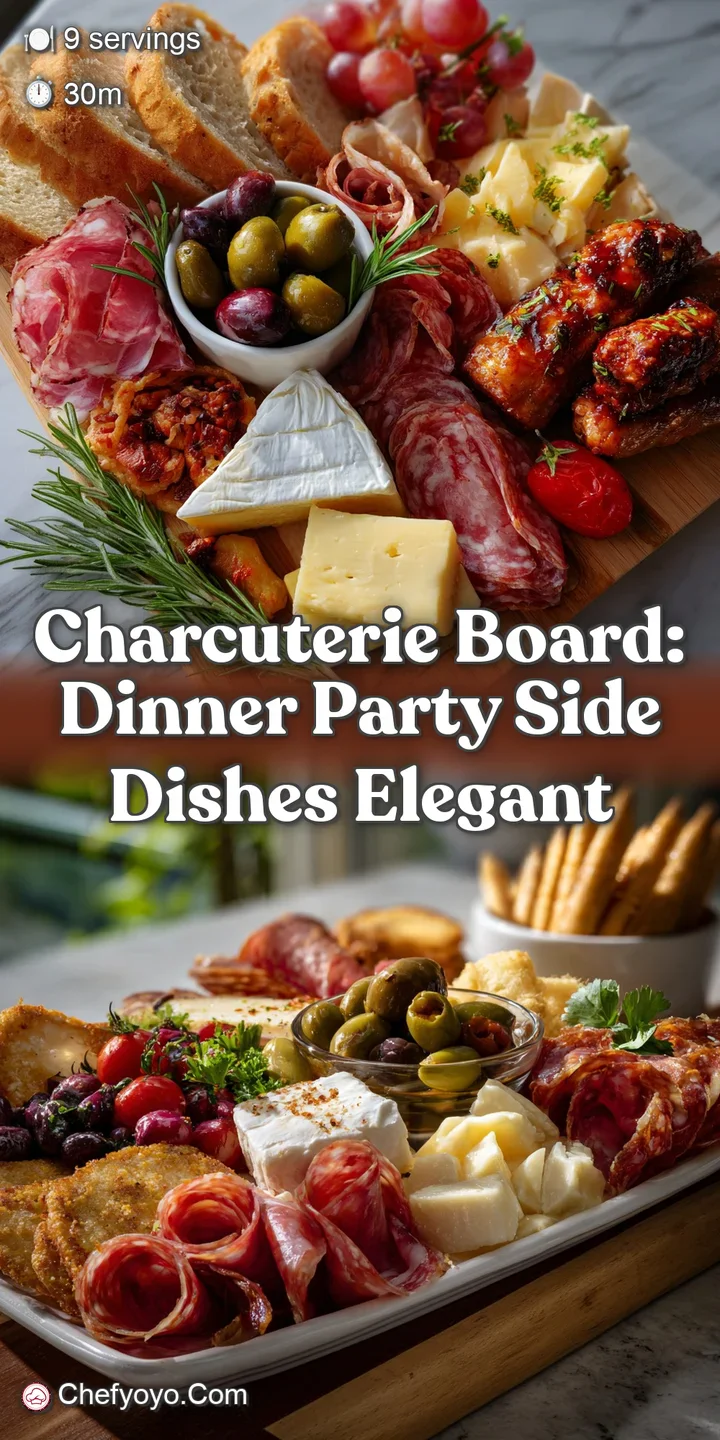
How to make a charcuterie board?
Anchor the board with cheeses, place ramekins, ribbon the meats, then fill gaps with fruit and nuts. Temperature management dictates texture; cheeses must temper to 68°F for peak flavor release. This ensures the ideal contrast between soft fats and sharp acids.
How to make charcuterie board from wood?
Use non-conductive maple wood over slate or marble. Wood maintains the ambient temperature of the cheese better than stone, preventing thermal shock to the milk fats. Avoid treating the wood with oils immediately before plating to prevent flavor transfer.
How to make charcuterie board pretty?
Create height variation and eliminate all visible empty surface area. Visual density implies abundance and intentionality in ingredient placement. Use folding and layering techniques to build vertical dimension across the board.
How to make charcuterie board flowers?
Arrange thin salami slices over the edge of a small glass, then flip. This technique uses surface tension and layering to mimic petal structure before the meat is placed onto the board. Ensure the salami has sufficient fat content to hold its curved shape.
How to make charcuterie board meat roses?
Ribbon folded Prosciutto over the rim of a thin water glass, then invert onto the board. The glass provides the necessary conical structure for the "bloom" to form. Prosciutto’s high fat content allows it to hold the shape when lifted.
Should the cheese be cold on the board?
No. Serve cheese at ambient room temperature for flavor. Cold traps volatile aromatic compounds within the solid fat matrix, muting the flavor profile. Warm cheeses release flavor because triglyceride structures soften and lipids coat the palate more effectively.
Should I use crackers or bread?
Bread offers a neutral canvas for soft cheeses; crackers provide sharp structural contrast. Bread softens faster due to high water content, whereas dense crackers maintain textural integrity against moist accompaniments. Place crackers near the edge to minimize olive/pickle moisture migration.
Mastering The Charcuterie Board
Ingredients:
Instructions:
Nutrition Facts:
| Calories | 652 kcal |
|---|---|
| Protein | 24.3 g |
| Fat | 41.8 g |
| Carbs | 44.6 g |
| Fiber | 3.2 g |
| Sugar | 11.5 g |
| Sodium | 1245 mg |
