Sweet Onion and Goat Cheese Tarts
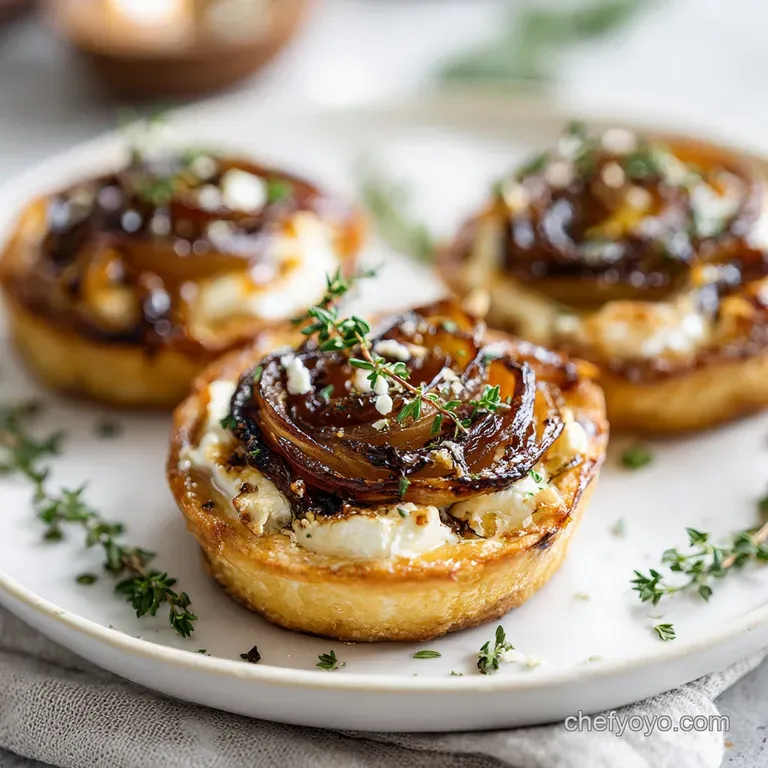
- Time: Active 15 minutes, Passive 45 minutes, Total 1 hours
- Flavor/Texture Hook: Flaky pastry with velvety balsamic onions
- Perfect for: Weekend brunch or a cozy appetizer
- Perfect Sweet Onion and Goat Cheese Tarts
- Why This Savory Recipe Works
- Core Ingredients for Success
- Necessary Tools for Artisanal Baking
- Clear Instructions for Your Tarts
- Solving Common Baking Problems
- Creative Variations to Try
- Storage and Zero Waste Tips
- Beautiful Ways to Serve
- Recipe FAQs
- 📝 Recipe Card
Perfect Sweet Onion and Goat Cheese Tarts
Imagine walking into a kitchen where the air is heavy with the scent of onions slowly melting into butter. There is a specific, low sizzle that happens when those onions start to give up their moisture and turn into gold.
It is the kind of aroma that makes you want to pull up a chair and wait, even if you weren't hungry five minutes ago. I first made these on a rainy Tuesday when I had almost nothing in the fridge but a stray sheet of pastry and a few onions, and it turned out to be the best "mistake" I ever made.
This French in a Flash Sweet Onion and Goat Cheese Tarts with Thyme Recipe delivers a simple yet elegant tart that looks like it came from a high end bakery. We are taking very basic, inexpensive ingredients and treating them with a bit of respect to get that deep, complex flavor.
You don't need fancy equipment or a culinary degree, just a little patience while those onions work their magic in the pan.
Right then, let's talk about what we're building here. We want a base that provides a loud, satisfying shatter when you bite into it. On top, we layer a mahogany colored onion jam that is sweet, salty, and just a bit tangy from a splash of balsamic.
Then, we add dots of chèvre that soften in the oven without fully melting, creating little pockets of creaminess. It’s rustic, it’s wholesome, and honestly, it’s a total crowd pleaser.
Why This Savory Recipe Works
The success of these tarts isn't just luck, it is all about how we manage moisture and sugar. By using a specific cooking method for the onions, we ensure the pastry stays crisp while the topping stays juicy.
- Hygroscopic Caramelization: Adding salt early draws water out of the onions via osmosis, allowing them to soften in their own juices before the browning begins.
- Acidic Structural Integrity: Balsamic vinegar provides acetic acid, which helps balance the heavy fats in the butter and pastry, making the overall flavor profile feel lighter.
- Starch Gelatinization: Chilling the puff pastry right until the moment it hits the oven ensures the fat layers stay solid, creating those distinct, flaky gaps as the steam escapes.
- The Maillard Reaction: The honey and balsamic act as catalysts, deepening the brown color of the onions and creating a complex, savory sweetness.
Comparison of Fresh vs Shortcut
| Feature | Fresh Onion Jam | store-bought Chutney |
|---|---|---|
| Texture | Silky and tender | Often chunky or jelly like |
| Flavor Profile | Balanced and customizable | Can be overly sweet/cloying |
| Cost | Extremely low (cents per serving) | High ($5-8 per jar) |
When you make your own onion base, you control the salt and the "jamminess." If you find yourself with extra goat cheese after this, it works beautifully in my How to Bake recipe.
Core Ingredients for Success
Selecting the right components makes a huge difference when the ingredient list is this short. We want to focus on quality where it counts without breaking the bank.
Component Analysis
| Ingredient | Science Role | Pro Secret |
|---|---|---|
| 3 Sweet Onions | Provide bulk and natural sugars | Slice them root to tip for better structure |
| Puff Pastry | The structural vessel | Look for "all-butter" for the best flavor |
| Goat Cheese | Emulsified fat and tang | Buy the log and crumble it yourself for better texture |
To keep things budget friendly, we use 3 tbsp (42g) of unsalted butter and 1 tbsp (15ml) of balsamic vinegar to transform those onions. You’ll also need 1 tbsp of fresh thyme leaves to add that earthy, artisanal touch.
The 250g sheet of puff pastry is the canvas, and we finish it with a simple egg wash (1 large egg mixed with 1 tsp water) to get that deep, golden luster.
For a bit of greenery, 1 cup of fresh arugula tossed on top after baking provides a peppery bite. If you’re looking for something more substantial to serve alongside, these tarts pair well with the hearty vibes of my Sliders recipe.
Necessary Tools for Artisanal Baking
You don't need a drawer full of gadgets to pull this off. A heavy bottomed skillet is your best friend here because it distributes heat evenly, preventing the onions from scorching while they cook for 45 mins.
Preparation Tools
I always recommend a sharp chef's knife for those onions. You are slicing about 900g of onions, so a dull blade will just make you cry. You will also need a standard baking sheet and a piece of parchment paper.
The parchment is non negotiable because the honey (1 tbsp) and balsamic can get sticky and you don't want to be scrubbing your pans all night.
Assembly Essentials
A pastry brush is helpful for the egg wash, but if you don't have one, the back of a small spoon works in a pinch. You also want a cooling rack. Letting the tarts sit for even 5 minutes on a rack prevents steam from being trapped underneath, which is the number one enemy of a crispy crust.
Clear Instructions for Your Tarts
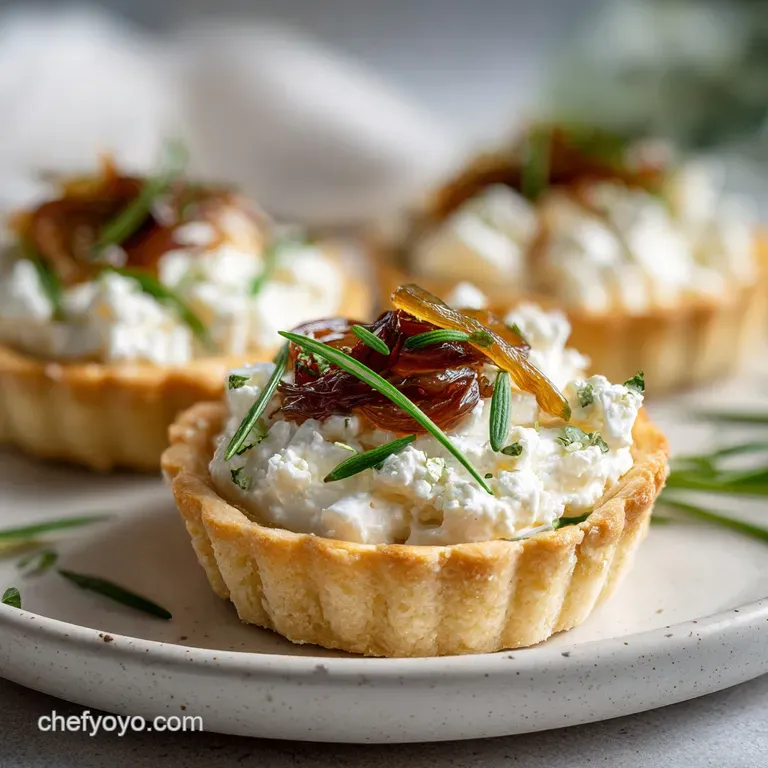
Let's get into the process. The goal is a velvety onion topping and a pastry that shatters.
- Sauté the onions. Melt 3 tbsp butter in a large skillet over medium low heat and add the 3 sliced sweet onions with 0.5 tsp kosher salt. Note: The salt helps release moisture quickly.
- Caramelize slowly. Cook the onions for about 25-30 mins, stirring occasionally, until they are deep golden and soft.
- Deglaze the pan. Stir in 1 tbsp balsamic vinegar, 1 tbsp thyme, and 0.25 tsp black pepper. Note: This lifts the savory bits off the bottom.
- Prep the pastry. Unroll the chilled 250g puff pastry sheet and cut it into 6 equal rectangles.
- Score the edges. Use a knife to lightly score a border 1/2 inch from the edge of each rectangle. Do not cut all the way through.
- Apply the wash. Beat the egg with 1 tsp water and brush the borders of the pastry. Note: This creates the golden shine.
- Add the topping. Divide the onion mixture among the centers of the pastry rectangles, keeping it inside the scored border.
- Add the cheese. Crumble 4 oz of goat cheese over the onions and drizzle with 1 tbsp honey.
- Bake the tarts. Place in a 400°F (200°C) oven for 15-20 mins until the pastry is puffed and dark golden.
- Final garnish. Let cool slightly, then top with 1 cup fresh arugula before serving.
While these tarts are in the oven, you can easily clean up or even prep a quick side, much like the workflow for my Sourdough Pesto Grilled Cheese recipe.
Solving Common Baking Problems
Sometimes things don't go exactly as planned, but most issues with these tarts are easy to fix. The most common complaint is usually about the base of the pastry.
Why Your Pastry Base is Soggy
If the bottom of your tart is soft instead of crispy, it's usually because the onions had too much liquid or the oven wasn't hot enough. Make sure the onions are cooked down until they are jammy, not watery.
| Problem | Root Cause | Solution |
|---|---|---|
| Leaking liquid | Onions not cooked enough | Sauté until "jammy" and thick |
| Pale pastry | Oven temp too low | Ensure a full preheat to 400°F |
| Bitter onions | Heat was too high | Add a teaspoon of water and lower heat |
Common Mistakes Checklist
- ✓ Never use warm puff pastry; keep it in the fridge until the very last second.
- ✓ Avoid piling the onions too high; a thin, even layer ensures the pastry can rise.
- ✓ Don't skip the scoring; it acts as a "vent" for the steam in the center.
- ✓ Use a dark baking sheet if possible; it absorbs more heat for a crispier bottom.
- ✓ Pat the arugula dry after washing to prevent wilting on the hot tart.
Creative Variations to Try
One of the best things about this recipe is how adaptable it is. Once you have the technique down, you can swap ingredients based on what is in your pantry.
If you want a sharper flavor, try replacing the goat cheese with a crumbled gorgonzola or a sharp feta. Just keep in mind that feta won't soften as much as chèvre. For a "French Onion Soup" twist, you can swap the thyme for sage and add a little bit of grated gruyère on top of the onions before baking.
Budget Scaling Guidelines
- Scaling Down (Making 3 tarts): Use half a pastry sheet and 2 onions. Reduce the butter to 2 tbsp. You still need a whole egg for the wash, but you'll have some left over.
- Scaling Up (Making 12 tarts): Double all ingredients. You may need to cook the onions in two batches or use a very large wide pan to ensure they caramelize rather than steam.
- Baking 2 Sheets: If baking two trays at once, rotate them halfway through and increase the total time by about 3-5 minutes.
Chef's Tip: If you find sweet onions are too expensive at your local shop, regular yellow onions work just fine. Just add an extra teaspoon of honey to the pan during the last 5 minutes of sautéing to mimic that natural sweetness.
Storage and Zero Waste Tips
These tarts are best eaten fresh while the pastry is still at its peak shatter point, but you can certainly keep leftovers if you handle them right.
Storage: Keep baked tarts in an airtight container in the fridge for up to 3 days. Whatever you do, don't use the microwave to reheat them unless you want a sad, rubbery mess.
Reheat in a 350°F (180°C) oven for 5-8 minutes until the pastry crisps back up.
Freezing: You can freeze the assembled, unbaked tarts. Flash freeze them on a tray first, then tuck them into a freezer bag. They will stay good for 2 months. Bake them straight from frozen, adding about 5-7 minutes to the total baking time.
Zero Waste: Don't throw away those onion ends or skins! Toss them into a freezer bag. Once the bag is full, boil them with some water and peppercorns for a quick, wholesome vegetable scrap stock. Also, if you have leftover egg wash, scramble it up for a "cook's snack" so nothing goes to waste.
Beautiful Ways to Serve
Presentation is where you can really lean into that artisanal, rustic feel. I love serving these on a wooden board rather than a ceramic plate. It just feels more communal and relaxed.
The "French Onion Soup" Twist
If you want to lean into the bistro vibe, serve these tarts with a side of cornichons or a very simple mustard vinaigrette on the arugula. The acidity of the pickles cuts through the richness of the butter and cheese perfectly.
Contrast with Greens
The arugula isn't just for looks. The bitterness of the greens balances the honey sweet onions. If you want to take it a step further, a light drizzle of high-quality olive oil and a tiny pinch of flaky sea salt over the arugula right before serving makes a massive difference.
It adds a final layer of texture that feels very professional.
These Sweet Onion and Goat Cheese Tarts are proof that you don't need a massive budget to make something that tastes like a luxury. It’s all in the slow sizzle and the golden bake. Enjoy the process, and trust me, your kitchen is going to smell incredible.
Recipe FAQs
What is the best cheese to use in an onion tart?
Goat cheese (chèvre) is highly recommended for this recipe. Its tangy, creamy profile cuts beautifully through the sweetness of the caramelized onions. It softens nicely in the oven without fully melting into a pool, maintaining distinct flavor pockets.
What is a French onion tart called?
It is often called a Tarte à l'Oignon. This term generally covers savory onion tarts, sometimes using a specific cheese like Gruyère, similar to the flavor profile found in our Classic French Onion recipe.
What is the French word for onion tart?
The most direct translation is Tarte à l'Oignon. If the pastry base is made with a sweet dough (pâte sucrée) rather than savory shortcrust, it might be called a Tarte aux Oignons Sucrée.
What is the French name for sweet pastry?
The standard French term is Pâte Sucrée. This is a rich, sweet, shortcrust dough, which differs from the flaky puff pastry used in these tarts. If you want to practice working with high hydration doughs, see how that skill transfers to our Gruyère Grilled Cheese Recipe.
How do I prevent the puff pastry base from becoming soggy?
Ensure the caramelized onions are thoroughly cooked down until they are jammy, not watery. Also, make sure your oven is fully preheated to 400°F, as high initial heat helps set the crust quickly before the moisture penetrates.
Can I substitute the sweet onions with yellow onions?
Yes, you can substitute yellow onions, but adjust the sweetness. Yellow onions have less natural sugar, so add an extra teaspoon of honey during the last five minutes of sautéing to achieve a similar flavor balance.
Why should I score the edges of the pastry?
Scoring creates a natural barrier that helps the edges rise evenly. It acts like a shallow dam, holding the onion mixture in the center while allowing steam to escape from the borders, guaranteeing a puffed, flaky rim.
Onion Goat Cheese Tarts
Ingredients:
Instructions:
Nutrition Facts:
| Calories | 404 kcal |
|---|---|
| Protein | 9.3 g |
| Fat | 24.4 g |
| Carbs | 37.1 g |
| Fiber | 2.6 g |
| Sugar | 10.3 g |
| Sodium | 426 mg |
