The Ultimate Oven Roasted Prime Rib Recipe
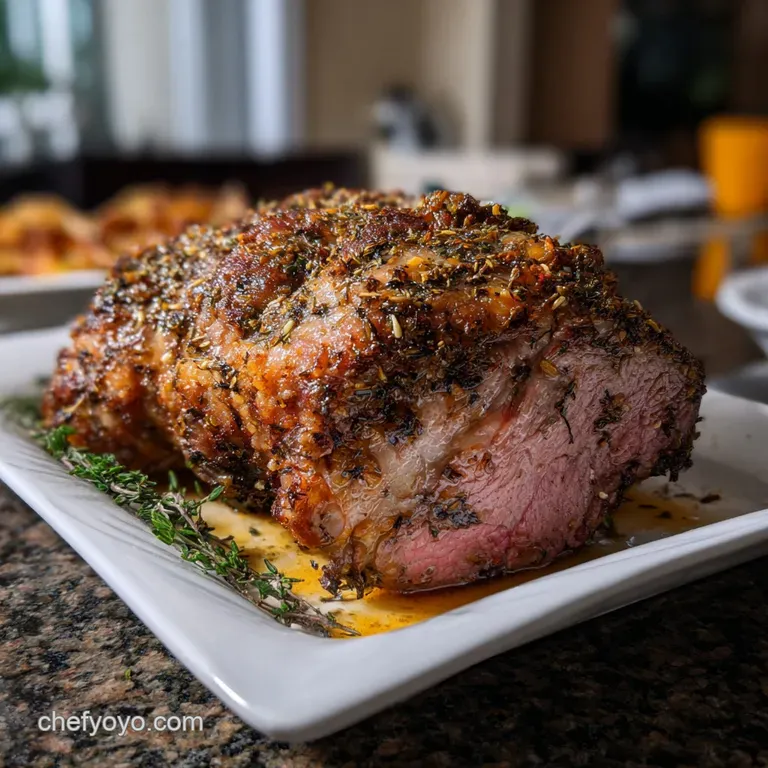
- Effort/Time: Low-active effort / 3 hour 50 mins total.
- Flavor Hook: Herb-infused butter crust meeting a melt-in-your-mouth beefy core for the ultimate prime rib experience.
- Perfect for: Holiday gatherings, high-end Sunday dinners, and celebratory feasts featuring prime rib.
- The Thermal Physics of Uniform Doneness and Crust Development
- Performance Metrics for a Succulent Holiday Roast
- The Alchemy of Flavor: Curating Your Prime Rib Elements
- Precision Engineering: Necessary Tools for a Five-Star Result
- The Low and Slow Execution Protocol for Maximum Juiciness
- Diagnosing Thermal Failures and Textural Inconsistencies
- Flavor Architecture and Adaptations for Your Ribeye Roast
- Preserving Structural Integrity: Storage and Reheating Systems
- ⚗️ The Scaling Lab: The Physics of Quantity
- Culinary Symphonies: Plating and Pairing Your Prime Rib
- Recipe FAQs
- 📝 Recipe Card
There is nothing more gut-wrenching than spending $150 on an 8.5 lb bone-in prime rib only to pull it from the oven and find a thick, gray ring of overcooked meat surrounding a cold, raw center.
The financial sting is sharp, but the emotional cost of serving a dry, disappointing roast to a table of expectant guests is far worse. I’ve lived through that technical failure, watching a beautiful cut of beef lose its structural integrity because I treated it like a standard pot roast instead of the delicate muscle structure it is when preparing a fine prime rib.
Years ago, I destroyed a massive ribeye roast by rushing the sear. I blasted it with high heat from the start, thinking I was "locking in juices" a pervasive culinary myth that science has since debunked.
The result was a kitchen filled with smoke and a prime rib that was charred on the outside but technically blue in the middle. It was the humbling realization that heat transfer is a game of physics, not just fire, that changed how I approach large format proteins like this specific prime rib.
The breakthrough came when I understood the science of protein denaturation and the Maillard reaction. By allowing the prime rib to roast at a low ambient temperature, we achieve uniform heat distribution, preventing the outer layers from reaching 160°F before the center hits 120°F.
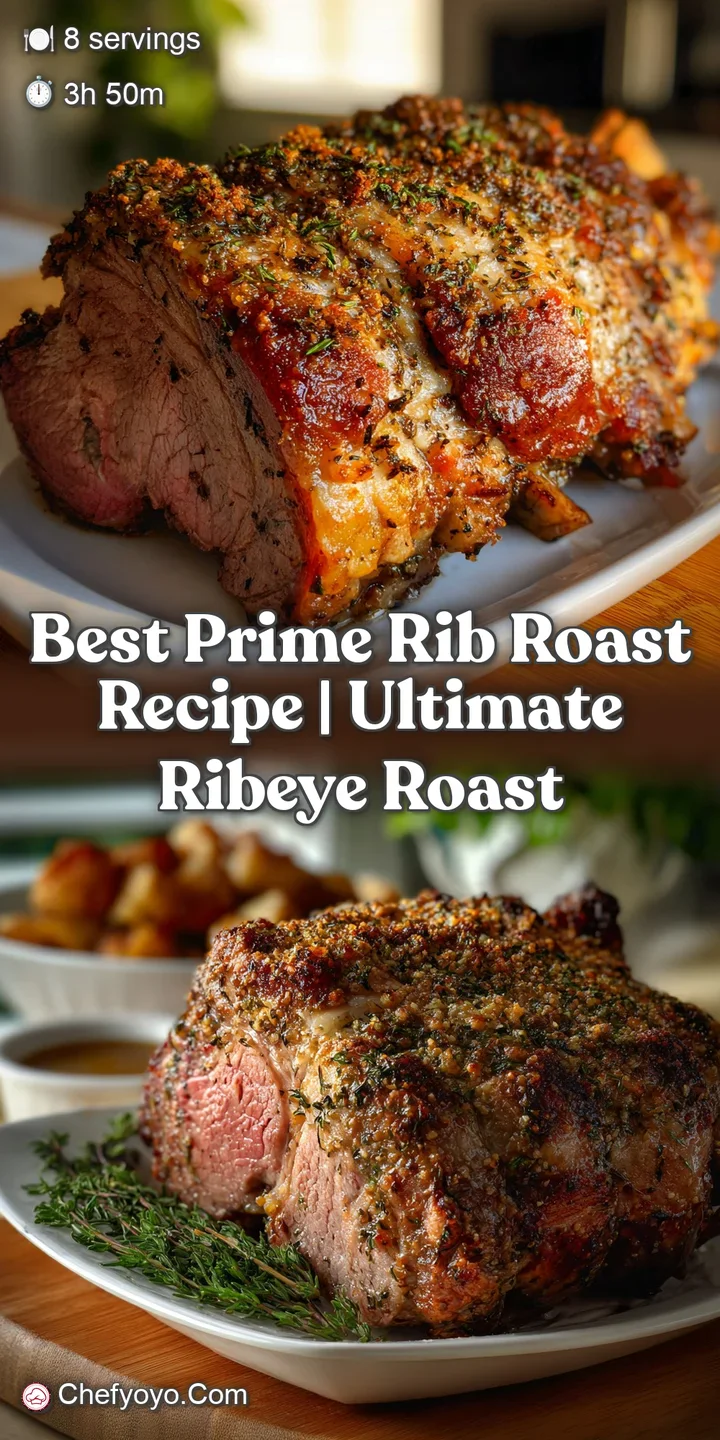
The sensory payoff is a roast with a shattering, herb crusted exterior and a velvety, tender crumb that glows rosy from the first slice to the last, defining a perfect prime rib.
The Thermal Physics of Uniform Doneness and Crust Development
The Science of Why it Works: Low-temperature roasting prevents the muscle fibers from contracting violently, which squeezes out intracellular moisture. The final over high heat blast triggers the Maillard reaction, rearranging amino acids and sugars into hundreds of complex flavor compounds without overcooking the interior of the prime rib.
- Enzymatic Tenderization: Holding the beef between 100°F and 120°F for an extended period activates cathepsins, enzymes that break down connective tissue.
- Surface Dehydration: Air-chilling the roast in the fridge creates a pellicle, a dry skin that browns faster and more deeply during the sear on this cut of beef.
- Thermal Gradient Reduction: Low oven temps (250°F) minimize the temperature delta between the surface and the core, ensuring an even pink color across the entire roast.
- Collagen Hydrolysis: While not as intense as in a braise, the slow crawl in temperature allows some collagen to soften into gelatin for a silkier mouthfeel in your finished prime rib.
Performance Metrics for a Succulent Holiday Roast
For this prime rib, we are targeting a specific set of benchmarks to ensure success. These specs are based on an 8.5 lb bone-in cut, providing the ideal ratio of fat to lean muscle for a delicious prime rib.
- Yield: 8 servings (approx. 1 lb or 1 bone per two people).
- Prep Time: 20 minutes (not including the mandatory 24 hour dry brine).
- Cook Time: 3 hours 30 mins (variable based on oven calibration).
- Total Time: 3 hours 50 mins.
- Target Internal Temp: 120°F (Rare) to 130°F (Medium Rare) before the final sear.
The Alchemy of Flavor: Curating Your Prime Rib Elements
Selecting the right components is the difference between a grocery store meal and a masterclass level prime rib.
Ingredient Chemistry Breakdown
| Ingredient | Chemical/Physical Role (Science) | The Pro Secret (Why This Matters) |
|---|---|---|
| 8.5 lb Prime Rib | Myoglobin retention and collagen softening | Bone-in acts as an insulator, slowing heat transfer for a more even cook. |
| Kosher Salt | Osmotic pressure and protein denaturation | Dissolves muscle proteins (myosin) to trap moisture during the roast. |
| Unsalted Butter | Lipid based flavor carrier | Provides the fat necessary to fry the herb aromatics against the meat's surface. |
| Dry Red Wine | Acidic deglazing and tannin interaction | Cleans the palate of heavy fats while providing a backbone for the Au Jus Recipe. |
- 8.5 lb bone-in Prime Rib Roast: Why this? Bone-in provides structural stability and protects the delicate eye of the roast.
- 2 tbsp Diamond Crystal Kosher Salt: Why this? Larger flakes allow for even coverage without over salting via density.
- 1 tbsp Coarse Black Pepper: Adds textural "bite" and a pungent contrast to the rich fat.
- 1/2 cup Kerrygold Unsalted Butter, softened: High fat content ensures a richer crust than standard butters.
- 6 cloves Garlic, minced: Provides sulfurous depth that intensifies during the over low heat roast.
- 1 tbsp Fresh Thyme, chopped: High oil content remains stable under heat.
- 1 tbsp Fresh Rosemary, chopped: Woody aromatics that pair specifically well with beef fats.
- 1 tsp Smoked Paprika: Adds a hint of "fire roasted" flavor without a grill.
- 2 cups Kitchen Basics Beef Bone Broth: High gelatin content provides a superior mouthfeel in the pan sauce.
- 1/2 cup Dry Red Wine (Cabernet or Merlot): Tannins cut through the richness of the ribeye roast.
Precision Engineering: Necessary Tools for a Five Star Result
- Lodge Cast Iron Roasting Pan: Massive thermal mass helps maintain a steady environment for the prime rib.
- ThermoWorks ChefAlarm: A leave-in probe is non-negotiable for monitoring the low and slow phase.
- Butcher's Twine: Essential for trussing the meat to ensure it roasts as a uniform cylinder.
- Small Offset Spatula: Best for spreading the herb butter evenly over the fat cap.
The Low and Slow Execution Protocol for Maximum Juiciness
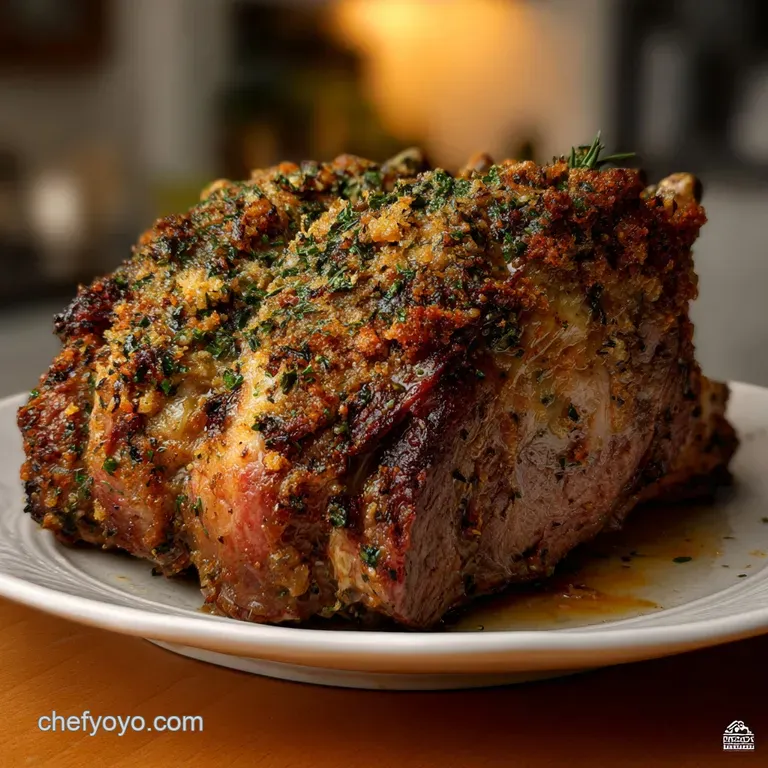
- Truss the roast. Secure the 8.5 lb roast with twine between each bone to ensure a uniform shape for even heat penetration.
- Dry brine early. Coat the exterior with 2 tbsp Diamond Crystal Kosher Salt and refrigerate uncovered for 24 hours until the surface looks dark and tacky. Note: This allows salt to penetrate the deep muscle tissues via osmosis.
- Temper the meat. Remove the prime rib from the fridge 2 hours before cooking until the internal chill dissipates and the meat feels room temp. Note: Cold centers lead to uneven cooking gradients.
- Compound the butter. Mix softened butter, garlic, thyme, rosemary, pepper, and paprika until a uniform, fragrant paste forms.
- Apply the crust. Slather the herb butter over the fat cap and sides until the meat is fully insulated in a pale green layer.
- Roast low and slow. Place in a 250°F oven for 3 hours 30 mins until the internal temperature hits 120°F for rare or 125°F for medium rare. Note: This prevents the muscle fibers from "ringing out" their juices.
- Rest the protein. Remove from the oven and tent loosely with foil for 30 minutes until the internal temperature stabilizes and carryover cooking completes. Note: Resting allows the internal pressure to equalize so juices don't spray out when sliced.
- Deglaze the pan. While the meat rests, simmer the bone broth and red wine in the roasting pan until the liquid reduces by half and smells intensely beefy.
- Flash sear. Crank the oven to 500°F and return the roast for 6 10 minutes until the butter crust sizzles and turns mahogany brown.
- Carve and serve. Slice against the grain into thick slabs until the board is covered in juices and the pink interior is revealed.
Diagnosing Thermal Failures and Textural Inconsistencies
Why Your Prime Rib Has a Gray Ring
A thick gray ring is caused by high intensity heat. If the oven is too hot, the exterior reaches the "well done" stage (160°F+) long before the center reaches 130°F.
This creates a textural gradient of dry, chewy meat on the outside and raw meat in the middle, ruining the look of the prime rib.
| Problem | Root Cause | The Fix | Pro Protocol |
|---|---|---|---|
| Tough, Stringy Meat | High heat caused protein fibers to shrink | Lower oven to 225°F-250°F | Use a leave-in thermometer, never a timer. |
| Soggy, Pale Crust | Excess surface moisture | 24 hour uncovered dry brine | Pat the meat bone dry with paper towels before buttering. |
| Bloody Cutting Board | Insufficient resting time | Rest at least 30 45 mins | Tent with foil to retain heat while fibers relax. |
Flavor Architecture and Adaptations for Your Ribeye Roast
If you are looking for a different experience, such as a FallOffTheBone How to recipe style of tenderness, you would need to transition to a braising technique, which is entirely different from this dry-heat roasting method for achieving perfect prime rib.
| Original Ingredient | Substitute | Why It Works |
|---|---|---|
| Unsalted Butter | Beef Tallow | Pure beef fat reinforces the meaty profile; higher smoke point. |
| Beef Bone Broth | Mushroom Stock | Adds earthy umami without the heavy meatiness; note it alters the color. |
| Dry Red Wine | Pomegranate Juice | Provides similar acidity and tannins but adds a fruity, tart edge. |
Preserving Structural Integrity: Storage and Reheating Systems
Prime rib is a massive investment, so handling leftovers is critical. Store sliced meat in an airtight container with a splash of the remaining au jus for up to 4 days. The liquid prevents the meat from oxidizing and drying out in the fridge.
Freezing: You can freeze thick cut slabs for up to 3 months. Wrap tightly in plastic wrap, then aluminum foil, and place in a vacuum sealed bag.
Reheating Protocol: Never microwave your prime rib. Instead, place slices in a baking dish with a few tablespoons of broth, cover tightly with foil, and warm in a 250°F oven until it reaches 120°F. This "steams" the meat back to life without overcooking it.
💡 ZERO WASTE PHILOSOPHY Don't discard the rib bones! Transform: Simmer the bones with aromatics for 6 hours to create a rich beef stock. Science: The marrow and connective tissue provide gelatin and minerals that store-bought stocks lack.
⚗️ The Scaling Lab: The Physics of Quantity
When doubling this recipe for a 16 17 lb roast, you must respect the laws of thermodynamics.
- The Square Cube Law: A roast twice as large does not have twice the surface area, but it has significantly more mass in the center. Expect the cook time to increase by only 40 50%, not 100%.
- Thermal Mass Recovery: When you put 17 lbs of cold meat into an oven, the air temperature will plummet. Increase your initial "warm-up" time for the oven to ensure it recovers quickly.
- Evaporation Paradox: If making a double batch of the wine reduction, use a wider pan. Doubling the liquid in a narrow pot will take four times as long to reduce, potentially leading to over extracted, bitter flavors.
- Carry Over Cooking: A larger roast holds more thermal energy. Pull a massive 17 lb roast 5°F earlier (at 115°F) than a smaller one, as the internal temp will climb more aggressively during the rest.
Culinary Symphonies: Plating and Pairing Your Prime Rib
This roast demands sides that can stand up to its richness. While this is a winter classic, if you find yourself craving ribs in the summer, consider my Sticky Grill Pork recipe for a lighter, smoky alternative.
- Horseradish Cream
- The pungent heat of fresh horseradish acts as a chemical "cleanser" for the palate against the heavy ribeye fats.
- Yorkshire Pudding
- Use the rendered beef drippings from the pan to create these airy, crisp vessels.
- Garlic Mashed Potatoes
- The starch absorbs the red wine au jus, creating a perfect texture balance.
The Best Prime Rib Rub Myth: Myth: You should put the garlic and herbs on 24 hours in advance. Truth: Garlic can turn bitter and "tinny" if left on raw meat for too long.
Save the aromatics for the butter rub right before the roast enters the oven; only the salt should go on early for the dry brine.
Searing Before Roasting Myth: Myth: Searing first "seals in the juices." Truth: Searing creates a flavor rich crust via the Maillard reaction, but it actually causes more moisture loss initially.
Searing at the end (reverse sear) ensures the most even internal temperature for the best prime rib.
Precision is the key to this prime rib. Trust your thermometer, respect the rest, and you'll never serve a gray roast again.
Recipe FAQs
how to make prime rib?
Reverse sear using low oven heat followed by a final high heat blast. This ensures edge-to-edge doneness without the dreaded gray ring. Mastering this uniform heating principle is key, as shown in our Prime Rib Roast: Herb Garlic Crust Reverse Sear Perfection.
how to make prime rib roast?
Dry brine 24 hours, then roast low until 120°F internal. Low temperature roasting minimizes moisture loss by preventing violent fiber contraction. You must rest the meat for 30 minutes before slicing to allow juices to redistribute.
how to make prime rib at home?
Use a leave-in probe thermometer for accuracy. You cannot cook prime rib successfully using only time, as internal mass dictates heat absorption, not clock minutes. If you enjoyed controlling temperature cues here, apply that same precision to our BoneIn Rib Roast: Reverse Sear for Juicy, Crispy Crust!
how to make prime rib au jus?
Deglaze the roasting pan drippings with broth and wine. Skim excess fat before reducing the liquid mixture until concentrated. This uses the fond the flavorful browned bits left behind after roasting.
how to make prime rib gravy?
Thicken the reduced au jus with a slurry or roux. A slurry of cornstarch and cold water thickens quickly, while a roux (butter/flour) offers a richer, cloudier mouthfeel. Adding a teaspoon of acid balances the heavy beef flavor.
Should I use bone-in or boneless prime rib?
Bone-in provides superior insulation and flavor infusion. The bones shield the meat closest to them, resulting in a more uniform internal temperature gradient. The marrow and connective tissue also contribute subtle richness to the surrounding meat.
Myth: Can I sear the prime rib before the long roast?
Myth: Searing first locks in juices for a better roast. Reality: High initial heat causes muscle fibers to seize and contract, pushing moisture out prematurely. Searing after the slow roast develops a superior crust without overcooking the interior.
Perfect Prime Rib Roast
Ingredients:
Instructions:
Nutrition Facts:
| Calories | 845 kcal |
|---|---|
| Protein | 54g |
| Fat | 68g |
| Carbs | 2g |
| Fiber | 0.4g |
| Sugar | 0.5g |
| Sodium | 1450mg |
