Prime Rib Roast with Herb-Garlic Crust - Reverse Sear
- Introduction & Overview
- Prime Rib Roast at a Glance
- Ingredients & Substitutions
- Pan Sauces and Condiments
- Step-by-Step Instructions (Prime Rib Roast)
- Prime Rib Roast: Reverse‑Sear Method
- Why This Recipe Works
- Chef's Tips & Common Mistakes
- Storage & Freezing
- Serving Suggestions (Prime Rib Roast)
- Recipe FAQs
- 📝 Recipe Card
Introduction & Overview
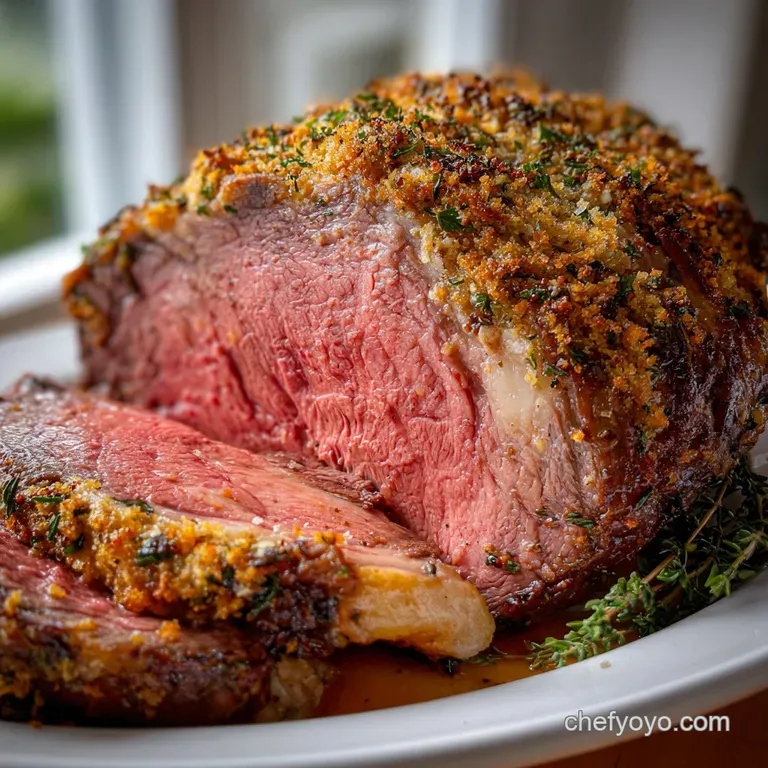
This Prime Rib Roast floods the kitchen with that heady roasted aroma and the crust makes a satisfying little shatter sound when you slice it. I love the way the interior stays pillowy rosy while the herb garlic crust crackles under your knife.
It's a lifesaver for holidays and lazy dinner parties because it looks fancy but is mostly hands off. You need a thermometer, a bit of patience, and a forgiving oven to pull this off.
So let's crack on and get you roasting. Below is my go-to Perfect Prime Rib Roast with Herb Garlic Crust (Reverse-Sear Method), tuned from mistakes I made so you don't repeat them.
Prime Rib Roast at a Glance
Introduction Detail 1
This Prime Rib Roast cooks low and slow first, then finishes hot for that caramelized crust. The slow roast gives even color from edge to edge and keeps the juices locked in.
Timing matters. But not in a scary way; a probe thermometer does the worrying for you.
Introduction Detail 2
Think of the low roast like gentle persuasion. It coaxes the internal temperature up evenly, and the quick high heat is the dramatic curtain call that makes the crust sing.
If you want to read a close cousin technique, check my Prime Rib Roast: Reverse Seared for Ultimate Perfection .
Ingredients & Substitutions
This Prime Rib Roast ingredient list is written for a 6 lb (2.7 kg) bone-in prime rib roast. Scale up or down with the roast weight.
-
1 bone-in prime rib roast (standing rib roast), 6 lb (2.7 kg)
- Substitute: boneless rib roast if you prefer; reduce cooking time and tent while carving.
-
2 3 tbsp olive oil or neutral oil (30 45 ml)
- Substitute: avocado oil or melted ghee.
-
2 tbsp kosher salt (~36 g)
- Substitute: 1 tbsp fine table salt (reduce quantity).
-
2 tbsp freshly cracked black pepper (~12 g)
- Substitute: ground black pepper in a pinch (coarser is better for crust).
-
3 4 cloves garlic, minced (~12 16 g)
- Substitute: 1½ 2 tbsp garlic paste or 1 tsp garlic powder (use less).
-
2 tbsp fresh rosemary, chopped (~8 g)
- Substitute: 2 tsp dried rosemary (use less by volume).
-
2 tbsp fresh thyme leaves (~6 g)
- Substitute: 2 tsp dried thyme.
-
2 tbsp unsalted butter, softened (~28 g)
- Substitute: extra olive oil for dairy-free option.
-
1 tsp Dijon mustard (optional)
- Substitute: whole grain mustard or a thin smear of horseradish for kick.
For au jus
-
1 cup beef stock (240 ml)
- Substitute: low-sodium stock or concentrated beef base + water.
-
½ cup dry red wine (120 ml) optional
- Substitute: extra stock plus 1 tbsp balsamic for depth.
-
1 tsp cornstarch + 1 tsp cold water (optional thickener)
- Substitute: a small butter flour slurry.
For horseradish cream
-
½ cup sour cream or Greek yogurt
- Substitute: mayonnaise for a richer version or crème fraîche.
-
2 tbsp prepared horseradish
- Substitute: fresh grated horseradish if available (more bite).
- 1 tsp lemon juice; salt and pepper to taste.
Chef's Note: If your roast came from Costco or a big-box butcher and looks a bit wet, dry-brine for 24 hours to concentrate flavor. This trick works wonders for a Prime Rib Roast costco buy.
| Ingredient | Substitute |
|---|---|
| Unsalted butter | Olive oil or vegan spread |
| Fresh herbs | Dried herbs (use 1/3 1/2 the amount) |
| Kosher salt | Table salt (use half the volume) |
Pan Sauces and Condiments
This Prime Rib Roast really sings with a simple pan au jus and a bright horseradish cream. They transform each slice into something restaurant level without fuss.
Sauce building is fast. Deglaze, simmer, strain, finish with a knob of butter if you like glossy sauce.
Ingredients Detail 1
For the pan au jus, use the roasting pan fond and a splash of red wine or extra stock. Scrape the brown bits; they hold concentrated, savory flavor.
Simmer until slightly reduced. Taste and season last.
Ingredients Detail 2
The horseradish cream cuts the richness with tang and heat. Mix sour cream, prepared horseradish, lemon, and salt.
Keep it chilled until serving. The cold cream against warm slices is magic.
step-by-step Instructions (Prime Rib Roast)

This Prime Rib Roast method combines a gentle low roast followed by a hot finish the reverse sear. Start with a dry surface and a reliable thermometer.
- Thaw & trim: Thaw completely. Trim only loose silver skin; keep the fat cap for flavor and moisture.
- Dry-brine (optional but recommended): Pat roast dry. Rub kosher salt all over and refrigerate uncovered on a rack for 24– 48 hours. This seasons deeply and dries the surface for a better crust.
- Bring to room temp: Remove from fridge 1– 2 hours before roasting so the roast isn’t ice-cold inside. This reduces cook time variance and helps with even doneness.
- Preheat oven to 225°F (107°C). Pat roast very dry again. Rub with oil, then smear on the garlic herb mixture and softened butter; press the mixture into the surface.
-
Low-and-slow roast: Place roast fat cap up on a rack in a roasting pan. Insert probe near the thickest part without touching bone. Roast at 225°F until internal temp hits 115 120°F for rare or 120 125°F for medium rare.
- Sensory cue: The roast will feel springy and juices will bead on the surface when it’s time to sear.
-
High-heat finish: Increase oven to 475 500°F (246 260°C) or transfer to a screaming hot cast iron skillet. Sear until the crust turns deep mahogany and the aromatics smell toasty, 8–
15
minutes.
- Watch closely; herbs and garlic can go from perfect to bitter fast.
- Rest: Transfer roast to a cutting board and tent loosely with foil. Rest 20– 30 minutes; internal temp will rise another 5 10°F. The juice redistribution is the difference between juicy and dry.
- Make au jus & carve: Deglaze the roasting pan with wine and stock, scraping up fond, reduce slightly and strain. Carve against the grain into ½-inch slices and serve with au jus and horseradish cream.
Prime Rib Roast: Reverse-Sear Method
This Prime Rib Roast: Reverse-Sear Method is my favorite for consistent medium rare all the way through. You get a rosy interior and an intense crust without overcooking the edges.
The oven does the slow work and the over high heat finish gives you that restaurant blast color.
Instructions Detail 1
Set a probe thermometer to the target temp and let the oven do the timing for you. Patience pays off here.
When the probe reads your target, the surface will look dry and slightly tacky. That's your cue.
Instructions Detail 2
Flip the oven or skillet to high heat and make the crust happen fast. The aromas are intoxicating nutty butter, roasted herbs, warm garlic.
If you prefer, sear in a preheated cast iron pan for a couple minutes per side before returning to the oven. That gives a beefy fond for your au jus.
Why This Recipe Works
Using a low oven temp first gives the roast an even gradient of pink rather than a band of overcooked outer meat. The slow rise in temperature keeps proteins from tightening too quickly, which preserves juiciness.
The over high heat finish caramelizes surface proteins and herb butter, creating that shatter crust texture everyone loves. Salt applied early (dry-brine) draws moisture out then back in, seasoning deeply while helping dry the surface for a better crust.
Finally, resting is not optional. Resting lets the juices redistribute, so every slice is glossy and tender instead of puddled on the cutting board.
Chef's Tips & Common Mistakes
- Mistake: Not using a reliable thermometer. Fix: Buy a probe or instant read and trust it, not clock times. Oven temps vary wildly.
- Mistake: Skipping the rest or carving too early. Fix: Tent and wait 20– 30 minutes; the meat firms slightly and slices cleanly.
- Mistake: Rushing the sear and burning herbs. Fix: Watch the final blast closely and remove the roast when a deep mahogany crust appears, not black char.
Anecdote: I once walked away to answer the door during the over high heat finish and came back to charred herbs. Lesson learned sear time is short and unforgiving. Now I set a loud kitchen timer.
Storage & Freezing
Leftovers of Prime Rib Roast keep well if handled right. In the fridge, sliced or whole, store airtight for 3 4 days on the middle shelf. Keep juices in a separate container if you like.
To freeze: Cool completely, slice if desired, then wrap tightly in plastic and foil or vacuum seal. Freeze up to 3 months for best texture. Label with date.
To reheat from fridge: Preheat oven to 250°F (120°C). Place roast or slices on a rack over a tray, cover loosely with foil, and warm until internal temp reaches 120 125°F (for medium rare slices), about 15– 25 minutes depending on thickness.
Finish briefly under a broiler or in a hot skillet for a minute per side to re-crisp the crust.
To reheat from frozen: Thaw overnight in the fridge first, then follow the above method. Do not microwave if you care about texture.
Serving Suggestions (Prime Rib Roast)
This Prime Rib Roast pairs beautifully with creamy, earthy sides and a bright, acidic condiment. Classic is best: mashed potatoes, roasted root veg, and a spoonful of horseradish cream.
If you want to try a nearby technique or side, my ribeye roast: Perfect Garlic Herb Crust Red-Wine Pan Jus and BoneIn Rib Roast: Reverse Sear for Juicy, Crispy Crust! are great reads for crust and sauce ideas.
Additional_Info Detail 1
For wine, choose a full bodied red like Cabernet or Syrah. The tannins cut the richness and make each bite sing.
And if you're doing an English holiday vibe, Yorkshire puddings love gravy made from the pan juices.
Additional_Info Detail 2
Leftover ideas: thinly slice and serve on toasted rolls with horseradish mayo for a killer sandwich. Or toss small dice into warm mashed potatoes for a boozy, indulgent hash.
Before you go: if you tell me your roast weight I’ll scale the times and ingredients for you. Making a Prime Rib Roast at home is more approachable than it seems trust me, you've got this. And if you want an oven technique comparison, I sometimes test a reverse sear against a traditional over high heat roast; see my reverse sear writeup here: Prime Rib Roast: Reverse Seared for Ultimate Perfection .
prime rib roast recipe ovens is mentioned once, and if you’re wondering about a 500 degree finish, try my notes on the prime rib roast recipe 500 degree oven approach in the searing step above.

Recipe FAQs
Why is my prime rib dry?
The most common reason a prime rib becomes dry is overcooking and slicing it too soon, which lets juices escape. Use an instant-read or probe thermometer and remove the roast about 10 15°F (5 8°C) below your target final temperature to allow for carryover cooking.
Always tent and rest the roast 20 30 minutes so the juices redistribute before carving.
How do I ensure even doneness throughout the roast?
The reverse-sear method itself promotes even doneness by roasting low and slow until the internal temperature is just below target, then finishing with a high-heat blast for the crust.
Place a probe thermometer in the thickest part of the roast so you can monitor the center temperature rather than relying on oven time. Rotating the roast and baking fat-side up also helps heat distribute evenly.
Can I make this recipe vegan or vegetarian?
No prime rib is beef, so you can't make the same dish vegan, but you can create a vegan centerpiece that evokes the same flavors. Use a large seitan, nut-and-mushroom loaf, or cauliflower heart dressed with the herb-garlic crust and roast until caramelized, adapting times and temperatures for the different matrix.
Finish with pan juices or a mushroom gravy and a vegan horseradish-style condiment to mirror the originals.
How long should I store leftovers in the fridge or freezer?
Refrigerate leftovers in an airtight container within two hours and consume within 3 4 days for best quality. To freeze, cool completely, wrap tightly in plastic wrap and foil or vacuum seal, and store for up to 2 3 months to avoid freezer burn. Thaw overnight in the refrigerator before reheating gently.
What is the best way to reheat slices without drying them out?
Reheat slices gently to preserve moisture: place them in a single layer on a baking tray, cover tightly with foil, and warm in a 225 275°F (110 135°C) oven until the center reaches your desired temperature.
For even better results, use a sous-vide bath at the target serving temp or quickly sear slices in a hot pan with butter to refresh the crust. Avoid high, prolonged heat which will overcook and dry the meat.
How should I carve the prime rib for best presentation?
After the recommended 20 30 minute rest, carve the prime rib by removing the bones (if necessary) and slicing against the grain with a long, sharp slicing knife for clean, even pieces.
Aim for 1/2-inch slices for medium-rare service, adjusting thickness to guest preference, and trim thin slices from fatty areas for those who prefer leaner bites. Arrange slices to show the rosy interior and serve with pan au jus and horseradish on the side.
Prime Rib Roast Classic

Ingredients:
Instructions:
Nutrition Facts:
| Calories | 615 kcal |
|---|---|
| Protein | 45.5 g |
| Fat | 47.2 g |
| Carbs | 3.7 g |
