Snickerdoodle Cookies: Artisanal Perfection
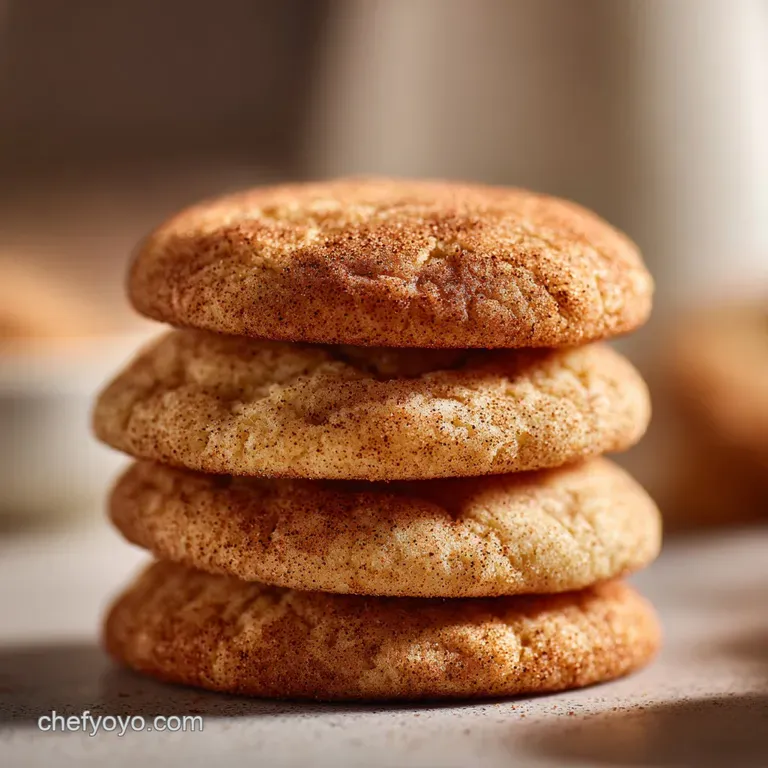
- Time: Active 15 minutes, Passive 10 minutes, Total 25 minutes
- Flavor/Texture Hook: Tangy, buttery crumb with a crisp, spiced exterior
- Perfect for: Holiday gift baskets or a cozy weekend baking session
- Bake the Most Irresistible Snickerdoodle Cookies
- Scientific Rationale for Signature Texture
- Essential Measurements for Consistent Batches
- Sourcing Premium Elements for Flavor
- Artisanal Tools for Superior Results
- Step-by-Step Method for Pillowy Dough
- Fixing Common Texture and Spread
- Creative Variations for Holiday Platters
- Strategic Planning for Make-Ahead Success
- Elegant Plating for Artisanal Displays
- Recipe FAQs
- 📝 Recipe Card
Bake the Most Irresistible Snickerdoodle Cookies
The scent of warm Saigon cinnamon hitting browned butter is enough to stop anyone in their tracks. I remember the first time I pulled a tray of these from the oven; the kitchen was filled with a rustic, toasted aroma that felt like a warm embrace.
There is something profoundly comforting about the way the sugar crystals sparkle under the kitchen lights, promising a texture that is both pillowy and crisp.
We often think of these as simple pantry treats, but achieving that signature "crackle" requires a bit of artisanal finesse. I’ve spent years tweaking the ratio of cream of tartar to baking soda to ensure every bite delivers that nostalgic tang without sacrificing the velvety soft center.
It is a balancing act of temperature and timing that transforms humble ingredients into a centerpiece worthy dessert.
You can expect a cookie that doesn't just crumble it melts. We are moving away from the dense, heavy discs found in grocery aisles and toward a rustic, hand rolled aesthetic that celebrates traditional flavors.
Whether you are prepping for a festive gathering or simply want to fill your cookie jar with something better than standard fare, this guide covers the nuances that make all the difference.
Scientific Rationale for Signature Texture
Understanding the chemistry behind the bake is what separates a good cook from a master of the craft. These cookies rely on specific reactions to achieve their unique height and flavor.
- Acidic Activation: The cream of tartar provides the necessary acidity to activate the baking soda, creating a rapid CO2 release for a loftier rise.
- Starch Gelatinization: Using room temperature eggs allows the proteins to bond more effectively with the flour, ensuring the structure doesn't collapse during the cooling phase.
- Maillard Reaction: The high heat of 375°F caramelizes the sugar coating quickly, creating a shattering exterior before the center becomes over baked.
- Sucrose Interference: Granulated cane sugar crystals disrupt gluten formation, which is why the crumb remains tender rather than bread like.
| Ingredient | Science Role | Pro Secret |
|---|---|---|
| Cream of Tartar | Acidic leavener | Prevents sugar crystallization for a softer, chewier bite. |
| Grass fed Butter | Lipid source | Provides a higher butterfat content, leading to a richer, silkier mouthfeel. |
| Baking Soda | Alkaline base | Reacts with tartar to create the signature craggy, cracked surface. |
The interaction between the cream of tartar and the baking soda is the "secret sauce" here. While most cookies rely on baking powder, the separation of the acid and the base allows for a more controlled rise and that specific, slightly sharp flavor profile that defines the category.
| Texture Choice | Temperature | Chill Time | Resulting Crumb |
|---|---|---|---|
| Chewy & Soft | 375°F | None | Thick, pillowy, and tender center. |
| Crispy & Thin | 350°F | 30 mins | Wider spread with a snap like edge. |
| Cakey & Tall | 400°F | 1 hour | Minimal spread with a dense, muffin like interior. |
Essential Measurements for Consistent Batches
Precision is the hallmark of artisanal baking, and while I love a "pinch of this" for savory dishes, these sweets demand accuracy. I always recommend using a kitchen scale to measure your 345g of flour, as a measuring cup can vary by up to 20% depending on how tightly it is packed.
This consistency ensures that your cookies won't turn into flat puddles or dry, sandy mounds.
| Feature | Fresh Artisanal | store-bought Shortcut |
|---|---|---|
| Cinnamon Punch | High (Saigon variety) | Low (Generic Cassia) |
| Fat Quality | Rich (Grass fed) | Muted (Oil based blends) |
| Texture | Velvety | Gritty or waxy |
When you are aiming for that "shatter" on the outside, the temperature of your oven is a non negotiable checkpoint. Ensure you have a thermometer inside to verify it hits exactly 375°F. If the oven is too cool, the fats will melt before the structure sets, leading to excessive spreading. If you find yourself craving a chocolatey twist instead, you might enjoy the technique used in my Crinkle Cookies recipe.
Sourcing Premium Elements for Flavor
The quality of your ingredients is the foundation of a rustic bake. I prefer grass fed butter for its vibrant yellow hue and deep, nutty flavor that shines through the cinnamon.
- 1 cup (226g) grass fed butter: Softened to room temperature. Why this? Higher fat content than standard butter ensures a more velvety texture.
- Substitute: 1 cup chilled coconut oil (results in a crispier, slightly nuttier edge).
- 1 cup (200g) granulated cane sugar: For the main dough body. Why this? Provides clean sweetness and structural stability.
- Substitute: 1 cup monk fruit sweetener (keeps it lower glycemic, but reduces browning).
- 0.5 cup (100g) coconut sugar: Adds a hint of caramel. Why this? Deepens the flavor profile without overpowering the cinnamon.
- Substitute: 0.5 cup light brown sugar (adds moisture and chewiness).
- 2 large eggs: Must be room temperature. Why this? Emulsifies better with the fats for a smooth, uniform dough.
- Substitute: 0.5 cup unsweetened applesauce (yields a denser, more moist cookie).
- 2 tsp vanilla extract: Use pure extract, never imitation.
- 2.75 cups (345g) all purpose flour: The structural backbone.
- 2 tsp cream of tartar: The essential tangy leavener.
- 1 tsp baking soda: For lift and browning.
- 0.5 tsp fine sea salt: To balance the sugars.
- 0.25 cup (50g) granulated sugar: For the exterior coating.
- 2 tbsp ground Saigon cinnamon: For the signature spiced crust.
Artisanal Tools for Superior Results
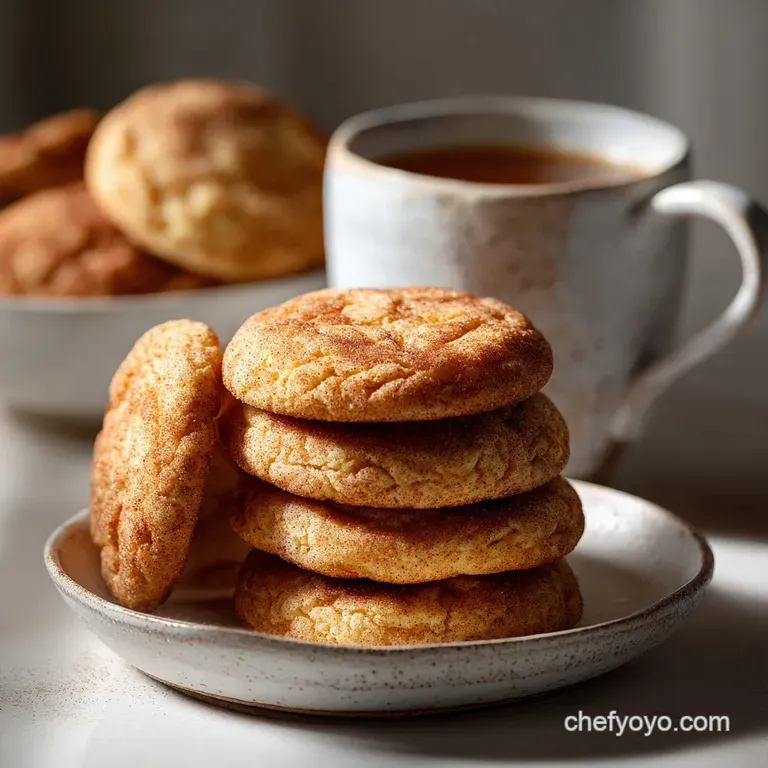
You don't need a professional bakery setup to achieve these results, but a few specific tools will help you maintain that artisanal standard. A stand mixer, such as a KitchenAid, is vital for the aeration phase hand whisking rarely provides the same volume.
I also swear by heavy gauge aluminum baking sheets; they distribute heat more evenly than thin, dark pans which tend to scorch the bottoms.
A spring loaded cookie scoop is another secret for the "occasion ready" look. It ensures every cookie is the exact same size, meaning they all finish baking at the same moment. Finally, use parchment paper or a silicone mat.
Never grease the pan directly with butter or spray, as this encourages the dough to slide and spread too thin, ruining that pillowy rise we're after.
step-by-step Method for Pillowy Dough
- Cream the fats. Beat 1 cup softened grass fed butter with 1 cup granulated sugar and 0.5 cup coconut sugar for 3 minutes until pale and fluffy. Note: This aeration is what creates the lift.
- Add the liquids. Incorporate 2 large eggs, one at a time, followed by 2 tsp vanilla extract.
- Sift dry ingredients. Whisk 2.75 cups flour, 2 tsp cream of tartar, 1 tsp baking soda, and 0.5 tsp sea salt in a separate bowl.
- Combine gently. Fold the dry mixture into the wet ingredients until no white streaks remain. Note: Over mixing here will make the cookies tough.
- Prepare the coating. Mix 0.25 cup sugar and 2 tbsp Saigon cinnamon in a small, shallow bowl.
- Shape the dough. Scoop rounded tablespoons of dough and roll between your palms until smooth and marble sized.
- Apply the crust. Roll each ball thoroughly in the cinnamon sugar mixture until completely encrusted.
- Arrange for baking. Place balls 2 inches apart on the prepared sheet. Do not flatten them.
- Execute the bake. Slide into the 375°F oven for 8 to 10 minutes until the edges are set but centers look soft.
- Cool with care. Let rest on the hot pan for 5 minutes until the structure firms up, then move to a wire rack.
Fixing Common Texture and Spread
One of the most frustrating things is watching your beautiful dough balls turn into flat pancakes. This often happens if the butter was too warm or if you over beat the eggs. If your cookies aren't cracking on top, it usually points to old cream of tartar that little jar in the back of the pantry loses its potency faster than you’d think.
Reasons for Excessive Spreading
If the cookies lose their shape, your dough might be too warm. Even if you didn't chill it initially, a quick 15 minute stint in the fridge can save a batch if your kitchen is particularly hot. Another culprit is using "spreadable" butter from a tub, which contains oils that don't hold air properly.
Stick to the sticks!
| Problem | Root Cause | Solution |
|---|---|---|
| Metallic Aftertaste | Too much baking soda | Check measurements; ensure 1 tsp exactly. |
| Hard/Tough Centers | Over mixed flour | Mix only until dry bits disappear. |
| No Signature Cracks | Oven temp too low | Calibrate oven; ensure it hits 375°F. |
Common Mistakes Checklist ✓ Ensure eggs are truly room temperature (submerge in warm water for 5 mins if needed). ✓ Weigh your flour extra flour leads to "hockey puck" cookies. ✓ Check the expiration date on your cream of tartar.
✓ Do not over grease the cookie sheet; use parchment instead. ✓ Let the baking sheet cool completely between batches to prevent premature melting.
Creative Variations for Holiday Platters
While the classic recipe is a masterpiece of simplicity, you can easily adapt these for different dietary needs or flavor preferences. For those seeking gluten-free snickerdoodle cookies, a high-quality 1:1 baking flour (like King Arthur) works beautifully, though you may need to add an extra tablespoon of butter to compensate for the flour's absorbency.
If you want to go the indulgent route, snickerdoodle cookies with cream cheese frosting are a revelation. I like to sandwich two cookies together with a tangy maple cream cheese filling for a rustic "whoopie pie" effect. If you’re a fan of unique textures, you might also enjoy comparing this process to my Classic Soft Oatmeal recipe, which uses a similar creaming method but results in a much heartier bite.
- If you want more tang, increase the cream of tartar to 2.5 teaspoons.
- If you want a deeper crust, use dark brown sugar for the coating instead of granulated.
- If you want extra sparkle, use coarse sanding sugar mixed with the cinnamon.
Strategic Planning for make-ahead Success
These cookies are a dream for the organized baker. You can roll the dough into balls and freeze them on a tray for 2 hours, then transfer them to a freezer bag. When the craving hits, bake them directly from frozen just add 2 minutes to the timer.
It’s the ultimate "emergency" dessert for unexpected guests.
Chef's Tip: To keep baked cookies soft for days, tuck a single slice of white bread into the storage container. The cookies will absorb the moisture from the bread, maintaining that velvety crumb.
Storage Guidelines
Store these in an airtight glass jar at room temperature for up to 7 days. If you find they’ve gone a bit crisp, a 10 second zap in the microwave will revive that "just baked" softness. For long term storage, they freeze perfectly for up to 3 months.
To minimize waste, any broken bits or "ugly" cookies can be pulsed in a food processor and used as a rustic crust for a cheesecake or sprinkled over vanilla bean gelato.
Debunking Baking Misconceptions
A common myth is that you can simply swap baking powder for cream of tartar. While it will provide lift, you will lose that signature tangy flavor and the specific chemical reaction that creates the soft, chewy interior.
Another misconception is that "more cinnamon is always better." Using too much can actually make the coating taste bitter; stick to the 2 tablespoons of Saigon cinnamon for the perfect balance.
Elegant Plating for Artisanal Displays
When serving these for an occasion, think about contrast. I love placing them on a dark ceramic platter to make the cinnamon sugar sparkle really pop. For a rustic touch, stack them three high and tie them with a simple piece of kitchen twine and a sprig of fresh rosemary.
It gives that "just from the farmhouse" look that people adore.
If you are gifting these, use brown parchment paper bags and a personalized stamp. Because these cookies hold their shape well, they are excellent for shipping to family just be sure to pack them tightly so they don't "shatter" in transit.
Pair them with a hot cup of spiced chai or a cold glass of almond milk to highlight the warm, woody notes of the Saigon cinnamon. These Snickerdoodle Cookies are more than just a snack; they are a timeless tradition done right.
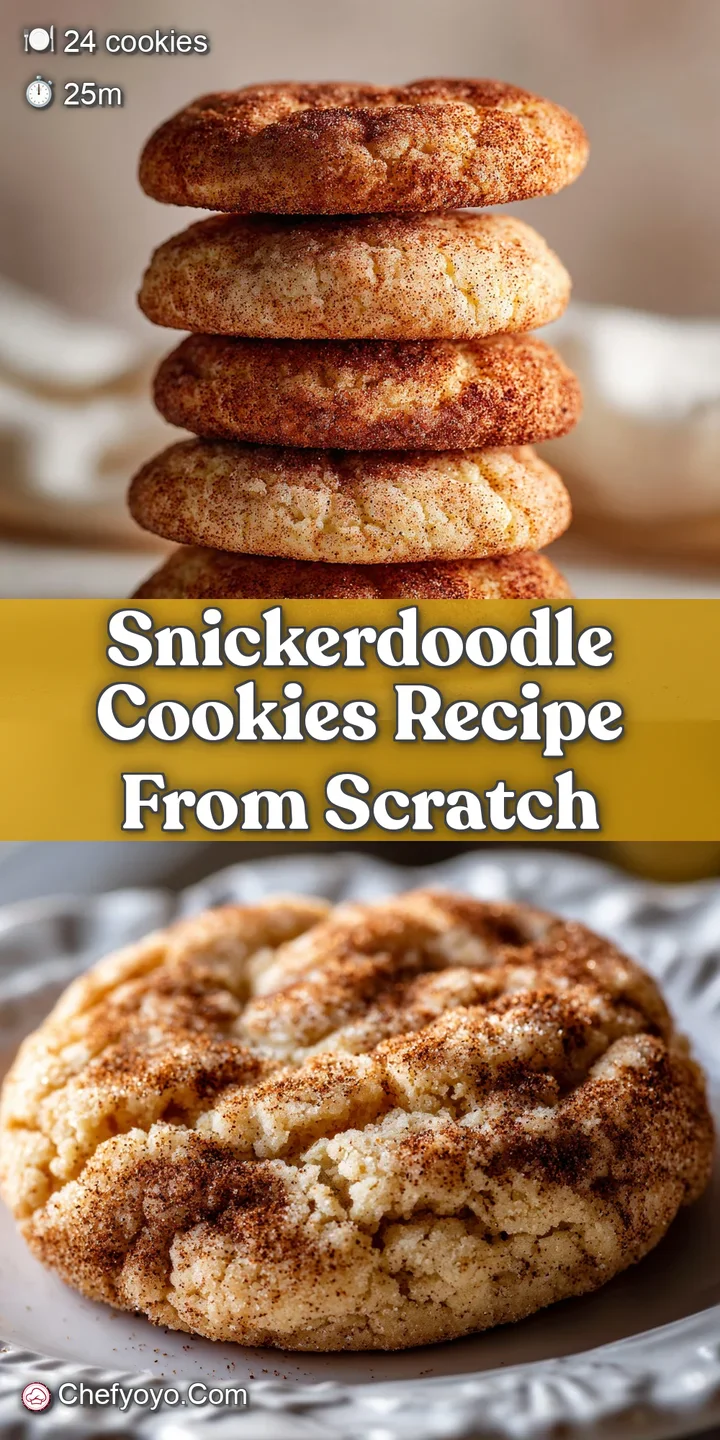
Recipe FAQs
What is the secret to soft snickerdoodles?
The secret is the right balance of fat and acid. Using softened, high fat butter and a good amount of cream of tartar helps create a tender crumb that stays soft. Avoid overmixing the flour, as this develops gluten and makes cookies tough, unlike the delicate structure in our Sugar Cookies: Buttery Snap and Almond Velvet.
What makes a cookie a snickerdoodle?
The signature tang and the cinnamon sugar coating make it a snickerdoodle. Cream of tartar is essential for its characteristic tangy flavor and slightly craggy texture, while the rolling in cinnamon and sugar provides that classic spiced crust.
Why is a cookie called a snickerdoodle?
The exact origin is uncertain, but it likely comes from German heritage. The name might be a playful variation of the German word "schneckennudel," meaning snail noodle, referring to a cinnamon roll shape, or it could simply be a whimsical, made-up name common in early American baking.
Why is cream of tartar used in snickerdoodles?
Cream of tartar is crucial for leavening and that distinctive tangy flavor. It reacts with baking soda to create carbon dioxide gas for lift, and its acidity provides the characteristic tartness that balances the sweetness, a key element in achieving the perfect snickerdoodle texture.
Can I make snickerdoodles without cream of tartar?
No, you'll lose the signature tang and texture. While baking soda alone provides lift, cream of tartar is what gives snickerdoodles their unique flavor profile and helps create that classic craggy surface. Without it, you'll end up with a much blander, less characteristic cookie.
How do I get my snickerdoodles to have crackly tops?
Ensure your cream of tartar is fresh and your oven temperature is accurate. The reaction between fresh cream of tartar and baking soda, combined with the correct baking temperature (around 375°F), causes the cookie to spread and crackle as it bakes. For a similar textural contrast, explore the crisp exterior of our Chocolate Crinkle Cookies Are a My Familys Timeless Recipe.
How do I store snickerdoodles to keep them soft?
Store them in an airtight container with a slice of bread. The bread releases moisture, keeping the cookies soft and chewy. For longer storage, they can be frozen in an airtight container for up to three months.
Snickerdoodle Cookies
Ingredients:
Instructions:
Nutrition Facts:
| Calories | 184 kcal |
|---|---|
| Protein | 2.1 g |
| Fat | 8.1 g |
| Carbs | 25.8 g |
| Fiber | 0.5 g |
| Sugar | 14.6 g |
| Sodium | 112 mg |
