The Nofuss Perfectly Chewy Peanut Butter Cookie
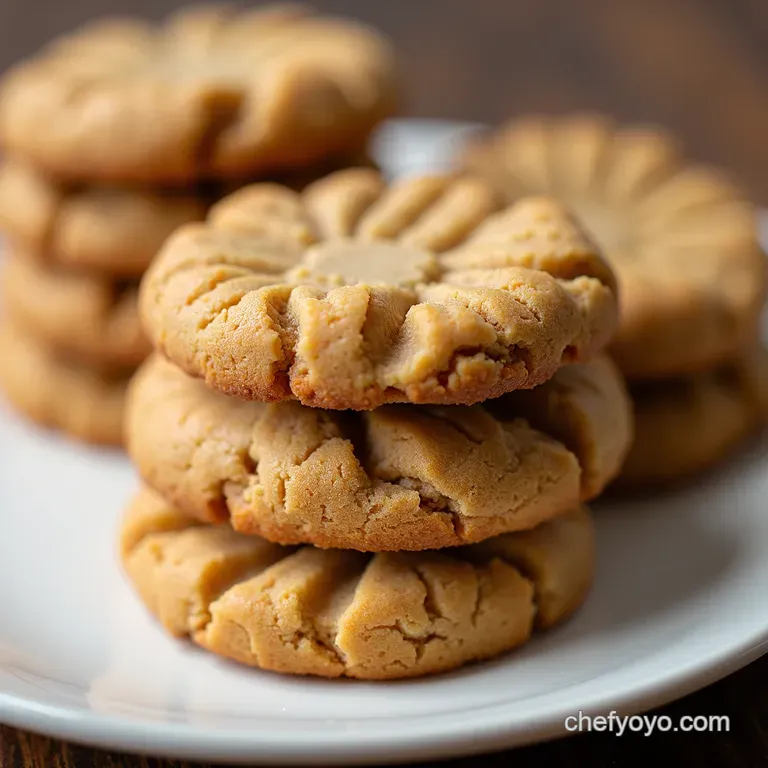
- Why These Are The Definitive Soft Chewy Peanut Butter Cookies
- Say Goodbye to Dry Crumble: The Gooey Guarantee
- Assembling Your Ultimate Cookie Components
- Ingredient Specifics for Maximum Softness
- The Method to Create Truly Soft Chewy Peanut Butter Cookies
- Baking Science: Temperature Control and Timing
- Elevating Your Peanut Butter Cookie Experience
- Storage Secrets for Lasting Freshness
- The Unsung Heroes of Baking: Why Room Temperature is Your Secret Weapon
- Achieving the Perfect Peanut Butter-to-Sugar Ratio for Soft Chewy Peanut Butter Cookies
- Oh No! The Great Cookie Melt: Why Your Soft Chewy Peanut Butter Cookies Spread Too Thin
- Keeping the Goodness: Storage Tips for Maximum Chewiness
- Frequently Asked Questions
- 📝 Recipe Card
Why These Are The Definitive Soft Chewy Peanut Butter Cookies
The scent alone is enough to make you forget your troubles, honestly. Imagine that warm, nutty aroma wafting from the oven it’s just pure comfort, isn't it? We're not messing about here; these Soft Chewy Peanut Butter Cookies are the ones that always disappear first at any bake sale.
Forget those sad, dry biscuits your aunt used to bring along. We are aiming for perfection.
The Classic Comfort Cookie, Reimagined for Texture
When I first started properly learning to bake, peanut butter cookies were my nemesis. They always came out hard as old boots. It took ages, but I figured out the trick. The biggest takeaway is balancing the sugars. We use a good amount of Peanut Butter Cookies with Brown Sugar here.
That molasses content in the brown sugar is vital for keeping things moist long after they’ve cooled down. It’s the flavour base, but it’s also a major player in the texture game.
This Soft Chewy Peanut Butter Cookie Recipe is designed to be fast too minimal faff, maximum reward. You can have these mixed, chilled, and ready for the oven in about 45 minutes total if you rush the chill time slightly.
Unlocking the Secret to Supreme Chewiness
So, how do we guarantee that chew ? Well, the first big secret is the cornstarch. Yes, cornflour, if you're over here in the UK. Just two teaspoons make a massive difference. It tenderises the flour structure.
Secondly, and this is the game changer for how to make peanut butter cookies soft and chewy , is slightly underbaking them. You want them to look done around the edges, but still slightly pale and wobbly in the very middle when you pull them out. Trust me on this; they set up beautifully on the tray.
Say Goodbye to Dry Crumble: The Gooey Guarantee
Listen, nobody wants a cookie that shatters when you bite it. We want that satisfying resistance a little grab before it melts in your mouth. That’s the goal of this Best Soft Chewy Peanut Butter Cookies approach.
People often ask me, "Why do mine spread so much?" It’s usually down to the butter being too warm, or skipping the chilling step. We're aiming for Easy Chewy Peanut Butter Cookies , but easy doesn't mean cutting corners on the science bits!
A Quick Look at Why Home Bakers Love This Batch
It’s the reliability, isn’t it? This is a simple recipe, but it consistently delivers the kind of Homemade Peanut Butter Cookies you see in fancy bakeries. You don't need exotic ingredients, just the standard stuff lurking in your pantry. Another huge plus? They freeze brilliantly.
Make a massive batch on a Sunday, and you’ve got perfect grab and-go treats for the week. If you’re wondering about using natural peanut butter, don’t bother unless you adjust the liquid content drastically.
Stick to the smooth, shelf stable stuff for this Chewy Peanut Butter Cookie Recipe . That’s the key to the Soft and Chewy Cookies Trick . Once you master this, you’ll never look back.
These Soft Peanut Butter Cookies are the only ones you’ll ever need.
Related Recipes Worth Trying
- 4 Ingredient Peanut Butter Cookies The Foolproof 20Minute Fix — Discover how to make genuinely easy peanut butter cookies with only four ingredients These foolproof biscuits are perfect for a quick chewy dessert rescue
- Best Ever Moist Zucchini Bread Recipe with Brown Butter — Learn how to make a very moist zucchini bread recipe that stays fresh for days thanks to nutty brown butter and warm spices Easy baking for your courgette glut
- Fudgy Chewy Browkies Brownie Meets Cookie Perfection — Master the ultimate Fudgy Chewy Browkies Brookies recipe for intensely fudgy centres and chewy edges Get the foolproof guide to these best chocolate brownie...
Right then! Let’s get cracking on the very components that make these Soft Chewy Peanut Butter Cookies sing. Forget those rock hard discs your auntie used to make.
We're aiming for the real deal here the kind of cookie that makes you pause before dunking because you want to savour that first bite. Getting the texture perfect for Chewy Peanut Butter Cookie Recipe is all about managing the dry stuff versus the wet stuff.
Assembling Your Ultimate Cookie Components
The Foundation: Fats, Sugars, and Binders
This is where the magic starts, honestly. We need richness, and that comes from the butter (113g or 1/2 cup), which should be softened not melted, mind you. The balance of sugar is critical for the Soft and Chewy Cookies Trick .
We’re using both white sugar (100g or 1/2 cup) and light brown sugar (150g or 3/4 cup packed). That brown sugar? It’s packed with molasses, which is hygroscopic it sucks up moisture and keeps things soft for longer.
That’s essential for any good Soft Peanut Butter Cookies . If you don't have brown sugar, you can substitute with granulated sugar mixed with a tablespoon of molasses, but the brown stuff is easier.
Peanut Butter Selection: Creamy vs. Crunchy Impact
Now, the star of the show: peanut butter (250g or 1 cup). Here’s a proper tip: use the standard, shelf stable kind you know, the one that doesn't separate when you buy it. Brands like Jif or Skippy are spot on. Why? Because the oils and stabilizers in those conventional butters help hold the structure firm.
If you use natural, runny peanut butter, your dough will be floppy, and you’ll end up with thin, greasy cookies instead of these Easy Chewy Peanut Butter Cookies . If you only have crunchy, it’ll work, but your texture will be lumpier, which isn't necessarily a bad thing!
Crucial Measurements for Dough Integrity
We’re using 210g (1 3/4 cups) of all-purpose flour, but listen closely: measure it by spooning it into your cup and leveling it off. Do not scoop straight from the bag; trust me, I’ve made that mistake it ruins the moisture balance for Homemade Peanut Butter Cookies .
The real secret weapon for that incredible chew? Cornstarch, or cornflour if you’re over here in the UK! Just two teaspoons (10g) works wonders. It tenderises the crumb beautifully. If you’ve run out, a tiny bit of extra flour will do, but it won't be quite as soft.
Ingredient Specifics for Maximum Softness
We’ve got our butter, sugars, and PB creamed up nicely. Now we bring in the binders: two large eggs (room temp is best, though I often forget to take them out!) and a teaspoon of vanilla. Mix these in well. Finally, after whisking your dry agents (flour, cornstarch, baking soda, and salt), introduce them slowly.
My biggest lesson learned making these Best Soft Chewy Peanut Butter Cookies is stop mixing the second the flour vanishes. Overmixing develops gluten, and gluten makes things tough, which is the enemy of soft and chewy!
Once combined, we chill the dough for 30 minutes , no excuses. This resting period is key to achieving the final texture in this Soft Chewy Peanut Butter Cookies Recipe .
Right then! Let’s get down to brass tacks. Making Soft Chewy Peanut Butter Cookies that don't crumble into dust when you look at them is an art, but honestly, it’s easier than trying to navigate the London Underground during rush hour.
We are aiming for that perfect balance salty, sweet, and that melt-in-your mouth texture. If you follow these steps for this Chewy Peanut Butter Cookie Recipe , you’ll have people asking for the recipe faster than you can say "biscuit."
The Method to Create Truly Soft Chewy Peanut Butter Cookies
This is where we build the foundation for those delightfully Soft Peanut Butter Cookies . Get your gear ready. If you've got a stand mixer, brilliant. If you're wrestling with a hand mixer, no worries, just be prepared for a bit of an arm workout.
We need to incorporate air, which is the difference between a flat, greasy disc and a beautifully puffy cookie.
Creaming Butter and Sugars: The Air Incorporation Stage
First things first: your butter needs to be softened. Not melted, mind you softened, like it’s been sitting out while you put the kettle on.
- Place the softened butter, peanut butter, brown sugar (packed tight, remember that brown sugar is key to moisture retention), and white sugar into your mixing bowl.
- Beat this mixture. You’re looking for about 3 minutes on medium speed. What are you looking for, visually? It should go from dense and grainy to pale, fluffy, and much lighter in colour. This is the 'creaming' stage; we are trapping air bubbles in the fat and sugar matrix. If you rush this, your Best Soft Chewy Peanut Butter Cookies will be dense. A common pitfall is stopping too soon!
Next, we bring in the wet binders. Add the eggs one at a time, making sure the first one is fully incorporated before you add the second. Follow that up with the vanilla. Scrape down the sides of the bowl always scrape down the sides!
Folding in the Dry Mix Without Overdeveloping Gluten
Now for the dry ingredients: flour, cornstarch (that’s our secret weapon for that soft and chewy factor, don't skip it!), baking soda, and salt. Give these a quick whisk in a separate bowl.
- Add the dry mix to the wet ingredients gradually. Start the mixer on the absolute lowest setting. We only want to mix until the white streaks of flour have just vanished.
- Stop right there. Seriously. As soon as you stop seeing dry flour, stop mixing. Overmixing develops gluten, and gluten makes things tough, like an old boot. We are making Easy Chewy Peanut Butter Cookies , not rock cakes. My biggest lesson learned here? Trust the sight of just combined dough; it looks shaggy, and that’s fine.
The Importance of Chilling the Dough Before Baking
This step feels like a total drag when you’re desperate for a cookie, but trust me, this is half the battle for achieving that sought after texture in your Soft Chewy Peanut Butter Cookies Recipe .
- Wrap the dough well and pop it in the fridge for at least 30 minutes . If your kitchen is particularly warm, aim for 45 minutes. Chilling solidifies the fat, meaning the cookies hold their shape better in the oven instead of spreading out into thin, crispy sheets. This technique is crucial for that soft and chewy texture. This makes them closer to the Best Soft Chewy Peanut Butter Cookies you’ve ever had.
Baking Science: Temperature Control and Timing
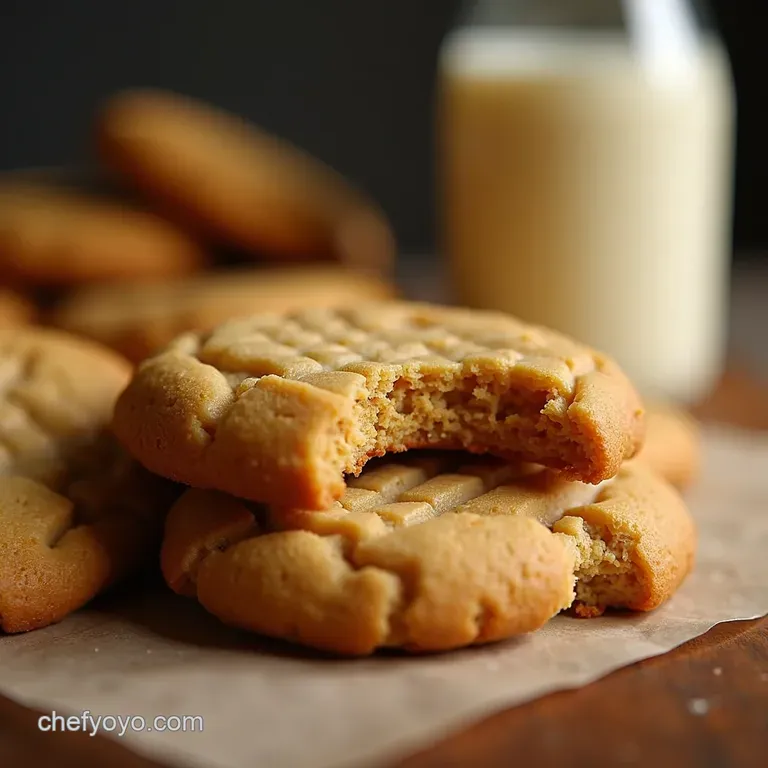
Getting the temperature right ensures the outside sets before the inside dries out. We are aiming for an underbaked centre that finishes cooking on the hot tray.
Achieving the Signature Crosshatch Pattern Perfectly
While the dough chills, get your oven warmed up. You need a steady temperature.
Preheat your oven to 350° F ( 175° C) . Line your baking sheets with parchment paper.
Take the dough out. If you are rolling them in extra sugar for a crisp exterior, do that now. Scoop dough balls (about 1.5 tablespoons).
Place them on the sheet, leaving space between them about 2 inches. Now, the classic fork press. Take a fork, press down gently once, then rotate the fork 90 degrees and press again. This creates the crosshatch. It’s iconic, and it helps flatten the dough evenly for consistent baking.
Bake for 10 to 12 minutes . Here is the key visual cue for How to make peanut butter cookies soft and chewy : the edges should look set and just barely golden brown, but the very centre should look slightly pale and a bit puffy.
If they look fully brown, they will be hard.
Let them sit on that hot baking sheet for 5 full minutes after removing them from the oven. They are still cooking! If you try to move them straight away, they will break. After 5 minutes, carefully transfer them to a wire rack to cool completely.
If you’ve got leftover Homemade Peanut Butter Cookies dough, wrap it tight; it freezes beautifully for up to 3 months. Bake frozen dough balls straight from the freezer, adding 2- 3 minutes to the bake time. Enjoy!
These are truly the Soft and Chewy Cookies Trick in action.
Elevating Your Peanut Butter Cookie Experience
Right then, we’ve covered the basics of getting these beauties in the oven. But if you want to move past 'nice' cookies to 'Oh my God, what is in these?' territory, we need to talk about the details.
Making Soft Chewy Peanut Butter Cookies isn’t just about chucking ingredients together; it’s about respecting the ingredients and knowing when to interfere.
Creative Flavor Twists Beyond the Basics
Look, the classic peanut butter cookie is brilliant as it is salty, sweet, and utterly satisfying. But sometimes you fancy something a bit more you , don't you? I love experimenting once I know the base recipe is solid. We’re talking about enhancing that deep, roasted peanut flavour.
My absolute favourite cheat? A tiny bit of coarse sea salt sprinkled on top right after they come out of the oven. It sounds minor, but that burst of salinity against the sweetness is addictive. For those who like a bit of zing, try swapping out half the vanilla extract for almond extract.
It gives the cookies a lovely, almost marzipan like background note that pairs brilliantly with the peanuts. If you’re feeling bold, try adding some finely chopped pretzels into the mix before chilling. You get an extra crunch and salt hit. It’s brilliant, trust me.
These are the little touches that turn good Homemade Peanut Butter Cookies into legendary ones.
Troubleshooting Common Texture Pitfalls
If you’ve ever baked these and ended up with something that could double as a doorstop, you’re not alone. I’ve been there, staring mournfully at a tray of flat, hard discs. The main culprits for losing that soft centre, that glorious chew, usually boil down to three things.
First, the peanut butter type . I stressed this in the outline, but it bears repeating: avoid the oily, natural separation kind unless you reduce the liquid elsewhere. Those natural ones add too much oil and cause major spreading.
Stick to the stabilised stuff if you want the Best Soft Chewy Peanut Butter Cookies . Second, overmixing the flour . Once that flour hits the wet mix, stop beating it like you’re trying to fluff a duvet!
Overmixing develops the gluten, which means tough, cakey cookies instead of soft, chewy ones. Mix until just combined. Third, baking time . Pulling them out early is the Soft and Chewy Cookies Trick .
They should look slightly pale and wobbly in the middle when you remove them. They finish setting on the hot tray that’s where the magic happens. If you wait until they look 'done' in the oven, they’ll be overdone when they cool.
Nutritional Snapshot and Serving Suggestions
Now, let’s not pretend these are health food, alright? They are a treat, pure and simple. Based on the recipe breakdown, you’re looking at roughly 180 calories per cookie.
They’ve got a decent hit of fat (from the butter and PB) and carbs, but they offer a respectable amount of protein thanks to all that peanut goodness. They’re a good little energy boost if you need one, though I usually reach for them when I need a hug in baked form.
When it comes to serving, I always suggest warmth. Even if you let them cool completely before storing, give them 10 seconds in the microwave before eating. It brings that buttery aroma right back to the forefront. For a really luxurious pairing, skip the standard milk and try a slightly spiced chai latte.
The warmth and complexity of the tea beautifully complement the salty peanut flavour. If you're having a proper tea party, serve them alongside some shortbread the textural contrast is superb. This Chewy Peanut Butter Cookie Recipe is robust enough to stand up to strong drinks.
Storage Secrets for Lasting Freshness
One of the biggest annoyances with homemade cookies is that they turn stale overnight. We want these Soft Peanut Butter Cookies to last more than 24 hours, ideally! It’s all about how you treat them post bake.
First rule of storage club: they must be completely cool before they go anywhere near a container. Putting warm cookies into a sealed tin creates condensation, and condensation equals soggy bottoms. Not what we want in a Soft Chewy Peanut Butter Cookies Recipe .
Once fully cooled, store them in a truly airtight container at room temperature. I find heavy duty Tupperware works better than standard biscuit barrels. If you’re keeping them for just a few days (say, 4-5 days), they should remain lovely and soft.
If you plan on keeping them longer, or if you’ve baked a massive batch (because who doesn’t?), freezing is the way to go.
For freezing, flash freeze the cookies first. Lay them out on a baking sheet, pop that sheet in the freezer for about an hour until they are rock solid, and then transfer them into a heavy duty freezer bag, pressing out as much air as possible.
They’ll keep beautifully for up to three months this way. When you fancy one, just take it out and let it thaw on the counter for 30 minutes, or zap it for 15 seconds in the microwave for that fresh baked feeling.
This method works wonders for keeping the Easy Chewy Peanut Butter Cookies tasting like they were just made.
There you have it the whole shebang for nailing the ultimate Peanut Butter Cookies with Brown Sugar . Give them a go, and I bet you’ll never go back to the hard, dusty versions again!
The Unsung Heroes of Baking: Why Room Temperature is Your Secret Weapon
Right then! We’re talking about making the Soft Chewy Peanut Butter Cookies of your dreams. You’ve seen the ingredient list, you know the steps, but let’s have a quick chinwag about something that separates the brilliant bakes from the bricks.
I’m talking about temperature. Specifically, the temperature of your ingredients.
It sounds dead dull, doesn't it? Like something a food scientist would drone on about. But honestly, getting this small detail right is the difference between cookies that look okay and cookies that are genuinely life changing.
When I first tried to make the Best Soft Chewy Peanut Butter Cookies , mine spread everywhere like they'd had a bit too much sherry at Christmas. Why? Cold butter. Stubborn, fridge cold butter.
The Creaming Conundrum: Making Friends with Fat and Sugar
When the recipe calls for "softened butter," it doesn't mean melted sludge swimming in a puddle on the counter. It means butter that gives slightly when you press it, but still holds its shape.
We are aiming for about 65– 70° F (18– 21° C) .
Why does this matter so much for our Soft Chewy Peanut Butter Cookies Recipe ? It’s all about aeration. We need that butter and sugar to beat together, trapping tiny air bubbles. Think of it like whipping up a nice meringue you need the right texture to hold the structure.
If your butter is too cold, it fights the sugar; the mixture won't blend smoothly, and you end up with sugary lumps suspended in slightly bruised butter.
When you finally introduce the eggs, those cold butter lumps won’t emulsify properly. This leads to a greasy, curdled looking mix. A happy, properly creamed base means a smooth dough, which translates directly to that desired soft texture in your Homemade Peanut Butter Cookies .
I learned this the hard way, scraping down cold butter clumps for what felt like an hour, only to realize I should have just waited fifteen minutes longer for it to warm up!
Egg Temperature: The Binding Agent's Best Friend
Following on from the butter, those two eggs also need to be at room temperature. Cold eggs hitting warm, creamy butter and sugar cause the entire mixture to seize up and curdle instantly. It’s a shock to the system for the fat.
This is a massive part of the How to make peanut butter cookies soft and chewy puzzle. If the eggs are cold, they chill down the creamed mixture. When we add the flour afterwards, the butter firms up again slightly, making it harder to blend evenly.
Again, uneven mixing equals uneven baking and a texture that’s patchy some bits dry, some bits greasy.
When the eggs are roughly the same temperature as the creamed fats, they slide in seamlessly, creating a homogenous, stable emulsion. This stability is what allows the dough structure to hold up beautifully during baking, ensuring a consistent chew in every single bite of your Easy Chewy Peanut Butter Cookies .
The Role of Peanut Butter and Brown Sugar
Now, let's talk about the stars of the show: the peanut butter and the Peanut Butter Cookies with Brown Sugar . Even these need to be behaving themselves!
If you’re using standard, shelf stable peanut butter (which is best for this recipe, remember, no natural oils separating out!), giving it a quick stir so it’s not stiff from the fridge helps immensely. It needs to incorporate easily with the creamed butter, not fight it.
And the brown sugar! That lovely, moist ingredient is essential for that soft texture. Brown sugar contains molasses, which is hygroscopic it loves water. This natural stickiness helps keep moisture trapped in the cookie long after it leaves the oven.
Room temperature ingredients mix better, meaning the sugar dissolves more evenly into the fat, maximising its moisture retaining superpower. This is the real Soft and Chewy Cookies Trick , often overlooked because people focus too much on flour ratios.
So, take a breath. Before you start mixing, lay your butter and eggs out onto the counter for about an hour. Trust me on this one. Respecting the temperature of your ingredients is the key to unlocking that gorgeously soft, satisfying chewiness we are after.
Get that right, and you’re halfway to the Chewy Peanut Butter Cookie Recipe goldmine!
Achieving the Perfect Peanut Butter-to-Sugar Ratio for Soft Chewy Peanut Butter Cookies
Right then! Let’s get down to the nitty gritty. If you’re chasing that blissful, melt-in-your mouth sensation the kind that makes you whisper, "Blimey, these are good" it all boils down to chemistry. Specifically, the precise dance between the peanut butter and the sugars.
Getting this balance wrong is why so many people end up with Soft Peanut Butter Cookies that turn out dry as an old boot.
I've made batches of these things that crumbled too fast, and batches that spread flatter than a pancake in July. The goal, remember, is the ultimate Soft Chewy Peanut Butter Cookies Recipe . That texture isn't an accident; it’s science working in your favour.
The Brown Sugar Secret: Moisture is King
When we talk about achieving that perfect chew, we need to talk about brown sugar. Granulated sugar is just that pure sucrose. It makes things crispier, like shortbread. But brown sugar? That’s sugar mixed with molasses.
Molasses is the hero here, folks. It's hygroscopic, which is a fancy way of saying it loves to hold onto water. When you’re crafting your Chewy Peanut Butter Cookie Recipe , you need that moisture locked in.
That's why you see a higher ratio of brown sugar (3/4 cup packed) to white sugar (1/2 cup) in my blueprint. The brown sugar keeps the interior soft and pliable long after they've cooled down.
My biggest lesson learned? Don’t skimp on packing that brown sugar. Really press it into the measuring cup. If you eyeball it, you lose crucial moisture, and suddenly you’re heading towards a crunchier cookie, not the soft, gooey dream we’re after.
This ratio adjustment is key to making truly Soft and Chewy Cookies Trick level bakes.
Peanut Butter: Not All Butters Are Created Equal
Here’s a bit of cultural housekeeping that trips up folks new to making Homemade Peanut Butter Cookies . If you use that super natural, freshly ground peanut butter the kind where the oil separates faster than you can say "cuppa" you're going to have a sticky mess. Why?
Because the liquid oil content is too high and unstable for baking structure.
For the Best Soft Chewy Peanut Butter Cookies , you need that classic, shelf stable, emulsified peanut butter. Think Jif or Skippy the stuff that holds its shape on the shelf. This type has added stabilizers (like hydrogenated oils) that keep the fat suspended evenly.
This consistency helps create that beautiful, thick dough that allows for the classic fork press pattern without collapsing into a puddle.
If you must use natural PB, you might need to drain off some of the excess oil or add an extra teaspoon of flour, but honestly, stick to the standard stuff for these Easy Chewy Peanut Butter Cookies . It just works better structurally.
The Cornstarch Catalyst
While the PB-to-sugar balance sets the flavour and foundational softness, we need an extra boost for that satisfying chew . Enter cornstarch (or cornflour, if you’re reading this over on the other side of the pond).
I added two teaspoons of this seemingly innocent powder to the dry mix for a reason. Cornstarch is a pure starch; it gelatinizes when baked, essentially thickening the matrix of the cookie dough as it bakes. This process inhibits the formation of too much gluten, which leads to toughness.
Instead, you get tender, dense crumbs the hallmark of truly Soft Chewy Peanut Butter Cookies .
It’s a small addition, but it stops the cookies from spreading too thinly and ensures that lovely, substantial bite. When you master this ratio, you master How to make peanut butter cookies soft and chewy every single time.
Trust me, once you nail this specific blend of sugars and starch, you’ll be whipping up magnificent Peanut Butter Cookies with Brown Sugar for every occasion. They’re simply smashing with a strong cup of tea.
Oh No! The Great Cookie Melt: Why Your Soft Chewy Peanut Butter Cookies Spread Too Thin
Right then, you’ve followed the steps, the aroma filling your kitchen is making your mouth water, and you pull the tray out. But instead of plump, gorgeous mounds, you’ve got flat, crispy discs. Disaster! We’ve all been there.
It’s the baking equivalent of getting halfway through a walk and realising you’ve forgotten your keys. It happens, but usually, it’s down to a few key things we can sort out.
These flat issues are the bane of anyone trying to master the Soft Chewy Peanut Butter Cookies Recipe . We are aiming for thick, satisfying chew, not a brittle wafer.
Let’s diagnose the problem so your next batch of Homemade Peanut Butter Cookies is absolutely spot on.
The Temperature Turndown: Fat Is Your Enemy (When It’s Too Hot)
The number one culprit for runaway cookies is heat management, specifically the state of your butter and peanut butter. Think about it: cookies spread because the fat melts before the structure (the flour and eggs) has a chance to set.
If your butter was too soft basically oil when you creamed it, or if your peanut butter was overly runny, you’ve already got a head start on disaster. For these Best Soft Chewy Peanut Butter Cookies , we need that fat to melt slowly .
Crucially, after mixing, did you chill the dough? I cannot stress this enough when making Soft Peanut Butter Cookies . Chilling for that crucial 30 minutes firms up all that delicious butter and PB.
It gives the structure time to build up strength in the oven before the melt begins. If you skip chilling, the dough hits a hot oven and immediately slumps. That’s physics, that is. For a truly Chewy Peanut Butter Cookie Recipe , cold dough is your best mate.
Measuring Mayhem: Too Much Sugar, Not Enough Starch
Sometimes the spread isn't fat-related; it’s about balance. Sugar loves to spread. It dissolves and flows. While brown sugar is essential for that deep flavour and moist texture in our Peanut Butter Cookies with Brown Sugar , too much of any sugar relative to flour will lead to thinness.
Check your measurements. Are you spooning and levelling your flour? If you just plunge the cup straight into the bag, you are likely adding 20 30% too much flour, which then throws the wet/dry ratio out. Conversely, if you’re light on the flour, the cookie has nowhere to go but wide.
Also, remember that secret weapon we added? The cornstarch! That tiny amount is vital for that signature softness it inhibits gluten development, leading to a tender crumb. If you forgot that, or substituted it with something else, you’re going to end up with a flatter, slightly tougher cookie.
That’s the core of the Soft and Chewy Cookies Trick right there!
Oven Heat Hiccups: Wrong Temp Means Wrong Texture
If your dough was perfectly chilled, but the cookies still spread too much, look at your oven temperature. Are you relying on the dial, or have you actually checked it with an oven thermometer? Many home ovens run hot or cold, sometimes by as much as 25 degrees either way.
If the oven is too cool say, only 325° F when it should be 350° F ( 175° C) —the fat melts before the flour has time to dry out and set. The cookie just pools.
If your oven runs low, you might need to bump the temperature up slightly to bake the structure fast enough. Getting this right is key for anyone wanting to know How to make peanut butter cookies soft and chewy .
Don't fret, though. Even flat cookies taste great smeared with jam, and frankly, I’ve never met a peanut butter cookie I didn't like. Just remember: chill the dough, use conventional peanut butter, and check that oven temperature.
Next time, you’ll have those perfectly tall, delightfully chewy mounds you were after for your Easy Chewy Peanut Butter Cookies !
Keeping the Goodness: Storage Tips for Maximum Chewiness
Right then, you’ve just pulled a batch of the Best Soft Chewy Peanut Butter Cookies out of the oven. The aroma in the kitchen is absolutely banging, isn't it? That mix of roasted nuts and sweet caramelised sugar it’s pure nostalgia.
But here’s the rub: we want these to taste just as brilliant tomorrow, or even the day after, as they do right now. We’re after that perfect, yielding bite every single time.
If you’ve followed the Chewy Peanut Butter Cookie Recipe correctly, you’ve already used that little trick with the cornstarch. That’s step one sorted.
Now we need to keep the moisture locked in so these Soft Peanut Butter Cookies don’t turn into little flavourless rocks by Tuesday.
The Cool Down: Why Patience Pays Off
This is where so many people muck it up. They’re too keen, aren't they? They rush the cookies off the hot tray and straight into a container. Hold your horses! When these Homemade Peanut Butter Cookies first come out, they are seriously fragile.
They need a minute to firm up externally, otherwise, they just crumble into sad little shards when you move them.
The rule of thumb, which I’ve learned the hard way (often resulting in a massive pile of cookie dust), is to leave them on the baking sheet for a solid five minutes . They need that residual heat to finish setting the structure, especially the edges.
After five minutes, gently slide them onto a wire rack. They should feel quite soft but hold their shape. Don’t stack them until they are completely cool and I mean stone cold, like they’ve been left on the windowsill overnight.
Stacking warm cookies traps steam, and steam equals sogginess where you want chew, see?
Airtight is Your Best Mate (But Not Too Airtight)
When you’re ready to store them, an airtight container is mandatory. This is non-negotiable if you want to master how to make peanut butter cookies soft and chewy for days. A simple Tupperware box or a cookie jar with a decent seal will do the job nicely.
However, here is a bit of a pro tip that separates the decent baker from the truly brilliant one when making Easy Chewy Peanut Butter Cookies . If you plan on keeping them for more than 48 hours, I recommend separating the cookies into smaller batches in smaller containers.
Why? Because once you open that big tub every time you fancy a treat, you let the cool, dry air in, and that starts pulling the moisture right out of them. Keeping the air exposure minimal makes a huge difference in maintaining that Soft and Chewy Cookies Trick .
Locking Down That Brown Sugar Goodness
Remember how we used plenty of Peanut Butter Cookies with Brown Sugar ? That molasses content in the brown sugar is the real hero when it comes to moisture retention. But even molasses can only do so much against a dry environment.
If you find your cookies are hardening up faster than you’d like perhaps they’ve been sitting out for a day or two there’s a classic bakery hack you can use. Pop one slice of plain white bread into the container with your cookies. Seriously, just one slice.
The bread acts as a sacrificial lamb, releasing moisture into the sealed environment, which the cookies then happily absorb. Replace the bread slice if it goes hard. It’s utterly simple, costs pennies, and is brilliant for resurrecting those Soft Chewy Peanut Butter Cookies Recipe batches that are just starting to lose their youthful bounce.
This little trick has saved many an afternoon tea session for me. Enjoy that chew!
If you're craving more ideas, explore Classic Apple Crisp Recipe Buttery Oat Crumble Top , 30Minute Quick Creamy Butter Chicken Authentic Murg Makhani for Weeknights and Quick Easy Homemade Butter Chicken The 35Min Quick Fix Homemade Butter Murgh Makhani .
Frequently Asked Questions
Why are my Soft Chewy Peanut Butter Cookies turning out hard and crumbly instead of chewy?
That’s usually down to a couple of things: either you’ve overbaked them, or the dough wasn't chilled properly. Pull the cookies out when the centres still look slightly soft they firm up on the tray.
Also, ensure you are using conventional peanut butter, not the natural runny kind, and don't skip chilling the dough for at least 30 minutes to stop them spreading into flat biscuits!
Can I use natural, oily peanut butter for these cookies?
For the best results in achieving truly "Soft Chewy Peanut Butter Cookies," it’s best to stick to standard, shelf stable, emulsified peanut butter (like good old Skippy or similar brands).
Natural, oily varieties can destabilise the dough structure, leading to cookies that spread too much in the oven and lose that essential soft texture.
My dough looks too soft even after chilling; should I add more flour?
If the dough still feels too soft after the required chill time, resist the urge to add loads of extra flour, as that will dry out the final product. Instead, pop it back into the fridge for another 15 minutes, or try scooping the dough with a chilled scoop.
If you must add something, add just one tablespoon of extra flour at a time.
How should I store these cookies to keep that chewy texture?
Once they have cooled completely, store your cookies in an airtight container at room temperature, just like you would keep a batch of Hobnobs. For maximum freshness, try to eat them within 3-4 days; they taste best on days one and two! Avoid the fridge, as it tends to dry baked goods out.
What’s the trick with the cornstarch (or cornflour) in the recipe?
Ah, the secret weapon! That little bit of cornstarch is crucial for guaranteed chewiness. It helps tenderise the flour proteins, resulting in a softer interior crumb that resists becoming tough. It’s a simple addition that makes a world of difference to the mouthfeel of these classic cookies.
Can I substitute the butter, or make these vegan?
You certainly can mix things up! You can substitute half the butter with vegetable shortening for an even softer texture, though you’ll lose some of that lovely buttery flavour.
For a vegan version, swap the butter for a solid vegan block butter substitute and replace the eggs with two flax eggs (2 tablespoons ground flaxseed mixed with 6 tablespoons water, rested for 5 minutes).
The Nofuss Perfectly Chewy Peanut Butter Cookie
Ingredients:
Instructions:
Nutrition Facts:
| Calories | 133 kcal |
|---|---|
| Protein | 1.0 g |
| Fat | 3.9 g |
| Carbs | 16.0 g |
| Fiber | 0.2 g |
| Sodium | 1175 mg |
