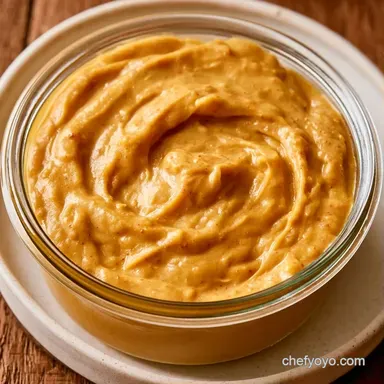
Traditional Dijon Mustard with Verjuice

- Time: 10 min active + 10 min cooking + 24 hours curing
- Flavor & Texture: Bold, sharp, and velvety
- Perfect for: Charcuterie boards, sandwiches, and bold dressings
Homemade Dijon Mustard with a Bold Punch
The scent of simmering verjuice and vinegar fills the kitchen, cutting through the air with a bright, acidic zing. It is a sharp contrast to the earthy, warm smell of mustard seeds. Once blended, it transforms into a thick, pungent spread that packs a serious wallop.
You can expect a condiment that tastes cleaner and more vibrant than anything from a store. It is not just about heat, but about that specific French-style tang that makes a sandwich pop.
This classic Dijon mustard takes a bit of patience. While the blending is quick, the real magic happens during the wait.
Why You'll Love This
Warm Acid: Simmering the verjuice and vinegar takes the raw, biting edge off the acidity. Seed Balance: Mixing brown and yellow seeds creates a complex heat that hits different parts of the palate.
| Method | Texture | Prep Effort | Best For |
|---|---|---|---|
| High-Speed Blender | Ultra-smooth | Low | Classic spreads |
| Food Processor | Slightly grainy | Low | Rustic feel |
Ingredient Deep Dive
| Ingredient | What It Does | Best Swap |
|---|---|---|
| Verjuice | Adds fruity acidity | White grape juice with lemon |
| Mustard Seeds | Provides the heat | Use only brown seeds for more punch |
| Garlic Powder | Adds savory depth | 4 small cloves of fresh garlic, minced and added to the saucepan in step 1 |
For the Flavor Base
The combination of verjuice and white wine vinegar provides a double layer of acidity. One is fruity, the other is sharp.
For the Texture
Brown and yellow seeds are used together to ensure the result is thick and glossy.
Ingredients & Substitutes
- 1/2 cup verjuice Why this? Gives a fruity, complex tartness
- 1/4 cup white wine vinegar Why this? Provides the sharp, classic punch
- 1 tsp sea salt
- 1/2 tsp garlic powder
- 1/4 cup brown mustard seeds
- 1/4 cup yellow mustard seeds
- 2 tbsp water
Bringing It Together
1. Infusing the Base
In a small saucepan, combine 1/2 cup verjuice, 1/4 cup white wine vinegar, 1 tsp sea salt, and 1/2 tsp garlic powder. Heat the liquid over medium for 10 minutes until it reduces slightly and the aroma softens. Remove from heat and allow it to cool for a few minutes.

2. Creating the Emulsion
Place 1/4 cup brown mustard seeds and 1/4 cup yellow mustard seeds in a food processor or high-speed blender. Pour the warm liquid base over the seeds.
Pulse a few times to break the seeds, then blend on high until the texture is smooth. If the blades struggle to rotate, add up to 2 tbsp water, one tablespoon at a time, until it moves freely.

3. The Curing Phase
Pour the blended mustard into a sterilized airtight glass jar and seal tightly. Leave the jar at room temperature for 24 to 48 hours to let the flavors stabilize and the bitterness fade. Finally, move the jar into the refrigerator.

When It Does Not Turn Out
If it tastes too harsh, don't panic. The enzymes in the seeds need time to settle. If you taste it immediately after blending, it will likely be too bitter.
When your Dijon Mustard tastes too sharp
Give it another 24 hours. If it still bites too hard, whisk in a tiny pinch of sugar or honey. This neutralizes the acid without ruining the punch.
Correcting a thick texture
If the mustard is too thick to spread, whisk in a teaspoon of warm water. Do this slowly so you don't thin it out too much.
| Problem | Root Cause | Solution |
|---|---|---|
| Too Bitter | Not enough curing time | Wait another 24 hours |
| Too Thick | Not enough liquid | Whisk in water 1 tsp at a time |
| Too Thin | Too much water added | Let it sit in fridge overnight |
Perfect Complements

This condiment shines when paired with bold flavors. I like it with a sharp cheddar or a platter of cured meats. It also works as an excellent base for honey mustard if you want something sweeter.
Plating Levels
| Level | Style | Tweak |
|---|---|---|
| Simple | Small ceramic bowl | Serve with a wooden spreader |
| Polished | Mini ramekin | Garnish with a single peppercorn |
| Restaurant | Sauce swoosh | Dot with micro-greens and sea salt |
Storing Your Mustard
Transfer the jar to the refrigerator after the curing period. Because this easy Dijon mustard recipe uses a high acid content from the verjuice and vinegar, it stays fresh and potent for up to 6 months.
Always use a clean spoon. This prevents cross-contamination and keeps the mustard from spoiling.
Make It Your Own
Wholegrain Style
To get a rustic, grainy texture, pulse the seeds only a few times. Do not blend on high. This creates a traditional Dijon mustard that is great on roast beef.
Honey-Gold
Whisk in a tablespoon of honey after the curing process. This balances the heat and makes it a great dip for pretzels or chicken tenders.
Extra Heat
Increase the ratio of brown seeds to yellow seeds. Brown seeds carry a more aggressive, pungent heat that lingers longer.
Before You Start Cooking
How does Dijon mustard differ from regular mustard?
It features a sharper, more pungent taste than standard yellow mustard. This is achieved through the specific blend of brown and yellow seeds combined with a high-acid base.
What makes up this mustard?
This recipe uses brown and yellow mustard seeds combined with verjuice and white wine vinegar. Sea salt and garlic powder are added to enhance the savory profile.
Can I use a substitute for Dijon mustard?
Yellow or spicy brown mustard are the closest options. They provide a similar heat, although the overall flavor profile varies slightly.
Which step fixes a thick mixture?
Gradually pour in water by the tablespoon until the blender blades move easily. This is necessary if the seeds have soaked up too much of the liquid base.
Where should I store the finished jar?
Keep the jar in the refrigerator after the initial curing period. It stays fresh and potent for up to 6 months.
How do I use this in other recipes?
Whisk it into salad dressings or use it as a spread for sandwiches. If you enjoy the tangy flavor profile, try the similar acidity in our vegan cheese sauce.
Does the curing process matter?
Yes, letting the mustard sit at room temperature for 24 to 48 hours is essential. This period allows the flavors to cure and the bitterness to mellow.
Why add garlic powder to the base?
It provides a subtle savory depth that complements the sharp mustard seeds. This helps balance the overall acidity of the verjuice and white wine vinegar.
Traditional Dijon Mustard