Creamy Carbonara: the Roman Secret for Silky Smooth Pasta (No Cream)
- The Authentic Roman Secret: Achieving Silky Creamy Carbonara
- The Science of Silk: Why This Traditional Carbonara Recipe Works
- Essential Ingredients for the Perfect Creamy Carbonara
- Preparing the Roman Masterpiece: Step-by-Step Method
- Troubleshooting Your Creamy Carbonara: Expert Tips and Common Mistakes
- Practical Guide: Storage, Reheating, and Handling Carbonara Leftovers
- Recipe FAQs: Creamy Carbonara
- 📝 Recipe Card
The Authentic Roman Secret: Achieving Silky Creamy Carbonara
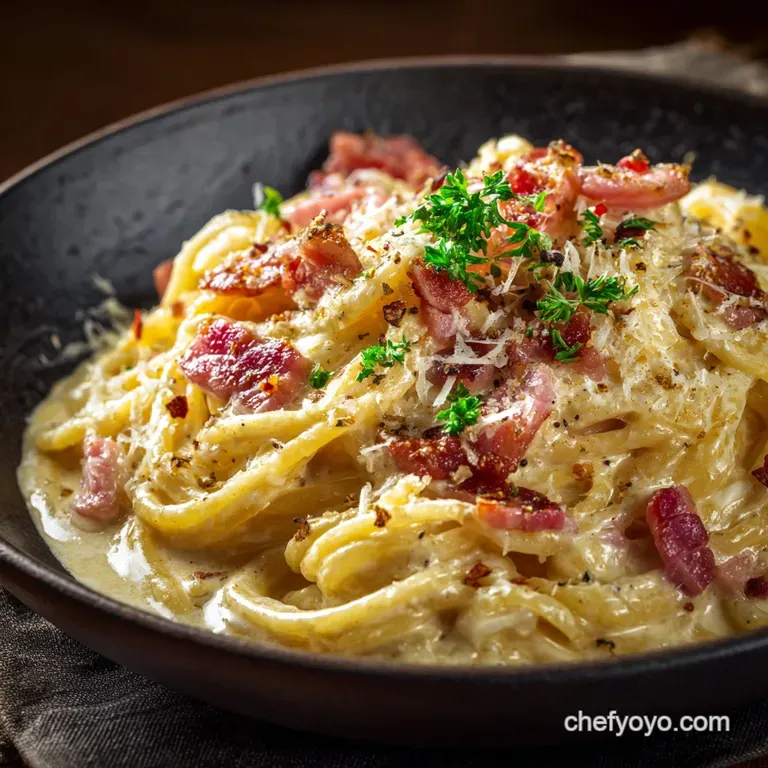
Seriously, forget what you think you know about creamy pasta. When you finally nail a proper, traditional Pasta Carbonara Recipe , it hits differently. The aroma of salty, rendered pork fat blending with sharp Pecorino and that incredible, glossy, golden sauce coating every strand of spaghetti is pure magic.
It's truly a sensory experience that defines simplicity.
This dish is my weeknight lifesaver, genuinely. It requires maybe five ingredients and takes less than 30 minutes from zero to plate, which is perfect when you are absolutely starving but want something seriously impressive.
Plus, relying on eggs and cheese instead of heavy cream makes this ultra rich dinner surprisingly economical, which we all appreciate right now.
I spent years messing this up, ending up with gloopy sauce or, worse, bits of scrambled egg stuck to my spaghetti. Trust me, I made all the rookie mistakes, so I figured out exactly how to bypass the drama.
We are going to dive into the real secrets of a Silky Smooth Carbonara —no cream, no compromise, just pure Roman deliciousness.
The Science of Silk: Why This Traditional Carbonara Recipe Works
The magic of authentic Creamy Carbonara isn't magic at all; it’s chemistry. Unlike béchamel or dairy based sauces (like my beloved Penne alla Vodka: The Velvet Hammer Creamy Sauce Recipe ), Carbonara relies on creating a stable emulsion. That fancy word just means we are binding fat (from the Guanciale) and liquid (the starchy water) using the lecithin found in egg yolks as our stabilizer.
Defining True Carbonara: Ingredients and Philosophy
A proper Carbonara is the culinary equivalent of an acoustic set: raw, powerful, and utterly stripped down. You only need five things: Guanciale, Pecorino Romano, eggs, pepper, and pasta. If anyone tries to slip in cream, garlic, or parsley, they are making a different and frankly, inferior dish.
This minimalism demands the highest quality ingredients possible.
The History of Carbonara: From WWII to Today
The dish we know and love today is actually pretty modern, dating back to the Allied liberation of Rome during WWII. Legend says the Romans, who had pasta, combined their food with the American soldiers' rations of bacon and dried eggs.
The resulting recipe was a high calorie, intensely satisfying meal that perfectly married Italian ingenuity with wartime necessity.
Why Traditional Carbonara Doesn't Need Cream
Adding cream completely destroys the texture and mutes the sharp flavour of the Pecorino. If you add cream, you are making a creamy sauce with eggs, not an egg-based emulsion. We are aiming for a luxurious, clingy gloss that comes only from emulsified fat and yolk.
Stop putting cream in your Carbonara!
The Role of Guanciale Fat in the Emulsion
Guanciale (cured pork jowl) fat is the foundation of the flavour and the sauce structure. Unlike bacon grease, guanciale fat is clean, deeply savoury, and renders out beautifully. This rendered fat coats the pasta, which is essential for binding the egg yolk mixture and creating that stable, velvety finish.
Temperature Control: Preventing Scrambled Eggs
This is where 90% of people fail, myself included, that one time I rushed it. The egg mixture must be heated gently tempered by the residual heat of the pasta and the reserved cooking water.
If the pan or the pasta is too hot, the proteins in the egg tighten up instantly, giving you clumps of yellow scramble instead of liquid gold.
The Magic of Pecorino Romano and Starch Water
Pecorino Romano is non-negotiable for that salty, tangy punch. The starch water is the true unsung hero. When you boil pasta, starch leaches into the water. This starch, combined with the hot water, is sticky and highly effective at stabilizing the fat and egg emulsion, giving you that beautiful, thick sauce that clings perfectly.
Essential Ingredients for the Perfect Creamy Carbonara
Sourcing Guanciale (And the Best Alternatives)
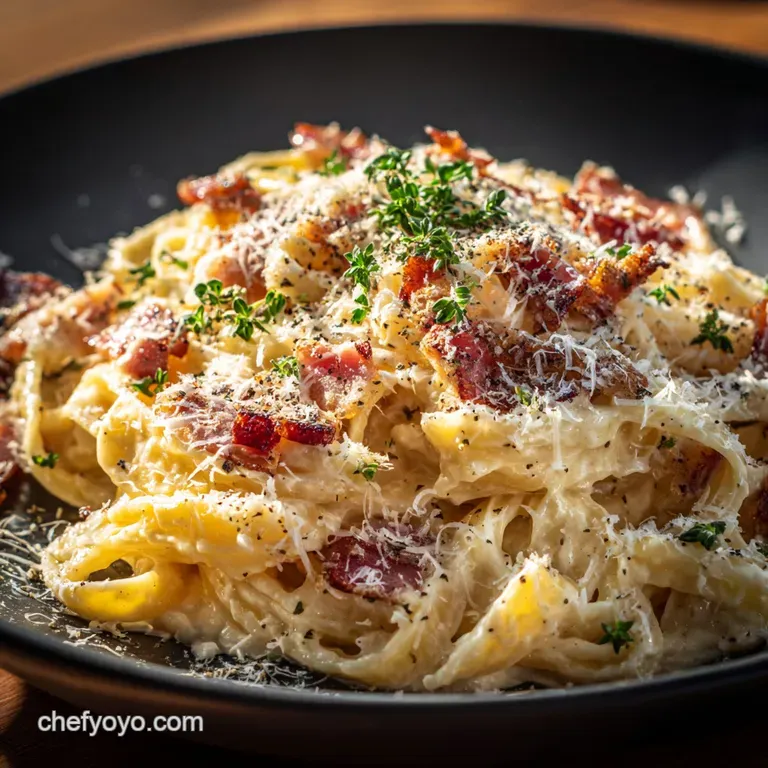
Guanciale, cured pork jowl, is the traditional meat. It has a high fat-to-meat ratio and an incredible, complex flavour thanks to the specific curing process.
| Ingredient | Why it's Best | Viable Substitute |
|---|---|---|
| Guanciale | Clean fat, rich flavour profile | high-quality, cubed Pancetta (unsmoked). |
| Pecorino Romano | Sharp, salty, robust flavour | Parmigiano Reggiano (Use slightly less, as it's milder.) |
| Spaghetti | Traditional texture, high surface area | Bucatini (hollow interior holds sauce) or Rigatoni. |
If you absolutely cannot find Guanciale, use pancetta, but dice it small and ensure it’s not smoked. If you use regular bacon, make sure it’s high-quality and render out all the smoky fat, replacing some with olive oil if necessary, because that smoky flavour takes over everything.
Egg Ratios: Mastering the Yolk Heavy Mixture
We use a yolk heavy mixture (3 yolks to 1 whole egg) for maximum richness and colour. The yolk provides most of the fat and emulsifiers (lecithin), ensuring that Silky Smooth Carbonara finish.
The one whole egg adds just enough albumen (white) to give the sauce structure so it doesn’t break too easily.
The Cheese Debate: Pecorino Romano vs. Parmesan (And Why It Matters)
While Parmigiano Reggiano is delicious, Pecorino Romano is the right choice here. It’s sheep's milk cheese, which is saltier, tangier, and sharper. This intense flavour is necessary to stand up to the richness of the Guanciale and egg yolks.
Always grate your cheese fresh , pre-grated cheese often contains anti caking agents that make the sauce chalky.
Choosing the Right Pasta Shape (Spaghetti vs. Rigatoni)
Spaghetti is the classic choice; its strands allow the sauce to coat everything beautifully. However, I’m obsessed with using Bucatini it’s like thick spaghetti with a hole running through the middle. That hollow centre acts like a tiny straw, scooping up all that beautiful sauce.
If you prefer a tube, Rigatoni works really well too.
Preparing the Roman Masterpiece: step-by-step Method
This entire operation needs to move quickly once the pasta is cooked. Think of it like a beautiful, flavourful race.
Stage 1: Prep and Render the Guanciale
- Prep the Sauce Base: In a medium bowl, whisk together the 3 egg yolks, 1 whole egg, 3 oz of the grated Pecorino Romano, and a generous amount of coarsely cracked black pepper. Whisk hard until it looks like a thick, pale yellow paste. Set this aside.
- Render the Fat: Dice your Guanciale into small cubes (about the size of a dice). Place them in a cold, heavy bottomed skillet and turn the heat to low . You want to melt the fat slowly, not fry the pork. This takes 10– 15 minutes until the cubes are golden brown and crisp ( ciccioli ).
- Reserve: Scoop out the crisp Guanciale pieces onto a paper towel. Turn the heat OFF under the pan but leave the rendered fat (liquid gold) inside.
Stage 2: Cook the Pasta
- Boil: Cook the pasta in aggressively salted water (it should taste like the sea) until it is about 1 minute shy of al dente. This brief undercooking ensures it finishes perfectly in the sauce.
- Reserve Water: Crucially, scoop out at least 1 cup of the starchy water and keep it nearby.
- Drain: Drain the pasta quickly, but do not shake all the water off. A little residual moisture is a good thing for this step.
Stage 3: The Critical Emulsification Phase
- Coat the Pasta: Immediately dump the hot pasta into the skillet with the Guanciale fat. Toss it for about 30 seconds to coat the noodles and bring down the temperature slightly. The pan must be completely OFF the heat now.
- Introduce the Eggs: Pour the egg-cheese mixture (the uova crema ) over the pasta. Working extremely quickly with tongs, stir and toss the pasta, keeping it moving continuously.
- Achieve Creaminess: Splash in one ladleful of the reserved hot pasta water. As you toss, the sauce should immediately thicken and turn glossy. If it still looks like thick paste, add half a ladle more water and keep tossing. The motion and the added water prevent the eggs from setting up into scrambled pieces.
Chef's Note: If your pasta is smoking hot, the eggs will scramble. If your pasta is too cool, the cheese won't melt. The sweet spot is tossing the pasta off the heat, allowing the temperature to fall between 150°F and 175°F (65°C 80°C) before adding the egg mixture.
Stage 4: Finishing and Immediate Serving
- Final Adjustments: Stir in the reserved crispy Guanciale. Taste and adjust with more cracked pepper. If the sauce is perfect, serve immediately into warm bowls.
- Garnish: Serve with a final dusting of the remaining Pecorino Romano. This Traditional Carbonara Recipe waits for no one, so get it on the table fast!
Troubleshooting Your Creamy Carbonara: Expert Tips and Common Mistakes
Rendering the Guanciale to Golden Perfection
People rush this step, thinking they need high heat. Incorrect! High heat burns the outside of the Guanciale before the fat inside has a chance to melt out. Start low and slow ; patience here results in clean, beautiful fat and perfectly crispy pieces.
Preparing the Egg and Cheese Base (The 'Uova Crema')
Make sure you whisk the egg mixture thoroughly before adding it to the pasta. It should be totally smooth. Lumps of dry cheese won't melt properly, leading to a gritty sauce texture later on.
The Critical Emulsification Phase
The key failure point is stillness. You must continuously toss the pasta while adding the egg mixture and the starchy water. The movement distributes the heat evenly and prevents hot spots from seizing the eggs. I recommend using tongs and moving the pasta almost like you’re whipping it in the pan.
How to Fix a Carbonara That Broke (The Egg Curdled)
If you see little chunks of cooked egg, your temperature was too high don't panic, it happens! Immediately toss the pasta back into the mixing bowl and stir in a tiny splash of cold water.
If that fails, try whisking another fresh yolk with a teaspoon of pasta water in a separate bowl, then quickly toss that mixture into the pasta to try and re-emulsify the sauce.
Achieving the Right Consistency (Not Too Dry, Not Too Runny)
A common mistake is adding too much liquid, resulting in soup. Start with just one ladle of pasta water. If the sauce feels sticky and thick, add another half ladle until it’s glossy and coats the back of a spoon.
If you accidentally added too much water, you can quickly toss in a bit more grated Pecorino, which will absorb some liquid and help thicken the sauce.
Practical Guide: Storage, Reheating, and Handling Carbonara Leftovers
Best Practices for Refrigerating Leftovers
Carbonara tastes best fresh, but leftovers can be safely refrigerated. Place them in an airtight container immediately after cooling. It will keep well in the fridge for up to 3 days, though the sauce will naturally thicken considerably as the starch cools. This is a very rich dish, similar to our Fish Florentine: The Ultimate Creamy Baked Cod Recipe in terms of decadence.
Warning: Why Authentic Carbonara Does Not Freeze Well
Do not freeze Carbonara. Since the sauce relies entirely on an egg and fat emulsion (with no stabilizing cream), freezing and thawing will cause the sauce to separate completely. It turns into an unpleasant, watery, greasy mess. Trust me, it’s not worth the freezer space.
Reheating Carbonara Without Losing the Creamy Texture
Reheating is tricky, but doable. Place the pasta in a large pan over the lowest heat possible. Add a teaspoon of water and, critically, a tiny splash of milk or broth. Stir constantly until the starch starts to loosen up and the pasta warms through. Never use the microwave; it will guarantee scrambled eggs.
Recommended Wine Pairings (Italian Reds and Whites)
Because Carbonara is so rich and salty, you need a wine with high acidity to cut through the fat. A crisp, dry white like Frascati or Vernaccia di San Gimignano is ideal.
If you prefer red, stick to something lighter, earthy, and highly acidic like a young Chianti Classico —nothing too big or tannic.
Simple Side Dishes That Complement the Richness
Keep the sides light and simple, since the pasta is the star. A simple salad dressed with olive oil and lemon juice is perfect. We love making a peppery arugula salad. If you wanted a rich starter, you could serve a small wedge of my Crustless Quiche Recipe Easy: Creamy Spinach, Mushroom, and Gruyère beforehand, but honestly, this dish is satisfying enough on its own!
Recipe FAQs: Creamy Carbonara
Why did my egg mixture scramble or turn into grainy clumps?
This is the most common pitfall and occurs because the egg mixture was added while the pan was still over direct heat or was too hot. You must remove the pan from the heat entirely and allow the pasta to cool for 30 60 seconds before tossing, using the reserved starchy water to control the temperature and create the perfect emulsion.
Can I substitute pancetta or bacon for Guanciale?
Guanciale (cured pork cheek) is traditional and provides a higher fat content and specific flavor profile that is essential for authentic Carbonara. While pancetta is an acceptable substitute in a pinch, avoid using standard smoked bacon as the smoky flavor and lean texture will fundamentally alter the dish.
My Carbonara turned out too dry and clumpy, what went wrong?
A dry result means you did not use enough of the starchy pasta water to create the creamy emulsion. The starch in the water is critical for binding the cheese and egg mixture into a velvety sauce. Always add reserved pasta water one tablespoon at a time until the desired silky consistency is achieved.
What is the best way to store and reheat leftover Carbonara?
Unfortunately, Carbonara does not store or reheat well because the egg-based sauce solidifies and separates upon cooling. If you have leftovers, refrigerate them for no more than one day and reheat them gently in a double boiler (bain marie) or a skillet with a splash of hot water, stirring constantly.
Can I use whole eggs instead of just yolks for the sauce?
Traditional Carbonara relies heavily on egg yolks for its rich flavor and emulsifying power. Using too many whole eggs, which contain more water in the whites, makes the sauce thinner and significantly increases the risk of the eggs scrambling into thin ribbons when hitting the hot pasta.
Is it safe to eat the eggs since they aren't fully cooked?
Because the eggs are only tempered by the hot pasta and not brought to a full cooking temperature, they are technically not fully pasteurized. Always use the freshest, highest quality pasteurized eggs available for this recipe to mitigate any health risk.
Can I substitute Parmigiano Reggiano for Pecorino Romano?
Pecorino Romano is the traditional choice, lending a sharper, saltier bite essential for balancing the Guanciale. While you can substitute quality Parmigiano Reggiano, be aware that the flavor will be milder and less pungent, so you may need to adjust the amount of salt and pepper accordingly.
Traditional Silky Creamy Carbonara
Ingredients:
Instructions:
Nutrition Facts:
| Calories | 954 kcal |
|---|---|
| Protein | 32.1 g |
| Fat | 50.8 g |
| Carbs | 87.3 g |
