The Perfect Velvety Thumbprint Cookie Recipe
- Effort/Time: 35 minutes total (Easy-to-follow)
- Flavor Hook: Rich, buttery shatter with a tart, concentrated fruit finish.
- Perfect for: Holiday exchanges, afternoon tea, or grab-and-go treats.
- The Ultimate Thumbprint Cookie Recipe: Easy, Buttery, and Customizable
- Why This Works: The Science of a Perfect Shortbread Base
- Essential Ingredients and Smart Substitutions
- Step-by-Step Guide to This Easy Thumbprint Cookie Recipe
- Expert Tips to Avoid Cracking and Other Common Mistakes
- Common Myths
- Storage and Freezing Instructions for Freshness
- Serving Suggestions for Holidays and Tea Time
- Recipe FAQs
- 📝 Recipe Card
The Ultimate Thumbprint Cookie Recipe: Easy, Buttery, and Customizable
The Heartbreak of the Crumbling Cookie
Ever pulled a tray from the oven only to find your thumbprint cookie recipe looking like a dried out lakebed? I’ve been there staring at deep cracks and jam that leaked everywhere because the dough was too dusty.
It’s frustrating when a simple cookie feels like a chemistry experiment gone wrong.
I used to think more flour meant a sturdier cookie, but I ended up with "shortbread" that tasted like sweetened cardboard. After failing through three holiday seasons, I finally learned that the secret isn't more flour; it's the moisture binding power of a single egg yolk and the temperature of your butter.
Today, we’re fixing that. We’re using a scientific approach to ensure your cookies have a velvety interior and a crisp, shattering edge.
This thumbprint cookie recipe relies on precise ratios to give you that iconic "melt-in-your mouth" sensation every single time. Let's crack on.
Why This Works: The Science of a Perfect Shortbread Base
- Fat Saturation: High butter content coats the King Arthur All-Purpose Flour proteins, which physically prevents long gluten strands from forming. This creates the "short" in shortbread, resulting in a tender, crumbly texture rather than a chewy one.
- Emulsification: The phospholipids in the room temperature egg yolk act as a bridge between the fats and the small amount of water in the butter. This creates a cohesive dough that stretches slightly instead of snapping, preventing those dreaded deep cracks during the thumb press stage.
Achieving a Melt-in-Your Mouth Texture
The goal of this thumbprint cookie recipe is a texture that dissolves upon contact. We achieve this by avoiding over aeration. Unlike a cake, we only cream the Land O'Lakes Unsalted Butter and sugar until combined, not until fluffy.
This keeps the density high and the air pockets small, ensuring the cookie doesn't puff and lose its "well" shape.
The Balance of Salt and Sweetness
Sugar isn't just for flavor; it's a tenderizer. As it dissolves, it interferes with the flour's ability to absorb water, further limiting gluten. We balance this with Diamond Crystal Kosher Salt to sharpen the buttery notes.
This contrast is vital because it prevents the thumbprint cookie recipe easy version from tasting one-dimensionally sweet.
A Versatile Dough for Any Filling
This dough is a neutral, buttery canvas. Because we use a low-moisture base, the jam doesn't sink or make the cookie soggy. This makes it the ideal thumbprint cookie recipe with jam, but it’s also sturdy enough to hold heavy ganache or caramel after baking.
Essential Ingredients and Smart Substitutions
The Science Behind Land O'Lakes Unsalted Butter
- What It Does
- Provides the primary structure and flavor profile for the shortbread.
- The Chemistry
- Through the process of plasticization, the solid fats support the flour matrix before the heat of the oven causes protein denaturation.
- Why This Matters
- Using unsalted butter allows you to control the exact sodium levels, ensuring the salt enhances the butter's richness rather than overpowering the delicate fruit jam.
The Science Behind King Arthur All-Purpose Flour
- What It Does
- Forms the skeletal framework of the cookie.
- The Chemistry
- Starch gelatinization occurs at 144°F, where the flour granules absorb the melting butter's water content and swell to set the cookie's shape.
- Why This Matters
- The consistent 11.7% protein content in King Arthur flour provides enough strength to hold the "thumbprint" shape without becoming tough or rubbery.
The Science Behind Large Egg Yolks
- What It Does
- Adds richness, color, and serves as the primary binding agent.
- The Chemistry
- Lecithin in the yolk acts as a natural emulsifier, bonding the granulated sugar and fat into a smooth, homogenous dough.
- Why This Matters
- Using only the yolk (and omitting the white) prevents the steam driven leavening that makes cookies puffy, keeping this thumbprint cookie recipe sleek and dense.
| Original Ingredient | Substitute | Why It Works |
|---|---|---|
| 1 cup Unsalted Butter | 1 cup Vegan Butter Sticks | High fat content (80%+) mimics the melt point. Note: May slightly increase spreading. |
| 2.25 cups AP Flour | 2.25 cups Cup4Cup gluten-free | Xantham gum provides the necessary elasticity usually found in gluten. |
| 0.33 cup Fruit Preserves | 0.33 cup Lemon Curd | High pectin or acidity sets the center during the cooling phase. |
| 0.5 cup Granulated Sugar | 0.5 cup Coconut Sugar | Lower glycemic index but adds a deep, caramel like color and nuttier flavor. |
step-by-step Guide to This Easy Thumbprint Cookie Recipe
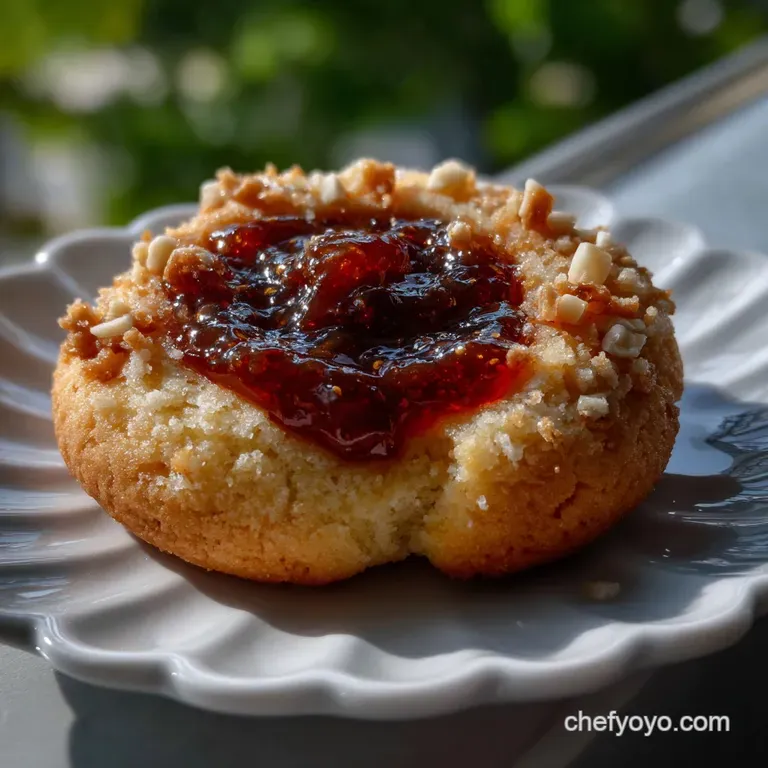
- Cream the Land O'Lakes Unsalted Butter (1 cup) and sugar (0.5 cup).Note: Stop as soon as the mixture is pale; over beating incorporates too much nitrogen, causing the cookies to collapse.
- Mix in the large egg yolk and 1 tsp Nielsen Massey Pure Vanilla Extract.Note: Room temperature ingredients are mandatory to maintain the emulsion and prevent the fats from curdling.
- Sift together 2.25 cups King Arthur Flour and 0.25 tsp Diamond Crystal Kosher Salt.Note: Sifting aerates the flour, ensuring no "flour pockets" remain in the final cookie recipe.
- Gradually add the dry ingredients to the butter mixture.Note: Mixing on low speed prevents the mechanical shearing of gluten, keeping the texture "short" and velvety.
- Roll the dough into 1 inch spheres (about 24 servings).Note: Friction from your palms warms the outer layer of fat, creating a smooth surface that resists surface level cracking.
- Press your thumb (or the back of a measuring spoon) into the center.Note: If the edges crack, the dough is too cold; let it sit for 5 minutes to reach 68°F.
- Fill the wells with 0.33 cup Smucker’s Seedless Red Raspberry Jam.Note: Pectin in the jam reacts with the heat to create a glossy, stable "jewel" center.
- Bake at 350°F on a Nordic Ware Aluminum Baking Sheet for 15 minutes. Note: Light colored aluminum reflects heat evenly, preventing the bottoms from burning before the centers set.
Expert Tips to Avoid Cracking and Other Common Mistakes
How to Fix Dry or Crumbly Dough
If your dough feels like wet sand, you likely over measured the flour. You can save this by adding 1 teaspoon of milk at a time. This adds just enough moisture to hydrate the starch without over developing the gluten. If you’re making a larger meal, this buttery dough actually pairs beautifully after a savory Chicken and Noodles Recipe: Velvety Sauce in 45 Mins to balance the salt.
The Secret to a Perfectly Round Cookie
For professional looking results, use a small cookie scoop to ensure every ball is exactly the same mass. After rolling, if the dough feels soft, chill the spheres on your Silpat Silicone Mat for 10 minutes before pressing.
This "cold core" technique ensures the edges stay upright during the baking process.
| Problem | Why It Happens | The Fix | Pro Protocol |
|---|---|---|---|
| Jam Boils Over | Too much moisture in jam | Use preserves or "jam" only | Simmer jam for 2 mins to reduce water before filling |
| Cookies are Hard | Over mixing the dough | Stop mixing once white streaks vanish | Use the "pulse" setting on your KitchenAid Stand Mixer |
| Bottoms are Burnt | Dark baking sheets | Switch to light colored aluminum | Use a laser thermometer to verify oven temp is exactly 350°F |
Common Myths
Myth: You must chill the dough for hours before baking. Truth: This specific ratio of 1 cup butter to 2.25 cups flour is stable enough to bake immediately. Chilling is only necessary if your kitchen is above 75°F.
Myth: Fresh fruit is better than jam for the center. Truth: Fresh fruit releases too much steam, which will create a soggy bottom in your thumbprint cookie recipe with jam. Preserves have the water already cooked out.
Storage and Freezing Instructions for Freshness
- Room Temperature: Store in an airtight Rubbermaid container for up to 5 days. Place parchment paper between layers to prevent the jam from sticking to the bottoms of the cookies above.
- Freezing Unbaked Dough: You can freeze the rolled spheres (without jam) for up to 3 months. When ready to bake, add 2 minutes to the bake time. Do not thaw before baking; this prevents the cookies from spreading too thin.
- Freezing Baked Cookies: These freeze surprisingly well. Wrap the container in a double layer of plastic wrap to prevent "freezer smell" from penetrating the butter rich dough.
Creating a Decadent Chocolate Ganache Filling
If you want a thumbprint cookie recipe chocolate variation, bake the cookies without the jam. Once they are cool, fill the wells with a 1:1 ratio of melted dark chocolate and heavy cream. This creates a "truffle style" cookie that feels much more expensive than it is. These are great to serve alongside a savory appetizer like Bang Bang Sauce: Copycat Bonefish Recipe for a party spread.
Serving Suggestions for Holidays and Tea Time
Best Beverage Pairings for Shortbread Treats
Because these cookies are high in fat, they pair exceptionally well with astringent drinks. A sharp Earl Grey tea or a dark roast coffee cuts through the butter, cleansing the palate between bites. If you're serving these at a brunch, they act as a fantastic sweet follow-up to a savory dish topped with Country Gravy Recipe: Peppery & Lumpy Free Sauce.
Variations for the Modern Baker
- Thumbprint cookie recipe with icing: Whisk 1 cup powdered sugar with 1 tbsp milk and drizzle over the cooled cookies for a bakery style finish.
- Thumbprint cookie recipe with Hershey Kisses: Press the chocolate into the center immediately after the cookies come out of the oven. The residual heat will soften the chocolate just enough to stick without melting it into a puddle.
- Thumbprint cookie recipe with cream cheese: Mix 4oz softened Philadelphia Cream Cheese with 2 tbsp sugar for a "cheesecake" style center.
Whether you're making this thumbprint cookie recipe for a cookie swap or just a Tuesday night craving, the key is the quality of your butter and the gentleness of your touch.
Remember: treat the dough with respect, don't over mix, and your reward will be a tray of cookies that shatter with buttery perfection. This is the only thumbprint cookie recipe you'll ever need.
Recipe FAQs
Can I substitute brown sugar for granulated sugar?
No, use granulated sugar only. Brown sugar introduces moisture due to the molasses content, resulting in a chewier, cake like texture rather than the intended shortbread shatter.
What is the ideal temperature for baking thumbprints?
350°F (175°C) is standard. This moderate temperature allows the high fat shortbread to bake through without the edges burning before the center sets, maintaining the delicate crumb structure.
My cookies are spreading too much and losing their well shape. What went wrong?
Butter was too warm when mixed. Creaming the butter too aggressively incorporates excess air, weakening the dough structure which collapses during oven spring, similar to issues when emulsifying unstable sauces like our Béarnaise Sauce Recipe: Master The Classic Steakhouse Emulsion.
- Chill dough immediately for 30 minutes
- Use room temperature, but still firm, butter
- Avoid over mixing flour after addition
Is chilling the dough before baking necessary?
Yes, chilling is crucial for shape retention. Chilling solidifies the high butter content, providing structural integrity necessary to support the indentation against oven heat, ensuring a crisp edge.
What is the best type of jam to use for minimal leaking?
Thick, high pectin preserves work best. Runny, low-sugar jams contain more water, which steams and causes the well to deflate or leak over the sides during baking.
Can I use margarine instead of butter?
Unsalted butter provides superior flavor and texture. Margarine often contains higher water content and stabilizing emulsifiers, resulting in a flatter cookie lacking the rich mouthfeel found in a pure Butter Cookie Recipe: The Best Homemade Crumbly Biscuits.
Myth: Adding an egg yolk improves the cookie's binding and tenderness.
Myth: Adding an egg yolk improves the cookie's binding and tenderness. Reality: Egg yolks add moisture and lecithin, promoting spreading and a cake like crumb, which contradicts the goal of a delicate, shortbread shatter.
Velvety Thumbprint Cookie Recipe
Ingredients:
Instructions:
Nutrition Facts:
| Calories | 140 kcal |
|---|---|
| Protein | 1.4 g |
| Fat | 8.0 g |
| Carbs | 16.0 g |
| Fiber | 0.3 g |
| Sugar | 7.0 g |
| Sodium | 26 mg |
