Twice Baked Potatoes | Cloud-Like Filling
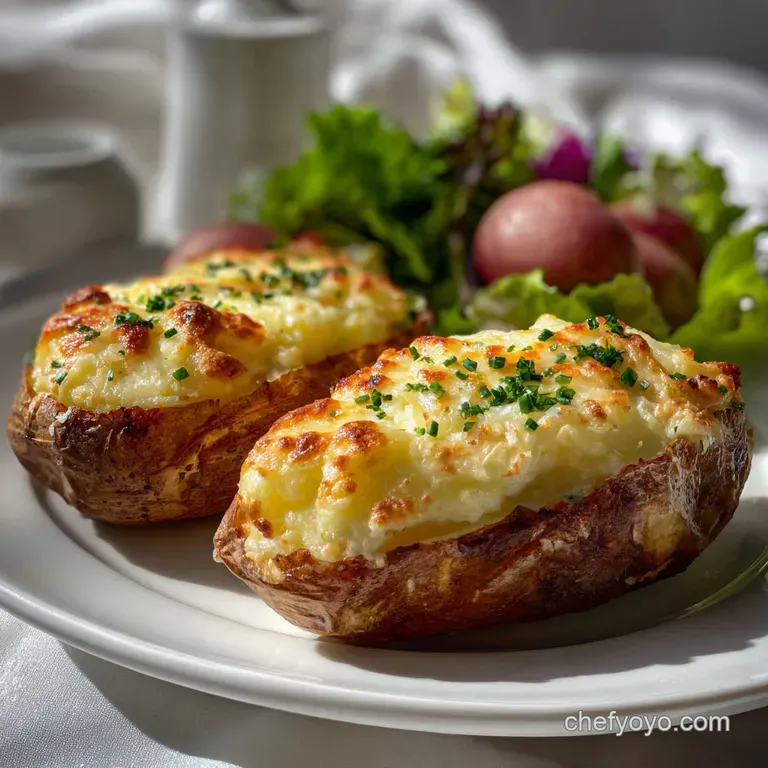
- Effort/Time: 1 hour 35 mins of focused thermal management.
- Flavor Hook: Sharp cheddar and crispy bacon folded into a cloud-like, cream-cheese-fortified mash.
- Perfect for: High-stakes dinner parties or make-ahead meal prep.
- The Architecture of Comfort: Master the Ultimate Twice Baked Potatoes
- The Science of Why This Technique Succeeds
- Critical Metrics: Yield, Timing, and Macro-Nutrient Density
- The Alchemy of Umami: Selecting Your Elements
- Precision Tools for Technical Potato Engineering
- The Execution Protocol: From Raw Tuber to Golden Crust
- Solving the Structural Failures of Stuffed Jacket Potatoes
- Flavor Evolution: Creative Adapting and Substitutions
- ⚗️ The Scaling Lab: The Physics of Quantity
- Preserving Integrity: Storage and Thermal Recovery
- The Art of the Side: Pairings and Presentation
- Recipe FAQs
- 📝 Recipe Card
The Architecture of Comfort: Master the Ultimate Twice Baked Potatoes
There is nothing quite like the sensory betrayal of biting into a stuffed potato only to find a waterlogged, grey interior and a skin that feels like damp cardboard. I once spent two hours prepping what I thought was the ultimate side dish for a celebratory steak dinner, only to realize I’d trapped the moisture inside the foil, steaming the skin into a mushy disaster.
The financial cost of those premium ingredients was one thing, but the emotional blow of serving a textureless side to guests was the real price.
I’ve ruined my fair share of tubers by rushing the cooling process or over working the mash into a gluey paste. Early in my cooking journey, I treated potatoes like a simple commodity rather than a complex starch and water matrix.
I’d throw cold butter into hot mash and wonder why the texture felt greasy rather than velvety. It took dozens of iterations to realize that the "twice" in twice baked potatoes isn't just about heat it's about manipulating starch structures twice to achieve two different goals.
The secret to a shattering crust and a fluffier than-air filling lies in osmotic dehydration and starch gelatinization. Rubbing the skin with Diamond Crystal Kosher Salt draws moisture out of the surface cells during the first bake, while the second bake allows the filling to undergo the Maillard reaction, developing those mahogany peaks.
When you master the physics of the potato shell, you’re not just making a side dish; you’re engineering a culinary experience that hits every textural note from "crack" to "melt."
The Science of Why This Technique Succeeds
- Osmotic Dehydration: Salt applied to the oil-coated skin pulls water molecules to the surface, where they evaporate, leaving behind a crisp, structural shell.
- Starch Retrogradation: Allowing the potato to cool slightly before scooping helps the starch granules slightly firm up, preventing the filling from becoming a gummy, cohesive mass when mashed.
- Fat Emulsification: Room temperature Philadelphia Cream Cheese and sour cream integrate into the hot potato cells more easily, creating a stable emulsion that mimics a rich mousse rather than a dense puree.
- Maillard Reaction: The second bake targets the exposed proteins in the cheese and milk, creating the complex flavor compounds that result in a savory, golden brown crust.
Critical Metrics: Yield, Timing, and Macro Nutrient Density
To execute twice baked potatoes with precision, you must respect the thermal timeline. Rushing the initial bake leads to under gelatinized starches in the center, which will never achieve the desired fluffiness regardless of how much butter you add.
| Metric | Value | Note |
|---|---|---|
| Recipe Yield | 8 servings | Based on 4 large potatoes halved |
| Prep Time | 20 minutes | Includes bacon prep and chive slicing |
| Cook Time | 1 hour 15 mins | 60 mins for first bake; 15 mins for second |
| Total Time | 1 hour 35 mins | Crucial for starch transformation |
| Calories | 448 kcal | Per serving |
| Fat Content | 32.5 g | Derived from full fat dairy and bacon |
The Alchemy of Umami: Selecting Your Elements
Choosing the right components for your twice baked potatoes is a matter of chemical compatibility. You need high starch potatoes (Russets) because their cells separate easily when cooked, unlike waxy red potatoes that stick together.
- 4 large Russet potatoes (approx. 250g each): Why this? High starch-to-water ratio ensures a light, mealy texture.
- 2 tbsp extra virgin olive oil: Used for heat conduction and skin crisping.
- 1 tbsp Diamond Crystal Kosher Salt: Why this? Flake size allows for even coverage and efficient moisture extraction.
- 1/2 cup Kerrygold Unsalted Butter (softened): Why this? High butterfat content creates a more luxurious mouthfeel.
- 4 oz Philadelphia Cream Cheese (room temperature): Provides structural stability to the filling.
- 1/2 cup Daisy Sour Cream: Adds necessary acidity to balance the heavy fats.
- 1/4 cup Whole Milk: Why this? Liquid phase needed to hydrate the starch without thinning it too much.
- 1 1/2 cups Tillamook Sharp Cheddar (divided): Aged cheddar has less moisture, preventing a greasy separation.
- 1/2 tsp Garlic Powder: For consistent flavor distribution without the moisture of fresh garlic.
- 0.5 tsp Black Pepper: Freshly cracked provides aromatic volatile oils.
- 6 slices thick cut bacon (cooked and crumbled): Provides the essential crunch and smoky saltiness.
- 3 tbsp Fresh Chives: Adds a bright, onion forward finish.
Ingredient Chemistry Breakdown
| Ingredient | Chemical/Physical Role (Science) | The Pro Secret (Why This Matters) |
|---|---|---|
| Russet Potato | Starch gelatinization at 150°F (66°C) | High amylose content ensures fluffiness rather than waxiness |
| Cream Cheese | Lactic acid and fat emulsification | Acts as a stabilizer to prevent the mash from "weeping" moisture |
| Kosher Salt | Osmotic pressure on the epidermis | Draws out surface water to create a rigid, edible potato "vessel" |
| Sharp Cheddar | Protein coagulation and Maillard browning | Aged cheese has more broken down proteins, enhancing the umami profile |
Precision Tools for Technical Potato Engineering
Using the right equipment ensures even heat distribution and prevents the potatoes from steaming in their own juices.
- Lodge Cast Iron Baking Sheet: Cast iron retains thermal mass, ensuring the bottom of the potato crisps as effectively as the top.
- KitchenAid Hand Mixer: While a ricer is great, a hand mixer on low speed helps aerate the cream cheese into the potatoes without overworking the gluten like starches.
- Global G-2 Chef's Knife: Essential for clean, sharp cuts through the potato skins without crushing the delicate internal structure.
- Oxo Good Grips Small Scoop: Ensures each twice baked potatoes serving is portioned identically for even second stage cooking.
The Execution Protocol: From Raw Tuber to Golden Crust
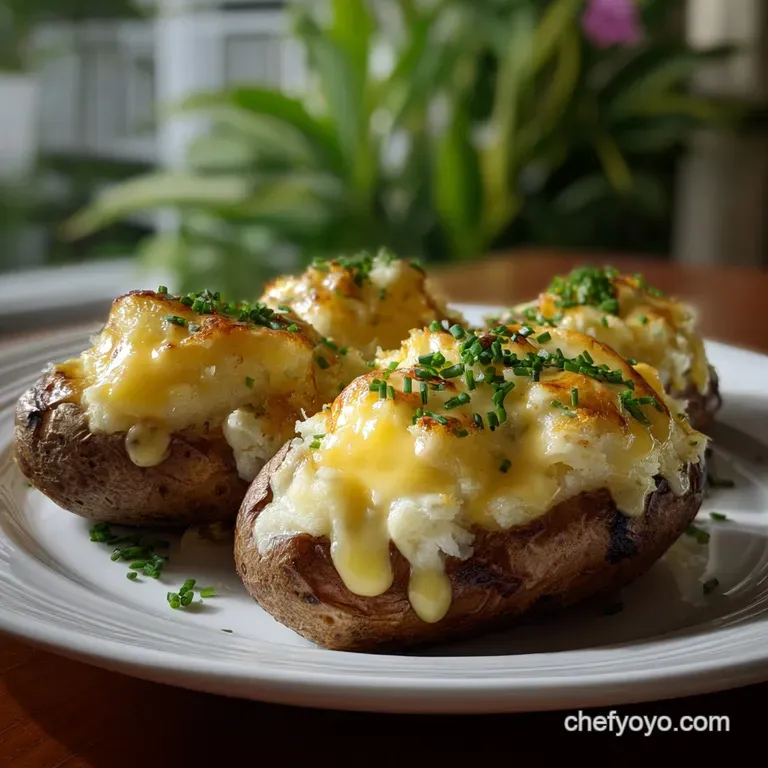
- Preheat oven to 400°F (200°C) until the internal thermometer stabilizes.
- Scrub 4 large Russet potatoes under cold water and pat dry until bone dry. Note: Moisture on the skin prevents oil adhesion.
- Pierce each potato 6 times with a fork until you hear the faint 'pop' of the skin. Note: Prevents internal steam pressure from exploding the tuber.
- Rub potatoes with 2 tbsp extra virgin olive oil and 1 tbsp kosher salt until skins are glossy and gritty.
- Bake on a rack for 1 hour until the skin feels brittle and the center yields to a gentle squeeze.
- Cool for 10 minutes until you can handle them with a kitchen towel. Note: Slight cooling allows starches to set, making scooping cleaner.
- Slice each potato lengthwise until you have 8 equal halves.
- Scoop the flesh into a bowl, leaving a 1/4 inch border until the shell stands upright without collapsing.
- Combine potato flesh with 1/2 cup butter, 4 oz cream cheese, 1/2 cup sour cream, 1/4 cup milk, 1/2 tsp garlic powder, and 0.5 tsp pepper.
- Whip on low speed until no large lumps remain and the texture looks velvety.
- Fold in 1 cup of shredded cheddar and 3/4 of the crumbled bacon until just distributed.
- Pipe or scoop the mixture back into the shells until they are mounded high.
- Top with the remaining 1/2 cup cheddar and bake for 15 minutes until the cheese bubbles and edges turn mahogany.
- Garnish with remaining bacon and 3 tbsp fresh chives until the heat of the potato releases the chive aroma.
Chef's Tip: For an ultra smooth filling, pass the scooped potato flesh through a fine mesh tamis before adding the fats. This breaks down every starch clump without activating the gummy starches that occur with over beating.
If you enjoy this level of decadence, you might find that this technique for managing dairy and starches is very similar to our Broccoli and Cheese recipe, which uses a similar filling logic for a veggie forward version.
Solving the Structural Failures of Stuffed Jacket Potatoes
The most common issues with twice baked potatoes recipe execution stem from temperature mismanagement or improper starch handling. If your filling feels like paste, you've likely over worked it.
Why Your Potatoes Turn Gummy
When you mash a potato, you break the starch granules. If you over process them (especially with a high speed blender), these granules release amylopectin, which creates a glue like consistency. Always use a manual masher or a low-speed mixer.
| Problem | Root Cause | The Fix | Pro Protocol |
|---|---|---|---|
| Soggy Skin | Trapped steam or too much oil | Bake on a wire rack | Rub salt heavily to assist evaporation |
| Gummy Filling | Ruptured starch granules | Use a ricer; do not over mix | Mix fats in by hand with a spatula |
| Collapsed Shell | Scooped too close to the skin | Leave a 1/4 inch "wall" | Reinforce the shell by baking it empty for 5 mins |
Flavor Evolution: Creative Adapting and Substitutions
While the classic twice baked potatoes with cream cheese is the gold standard, the chemical structure allows for several swaps without compromising the integrity of the dish.
| Original Ingredient | Substitute | Why It Works |
|---|---|---|
| Sour Cream | Greek Yogurt (full fat) | Similar acidity and moisture; adds protein boost |
| Whole Milk | Heavy Cream | Increases fat content for a denser, richer mouthfeel |
| Sharp Cheddar | Smoked Gouda | Same melting point; adds a deeper, campfire aroma |
| Bacon | Sautéed Mushrooms | High umami content provides the savory "hit" without meat |
Twice Baked Potatoes Air Fryer Version
If using an air fryer, reduce the temperature to 375°F (190°C). The high velocity air speeds up the Maillard reaction, so the initial bake usually takes 40 45 minutes.
The second bake only requires 5 8 minutes to melt the cheese and crisp the toppings.
Twice Baked Potatoes Casserole Style
If your potato skins tear, don't panic. Transform this into a twice baked potatoes casserole. Grease a 9x13 baking dish, layer the skins (chopped up) at the bottom, spread the filling over the top, and bake. You get all the flavor with 100% less stress about structural integrity. For more layered potato inspiration, check out our Classic Creamy Gruyère recipe.
⚗️ The Scaling Lab: The Physics of Quantity
When you decide to double this twice baked potatoes easy recipe for a crowd, you cannot simply double everything and expect the same results.
- The Evaporation Paradox: Doubling the potatoes in a single oven increases the ambient humidity. This means the skins will take longer to crisp. You may need to increase the initial bake time by 10 15 minutes or use two separate racks with a convection fan.
- Flavor Saturation: When scaling spices like garlic powder, scale to 1.5x rather than 2x. Spices can become overpowering in larger volumes where the potato-to-spice ratio shifts.
- Thermal Mass: 8 potatoes in an oven will drop the temperature more significantly than 4. Ensure you allow the oven to fully recover its temperature before starting the timer.
- Batch Mixing: Do not attempt to mash 10 lbs of potatoes in a small bowl. Use a large, chilled stainless steel bowl to keep the fats from melting too quickly as you incorporate them.
Preserving Integrity: Storage and Thermal Recovery
Twice baked potatoes make-ahead and freeze beautifully, making them the ultimate "emergency" side dish.
- Fridge: Store in an airtight container for up to 4 days. The starch will firm up (retrograde), making them feel dense when cold.
- Freeze: Wrap individual stuffed jacket potatoes in plastic wrap, then foil. Freeze for up to 3 months.
- Reheating: To maintain the skin's texture, avoid the microwave. Reheat in a 350°F (175°C) oven for 20 minutes (if refrigerated) or 45 minutes (if frozen).
- Zero Waste: Don't discard the chive nubs or bacon fat. Transform: Use the rendered bacon fat to sauté onions for a separate dish. Science: Bacon fat has a high smoke point and carries fat-soluble flavor compounds that vegetable oils lack.
The Art of the Side: Pairings and Presentation
Serving twice baked potatoes requires a balance of textures. Since the potato is soft and creamy, pair it with a protein that has a significant "crust," like a pan-seared ribeye or a crispy roasted chicken.
- Steakhouse Vibes: Serve alongside a wedge salad and a peppercorn crusted steak.
- Holiday Spread: These act as a structural upgrade to traditional mashed potatoes, holding their shape on a plate next to turkey and gravy.
- The Lunch Hack: A single potato half served with a simple arugula salad provides a balanced meal with high satiety.
- Myth
- You must boil potatoes before baking to save time.
- Truth
- Boiling introduces excess water into the starch cells, ensuring a soggy, gluey filling. Always dry-bake for the best texture.
- Myth
- Wrapping in foil makes them cook faster.
- Truth
- Foil traps steam, which prevents the skin from crisping and actually slows down the heat transfer to the center of the potato by reflecting infrared radiation.
Whether you're making these as a weeknight treat or a holiday staple, remember that the potato is your canvas. Respect the starch, manage the moisture, and you'll never settle for a mediocre twice baked potatoes recipe again. Let's get cooking!

Recipe FAQs
how to make twice baked potatoes?
Bake Russets until tender, scoop out the flesh, mix with fats and cheese, remound into skins, and bake again until golden brown. Mastering this starch gelatinization process is key; if you enjoyed learning the technique here, see how we apply the same principle of careful moisture management in our Creamy Mashed Gold Potatoes: The Best Homemade Comfort Food.
how to make twice baked potatoes easy?
Skip the scooping and use a heavy duty potato masher. Over mixing causes gummy starch release, which ruins the texture. Always use room temperature dairy additions to ensure a smooth, even blend without requiring excessive beating.
how to make twice baked potatoes ahead of time?
Bake the potatoes completely, then store the unfilled shells. Allow the baked shells to cool completely before storing them in the refrigerator for up to 2 days. Fill and bake them 30 minutes before serving for a fresh finish.
how to make twice baked potatoes fast?
Microwave the initial cook for 8-10 minutes per potato. Microwaving softens the starch quickly but often results in a wetter final product compared to oven baking. For truly fast results, skip the second bake and just broil the tops for 3 minutes.
how to make twice baked potatoes in air fryer?
Use 375°F (190°C) for the initial bake, reducing time to 45 minutes. The air fryer’s convection heat mimics dry-heat oven conditions but speeds up the dehydration of the skin.
If you enjoy mastering accelerated cooking methods, you will find this principle useful when making our Homemade Pizza Rolls UltraCrispy Baked or Air Fryer Recipe.
why are my twice baked potatoes watery?
Cold sour cream introduced to hot mash creates rapid separation. Temperature shock causes the milk solids in the cream to instantly expel whey, leading to a watery base.
- Ensure all dairy is room temperature
- Bake shells empty for 5 minutes first
- Do not use waxy, low-starch potatoes
should I use Russets or Yukon Golds?
Russet potatoes provide the best structural integrity for stuffing. Yukon Golds have higher moisture and lower starch content, yielding a denser, creamier mash more like a puree. Russets break down into a light, mealy texture ideal for incorporating heavy fillers.
Velvety Twice Baked Potatoes
Ingredients:
Instructions:
Nutrition Facts:
| Calories | 448 kcal |
|---|---|
| Protein | 11.4 g |
| Fat | 32.5 g |
| Carbs | 28.4 g |
| Fiber | 2.8 g |
| Sugar | 2.1 g |
| Sodium | 945 mg |
