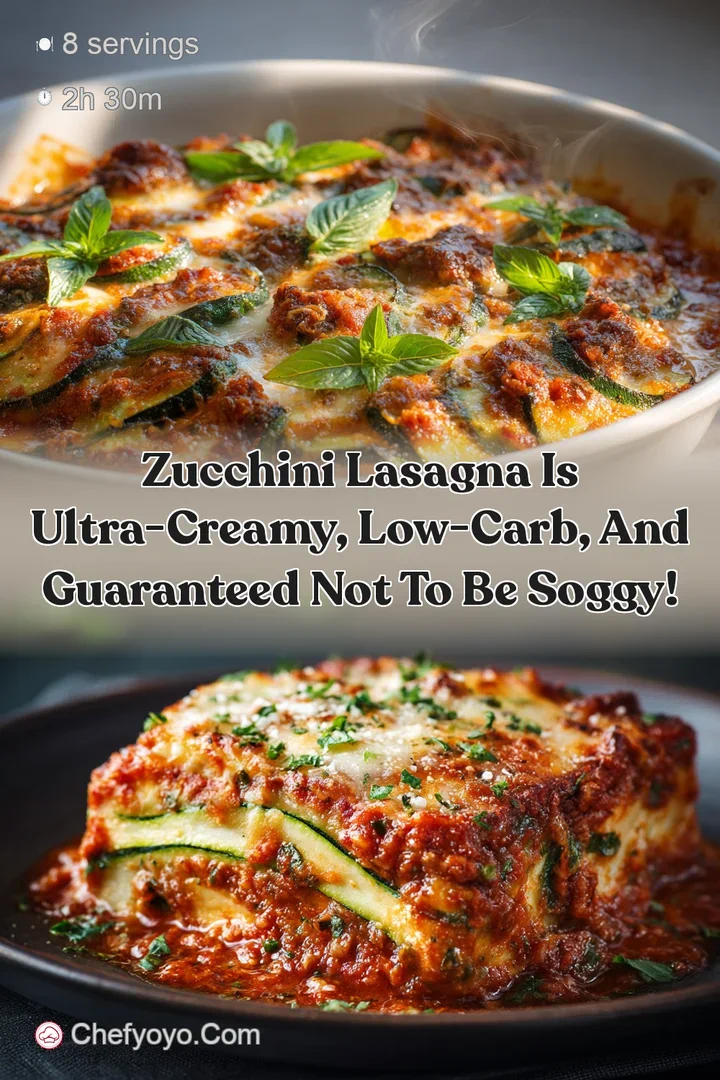
Zucchini Lasagna: the Mediterranean Rhapsody (Low-Carb, Zero-Noodle)
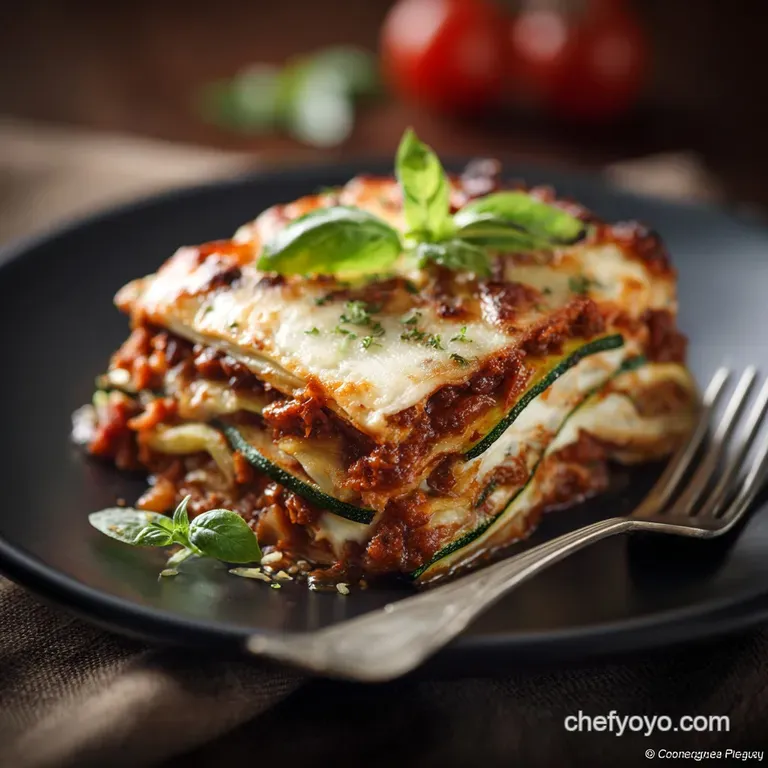
- The Art of Zero-Noodle Baking: Introducing the Ultimate Zucchini Lasagna
- Achieving the Perfect Structure: Flavor and Texture Science
- Required Components: Detailed Ingredients and Expert Substitutions
- The Method: Step-by-Step Guide to Baking Zucchini Lasagna
- Troubleshooting and Advanced Chef's Secrets
- Practical Guide to Storage, Freezing, and Reheating Your Zucchini Lasagna
- Complementary Pairings: What to Serve Alongside Your Low-Carb Bake
- Recipe FAQs
- 📝 Recipe Card
The Art of Zero Noodle Baking: Introducing the Ultimate Zucchini Lasagna
Can we just talk about that moment the aroma hits? It's that dense, slow baked smell of rich tomato, melting mozzarella, and garden fresh herbs that fills your kitchen. This Zucchini Lasagna gives you all the glorious, deep comfort of the classic bake without that heavy, post carb coma feeling.
I have spent years battling watery, sad vegetable lasagna attempts; seriously, I once served a dish that needed a straw. This recipe is the culmination of those failures, engineered specifically to be structurally sound and totally satisfying.
It is ridiculously low-carb, naturally gluten-free, and an absolute lifesaver when you are trying to use up that bumper crop of summer squash.
So toss those processed lasagna noodles, friend, because we are going full green and crafting a masterpiece. Get your mandoline ready, put on some good music, and let's crack on with making the only Zucchini Lasagna you’ll ever need.
Achieving the Perfect Structure: Flavor and Texture Science
The main problem with using watery vegetables in baked dishes is, well, the water. If you skip the critical step of drying the zucchini, you will end up with a messy puddle of cheese and sauce, not the elegant, sliceable bake we are aiming for. This structure relies entirely on moisture management and even slicing.
Why Zucchini Replaces Pasta Sheets So Successfully
When properly salted and drained, zucchini loses its excess moisture and becomes beautifully flexible yet sturdy. Unlike pasta, the squash softens during baking but retains a slight bite, giving incredible texture contrast to the creamy ricotta.
We want those thin sheets to act like sturdy little rafts holding up the filling, and they do a magnificent job when they aren't waterlogged.
Nutritional Snapshot: Low-Carb Comfort Food
This bake is a nutritional powerhouse wrapped in comfort food clothing. By swapping traditional flour based pasta for zucchini, we dramatically reduce the total carbohydrates and increase the fiber content.
It’s perfect for those enjoying a low-carb lifestyle or who just want a lighter take on a heavy Italian classic.
Essential Tools for Mastering This Bake
You definitely need a good baking dish, obviously. But do you really need a mandoline slicer for this recipe? Yes, you absolutely do. Uniform slices are non-negotiable for even cooking and structural stability; a knife simply cannot guarantee the precise 1/8 inch thickness required for this recipe.
The Critical Pre-Bake: How to Manage Zucchini’s Water Content
This is the make-or-break moment, my friends. We use coarse salt to pull water out of the sliced zucchini through osmosis, which is just a fancy way of saying we make them sweat profusely.
After salting, you must let them sit for at least 30 minutes, then pat them dry until your paper towels feel barely damp. I once rushed this step and ended up with a runny mess that slid right off the plate; never again.
The Maillard Reaction on Sautéed Zucchini Slices
While salting and drying is mandatory, adding flavor is optional but highly recommended. Lightly brushing the drained zucchini slices with olive oil and giving them a quick turn in the oven or under the broiler adds a slight toastiness.
This quick caramelization deepens the flavor profile, ensuring your "noodles" taste savory, not just vegetal.
The Role of Cheese Layer Density in Structural Integrity
We are using low-moisture mozzarella, which is key to avoiding soup territory. Whole milk ricotta, blended with Parmesan and one egg, creates a dense, creamy matrix that binds the layers.
The egg acts as a setting agent, tightening up the ricotta when baked and ensuring the filling doesn't run everywhere when you slice into it.
Required Components: Detailed Ingredients and Expert Substitutions
We are building a deeply flavored, robust low-carb zucchini lasagna, which means every ingredient must pull its weight.
Choosing the Best Zucchini: Size and Firmness Matters
Look for medium sized, firm zucchini, not the giant baseball bats hiding under the squash leaves. Those huge ones tend to be watery, have large, soft seeds, and lack the flavor intensity we need. Aim for firm skin and no visible blemishes.
Dairy Selection: Optimizing Ricotta and Mozzarella for Less Moisture
Always choose whole milk, full fat ricotta for the richest flavor and texture. Avoid containers that look excessively watery. When picking mozzarella, look for low-moisture, pre-shredded or solid blocks that you shred yourself, as fresh mozzarella contains too much liquid.
Crafting the Marinara: Using Fresh Herbs for Brightness
The sauce needs to be hearty and thick, almost bolognese like. Tomato paste is essential here; it concentrates the flavor and helps thicken the sauce so it doesn't leak into your cheese layers.
Don’t skimp on the fresh basil and parsley folded into the ricotta; they provide a crucial, bright contrast to the richness of the meat and cheese.
Vegan Swaps for a dairy-free Zucchini Lasagna
If you are cooking for someone who avoids dairy, this dish is still completely achievable with just a few mindful substitutions.
| Ingredient | Suggested Vegan Swap | Notes |
|---|---|---|
| Ricotta Cheese | Cashew Cream or Tofu Ricotta | Must be firm and well seasoned with nutritional yeast. |
| Mozzarella Cheese | Vegan Shredded Mozzarella (Daiya or Miyoko’s) | Check labels; some melt better than others. |
| Parmesan Cheese | Nutritional Yeast + Cashew Powder | Adds that desired cheesy, umami depth. |
| Egg (in Ricotta) | 1 Tbsp Chickpea Flour or Flax Egg | Needed for binding the filling. |
The Method: step-by-step Guide to Baking Zucchini Lasagna
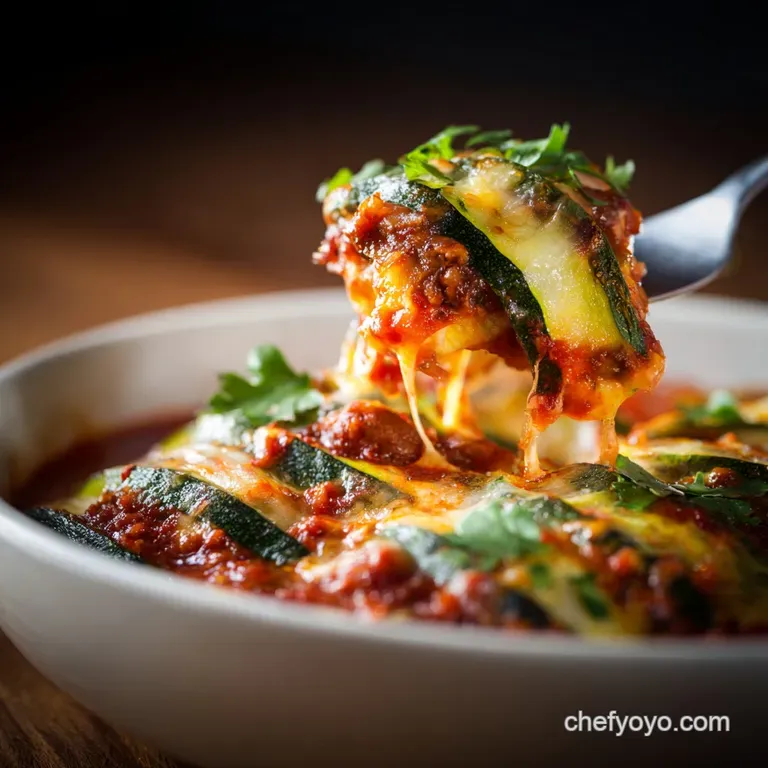
Phase I: The Salting and Draining Technique (Moisture Management)
Slice your zucchini thinly, about 1/8 inch thick, using a mandoline. Lay the slices on a rack over a baking sheet, sprinkle them with coarse salt, and let them sit for 30 to 45 minutes. This waiting period is important, so don't rush it.
When time is up, use a stack of paper towels to press and pat the slices dry until you are sure they are truly dry .
Phase II: Preparation of the Filling Components
First, get that sauce thick. Brown your ground beef and aromatics, then simmer your crushed tomatoes and tomato paste until the sauce is visibly reduced and sticks easily to the back of a spoon. Remember to remove the bay leaf before using the sauce.
Next, gently fold the egg, Parmesan, fresh herbs, and a pinch of nutmeg into the ricotta cheese.
Phase III: Assembly Strategy: Building Stable, Even Layers
Preheat your oven to 375°F (190°C) and grab your 9x13 inch baking dish. Start with a thin layer of sauce on the very bottom; this prevents the first layer of zucchini from sticking and burning. Lay the zucchini sheets down, slightly overlapping them like roof tiles, creating a solid base.
Layer half the ricotta, a third of the sauce, another layer of zucchini, the rest of the ricotta, and the final large amount of sauce.
Chef's Note: Press down lightly on the layers as you build. This compacts the structure and helps prevent those frustrating air pockets that cause layers to shift during baking.
Phase IV: Baking Times, Resting, and Serving
Cover the baking dish tightly with foil and bake for 40 minutes. This traps the steam, ensuring the zucchini finishes cooking through without burning the cheese.
Remove the foil, increase the heat to 400°F (200°C) if necessary, and bake for another 10– 15 minutes until the mozzarella is bubbly, golden, and slightly crusty on the edges. Crucially, let it rest for at least 15 minutes before cutting.
Troubleshooting and Advanced Chef's Secrets
Preventing the Puddle: Oven Temperature and Baking Placement
If your lasagna comes out watery, the culprit is usually insufficient zucchini draining, but oven temperature plays a role, too. Ensure your oven is fully preheated and use a center rack position.
The heat needs to penetrate quickly to cook out the liquid; sometimes a quick burst of high heat (400°F/200°C) at the beginning can help evaporate residual moisture before the structural layers collapse.
Achieving Uniform Slices: Mandoline vs. Knife Technique
I cannot stress this enough: consistency matters. A mandoline is truly the easiest way to ensure every strip is about 1/8 inch (3mm). If you must use a knife, take your time, aiming for uniform slices that are thin but sturdy. Too thin, and they disintegrate; too thick, and the lasagna is dense and crunchy.
How to Fix Undersalted or Under Seasoned Layers
If you taste your ricotta mix and realize it’s bland don't panic. You can drizzle a small amount of high-quality, flavorful olive oil over the top right before serving, or grate extra Parmesan over each slice. A pinch of flaky sea salt sprinkled on the post rest slices brightens everything up immediately.
Practical Guide to Storage, Freezing, and Reheating Your Zucchini Lasagna
This dish is a fantastic make-ahead option, perfect for meal prep or feeding a crowd later.
Freezing Zucchini Lasagna: Baked vs. Unbaked Strategies
You can freeze this low-carb zucchini lasagna successfully either before or after baking.
- Unbaked: Assemble the whole thing, cover it tightly with plastic wrap and foil, and freeze for up to 3 months. When ready to cook, thaw overnight in the fridge and bake as directed (you may need an extra 10– 15 minutes).
- Baked: Cool the entire dish completely before portioning and freezing. Freeze individual slices in airtight containers.
Reheating Leftovers Without Drying Them Out
Avoid the microwave if you can; it turns the edges rubbery and makes the ricotta weep. The best way to reheat is to cover the individual slices loosely with foil and bake them in a toaster oven or standard oven at 300°F (150°C) until warmed through (about 20 minutes).
Shelf Life and Refrigeration Best Practices
Leftover Zucchini Lasagna stores beautifully in the fridge for up to 4 days. Always use an airtight container and place it on a middle or upper shelf, avoiding the door where temperatures fluctuate constantly.
Complementary Pairings: What to Serve Alongside Your Low-Carb Bake
Because Zucchini Lasagna is so rich and savory, you want a side that offers brightness and acidity to cleanse the palate.
- Simple Green Salad: Toss mixed greens with a tangy lemon vinaigrette. Seriously, skip the heavy croutons and focus on crispness.
- Light Summer Veggies: If you still have zucchini to spare, consider a lighter baked vegetable dish like my Zucchini Tomato Gratin: The Riviera Summer Bake with a Gruyère Crust . It's the perfect contrast of soft, light texture.
- Garlic Bread Alternative: For those skipping the bread, sautéed rapini or broccoli rabe, tossed simply with garlic and a squeeze of lemon, adds a pleasant bitterness that balances the sweetness of the tomatoes.
Recipe FAQs
Why did my Zucchini Lasagna turn out watery or soggy?
This is overwhelmingly the result of insufficient draining of the zucchini slices. You must heavily salt the sliced zucchini and let it sweat for at least 30 minutes, then blot it thoroughly with paper towels before assembling the layers. Additionally, ensure the sauce is thick, not thin, to minimize added moisture.
What is the best way to slice the zucchini for uniform noodles?
A mandoline slicer is highly recommended for achieving a consistent 1/8 inch thickness, which ensures even baking and easy layering. Consistency is crucial; if the slices are too thick, the dish takes too long to cook, and if they are too thin, they may break down completely during baking.
Can I assemble the lasagna ahead of time, or should I bake it immediately?
While the flavour improves when components marry, assembling too far ahead is risky due to the zucchini’s inherent water content, even when pre-drained. If you must prep early, prepare all components separately and assemble no more than 4 hours before baking to prevent the salt from reacting and drawing out more moisture.
Is it possible to make this recipe dairy-free or vegan?
Absolutely. Substitute the ricotta cheese layer with a blend of firm tofu or cashew cream seasoned heavily with nutritional yeast, garlic powder, and herbs for the characteristic tanginess. You can use your preferred plant based mozzarella or simply top the dish with breadcrumbs for a crispy crust.
What should I do if the top layer of cheese isn't browning properly?
If the lasagna is cooked through but lacks colour, remove the foil during the final 10 15 minutes of baking to help the cheese dry out and crisp up. For a beautiful golden brown crust, place the dish briefly under the broiler for 1 to 2 minutes, watching it closely to prevent scorching.
Can I freeze Zucchini Lasagna, either cooked or uncooked?
Freezing is generally not recommended for this dish because the high water content of the zucchini causes the texture to become mushy upon thawing and reheating. If you need to prep ahead, prepare the sauce and cheese mixture and freeze those components separately, assembling the fresh zucchini right before baking.
Can I substitute traditional pasta sauce with a homemade Bolognese or meat sauce?
Yes, swapping marinara for a hearty meat sauce works brilliantly, but ensure the sauce is very thick and reduced down before layering. A watery meat sauce will severely compromise the structural integrity of the lasagna, leading to a soupy bottom layer. Strain excess liquid before adding the sauce to the dish.
Zero Noodle Low Carb Zucchini Lasagna
Ingredients:
Instructions:
Nutrition Facts:
| Calories | 1067 kcal |
|---|---|
| Protein | 90.7 g |
| Fat | 52.6 g |
| Carbs | 49.7 g |
