Artisan Charcuterie Board Recipe: Layered Textures
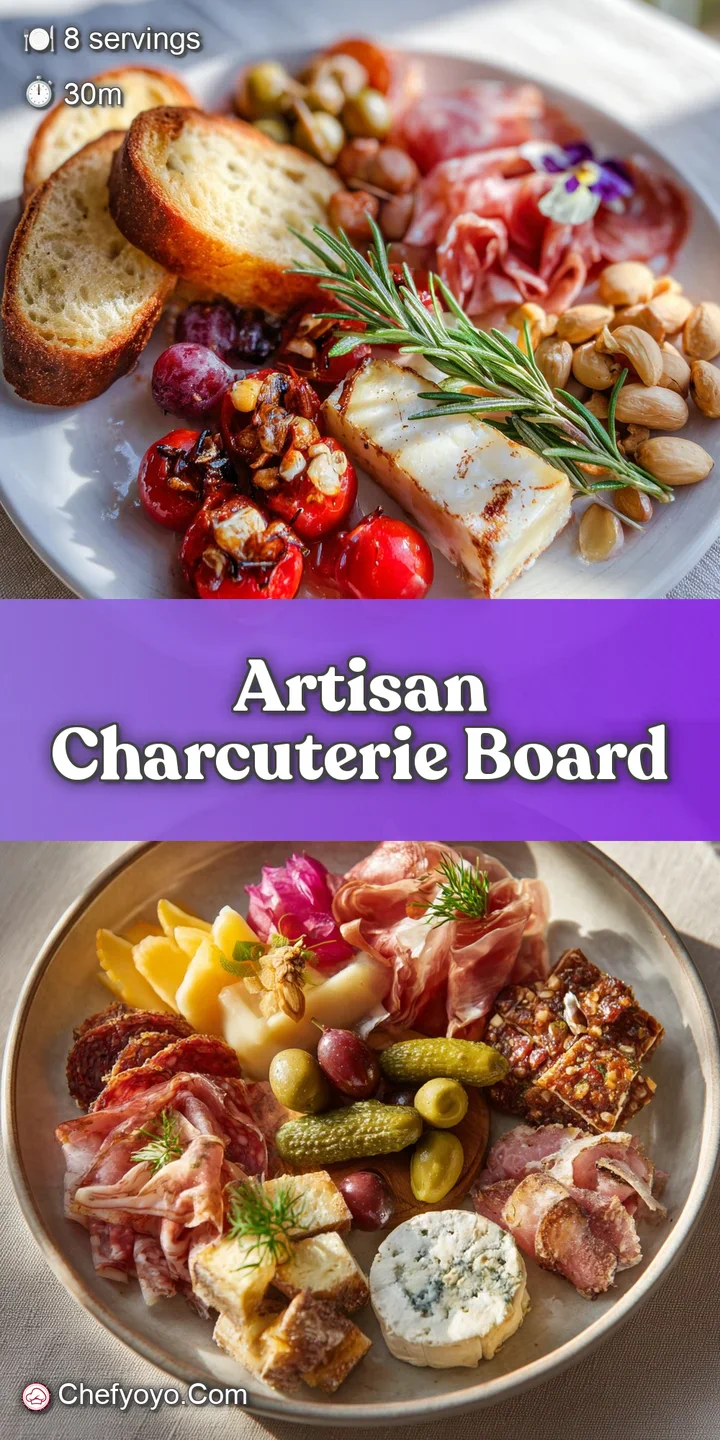
- Time: Active 30 minutes, Passive 0 minutes, Total 30 minutes
- Flavor/Texture Hook: A symphony of salty, buttery, and shatter crisp components.
- Perfect for: Sophisticated gatherings, holiday hosting, or a luxury date night in.
- Mastering the Best Artisan Charcuterie Board Recipe
- Board Specs and Planning
- Selecting Your Premium Components
- The Necessary Board Equipment
- Manual for Flawless Assembly
- Solving Common Presentation Errors
- Innovative Flavor Substitutions
- Keeping Your Ingredients Fresh
- Techniques for Stunning Plating
- Very High in Sodium
- Recipe FAQs
- 📝 Recipe Card
Mastering the Best Artisan Charcuterie Board Recipe
I still remember the first time I tried to build a board for my best friend’s housewarming. I basically threw some supermarket ham and a block of rubbery cheddar on a plate and called it a day. It was fine, I guess, but it lacked that "wow" factor that makes people stop talking and just start eating.
The room smelled like... well, just cold ham. It wasn't until I visited a tiny salumeria in Florence that I realized what I was missing. The aroma of paper thin Prosciutto di Parma hitting the air, that nutty scent of aged Manchego, and the way a single drop of fig jam could transform a bite that’s when it clicked.
A truly great artisan charcuterie board recipe isn't about just buying the most expensive things you can find; it’s about the architecture of flavor. We’re building a map for the palate to follow.
You want a path that leads from the salty bite of Genoa Salami to the creamy, decadent richness of a 200g wheel of Triple Cream Brie. I’ve spent years making mistakes like putting wet olives right next to sea salt water crackers (soggy nightmare!) so you don't have to.
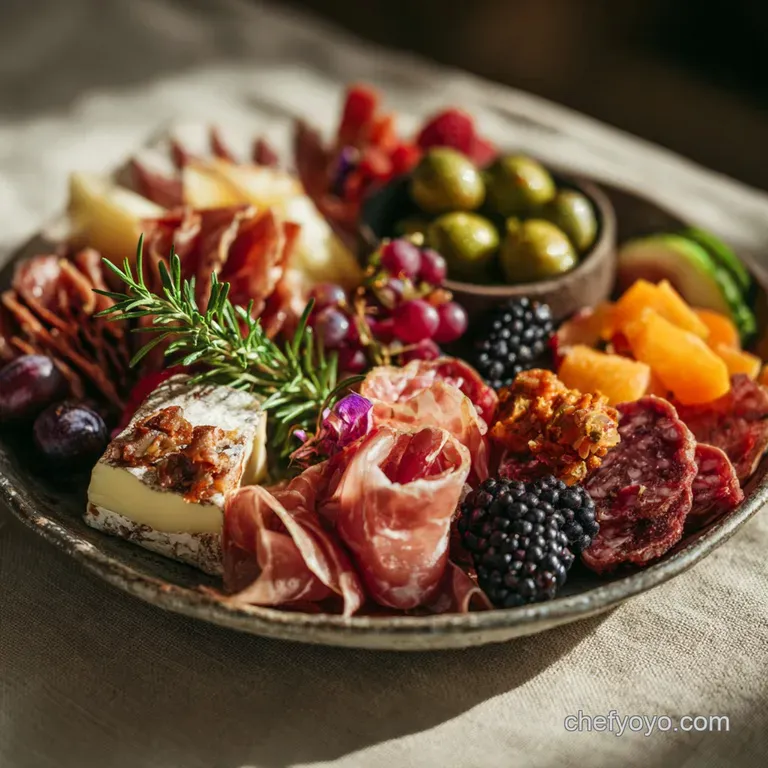
We're going to treat this like a craft, layering colors and shapes until it looks like a rustic Mediterranean still life.
Trust me on this: once you understand how to pair the smokiness of artisan smoked chicken breast with the funky, velvety punch of Point Reyes Blue, you’ll never go back to basic snack plates. We’re aiming for something that feels intentional and artisanal.
It's about that specific moment when someone picks up a fruit and nut crisp, shmears it with brie, and tops it with a single blackberry. That’s the goal. Let’s get into the details of how to make that happen every single time.
Board Specs and Planning
Success with this recipe starts with the logistics. You need to know how much to buy so you don't end up with three pounds of leftover bresaola or, worse, hungry guests looking at an empty board.
This artisan charcuterie board recipe is designed to serve 8 people as an appetizer, providing a balanced mix of proteins and fats.
| Servings | Meat/Cheese Adjustments | Board Size | Prep Time |
|---|---|---|---|
| 4 People | Half all quantities | 10x10 inch | 15 minutes |
| 8 People | Use full Schema quantities | 12x18 inch | 30 minutes |
| 12 People | 1.5x meats, add 2 extra cheeses | 15x24 inch | 45 minutes |
The Acid Fat Flavor Balance
The Architecture of the Palate: High fat components like Brie and Salami coat the tongue, dulling taste buds over time. Introducing high acid elements like cornichons or spicy Dijon mustard acts as a "palate cleanser," stripping away the fat and resetting your senses for the next bite.
The Essential Texture Rule
The Physics of the Crunch: A varied board must include at least one "shatter" texture (crackers), one "yielding" texture (Brie), and one "fibrous" texture (Prosciutto). This prevents sensory boredom by constantly engaging the mechanoreceptors in your mouth.
The Science of Temperature
Aromatic Release: Serving cheese at room temperature (about 21°C) allows the fat molecules to soften. This volatility lets the complex aromas reach your olfactory receptors more efficiently than when the cheese is cold and the fats are "locked."
Selecting Your Premium Components
Selecting ingredients is where the artisanal magic happens. You want to look for contrast. For the meat, we are using a mix of traditional pork and a slightly more modern 4 oz artisan smoked chicken breast, thinly sliced with black pepper.
The chicken adds a lean, peppery note that balances the richer 4 oz Genoa Salami. If you can find it, Bresaola (3 oz) is a fantastic addition because its lean, air dried beef profile is so different from the fatty Prosciutto di Parma.
The cheese library needs to be just as diverse. We start with a 200g wheel Triple Cream Brie for that "butter on-butter" experience. To contrast that, we need the structure of 5 oz Aged Manchego its sheep's milk tang is unmistakable. Finally, the 4 oz Point Reyes Blue provides the "edge." It’s salty, sharp, and cuts right through the sweetness of the fruit. For the perfect seasonal touch, you might even consider adding a side of the How to Make recipe during the holidays to add a tart, vibrant zing to the heavier meats.
| Component | Science Role | Pro Secret |
|---|---|---|
| Prosciutto di Parma | Salt cured umami | Drape it loosely to allow air to circulate between the paper thin folds. |
| Triple Cream Brie | High fat emulsion | Cut a small wedge out before serving to encourage the "ooze" factor. |
| Marcona Almonds | Crunchy lipid source | These are "the Queen of Almonds" because of their high oil content and softer bite. |
| Castelvetrano Olives | Briny alkaline balance | Look for the bright green ones; they are buttery rather than purely salty. |
The Necessary Board Equipment
You don't need a thousand gadgets, but a few specific tools make the assembly of this artisan charcuterie board recipe much easier. First, a large wooden board is essential preferably something with a bit of a lip so those Marcona almonds don't make a run for it.
If you don't have a specific "charcuterie board," a large slate tile or even a clean wooden cutting board works perfectly.
You will also need small ramekins or bowls for the 1/2 cup Castelvetrano olives and the spicy Dijon mustard or fig jam. This keeps the "wet" ingredients from migrating into your 150g sea salt water crackers. For the cheeses, have at least three different knives.
One for the soft Brie, one for the hard Manchego, and a spreader for the jam. Using one knife for everything leads to "cross contamination" of flavors, and nobody wants blue cheese on their fig jam.
Chef's Tip: If your board is particularly slippery, place a small damp paper towel underneath your ramekins to "glue" them in place while you carry the board to the table.
Manual for Flawless Assembly
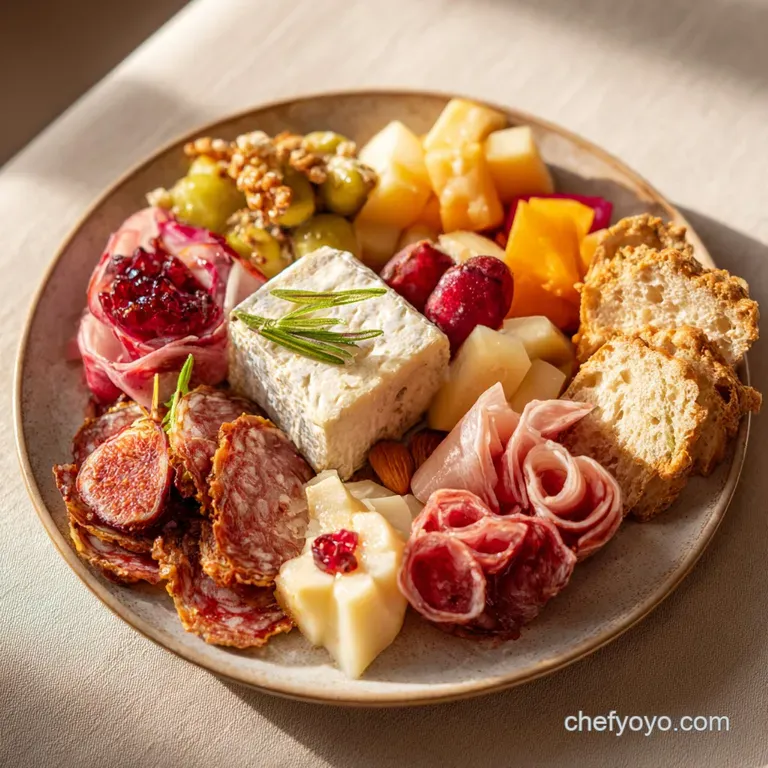
- Place the anchors. Start by positioning your 200g wheel Triple Cream Brie and the bowls for olives and jam. Note: These larger items define the "flow" of the board.
- Fan the hard cheese. Slice the 5 oz Aged Manchego into triangles and fan them out near one corner. Look for a deck of-cards pattern.
- Ribbon the Prosciutto. Gently fold each of the 3 oz Prosciutto di Parma slices into "ribbons" or nests. Note: This adds height and prevents the meat from looking flat.
- Shingle the Salami. Lay the 4 oz Genoa Salami in an overlapping line, snaking it across the board. It should look like a moving river.
- Add the Smoked Chicken. Place the 4 oz artisan smoked chicken breast in a distinct cluster. Ensure the black pepper edges are visible.
- Position the Blue Cheese. Keep the 4 oz Point Reyes Blue in one large piece with a knife nearby. Note: This prevents the blue mold from rubbing off on other cheeses.
- Create cracker clusters. Arrange the 150g sea salt water crackers and 100g fruit and nut crisps in the larger gaps. Make them easily accessible from all sides.
- Fill the small gaps. Tuck in the 1 cup Marcona almonds and 1/2 cup cornichons around the cheeses. No wood should be visible in these areas.
- Add the fresh fruit. Scatter the 1 cup blackberries and raspberries and the bunch of Champagne grapes. Use these to add pops of deep purple and red.
- Final garnish. Place a small spoon in the 2 tbsp fig jam and ensure all meats are separated. Check that the board looks lush and overflowing.
| Plating Level | Focus | Key Detail |
|---|---|---|
| Simple | Ease of Access | Keep ingredients in distinct piles with clear space between them. |
| Polished | Color & Flow | Use S curves for meats and group colors (red berries near white cheese). |
| Restaurant | Height & Texture | Stack cheeses vertically and use herbs like rosemary for a rustic forest look. |
Solving Common Presentation Errors
The biggest mistake I see people make is serving everything straight from the fridge. When cheese is cold, the fat is solid, and you lose about 50% of the flavor profile. Give your board at least 20 minutes to sit at room temperature before the guests arrive.
This also helps the 3 oz Bresaola soften so it doesn't feel like you're chewing on leather.
Another issue is the "Soggy Cracker Syndrome." This happens when you place juicy fruit like sliced pears or wet olives directly touching your 150g sea salt water crackers. Always use your ramekins for the brined items, and keep the berries whole so they don't leak juice.
If you find your crackers are losing their snap, you can actually pop them in a 150°C oven for 3 minutes to "re crisp" them before serving.
Why Your Crackers Get Soft
The moisture from the cheese and fruits migrates through the air or direct contact into the dry starch of the crackers. This starch is hygroscopic, meaning it actively pulls moisture in. To prevent this, create a "buffer zone" using the roasted Marcona almonds between the fruit and the crackers.
| Problem | Root Cause | Solution |
|---|---|---|
| Sweating Cheese | Temperature shock | Take cheese out of the wrapper but keep in a cool spot for 20 mins. |
| Greasy Salami | High ambient heat | Keep the board away from the oven or direct sunlight. |
| Discolored Fruit | Oxidation | Keep berries whole; if using apples, toss in lemon juice first. |
Common Mistakes Checklist
- ✓ Don't serve cheese ice cold; let it sit for 20-30 minutes.
- ✓ Avoid putting "wet" items (olives, pickles) directly on the wood.
- ✓ Ensure every cheese has its own dedicated knife to keep flavors pure.
- ✓ Don't over slice the soft Brie; let guests do the work to keep it pretty.
- ✓ Use a mix of "sweet" and "savory" crackers for better pairing options.
Innovative Flavor Substitutions
Part of the fun of an artisan charcuterie board recipe is that it’s a living document. You can swap things out based on what’s in season or what your local deli has in stock. For example, if you can't find Bresaola, a thinly sliced roast beef with a bit of horseradish is a great rustic alternative. For a more casual vibe, you might look at our Charcuterie and Cheese Board recipe which focuses on simpler, everyday ingredients.
| Original Ingredient | Substitute | Why It Works |
|---|---|---|
| Prosciutto di Parma | Serrano Ham | Similar salty profile but slightly firmer and more "nutty" in flavor. |
| Aged Manchego | Sharp White Cheddar | Provides the same firm texture and acidic "bite" to the palate. |
| Castelvetrano Olives | Kalamata Olives | Note: Adds a much stronger, vinegary punch best for bold meat pairings. |
- The Mediterranean Path
- Swap the almonds for walnuts and use honey instead of fig jam.
- The Spicy Route
- Use peppered salami and add a few sliced jalapeños to the cornichon bowl.
- The Orchard Vibe
- Use sliced crisp apples and a sharp cloth bound cheddar.
Keeping Your Ingredients Fresh
Storage is usually the last thing on people's minds until the party is over and there's a pile of leftover Brie. My biggest tip: never wrap cheese in plastic wrap if you can avoid it. It "suffocates" the cheese and can make it taste like plastic. Use parchment paper or specialized cheese paper.
This allows the cheese to breathe while still holding onto its moisture.
Leftover meats like the 4 oz Genoa Salami or the artisan smoked chicken can be stored in airtight containers in the fridge for up to 5 days. For a zero waste hack, I take all the leftover cheese scraps, grate them together, and make the world's most luxurious grilled cheese or mac and cheese the next day.
The leftover Prosciutto is also incredible when crisped up in a pan and sprinkled over a salad.
- Fridge Life: 3-5 days for meats/cheeses; 2 days for berries.
- Freezer Note: Most hard cheeses freeze okay (though texture changes), but never freeze the Brie or the fresh berries.
- Reheating: If you have leftover crackers that got a bit soft, a quick toast in a 150°C oven for 3 minutes brings back the "shatter."
Techniques for Stunning Plating
Plating this artisan charcuterie board recipe is where you get to be an artist. Start with the "Rule of Three" three types of meat, three types of cheese, three types of crunch. This creates a visual balance that the human eye naturally finds pleasing.
I like to think of the board in "zones." Put the strongest flavors (the Blue cheese and the spicy Dijon) in one corner so they don't overwhelm the more delicate flavors like the Bresaola.
When you're arranging the Champagne grapes, keep them on the stem in small clusters. It looks more "rustic" and artisanal than a pile of loose grapes. For the meats, try "The Salami Rose" technique: fold the circles into quarters and nestle them tightly together. It makes the board look dense and expensive.
Finally, don't be afraid of empty space while you're building, but fill it all in at the end with the 1 cup Marcona almonds. A "full" board looks much more inviting than a "sparse" one.
| Method | Prep Time | Depth of Flavor | Best For |
|---|---|---|---|
| The Fast Way | 10 mins | Tangy & Direct | Last minute guests or quick snacks. |
| The Classic Way | 30 mins | Nuanced & Layered | Formal dinner parties and holidays. |
Myths about Boards: "You need a expensive silver platter." Truth: A clean piece of slate or a rustic wooden board actually highlights the colors of the food much better and feels more authentic. "The more ingredients, the better." Truth: Quality beats quantity. Six incredible items are better than twenty mediocre ones. Focus on the Authentic Crawfish Etouffee recipe level of care for your selections, and your guests will notice.
Right then, you're ready to create. Just remember to keep your crackers dry, your cheese at room temp, and your wine glass full. Happy assembling!
Very High in Sodium
1420 mg mg of sodium per serving (62% of daily value)
The American Heart Association recommends limiting sodium intake to approximately 2,300mg per day for overall health.
Tips to Reduce Sodium in Your Charcuterie Board
-
Reduce Processed Meats-25%
The processed meats (Prosciutto, Salami, Smoked Chicken, Bresaola) contribute significantly to the sodium content. Reduce the portion sizes of these items by half, or replace some with fresh, unseasoned roasted chicken or turkey breast.
-
Choose Lower Sodium Cheeses-15%
Brie, Manchego, and Gorgonzola are high in sodium. Substitute some of these with lower sodium options like fresh mozzarella, ricotta, or Swiss cheese. Use less cheese overall to further reduce sodium.
-
Rinse or Reduce Olives-10%
Castelvetrano olives are often brined in salt water. Rinse the olives thoroughly before serving to remove excess salt. Alternatively, reduce the portion size of the olives or omit them entirely.
-
Swap Crackers-10%
Sea salt water crackers are a major source of sodium. Substitute them with unsalted crackers, whole wheat crackers, or sliced baguette. Consider serving with cucumber slices or bell pepper strips instead.
-
Unsalted Almonds-5%
Marcona almonds roasted with sea salt add unnecessary sodium. Choose unsalted or lightly salted roasted almonds instead. You can also toast plain almonds in the oven yourself.
-
Reduce Pickled Items-5%
Cornichons or pickled red onions are preserved using salt. Limit the portion size of these items or replace them with fresh cucumber slices for a similar crunchy texture.
-
Flavor with Herbs & Spices
Use fresh or dried herbs and spices like rosemary, thyme, garlic powder, or onion powder to enhance the flavor of the board without adding sodium. Experiment with different flavor combinations to create a unique taste.
Recipe FAQs
What is the 3 3 3 3 rule for charcuterie?
No, there isn't a universally agreed upon 3 3 3 3 rule. This rule often surfaces as a general guideline for beginners suggesting three meats, three cheeses, three starches (crackers), and three accompaniments (fruit/nuts/pickle).
While a good starting point, artisan boards thrive on contrast, so prioritize texture and flavor balance over rigid numbers.
What is artisan charcuterie?
Artisan charcuterie refers to cured or prepared meats made using traditional, small batch methods. These items often involve high-quality cuts, specialized curing times, and natural ingredients, resulting in superior texture and flavor complexity compared to mass produced deli meats. If you master the temperature precision needed for this board, you’ll appreciate the delicate nature of artisan cuts, similar to the precision needed for our Homemade Butternut Squash recipe.
How to make an aesthetically pleasing charcuterie board?
Start by placing your anchors: the cheeses and bowls for wet ingredients. Next, create flow by arranging meats in overlapping ribbons or fans, ensuring you use height by lightly folding cured meats.
Fill all remaining negative space with nuts, dried fruits, and herbs so the board looks lush and abundant.
What not to put on a charcuterie board?
Avoid anything that will immediately make other components soggy or overwhelm the delicate flavors. This means keeping wet items like pickles and olives in small bowls, and steering clear of highly processed condiments that lack depth.
Also, never place soft Brie directly next to hard, crumbly cheese to avoid flavor contamination.
Should I serve cheese cold or at room temperature?
Serve cheese closer to room temperature for optimal flavor release. When cheese is straight from the refrigerator, the fat molecules are locked in, muting the complex aromas and taste.
Allow firm and semi soft cheeses about 20 to 30 minutes on the counter before serving to let the volatile aromatic compounds fully express themselves.
Is it true I must slice all the meats thinly ahead of time?
No, this is a common misconception, especially for artisan meats. While slicing hard salami thin is good, folding or "ribboning" soft cured meats like Prosciutto creates better visual appeal and texture. If you master the folding and layering technique here, you can apply that same texture control when working with soft doughs in our The Comfort King recipe.
How do I make sure the crackers stay crunchy?
Separate crackers from all moist ingredients using a buffer or barrier. Place your olives, jams, or sliced fruit in small ramekins, and then use nuts or hard cheeses to physically separate the crackers from these moisture sources.
If your crackers feel slightly soft, a quick 3-minute toast at 150°C will re-crisp them.
Artisan Charcuterie Board Recipe
Ingredients:
Instructions:
Nutrition Facts:
| Calories | 616 kcal |
|---|---|
| Protein | 28 g |
| Fat | 42 g |
| Carbs | 31 g |
| Fiber | 4 g |
| Sugar | 9 g |
| Sodium | 1420 mg |
