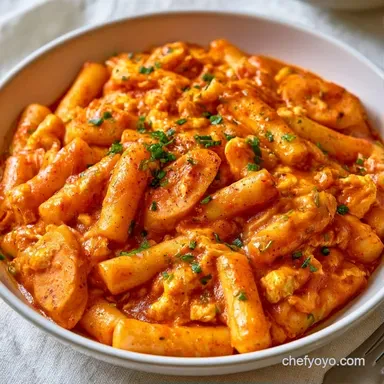
Authentic Korean Tteokbokki with Fish Cakes

- Time: 10 min active + 20 min cooking + 15 min soaking
- Flavor & Texture: Chewy, spicy, and sweet
- Perfect for: A cozy lunch or late-night craving
Authentic Korean Tteokbokki
Imagine a pan of bubbling, deep-red sauce that smells like toasted chili and garlic. You pull out a rice cake, and it has that signature bounce, coated in a glaze that's both spicy and sweet. It's the kind of food that makes you feel warm and full immediately.
Whether it's a rainy Tuesday or you're just hanging out with friends, this dish fits the mood. It's vibrant, filling, and hits every taste bud at once.
I like making this when I need something that feels like a treat but comes together quickly. Most of the work happens in the simmer, leaving you to just wait for that glossy finish.
Why the Chew Stays Right
Pre-soaking: Hydrating the cakes first avoids a hard center and ensures they are perfectly tender by the time the sauce has thickened.
Low Simmer: Maintaining medium-low heat allows the rice starch to slowly release into the liquid, naturally thickening the sauce without making the cakes mushy.
| Rice Cake Type | Texture | Prep Need | Best For |
|---|---|---|---|
| Fresh/Traditional | Chewy and bouncy | Must soak 15 mins | Authentic feel |
| Instant/Dried | Softer, less "snap" | No soak needed | Quick weekday meal |
The Flavor Components
- 1.1 lb Korean rice cakes (cylindrical tteok)
- 4 oz fish cakes, sliced into bite-sized pieces
- 2 cups low-sodium vegetable broth
- 2 stalks green onions, cut into 2-inch lengths
- 4 large hard-boiled eggs, peeled
- 3 tbsp Gochujang (Korean red chili paste)
- 1 tbsp Gochugaru (Korean red chili flakes)
- 2 tbsp honey
- 1 tbsp low-sodium soy sauce
- 1 tsp minced garlic
The base of this dish is all about the contrast between the heat of the peppers and the sweetness of the honey.
Gochujang provides the deep, fermented funk and a thick body. For the heat, Gochugaru adds a brighter, smokier spice that doesn't overwhelm. Honey is what gives the sauce its gloss, while soy sauce and garlic bring the savory balance.
If you want a lighter version, vegetable broth keeps things fresh. Fish cakes add a salty, umami layer that cuts through the sugar.
Essential Kitchen Tools
You don't need much here. A large non-stick skillet or a shallow pot is the best bet because it gives the sauce plenty of surface area to reduce. A simple whisk helps get the paste smooth so you don't have clumps of chili in your sauce.
How to Cook It
Phase 1: The Preparation
- Soak the Korean rice cakes in lukewarm water for 15 minutes to soften, then drain. Note: This ensures the centers aren't raw.
- In a small bowl, combine the gochujang, gochugaru, honey, soy sauce, and minced garlic, whisking until you have a smooth, consistent paste.

Phase 2: Simmering the Sauce
- Pour the vegetable broth into a shallow pot or large non-stick skillet and heat over medium-high until it reaches a boil.
- Stir in the sauce paste, whisking steadily until it is completely dissolved and the liquid turns a rich red.
Phase 3: The Texture Build
- Add the drained rice cakes and sliced fish cakes to the simmering liquid.

- Lower the heat to medium-low and cook for 10–12 minutes, stirring often to avoid sticking, until the sauce has reduced by half into a velvety, syrupy glaze.
Phase 4: The Finishing Touch
- Gently stir in the green onions and hard-boiled eggs (making sure the yolks are fully set).

- Cook for another 2 minutes until the onions soften but remain bright green, then take the pan off the heat immediately.
| Original Ingredient | Substitute | Why It Works |
|---|---|---|
| Honey (2 tbsp) | Maple Syrup (2 tbsp) | Comparable sweetness. Note: Introduces a subtle woody note |
| Fish Cakes (4 oz) | Extra-Firm Tofu (4 oz) | Similar texture. Note: Great for vegetarian options |
| Vegetable Broth (2 cups) | Water + 1 tsp Salt | Simple base. Note: Doesn't have the same richness as broth |
Common Problems and Fixes
Fixing a Watery Sauce
If the rice cakes are soft but the sauce is too runny, remove the lid. Increase the heat to medium-high for 2-3 minutes while stirring rapidly. This evaporates the extra moisture and thickens the sugars so the sauce clings better.
Handling Hard Rice Cakes
If the centers remain firm, you probably didn't soak them long enough. Pour in a splash of broth and simmer for an additional 3-5 minutes. Stir constantly to prevent the bottom from burning.
Taming the Heat
If the dish is too spicy for your preference, stir in a tablespoon of butter or a touch of heavy cream at the very end. The fat neutralizes the capsaicin without masking the flavor.
Easy Flavor Twists
For the Tteokbokki Sauce
I like adding a teaspoon of toasted sesame oil right before serving. It adds a nutty aroma that makes the whole dish smell more complex.
Rosé Tteokbokki
For a creamier version, stir in 1/4 cup of heavy cream during the last 3 minutes of simmering. It turns the sauce a bright orange and softens the spice.
Vegetarian Tteokbokki
Swap the fish cakes for sliced shiitake mushrooms or fried tofu puffs. They soak up the sauce just as well as the cakes do.
Storage and Reheating
Store them in a sealed container in the refrigerator for 3 days. It is normal for the sauce to thicken into a gel-like consistency as it cools.
To reheat, try to avoid the microwave to prevent the rice cakes from becoming rubbery. Instead, use a pan over medium heat. Add 2-3 tbsp of water to loosen the sauce and stir gently until the dish reaches 165°F (74°C) in the food.
When reheating cooked leftovers, check with a food thermometer that the centre reaches 165°F (74°C); the appliance temperature and time alone do not confirm this.
What to Serve With It

Because this dish is quite spicy and starchy, something tangy is needed for balance. Pickled daikon is a traditional accompaniment that cleanses the palate with its acidity.
To turn this into a full meal, serve it alongside Honey Glazed Carrots Green Beans for a crisp contrast. Fried dumplings or a chilled cucumber salad are also great options.
High Sodium Levels
900 mg of sodium per serving (39% of the daily value)
For better heart health and blood pressure management, the American Heart Association suggests a daily sodium intake of under 2,300 mg.
Tips to Reduce Sodium
-
Limit Gochujang
Use less Gochujang and increase the Gochugaru (chili flakes) to maintain the spice level.
-
Replace Fish Cakes
Use fresh seafood, tofu, or sliced mushrooms instead of processed fish cakes to avoid added salts.
-
Switch Soy Sauce
Trade low-sodium soy sauce for coconut aminos to keep the savory flavor with far less sodium.
-
Use Water or Unsalted Broth
Opt for water or homemade unsalted stock instead of low-sodium vegetable broth to lower the salt content.
-
Use More Aromatics
Mix in extra minced garlic, fresh ginger, or black pepper to deepen the flavor without needing more salt.
Recipe FAQs
Is tteokbokki a healthy food?
It is primarily a carbohydrate-rich comfort food. Nutritional value depends on the portions of rice cakes and the sodium content in the sauce.
Are tteokbokki and topokki different?
Yes, they are two different spellings for the same dish. Topokki is simply a phonetic romanization of the Korean name.
How do you pronounce tteokbokki?
Pronounce it as "tok-bo-ki". The first syllable uses a tense "t" sound and the "k" sounds are soft.
Where should I store leftovers?
Store them in a sealed tub and refrigerate for three days. The sauce will naturally thicken into a gel as it cools.
What is the best way to reheat this dish?
Heat the cakes in a pan over medium heat. Stir in 2-3 tbsp of water to loosen the sauce until it reaches 165°F (74°C) in the food. When reheating cooked leftovers, check with a food thermometer that the centre reaches 165°F (74°C); the appliance temperature and time alone do not confirm this.
Chewy Tteokbokki with Fish Cakes