Best Beef Stroganoff Recipe: Velvety Sauce
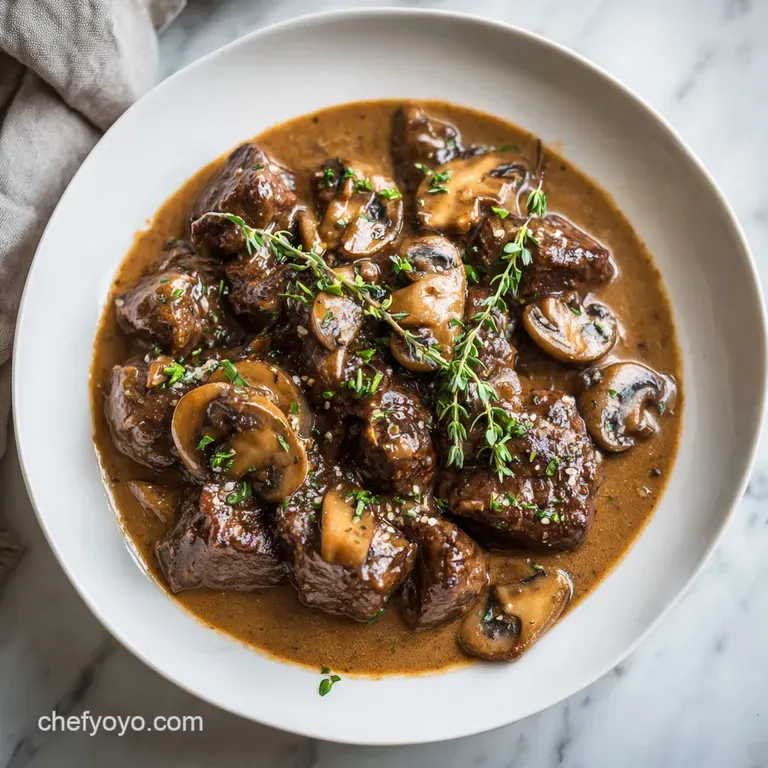
- Time: Active 15 minutes, Passive 15 minutes, Total 30 minutes
- Flavor/Texture Hook: Velvety sauce paired with tender, seared steak
- Perfect for: High energy weeknight dinners or a cozy date night
- Mastering The Vibrant Layers of Beef Stroganoff
- The Science of Silky Emulsions
- Steak Searing and Timing Checkpoints
- Analyzing the Primary Flavor Elements
- The Building Blocks
- Essential Tools for Even Heat
- Building Deep Flavor in Stages
- Common Hurdles and Quick Fixes
- Dietary Shifts and Creative Swaps
- Freshness and Reheating Standards
- Plating for Visual Balance
- Common Myths
- High in Sodium
- Recipe FAQs
- 📝 Recipe Card
Mastering The Vibrant Layers of Beef Stroganoff
The first time I tried to make this, it was a disaster. I ended up with gray, boiled looking meat and a sauce that looked more like thin soup than a velvety coat. I realized I was crowding the pan and rushing the mushrooms, which are the secret soul of the whole thing.
Now, when that 1.5 lbs of sirloin hits the hot oil, the sizzle is immediate and sharp, filling the kitchen with that deep, caramelized aroma that promises a real meal.
We aren't just making dinner here, we're building a fusion of textures. You want the steak to have a crust that stands up to the creaminess, and you want those cremini mushrooms to be so browned they almost snap when you bite them.
It's about that specific moment when the dry white wine hits the pan, the steam rushes up, and all those browned bits on the bottom dissolve into the start of something brilliant.
This version is all about the balance. We use full fat sour cream because, honestly, don't even bother with the low-fat stuff it just breaks and leaves you with a grainy mess. By the time you fold the fresh parsley over those wide egg noodles, you'll see why these specific steps matter.
It's fast, it's punchy, and it works every single time.
The Science of Silky Emulsions
- Maillard Mastery: over High heat searing creates new flavor molecules on the steak surface that don't exist in raw or boiled meat.
- Starch Suspension: The 2 tbsp of all purpose flour coats the fat molecules, preventing the beef stock and sour cream from separating during the simmer.
- Protein Tempering: Adding a splash of warm sauce to the room temperature sour cream before mixing it in prevents the proteins from denaturing too fast, which causes curdling.
- Fungus Reduction: Cooking the 1 lb of cremini mushrooms until they release all their water and re absorb the butter intensifies their savory "umami" profile.
Steak Searing and Timing Checkpoints
| Thickness | Internal Temp | Rest Time | Visual Cue |
|---|---|---|---|
| 0.5 inch strips | 145°F (63°C) | 3 minutes | Deep brown crust with a hint of pink inside |
| 0.25 inch strips | 150°F (66°C) | 2 minutes | Uniformly seared, no visible red |
| 1 inch cubes | 140°F (60°C) | 5 minutes | Charred exterior, tender center |
Success starts with the pan temperature. If the oil isn't shimmering, the steak will just sit there and steam in its own juices, becoming tough and rubbery. You need that aggressive heat to lock in the flavor before the middle overcooks.
Analyzing the Primary Flavor Elements
| Ingredient | Science Role | Pro Secret |
|---|---|---|
| Sirloin Steak | Main Protein | Slice against the grain to break up tough fibers for a tender bite. |
| Cremini Mushrooms | Umami Base | Don't salt them early; salt at the end to ensure they brown instead of stew. |
| White Wine | Acidity / Solvent | The alcohol dissolves flavor compounds that water or fat can't touch. |
| Sour Cream | Emulsifier / Fat | Use full fat only to ensure the sauce stays velvety and stable under heat. |
The Building Blocks
- 1.5 lbs sirloin or ribeye steak: Sliced into 1/2 inch strips. Why this? Sirloin offers the best balance of tenderness and beefy flavor for quick searing.
- Substitute: Beef tenderloin for a more buttery texture, though it's pricier.
- 2 tbsp high smoke point oil: Grapeseed or avocado oil works best. Why this? These oils won't burn at the high temps needed for the sear.
- Substitute: Vegetable oil is a fine, neutral alternative.
- 1 lb cremini mushrooms: Sliced medium thick. Why this? They have deeper flavor than white buttons and hold their shape better.
- Substitute: Portobello mushrooms chopped into bite sized pieces.
- 1 large yellow onion: Finely diced. Why this? Yellow onions provide a consistent sweetness once translucent.
- Substitute: Shallots for a more delicate, garlicky finish.
- 3 cloves garlic: Minced fresh. Why this? Fresh garlic provides a punch that pre minced jars simply lack.
- Substitute: 1 tsp garlic powder in a pinch, but it's less vibrant.
- 3 tbsp unsalted butter: For sautéing the aromatics. Why this? Controls the salt levels while adding a rich, nutty finish.
- Substitute: Salted butter (just reduce the extra added salt later).
- 1.5 cups high-quality beef stock: Use low sodium to control seasoning. Why this? The liquid foundation that carries all the pan flavors.
- Substitute: Beef bouillon paste mixed with water.
- 1 tbsp Worcestershire sauce: The ultimate savory booster. Why this? Adds fermented depth and a hint of vinegar tang.
- Substitute: Soy sauce mixed with a drop of lemon juice.
- 1 tsp Dijon mustard: For a sharp, bright counterpoint. Why this? Acts as a natural emulsifier to keep the sauce together.
- Substitute: Ground mustard powder (0.5 tsp).
- 1/2 cup full fat sour cream: Room temperature is mandatory. Why this? Provides the signature tang and creamy mouthfeel.
- Substitute: Greek yogurt (note: it's more prone to curdling, so be careful).
- 2 tbsp all purpose flour: The thickening agent. Why this? Creates a stable roux like base when combined with butter.
- Substitute: Cornstarch (use only 1 tbsp mixed with cold water).
- 1/4 cup dry white wine or Sherry: For deglazing. Why this? Cuts through the richness of the cream and beef.
- Substitute: 1 tbsp apple cider vinegar mixed with 3 tbsp water.
- 12 oz wide egg noodles: The classic vessel. Why this? Their broad surface area catches the thick sauce perfectly.
- Substitute: Pappardelle or even mashed potatoes.
- 0.5 tsp salt & 0.5 tsp cracked black pepper: Basic seasoning.
- 2 tbsp fresh parsley: For a vibrant garnish.
Essential Tools for Even Heat
You don't need a professional kitchen, but a heavy bottomed skillet is your best friend here. I prefer a large cast iron or a heavy stainless steel pan because they hold onto heat when the cold meat hits the surface.
If you use a thin, cheap pan, the temperature will drop instantly, and you'll end up boiling your steak instead of searing it.
A good whisk is also vital. When you're adding that beef stock to the flour and butter, you want to be brisk to ensure no lumps form. It's the difference between a grainy sauce and one that is truly silky.
Also, make sure your cutting board is large enough to slice the 1.5 lbs of steak without making a mess precision in the slice size ensures everything cooks at the same rate.
Building Deep Flavor in Stages
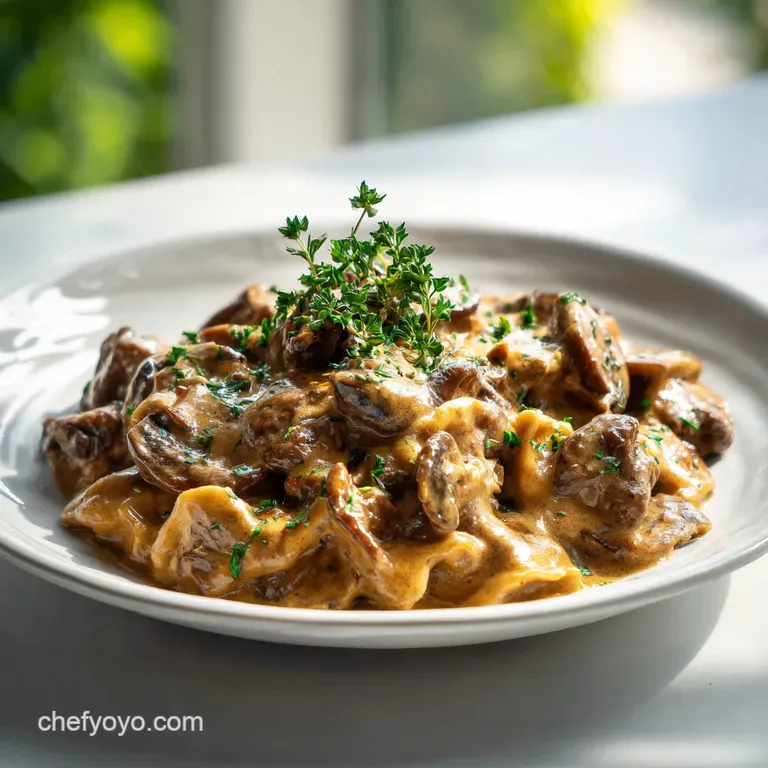
- Sear the steak. Heat 2 tbsp oil in a large skillet over high heat until it's shimmering and just starting to smoke. Note: This prevents the meat from sticking.
- Work in batches. Add the beef strips in a single layer, seasoned with salt and pepper, and cook for about 1 minute per side until a dark crust forms. Remove and set aside.
- Sauté the mushrooms. In the same pan, add the 1 lb sliced cremini mushrooms. Cook undisturbed for 3 minutes until they shatter their moisture and turn golden brown.
- Soften the aromatics. Add the 3 tbsp butter and the diced yellow onion to the mushrooms. Cook for 5 minutes until the onions are translucent and soft.
- Aromatize. Stir in the 3 minced garlic cloves and cook for 30 seconds until you can smell the fragrance clearly.
- Build the thickener. Sprinkle the 2 tbsp flour over the vegetables and stir constantly for 1 minute until the raw flour smell disappears. This is similar to the base technique in our Proper Homemade Beef recipe.
- Deglaze the pan. Pour in the 1/4 cup white wine, scraping the bottom of the pan with a wooden spoon until all the brown bits are dissolved.
- Simmer the base. Whisk in the 1.5 cups beef stock, Worcestershire sauce, and Dijon mustard. Simmer for 5 minutes until the sauce thickens and looks glossy.
- Temper the cream. Remove the pan from heat. Take a spoonful of the hot sauce and whisk it into the 1/2 cup sour cream in a small bowl, then pour the mixture back into the pan.
- Combine and serve. Return the steak and its juices to the pan. Toss with the cooked egg noodles and 2 tbsp parsley until every strand is coated in velvety sauce.
Common Hurdles and Quick Fixes
Rescuing a Grainy Sauce
If your sauce looks broken or curdled, it usually means the heat was too high when the sour cream was added. Don't panic. You can often save it by removing the meat and giving the sauce a very vigorous whisk with a tiny splash of hot water.
For future batches, remember that the "tempering" step mixing a bit of hot liquid into the cold cream first is your insurance policy against this.
Fixing Tough Beef
If the steak feels like rubber, it was likely cooked too long on the initial sear or boiled in the sauce for too many minutes. Sirloin is lean, so it doesn't need much time. Next time, try the "velveting" trick I use in my Proper Homemade Beef recipe or simply ensure the pan is screaming hot so the sear happens in under 120 seconds.
| Problem | Root Cause | Solution |
|---|---|---|
| Thin Sauce | Not enough flour or didn't simmer long enough | Simmer for 3 more minutes or add a cornstarch slurry |
| Bland Flavor | Undersalted mushrooms or low quality stock | Add an extra dash of Worcestershire or a pinch of salt |
| Rubbery Meat | Overcooked or sliced with the grain | Slice against the grain and only sear for 60 seconds per side |
- ✓ Pat the steak completely dry with paper towels before searing to ensure a crust forms.
- ✓ Leave the mushrooms alone for the first 3 minutes; stirring too much prevents browning.
- ✓ Use room temperature sour cream to minimize the temperature shock to the sauce.
- ✓ Don't boil the sauce once the sour cream is added, as high heat breaks the emulsion.
- ✓ Always rest the seared meat for 3 minutes before adding it back to the sauce.
The depth of flavor here is comparable to a long simmered Cozy beef stew recipe, but achieved in a fraction of the time thanks to the over high heat mushroom technique.
Dietary Shifts and Creative Swaps
If you're looking to change things up, this recipe is surprisingly flexible. For a lower carb version, skip the noodles entirely and serve the beef and mushroom mixture over roasted cauliflower or sautéed cabbage. The sauce is rich enough that you won't even miss the pasta.
If you're avoiding alcohol, use a bit extra beef stock with a teaspoon of lemon juice to mimic that bright acidity the wine provides.
| Original Ingredient | Substitute | Why It Works |
|---|---|---|
| Wide Egg Noodles | Zucchini Noodles | Lowers carbs. Note: Add them at the very end so they don't get soggy. |
| Sirloin Steak | Ground Beef (1.5 lbs) | More budget friendly. Note: Drain the fat after browning the meat. |
| Sour Cream | Greek Yogurt (full fat) | Adds a sharper tang and more protein. Note: Much higher risk of curdling. |
If you want a deeper, more robust flavor, use 1/4 cup of dry Sherry instead of white wine. It adds a nutty, oxidized note that pairs incredibly well with the earthiness of the mushrooms.
Freshness and Reheating Standards
Storage: This keeps well in the fridge for up to 3 days. Store the sauce and noodles together if you like the noodles to soak up the flavor, or separately if you prefer to keep the pasta firm.
Freezing: I don't recommend freezing this dish once the sour cream is added. Dairy based sauces often separate and become grainy when thawed. If you must freeze it, do so before adding the sour cream, then add the cream fresh when you reheat it.
Zero Waste: Don't throw away those mushroom stems! If they are too woody to slice, throw them into a freezer bag. Once you have a handful, boil them with some water and onion scraps to make a quick vegetable base for your next soup.
Any leftover sauce can be thinned with a little milk and used as a savory topping for a baked potato the next day.
Plating for Visual Balance
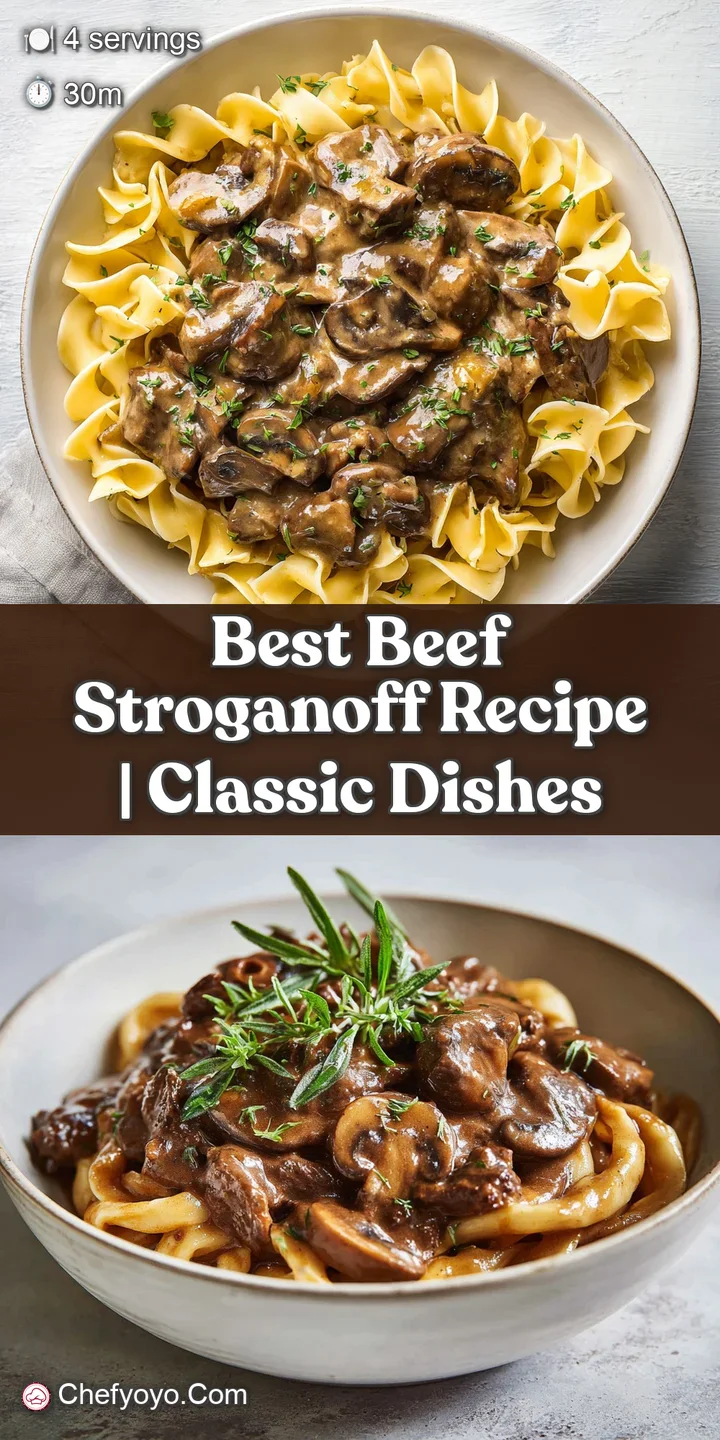
Presentation matters because this dish can easily look monochromatic. Use a wide, shallow bowl rather than a deep one. Twist the noodles into a high nest in the center, then ladle the beef and mushroom sauce over the top so the seared edges of the steak are still visible.
The fresh parsley isn't just a garnish it's a flavor component. The grassy brightness cuts through the heavy fat of the 1002 calories per serving, making the last bite feel as exciting as the first.
A final crack of fresh black pepper over the top adds a bit of visual texture and a sharp pop of heat that finishes the dish beautifully.
- If you want a crunchier texture, toss the egg noodles in a little browned butter before topping with the sauce.
- If you want it extra creamy, increase the sour cream to 3/4 cup, but adjust the salt accordingly.
- If you want a smoky edge, add a 1/2 tsp of smoked paprika when you add the garlic.
Common Myths
One of the biggest misconceptions is that searing meat "seals in the juices." Science tells us this isn't true; moisture loss happens regardless of the crust. The real reason we sear is for the Maillard reaction, which creates those complex, savory flavors that make the beef taste "meaty." Another myth is that you can't use white wine with beef.
In a cream based dish like this, the acidity of a dry white wine provides a much needed lift that a heavy red wine would muddy. Finally, don't believe that you have to use "Stroganoff" meat. Any tender cut like ribeye or even a well marbled flank steak will work perfectly if sliced thin and seared fast.
High in Sodium
875 mg mg of sodium per serving (38% % of daily value)
The American Heart Association recommends limiting sodium intake to about 2,300mg per day.
Tips to Reduce Sodium in Your Beef Stroganoff
-
Low-Sodium Broth-30%
Use low-sodium or no-salt added beef broth. Standard beef broth is a significant source of sodium in this recipe. This simple switch can drastically reduce the overall sodium content.
-
Reduce Added Salt-25%
Eliminate or significantly reduce the 0.5 tsp of added salt. Taste the dish before adding any salt and adjust accordingly. You may find you don't need it at all!
-
Low-Sodium Worcestershire-20%
Opt for a low-sodium Worcestershire sauce. This will still give you the umami flavor you want, but with less sodium.
-
Unsalted Butter-10%
Ensure you are using unsalted butter, as salted butter contributes to the overall sodium content of the recipe.
-
Check Noodle Sodium-10%
Some egg noodles can contain added salt. Check the nutrition label and choose the lowest sodium option available.
-
Fresh Herbs & Spices
Enhance the flavor with fresh herbs like dill or chives, and spices like garlic powder or onion powder. This will make it less necessary to add salt for taste.
Recipe FAQs
What is the secret to a great stroganoff?
High heat searing and proper tempering of the sour cream. A great stroganoff relies on achieving deep, savory flavor on the mushrooms and beef via the Maillard reaction first.
Then, you must temper the sour cream by slowly adding warm sauce to it before incorporating it into the pan to prevent it from curdling or breaking the emulsion.
What are the main ingredients in beef stroganoff?
Tender beef (sirloin or ribeye), cremini mushrooms, onions, beef stock, Dijon mustard, and full fat sour cream. These form the savory base and the signature tangy, velvety sauce. Mastering the flavor layering, especially deglazing with wine, is key to moving beyond just basic stew.
What is the secret ingredient in stroganoff?
It's usually the combination of Dijon mustard and a splash of dry white wine. The mustard acts as a bright, sharp flavor accent while also helping to stabilize the fat and liquid components. If you enjoy mastering balancing acidity, see how this technique improves flavor depth in our Beef Enchiladas with recipe.
What are common mistakes when making stroganoff?
Crowding the pan when searing meat and adding cold sour cream directly to high heat. Crowding causes the meat to steam instead of brown, yielding tough beef. Adding cold dairy straight to a boiling liquid causes the proteins to seize and curdle the sauce, resulting in graininess rather than silkiness.
Can I substitute sour cream with Greek yogurt?
Yes, but proceed with extreme caution due to curdling risk. Full fat Greek yogurt has less fat and more protein, making it less stable when heated than traditional sour cream.
You must ensure the pan is taken completely off the heat and that you temper the yogurt very slowly with warm sauce first to avoid a broken sauce.
How do I ensure my mushrooms develop deep flavor?
Cook them without salt first until all their released moisture has evaporated and they start to brown aggressively. Do not stir them constantly for the first several minutes, allowing them direct contact with the hot pan surface. If you enjoyed mastering the sensory doneness cues here, apply them to your next pan-fried item, like achieving perfect crust in our Beef Chow Mein recipe.
What temperature should the beef strips be when removed from the pan?
Remove them when they reach 140 145°F (60 63°C) for medium rare doneness. Because the meat will continue to cook slightly while resting and again when reintroduced to the sauce, you want to slightly undercook them initially.
Allow the strips to rest for at least 3 minutes before the final combination step.
Best Beef Stroganoff Recipe
Ingredients:
Instructions:
Nutrition Facts:
| Calories | 1002 calories |
|---|---|
| Protein | 62.1 g |
| Fat | 49.6 g |
| Carbs | 71.8 g |
| Fiber | 3.9 g |
| Sugar | 5.4 g |
| Sodium | 875 mg |
