Grandma Prudys Rustic Caraway Rye the Ultimate Comfort Loaf
- Why Grandma Prudy’s Rustic Caraway Loaf Stands Above the Rest
- Essential Provisions for Authentic Rye Baking
- Required Tools and Preparations Before Mixing
- Mastering the Dough: Step-by-Step Mixing and Shaping
- The Bake: Optimal Temperatures and Steam Setup
- Troubleshooting Common Issues When Making Grandma Prudys Rye Bread
- Recipe FAQs
- 📝 Recipe Card
Why Grandma Prudy’s Rustic Caraway Loaf Stands Above the Rest
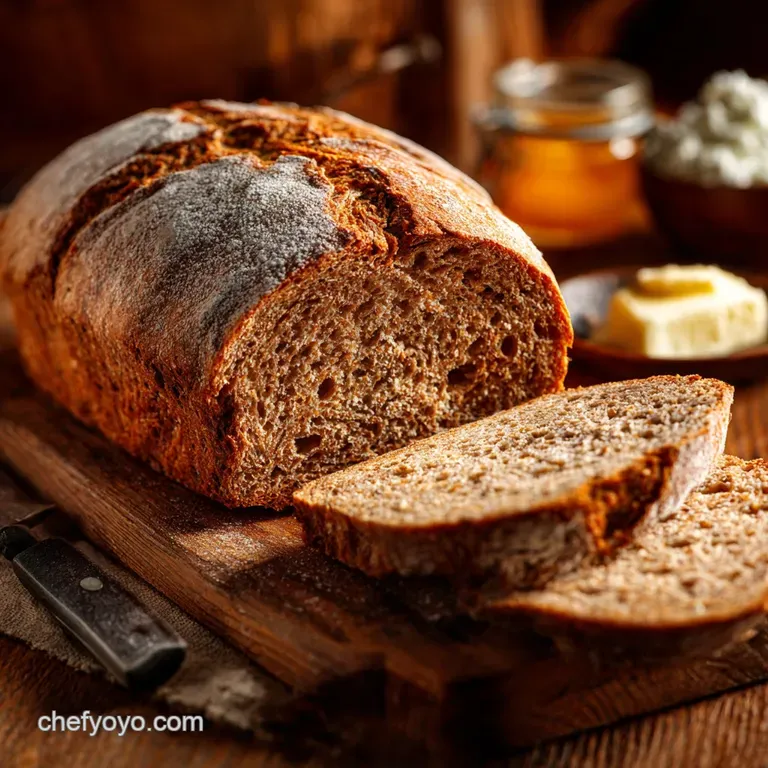
Baking Grandma Prudys Rye Bread is an experience far removed from purchasing a generic supermarket loaf. This particular formulation stands out because it masterfully balances the inherent earthiness and sometimes overpowering density of traditional rye flours with a delightful sweetness and a remarkably soft crumb.
Unlike many Homemade Rye Bread attempts that result in a brick, this recipe achieves a perfect harmony between sturdiness and tenderness. It truly is the definitive Traditional Rye Loaf —robust enough for a hearty sandwich yet tender enough to simply enjoy with a smear of good butter.
The secret lies in balancing the flour types and embracing the long, slow, crucial fermentation time.
Decoding the Secret: Molasses, Treacle, and Tangy Flavor Balance
The deep, resonant flavor and rich mahogany color of this bread are not solely derived from the rye flour; they are the result of adding a generous 1/4 cup (80 grams) of molasses, or black treacle if you seek a truly intense, slightly bitter sweet note.
This liquid sweetener does more than just add flavor; it is chemically essential. It provides readily available sugars to the active dry yeast (2 1/4 teaspoons / 7 grams), kickstarting the fermentation process faster and encouraging better overall lift.
On top of that,, the molasses acts as a humectant, helping the resulting loaf retain moisture, ensuring the crumb remains soft and chewy for several days.
The Unbeatable Texture: Soft Crumb Meets Sturdy, Rustic Crust
The perfect texture is achieved by the ratio of flours. We combine 1 1/2 cups (180 grams) of dark rye flour with a much larger portion 2 1/2 cups (300 grams) of strong white bread flour. Rye flour, being low in gluten, would create a very dense loaf if used predominantly.
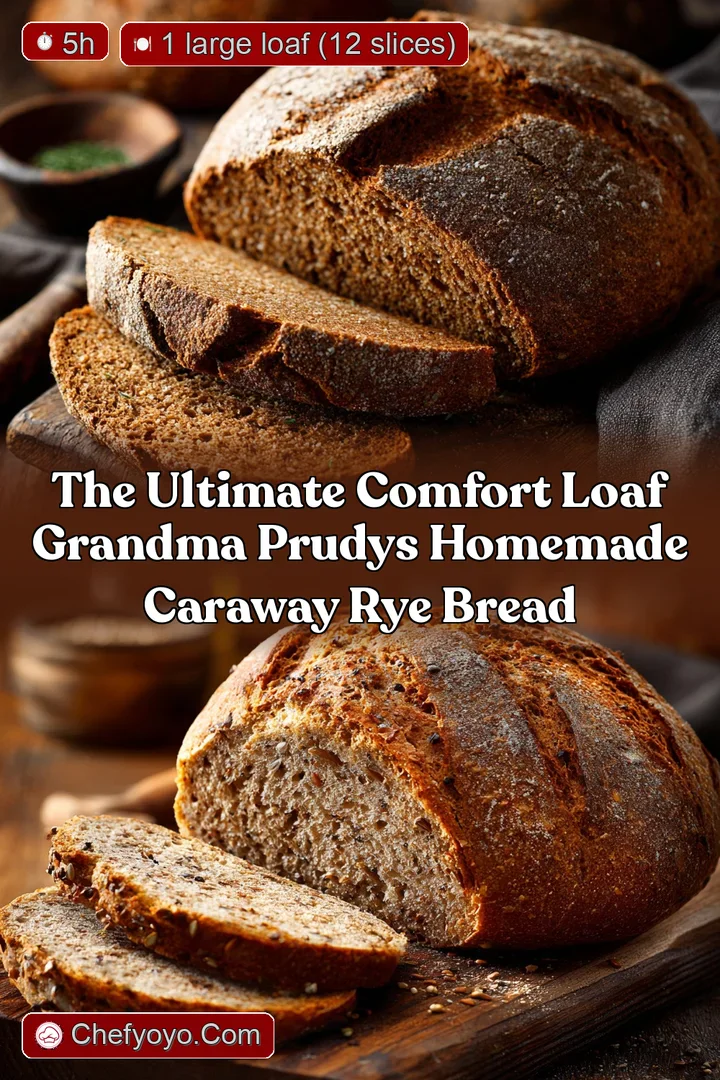
By supporting the rye with high gluten bread flour, we guarantee the necessary structure for a beautiful rise while retaining the rustic flavor profile. The result of this blend and a meticulous kneading schedule (8 to 10 minutes by machine) is a deeply satisfying, soft interior contrasted perfectly by the wonderfully sturdy, dark Rustic Caraway Rye crust.
Embracing the Legacy: Why This Is the Best Grandma Prudys Rye Bread Recipe
This isn't just a Rye Bread Recipe ; it is a commitment to quality baking passed down through generations. What makes this version of Grandma Prudys Rye Bread so superior is the careful inclusion of 2 tablespoons (15 grams) of caraway seeds, providing the signature aromatic spice that defines this loaf.
The technique, which demands patience through multiple proofing stages, ensures maximum flavor development and optimal texture, demonstrating that simple, high-quality ingredients handled correctly always yield the most outstanding results.
Essential Provisions for Authentic Rye Baking
To ensure your Caraway Rye Bread Recipe turns out perfectly, focusing on ingredient quality and temperature control is paramount. You will need 1 1/2 cups (355 ml) of perfectly lukewarm water (between 105°F and 115°F is critical for yeast activation), high-quality active dry yeast, and the aforementioned molasses.
For the dry component, ensure your dark rye flour is fresh, and pair it with strong bread flour (or "strong white flour") for maximum gluten potential. Finally, 2 teaspoons (10 grams) of fine sea salt provides structure and flavor control, while 2 tablespoons (28 grams) of unsalted butter adds richness and tenderness to the final crumb.
Required Tools and Preparations Before Mixing
Preparation is arguably the most crucial step in any successful bread venture. Gathering your equipment and ensuring your environment is optimized saves time and prevents measurement errors.
Sourcing the Perfect Rye Flour (Pumpernickel vs. Light Varieties)
When selecting the flour for this Homemade Rye Bread , we use dark rye, which includes more of the grain’s bran and germ, imparting a deeper color and earthier flavor than light rye.
Crucially, we are not using pumpernickel flour (which is typically coarser and sometimes necessitates a pre-ferment to manage its density). The ratio here more bread flour than rye is deliberately calibrated to create an Easy Homemade Rye Bread that reliably achieves excellent volume.
Caraway Considerations: Whole Seeds vs. Crushed Aromatics for Intensity
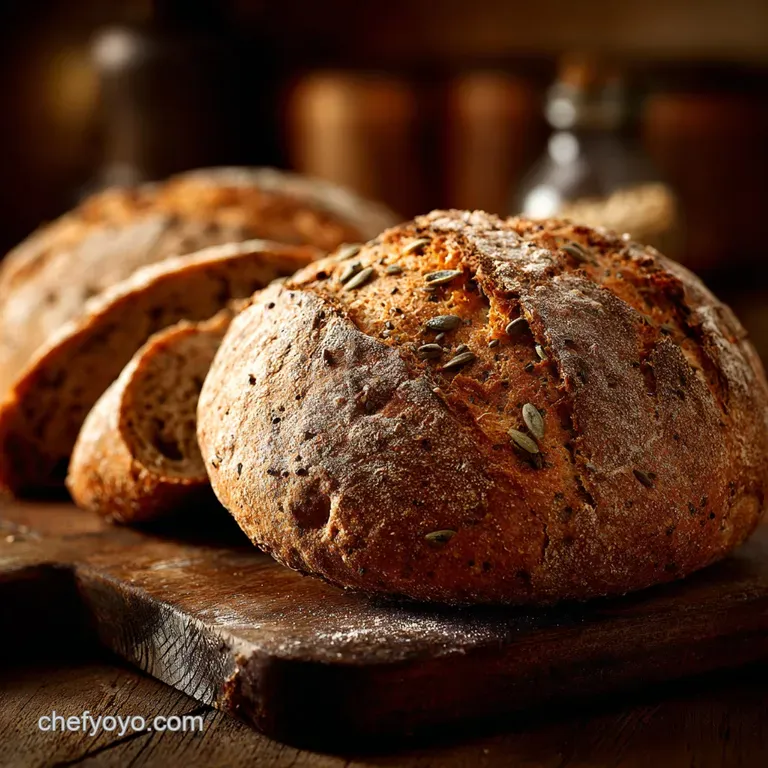
The classic Rustic Caraway Rye relies heavily on the aromatic kick of caraway seeds. Grandma Prudy always preferred whole seeds (2 tablespoons) mixed directly into the dough during the dry ingredient phase.
While crushing the seeds slightly can release more immediate volatile oils, incorporating them whole ensures a burst of flavor in every slice and maintains an authentic, traditional appearance.
The Role of Liquid Sweeteners in Rye Dough Chemistry
As noted earlier, molasses acts as both a flavor agent and a necessary chemical component. When combining the lukewarm water, yeast, and molasses, allowing this mixture to stand for 5 to 10 minutes until frothy confirms the yeast is active.
This process, often called creating a sponge, is fundamental to guaranteeing a strong rise later on. The addition of 2 tablespoons of melted butter, stirred in before the dry ingredients, enriches the dough and keeps the crumb soft.
Must Have Equipment for Kneading and Proofing Success
While kneading by hand (12 to 15 minutes of effort) is achievable, a sturdy stand mixer fitted with a dough hook attachment significantly streamlines the 8 to 10 minutes required for proper gluten development.
The two non-negotiable tools are a digital kitchen scale for precise flour measurement and an instant read thermometer to check the critical water temperature. Finally, you’ll need a standard 9x5 inch loaf pan, lightly greased and prepared, to house the loaf during the final proof and bake.
Related Recipes Worth Trying
- The Best Moist Zucchini Bread Recipe Foolproof Loaf — Tired of dry baking This Easy Zucchini Bread Recipe guarantees a wonderfully moist loaf perfect with a cup of tea Get the secret trick now
- The Best Crispy Air Fryer Chicken Parmesan Recipe — Ditch the deep fryer This 30minute Air Fryer Chicken Parmesan recipe delivers ultimate crunch without the oil A guaranteed weeknight hero
- The Bakers Secret Seriously Moist Banana Bread Recipe — Tired of dry loaves This easy Banana Bread Recipe guarantees a tender crumb using just a few simple tricks Perfect for your overripe bananas
Mastering the Dough: step-by-step Mixing and Shaping
The journey to an excellent Traditional Rye Loaf involves careful handling from the first mix to the final form.
Achieving Peak Hydration: The Initial Mixing Phase
Once your yeast/molasses sponge is active, pour in the melted butter. In a separate bowl, ensure the dark rye flour, strong white flour, caraway seeds, and salt are thoroughly combined. Gradually add this dry mixture to the wet components.
Start mixing slowly (either by hand or with the dough hook) until a shaggy, slightly sticky mass forms. This gradual incorporation ensures peak hydration without accidentally over flouring the dough. Continue kneading until the dough is smooth, elastic, and pulls cleanly away from the sides of the bowl.
The Patience Game: First Proofing and Bulk Fermentation Timing
Bread making is a lesson in patience, particularly when dealing with rye. The first proof (bulk fermentation) is critical for flavor development. Place the kneaded dough into a lightly oiled bowl, cover it tightly, and allow it to rest in a warm, draught free location for a total of 1.5 to 2 hours.
This rise time is non-negotiable; the dough must truly double in size to achieve that coveted light texture. Rushing this stage is the primary reason homemade loaves often turn out dense.
Expert Shaping Techniques for a Beautifully Rounded Loaf
After the first rise, gently deflate the dough do not punch it aggressively. Turn the dough onto a lightly floured surface. To achieve the beautiful rise characteristic of Grandma Prudys Rye Bread , the dough must be shaped tightly.
Roll and tuck the edges under, creating a taut, uniform oval log that perfectly fills the length of your prepared 9x5 inch loaf pan. Place the shaped dough into the pan, cover loosely, and allow it to undergo the second rise (the final proof) for another 1 to 1.
5 hours until it looks noticeably puffy and has nearly doubled in volume again.
The Bake: Optimal Temperatures and Steam Setup
Preheating the oven 20 minutes before baking is essential to ensure the heat is stable. Set your oven to 375°F (190°C). Before the loaf enters the oven, brush the top gently with the egg white and water mixture, which ensures a glossy, golden finish.
Sprinkle the extra caraway seeds over the wash for maximum aesthetic appeal and aroma.
Creating Oven Steam for a Superior Crust
While we do not use an explicit steam recipe here, if you want to emulate the bakery quality crust often seen in this style of Swedish Rye Bread Recipe , consider placing an empty, heavy metal pan on the bottom rack while the oven preheats.
Just as you place the bread in the oven, carefully pour a cup of hot water into the empty pan to generate a burst of steam. This humidity keeps the crust soft initially, allowing the loaf to expand fully before the crust sets, leading to a thinner, crisper texture.
The loaf should bake for 35 to 40 minutes. It is fully cooked when the internal temperature registers between 200°F and 210°F (93°C to 99°C).
Immediately remove the loaf from the pan and cool it completely on a wire rack for at least 60 minutes before slicing.
Troubleshooting Common Issues When Making Grandma Prudys Rye Bread
Even experienced bakers encounter hurdles. Knowing how to diagnose issues ensures your next loaf of Homemade Rye Bread is even better.
Why Is My Rye Loaf Too Dense? (And How to Fix It)
A dense crumb is usually linked to two main errors. First, inadequate kneading: if the dough does not pass the "windowpane test" (stretching a small piece thin enough to see light through without tearing), the gluten is undeveloped. Second, rushing the proofing. If you skip the full 3 to 3.
5 hours of total rise time, the yeast hasn't produced enough gas to create that light, airy structure. Ensure your proofing environment is consistently warm (using a turned off oven with a boiling water pan can help immensely).
Finally, slicing warm rye bread gelatinizes the starches, guaranteeing a gummy, dense texture patience during cooling is key.
Storage Secrets: Keeping the Comfort Loaf Fresh for Days
Due to the generous inclusion of molasses and melted butter, this Easy Homemade Rye Bread stays fresh and moist longer than many simple white breads. Once completely cool, store the loaf tightly wrapped in plastic wrap or foil at room temperature.
For longer storage, slice the cooled loaf, wrap the slices in freezer paper, and freeze them. They can be toasted directly from the freezer, offering fresh rye bread on demand.
Beyond Butter: What Pairs Perfectly with This Classic Rye
The strong, aromatic flavor of this Rustic Caraway Rye makes it an ideal companion for robust flavors. For a classic deli experience, serve thick slices with smoked salmon, cream cheese, and capers.
It shines alongside salty components, making it the perfect base for a ploughman’s lunch featuring sharp, robust cheddar and tangy pickles. For dinner, it beautifully complements hearty, acidic soups like traditional Borscht, where the sweetness of the bread contrasts brilliantly with the sour notes of the soup.
Customizing Your Loaf: Seed Variations and Molasses Swaps
While the original Grandma Prudys Rye Bread uses caraway, you can introduce other seeds for variation. Poppy seeds or fennel seeds can be added alongside or substituted for the caraway.
For a savory twist, try adding 1/4 cup of dried, minced onion flakes along with the caraway during the dry ingredient mixing. If you prefer a slightly less intense flavor than molasses or black treacle, you can successfully substitute it with an equal measure of honey or dark maple syrup, though note that the final color and flavor profile of this Swedish Rye Bread Recipe inspired loaf will be slightly lighter.
Recipe FAQs
My kitchen is a bit chilly. How do I ensure this Grandma Prudys Rye Bread rises properly and doesn't end up like a brick?
That's a classic bread making conundrum, especially in a draughty British kitchen! The trick is to create a small, warm haven for the dough. Turn your oven off (crucially!) and place the bowl inside, alongside a pan of boiling water.
This steam creates the perfect warm, humid atmosphere, ensuring the yeast wakes up properly and your Grandma Prudys Rye Bread gets a brilliant lift.
I really don’t fancy caraway seeds. Can I leave them out or use something else in this recipe?
Absolutely, it would be a tragedy to miss out on this smashing loaf just because of the seeds! You can ditch them entirely for a simpler, earthy rye flavour. Alternatively, for a different aromatic twist, substitute them with 1 tablespoon of fennel seeds, which complement the molasses beautifully, or add a mix of poppy and sesame seeds for a bit of crunch.
This loaf is huge! What’s the best way to store homemade rye bread so it doesn’t go stale quickly?
Homemade bread lacks the preservatives of the shop bought varieties, so careful storage is key. Once completely cooled (never before!), store it tightly wrapped in a cotton or linen bread bag at room temperature. Avoid the refrigerator, as that actually encourages staling.
For longer keeping, slice the loaf and freeze the slices in an airtight bag they toast wonderfully straight from the freezer.
Why does this "rye" bread use more strong white flour than dark rye flour? Won’t that taste bland?
That’s Grandma Prudy's secret to achieving a light and chewy loaf, rather than a dense one! Rye flour has very little gluten, meaning a loaf made mostly of rye won't trap gas well and will be very heavy. The strong white bread flour provides the necessary gluten structure, allowing the dough to rise high.
This blend ensures you retain that deep, earthy rye flavour without sacrificing that desirable soft crumb.
I only have light syrup, not dark molasses or black treacle. Will that ruin the texture?
Structurally, the bread will still work perfectly, so don't fret! However, dark molasses or black treacle provides that deep, rich, slightly smoky colour and bitter complexity that defines traditional rye. If you use light syrup, the loaf will be slightly sweeter and lighter in colour.
A handy chef’s trick is to incorporate a tablespoon of unsweetened cocoa powder alongside the flours to help restore some of that deep, earthy hue.
Grandma Prudys Rustic Caraway Rye Loaf
Ingredients:
Instructions:
Nutrition Facts:
| Calories | 7694 kcal |
|---|---|
| Protein | 127.7 g |
| Fat | 122.7 g |
| Carbs | 424.4 g |
| Fiber | 133.4 g |
| Sodium | 586 mg |
