Greek Meatball Bowl Recipe with Tzatziki
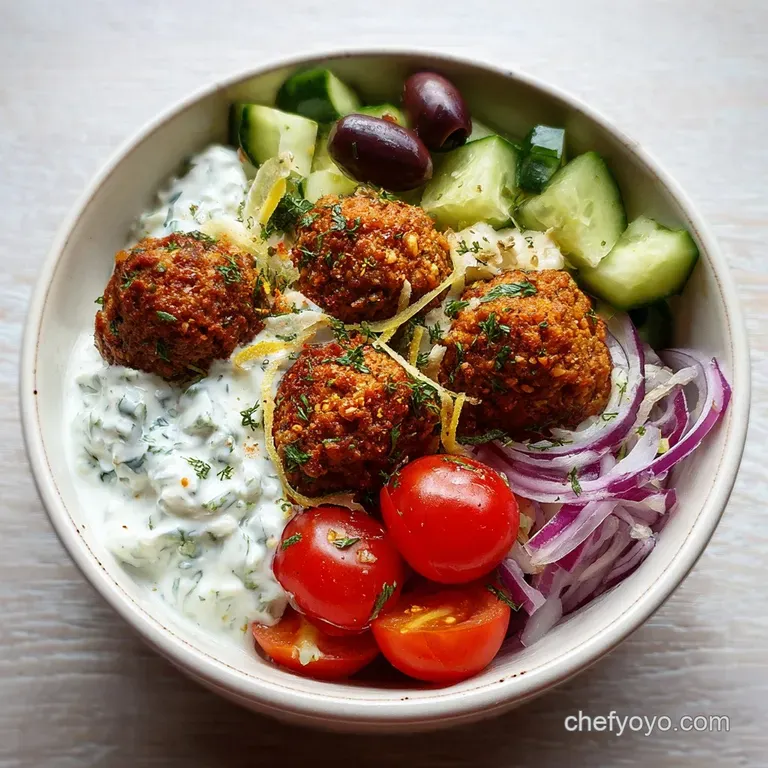
- Time: Active 25 mins, Passive 20 mins, Total 45 mins
- Flavor/Texture Hook: Sizzling, herb crusted meatballs paired with velvety, cool tzatziki
- Perfect for: Stress free dinner parties or an artisanal meal prep upgrade
- Experience the Rustic Aromas of This Greek Meatball Bowl Recipe
- Core Metrics for Your Occasion Ready Mediterranean Meatball Bowl
- The Artisanal Selection for a Healthy Greek Meatball Bowl
- The Curated List for an Easy Greek Meatball Bowl
- Necessary Tools for a Successful Mediterranean Meatball Bowl
- Executing the Culinary Steps for This Recipe
- Solving Common Kitchen Problems With These Fixes
- Delicious Flavor Variations for Your Mediterranean Meatball Bowl
- Storing and Reheating Guide for Best Quality
- Beautiful Serving Suggestions for Any Occasion
- Debunking Some Common Kitchen Myths
- Recipe FAQs
- 📝 Recipe Card
Experience the Rustic Aromas of This Greek Meatball Bowl Recipe
The air in my kitchen thickens with the scent of dried oregano and searing beef, a smell that instantly transports me back to a tiny taverna in Crete where I first understood that meatballs weren't just for spaghetti.
I remember watching an elderly woman grate onions directly into a bowl of ground meat, her hands moving with a rhythmic grace that only decades of practice can produce. When I finally recreated this greek meatball bowl recipe at home, that first sizzle in the pan felt like a victory, a bridge between my suburban kitchen and the sun drenched Mediterranean coast.
There is something deeply grounding about rolling these meatballs by hand, feeling the texture of the panko and the coolness of the grated onion. I used to think the cinnamon was a mistake a dessert spice lost in a savory world but once you taste how it dances with the cumin, you’ll never go back.
This isn't just a quick dinner; it's a collection of textures, from the snap of fresh cucumbers to the creamy crumble of feta, all resting on a bed of fluffy basmati rice.
We are going for a dish that feels artisanal yet approachable, something you’d be proud to serve at a gathering but easy enough to whip up on a Tuesday. You can expect a meal that hits every sensory note: the warmth of the meat, the chill of the yogurt, and the briny punch of Kalamata olives.
Honestly, after you try this, those bland takeout bowls will lose their luster forever.
Core Metrics for Your Occasion Ready Mediterranean Meatball Bowl
To ensure your greek meatball bowl recipe turns out exactly like the photos, we need to focus on a few technical checkpoints. Whether you are scaling this up for a garden party or keeping it intimate for a family dinner, timing and temperature are your best friends.
These meatballs rely on a quick sear followed by a brief rest to maintain their interior moisture.
The Thermal Precision Guide
| Meatball Size | Internal Temp | Rest Time | Visual Cue |
|---|---|---|---|
| 1.5 inch ball | 160°F | 5 mins | Golden brown crust, clear juices |
| 2 inch ball | 160°F | 7 mins | Deep mahogany exterior, firm touch |
| 1 inch (mini) | 160°F | 3 mins | Rapid browning, snappy texture |
Maintaining these metrics prevents the common tragedy of the "rubbery meatball." By pulling them off the heat at the right moment, we allow the residual heat to finish the job without drying out the proteins. If you are looking for a different profile, you might enjoy the classic comfort of a Spaghetti and Meatballs recipe for those colder nights when only red sauce will do.
The Artisanal Selection for a Healthy Greek Meatball Bowl
Science tells us that a great meatball isn't just about the meat; it's about the "panade" or the binder that keeps things tender. When we mix breadcrumbs with milk and grated onion, we create a moisture reservoir that prevents the beef proteins from tightening into a hard little rock.
This is the foundation of any healthy greek meatball bowl recipe.
Component Analysis
| Ingredient | Science Role | Pro Secret |
|---|---|---|
| Grated Onion | Moisture Delivery | Grate it directly over the meat to catch every drop of juice. |
| Red Wine Vinegar | Protein Denaturation | The acidity breaks down tough fibers, ensuring a tender bite. |
| Panko Breadcrumbs | Structural Integrity | Panko stays airy, preventing the meatball from becoming too dense. |
| Plain Greek Yogurt | Emulsification Base | Use full fat yogurt for a thicker, more stable tzatziki sauce. |
The interaction between the vinegar and the ground beef is a subtle magic trick. It provides a bright top note that cuts through the fat, while the cinnamon adds an earthy mystery that people can never quite place but always love.
The Curated List for an Easy Greek Meatball Bowl
For this greek meatball bowl recipe, we are using fresh, high-quality ingredients that honor traditional Mediterranean flavors. I always recommend shopping the perimeter of the grocery store for the freshest herbs and produce.
- 1 lb Ground Beef (90/10):Why this? Provides enough fat for flavor without being overly greasy in the bowl.
- Substitute: 1 lb Ground Lamb for a more traditional, gamey flavor profile.
- 1 small yellow onion, grated:Why this? Melts into the meat, providing moisture without chunky textures.
- Substitute: Grated shallots for a milder, sweeter aromatic base.
- 3 cloves garlic, minced:Why this? Essential for that punchy, savory backbone.
- Substitute: 1.5 tsp garlic paste if you're in a hurry.
- 0.5 cup Panko breadcrumbs:Why this? Large surface area absorbs more moisture than standard crumbs.
- Substitute: Almond flour for a gluten-free option (note: result will be denser).
- 2 tbsp milk:Why this? Hydrates the breadcrumbs to create a soft panade.
- Substitute: Unsweetened almond milk or water works in a pinch.
- 0.25 cup fresh parsley, chopped:Why this? Adds a grassy freshness that lightens the heavy meat.
- Substitute: Fresh cilantro for a non traditional but bright twist.
- 1 tbsp dried oregano:Why this? The quintessential herb for an authentic Greek profile.
- Substitute: Dried marjoram for a slightly more floral aroma.
- 1 tsp cumin & 0.5 tsp cinnamon:Why this? The secret duo for deep, Mediterranean warmth.
- Substitute: Ground coriander can replace cumin for a citrusy note.
- 1 tbsp red wine vinegar:Why this? Adds a necessary zing and tenderizes the beef.
- Substitute: Lemon juice or apple cider vinegar.
- 1 tsp kosher salt & 0.5 tsp cracked black pepper:Why this? Enhances all other flavors in the mix.
- 1 cup Plain Greek Yogurt:Why this? Creates a thick, creamy base for the tzatziki.
- Substitute: Sour cream (though it's less traditional and more tart).
- 0.5 English cucumber, grated and squeezed:Why this? Essential for the tzatziki's crunch and hydration.
- 2 cloves garlic, pressed & 1 tbsp lemon juice & 1 tbsp fresh dill:Why this? The holy trinity of tzatziki seasoning.
- Vegetable Accoutrements: 1 cup cherry tomatoes (halved), 1 cup cucumber (diced), 0.25 red onion (thinly sliced), 8 Kalamata olives.
- 2 cups cooked Basmati rice:Why this? A light, fragrant base for the bowl.
- 0.25 cup Feta cheese & 1 tbsp fresh mint:Why this? The final salty and cooling garnishes.
Necessary Tools for a Successful Mediterranean Meatball Bowl
You don't need a professional kitchen to pull off this greek meatball bowl recipe, but a few specific tools make the process much smoother. I personally swear by a box grater for the onion and cucumber; it's faster and cleaner than trying to mince things into a pulp by hand.
- Large Mixing Bowl: For combining the meatball ingredients without making a mess.
- Box Grater: For the onion and the cucumber this is non negotiable for texture.
- Fine Mesh Sieve or Clean Kitchen Towel: To squeeze every ounce of water out of the grated cucumber.
- Large Skillet: Cast iron or heavy bottomed stainless steel is best for getting that perfect sizzle.
- Small Mixing Bowl: For whisking together the tzatziki.
- Meat Thermometer: To ensure the meatballs reach exactly 160°F without overcooking.
Chef's Tip: Freeze your onion for 10 minutes before grating. This prevents the "onion tears" by slowing down the release of the sulfuric compounds that irritate your eyes!
Executing the Culinary Steps for This Recipe
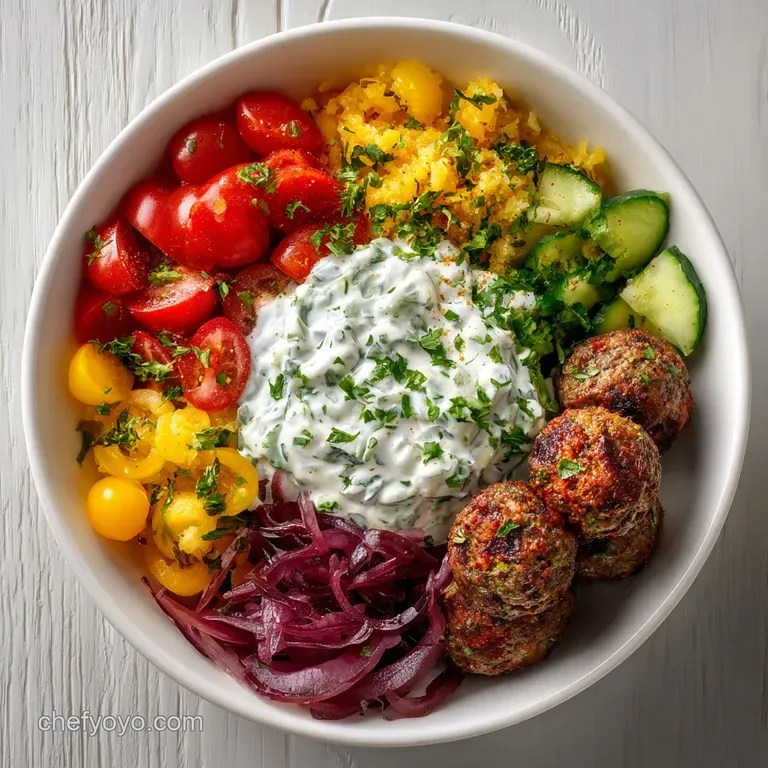
The key to a spectacular greek meatball bowl with tzatziki recipe is the order of operations. We want the rice hot, the vegetables cold, and the meatballs fresh out of the pan. Let's walk through it together.
1. Prep the Aromatic Base
In a large mixing bowl, combine the grated yellow onion (and its juice!), minced garlic, Panko, milk, red wine vinegar, and all the spices (oregano, cumin, cinnamon, salt, pepper). Let this sit for 5 minutes.
This allows the breadcrumbs to fully hydrate, creating that velvety "panade" we talked about earlier.
2. Form and Chill
Add the ground beef and chopped parsley to the aromatic base. Use your hands to gently fold everything together until just combined overmixing will lead to tough meatballs. Form into about 16-20 balls (roughly 1.5 inches each).
If you have time, chill them in the fridge for 15 minutes; this helps them hold their shape when they hit the hot oil.
3. Sizzling for Maximum Flavor
Heat 2 tbsp extra virgin olive oil in your skillet over medium high heat. Once the oil shimmers, add the meatballs. Do not overcrowd the pan. Cook for about 8-10 minutes, turning every few minutes until a deep golden crust forms on all sides and the internal temperature hits 160°F.
Remove them to a plate and let them rest.
4. Craft the Zesty Tzatziki
While the meat rests, mix the Greek yogurt, grated (and squeezed dry!) cucumber, pressed garlic, lemon juice, and fresh dill in a small bowl. Taste it it should be bright and punchy. If you want a more traditional vibe, you can use the same technique I suggest in my Zesty Keftedes Greek recipe for an even more herb forward sauce.
5. Build the Healthy Greek Meatball Bowl
Scoop 0.5 cup of warm basmati rice into four bowls. Divide the meatballs among the bowls. Arrange the cherry tomatoes, diced cucumber, red onion, and Kalamata olives around the meat. Add a generous dollop of tzatziki, a sprinkle of feta cheese, and the fresh mint leaves.
Solving Common Kitchen Problems With These Fixes
Sometimes things go sideways. Maybe the meatballs are falling apart, or the tzatziki looks more like a soup than a sauce. Don't panic! Most of these issues are easily fixed once you understand the root cause.
The Troubleshooting Table
| Problem | Root Cause | Solution |
|---|---|---|
| Meatballs Falling Apart | Too much moisture or not enough binder. | Add 1-2 tbsp more Panko or chill the mix for 30 mins before frying. |
| Watery Tzatziki | Cucumber wasn't squeezed dry enough. | Strain the sauce through a coffee filter for 20 mins to thicken. |
| Meatballs are Tough | Overmixing the meat or using lean beef. | Fold ingredients gently; don't use beef leaner than 90/10. |
Common Mistakes Checklist
- ✓ Squeeze the cucumber until it feels like dry paper; any leftover water will ruin your sauce.
- ✓ Don't skip the rest period; the juices need time to redistribute so the first bite is succulent, not dry.
- ✓ Preheat your skillet for at least 3 minutes; you want that immediate sizzle to lock in flavor.
- ✓ Use fresh dill and mint; dried herbs simply cannot provide the same bright, artisanal finish in a bowl.
Delicious Flavor Variations for Your Mediterranean Meatball Bowl
One of the best things about a greek meatball rice bowl recipe is how easily it adapts to your pantry or dietary needs. You can swap the protein or the grain base and still end up with something incredible.
Decision Shortcut
- If you want a lighter meal, do a greek turkey meatball bowl recipe by swapping the beef for ground turkey and adding 1 tbsp of olive oil to the mix for fat.
- If you want a lower carb count, do a low carb mediterranean meatball bowl by replacing the rice with cauliflower rice or a bed of baby spinach.
- If you want a more intense flavor, do a greek lamb meatball bowl recipe using ground lamb and doubling the amount of fresh mint.
Quick Shortcut Comparison
| Fresh Approach | Shortcut Version | Resulting Difference |
|---|---|---|
| Hand rolled meatballs | Frozen pre cooked meatballs | Fresh is more tender; frozen is faster but can be rubbery. |
| Homemade Tzatziki | store-bought Tzatziki | Homemade is zingier and less salty than tub versions. |
| Grated Fresh Onion | Onion Powder | Fresh provides essential moisture; powder is strictly for flavor. |
If you find yourself craving a different type of comfort, you might want to look at a Silky Swedish Meatballs recipe. It uses a similar panade technique but swaps the Mediterranean zest for a velvety cream sauce that is purely soul warming.
Storing and Reheating Guide for Best Quality
This greek meatball bowl recipe is a champion for meal prep because the flavors actually deepen as they sit. However, you have to be smart about how you pack it.
Fridge Storage: Keep the components separate! Store the meatballs, rice, and fresh vegetables in different containers. The meatballs will stay fresh for up to 4 days, while the tzatziki is best within 3 days.
Freezing: You can freeze the cooked meatballs for up to 3 months. To freeze, place them on a baking sheet until solid, then transfer to a freezer bag. Do not freeze the tzatziki or the fresh salad components, as the texture will be destroyed upon thawing.
Reheating: For the best "shatter crisp" exterior, reheat meatballs in an air fryer at 350°F for 5 minutes. Alternatively, use a microwave at 50% power to prevent the meat from becoming rubbery.
Always add the cold tzatziki and veggies after reheating the meat and rice.
Zero Waste Tip: Have leftover cucumber and mint? Toss them into a pitcher of water for a refreshing spa style drink. Leftover feta can be whipped with a little olive oil to make a decadent spread for toast the next morning.
Beautiful Serving Suggestions for Any Occasion
When serving this mediterranean meatball bowl, presentation is everything. Start with a wide, shallow bowl rather than a deep one so all the colorful components are visible. I like to "shingle" the vegetables in sections around the meatballs to create a rainbow effect.
For a dinner party, serve the components "family style" on a large rustic platter. Pile the rice in the center, surround it with the meatballs, and place bowls of tzatziki, olives, and feta on the side. This allows guests to build their own easy greek meatball bowl recipe to their liking.
Pair this dish with a crisp, dry white wine like an Assyrtiko or a chilled rosé. The acidity in the wine will mirror the lemon in the tzatziki and cut through the richness of the beef. If you're looking for another meatball focused meal that brings the heat, my Comforting Abondigas recipe is a fantastic alternative for those who love a spicy tomato sauce base.
Debunking Some Common Kitchen Myths
Myth: You must use egg to hold meatballs together. Actually, the starch and liquid panade (panko and milk) is often superior to egg. While eggs provide structure through protein coagulation, a panade creates a gel like matrix that holds moisture, resulting in a much more tender, artisanal texture.
Myth: Searing meat "seals in the juices." This is a classic kitchen tale. Searing is actually about the Maillard reaction the chemical reaction between amino acids and reducing sugars that gives browned food its distinctive flavor.
The juices are retained by not overcooking the meat and letting it rest, not by the "crust" itself.
Myth: Authentic Greek meatballs are always deep fried. While frying is common, pan searing or even baking is perfectly traditional in many Greek households. The goal is the flavor profile and the texture, not necessarily the specific method of fat immersion.
This healthy greek meatball bowl recipe uses pan searing to get that crust without the heaviness of deep frying.
Recipe FAQs
Can I substitute ground turkey for the beef in this Greek meatball bowl recipe?
Yes, but adjust your fat content. Ground turkey is leaner, so add 1 tablespoon of olive oil to the mix to ensure the meatballs remain moist and don't become dry or crumbly.
How do I prevent my tzatziki sauce from becoming watery?
Grate the cucumber and squeeze it forcefully. Use a fine mesh sieve or a clean kitchen towel to remove as much liquid as possible after grating; this prevents dilution of the yogurt base.
How long must the meatballs rest after cooking to stay juicy?
Rest the meatballs for a minimum of 5 minutes. This allows the internal juices, which have been driven to the center by the heat, to redistribute throughout the meatball, ensuring every bite is succulent.
What is the purpose of adding cinnamon to savory Greek meatballs?
Cinnamon adds depth and authentic warmth to the spice profile. It pairs beautifully with cumin, balancing the savory meat and the tang of the feta and vinegar, which is a common technique in Mediterranean cooking.
Is it true that you need to add egg to the meatball mixture?
No, this is a common misconception. We rely on the hydrated Panko breadcrumbs and grated onion (the panade) to bind the mixture and lock in moisture, resulting in a significantly more tender meatball than one relying solely on egg.
How should I prepare the components if I am meal prepping this bowl for the week?
Keep the meatballs, rice, and tzatziki separate during storage. The meatballs freeze well for up to 3 months, but the fresh vegetables and yogurt sauce should be stored individually and assembled just before eating for the best texture.
What is the ideal internal temperature the meatballs must reach?
Pull the meatballs off the heat once they reach exactly 160°F. Use a thermometer to check; this temperature ensures safety without overcooking the proteins, keeping the interior tender while developing the exterior crust.
Greek Meatball Bowl Recipe
Ingredients:
Instructions:
Nutrition Facts:
| Calories | 458 kcal |
|---|---|
| Protein | 31.2 g |
| Fat | 19.8 g |
| Carbs | 38.5 g |
| Fiber | 2.4 g |
| Sugar | 4.1 g |
| Sodium | 785 mg |
