Tender Sausage Balls: Why Cream Cheese Makes Them Perfect
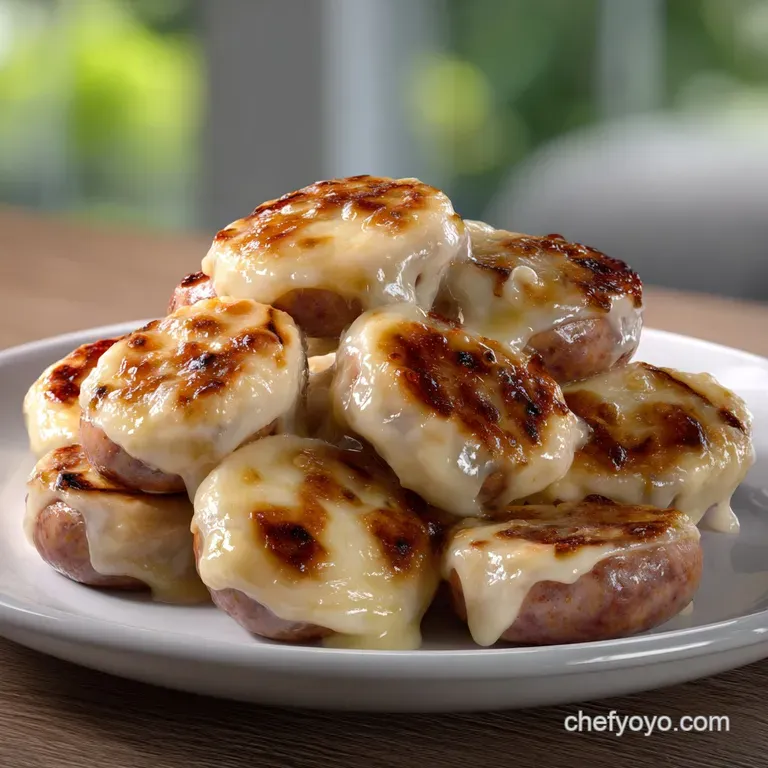
- Effort/Time: 35 minutes total (low-effort, high-yield).
- Flavor Hook: Smoked paprika and sharp cheddar provide a deep, mahogany crust with a spicy, savory core.
- Perfect for: Game-day gatherings, holiday brunches, or make-ahead meal prep.
- Engineering the Perfect Texture in Savory Sausage Balls
- The Scientific Principles of Moisture Retention and Emulsification
- Standard Production Metrics for High-Yield Appetizer Batches
- The Alchemy of Umami: Selecting Your Primary Elements
- Technical Apparatus for Consistent Aeration and Thermal Transfer
- A Systematic Protocol for Molecular Integration and Baking
- Resolving Structural Failures and Correcting Common Texture Anomalies
- Adaptive Flavor Architectures and Ingredient Substitution Strategies
- ⚗️ The Scaling Lab: The Physics of Quantity
- Common Myths
- Thermal Recovery Protocols and Long-Term Preservation Methods
- Curating the Sensory Experience through Complementary Flavor Profiles
- Recipe FAQs
- 📝 Recipe Card
Engineering the Perfect Texture in Savory Sausage Balls
There is nothing more demoralizing than hosting a party only to realize your guests are quietly choking down dry, leaden protein lumps that require a full glass of water to swallow.
I’ve seen hundreds of dollars of Jimmy Dean sausage and Tillamook cheddar wasted because the ratio of binder to fat was calculated incorrectly, resulting in a "sawdust" texture that lacks any structural integrity.
It is a technical failure that leaves your kitchen smelling like a grease fire and your pride in the gutter.
I once destroyed three consecutive batches for a neighborhood potluck because I tried to speed up the process using pre-shredded cheese from a bag. I didn't account for the cellulose anti caking agents, which acted as a moisture barrier and prevented the cheese from ever truly emulsifying with the sausage balls dough.
The result was a gritty, separated mess that leaked oil across the Lodge baking sheet and left me apologizing to twenty hungry neighbors. It was a humbling lesson in the chemistry of dairy and the necessity of fresh grating.
The scientific breakthrough came when I realized that standard sausage balls rely too heavily on the fat from the pork alone, which often renders out too quickly in a over high heat environment.
By introducing a secondary fat softened Philadelphia Cream Cheese we create a stabilized emulsion. This prevents the pork fat from escaping, while the lactic acid in the cream cheese tenderizes the gluten in the Bisquick, ensuring a velvety interior and a snappy, golden brown exterior.
The Scientific Principles of Moisture Retention and Emulsification
- Lipid Stabilization: Cream cheese acts as a powerful emulsifier, binding the rendering pork fat to the starch molecules in the baking mix.
- Gluten Inhibition: The acidic pH of cream cheese limits gluten network formation, preventing the sausage balls from becoming tough or rubbery during the 20 minute bake.
- Maillard Enhancement: Freshly grated cheddar contains natural sugars and proteins that undergo the Maillard reaction at 285°F (140°C), creating a complex, savory crust.
- Thermal Expansion: Chemical leaveners in the Bisquick react to heat, creating micro pockets of steam that provide a light, airy crumb within the dense meat matrix.
Standard Production Metrics for High Yield Appetizer Batches
- Preparation Phase: 15 minutes
- Thermal Transformation: 20 minutes
- Total Cycle Time: 35 minutes
- Output Yield: 40 servings
The Alchemy of Umami: Selecting Your Primary Elements
| Ingredient | Chemical/Physical Role (Science) | The Pro Secret (Why This Matters) |
|---|---|---|
| 1 lb Bulk Pork Sausage | Protein denaturation provides structure | Why this? Fat-to-lean ratio (usually 30/70) is essential for moisture. |
| 8 oz Sharp Cheddar | Fat release and flavor crystallization | Why this? High fat aged cheese melts into the starch matrix. |
| 2 cups Bisquick | Starch gelatinization and leavening | Why this? Pre-mixed leaveners ensure consistent rise without weighing. |
| 4 oz Cream Cheese | Emulsification and moisture barrier | Why this? Stabilizes the fat/starch bond to prevent greasiness. |
- 1/2 tsp Garlic Powder
- Adds pungent, savory depth.
- 1/2 tsp Onion Powder
- Provides a subtle, sweet aromatic base.
- 1/4 tsp Smoked Paprika
- Introduces a wood fired aroma and enhances the mahogany color of the sausage balls.
Technical Apparatus for Consistent Aeration and Thermal Transfer
- KitchenAid Stand Mixer: Using the paddle attachment is the most efficient way to achieve a homogenous emulsion without overworking the dough. Hand mixing often leads to "warm hand syndrome," where the cheese fat begins to melt before the sausage balls even hit the oven.
- Lodge Cast Iron Baking Sheet or Heavy Rimmed Sheet Pan: A heavy gauge pan provides better thermal mass, preventing the bottoms from scorching while the centers cook.
- Microplane or Box Grater: Essential for processing the Tillamook Sharp Cheddar; the increased surface area of fresh shreds allows for instant melting.
- 1 Tablespoon Cookie Scoop: Ensures every one of the 40 sausage balls is identical in volume, guaranteeing they all reach the target internal temperature simultaneously.
A Systematic Protocol for Molecular Integration and Baking
- Preheat oven to 400°F (200°C) until the internal air temperature stabilizes.
- Grate 8 oz Sharp Cheddar cold until you have a pile of airy, thin ribbons. Note: Cold cheese grates cleaner and melts more evenly.
- Combine 1 lb Pork Sausage and 4 oz softened Cream Cheese in a KitchenAid bowl until the mixture is a uniform, pale pink paste. Note: This creates your primary emulsion base.
- Incorporate 1/2 tsp garlic powder, 1/2 tsp onion powder, and 1/4 tsp smoked paprika until the spices are evenly streaked through the meat.
- Fold in the freshly grated cheddar until the cheese is suspended in the meat matrix without being crushed.
- Add 2 cups Bisquick gradually until a thick, slightly tacky dough forms and pulls away from the sides.
- Scoop 1 tablespoon portions until you have 40 uniform rounds.
- Roll briefly between palms until the surface is smooth and spherical.
- Space rounds 1 inch apart on the Lodge sheet pan until the pan is organized in a grid.
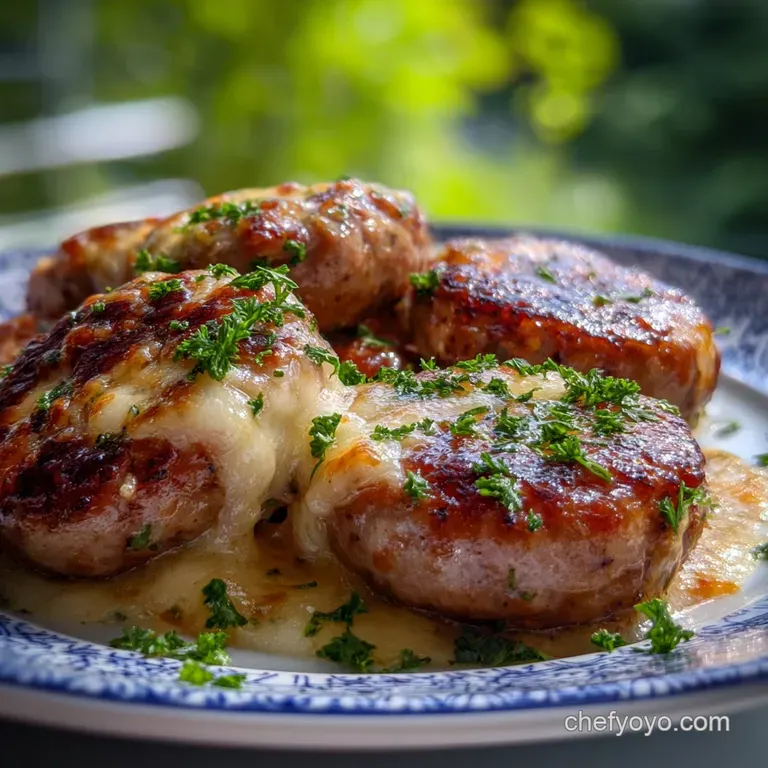
- Bake for 20 minutes until the surfaces are mahogany brown and the cheese sizzles at the base.
Chef's Note: For an even more complex flavor profile, try using a spicy "hot" variety of pork sausage. This heat pairs excellently with the creamy cheddar. If you're looking for more inspiration, these sausage balls are a great precursor to a hearty Gumbo recipe for a complete Southern themed event.
Resolving Structural Failures and Correcting Common Texture Anomalies
Why Your Sausage Balls Are Dry and Crumbly
When the starch-to-fat ratio is skewed, or if the fat renders out too quickly, the proteins contract and squeeze out moisture. This is usually caused by using a pork sausage that is too lean (less than 20% fat) or omitting the cream cheese.
| Problem | Root Cause | The Fix | Pro Protocol |
|---|---|---|---|
| Crumbly Texture | High starch, low moisture | Add 1 tbsp of milk or extra cream cheese | Mix until dough just holds together |
| Greasy Bottoms | Emulsion break/Cheap sausage | Use high-quality bulk pork; use a wire rack | Pre-chill the formed balls for 10 mins |
| Tough/Rubberwy | Overworked gluten | Reduce mixing time once Bisquick is added | Use the "pulse" method on your mixer |
Adaptive Flavor Architectures and Ingredient Substitution Strategies
Changing the core ingredients of sausage balls will alter the texture. High moisture substitutes like Greek yogurt can work but will produce a softer, less snappy ball. For another protein forward option, you might enjoy my Skillet Meatballs in recipe which uses a similar "pan-seared to oven" logic.
| Original Ingredient | Substitute | Why It Works |
|---|---|---|
| Bisquick (2 cups) | 2 cups Flour + 3 tsp Baking Powder + 1/2 tsp Salt + 2 tbsp Butter | Mimics the chemical leavening and fat content of the mix. |
| Pork Sausage | Ground Turkey + 1 tsp Sage/Fennel | Leaner; requires 1 extra tbsp of fat to prevent drying. |
| Sharp Cheddar | Pepper Jack | Adds capsaicin heat while maintaining the same melting point. |
Sausage Balls without Bisquick
If you find yourself without the yellow box, you can create a "from scratch" binder. Combine 2 cups of all-purpose flour with 1 tablespoon of baking powder and cut in 2 tablespoons of cold butter. This ensures the sausage balls still have the necessary lift and crumb structure.
The "Spicy Tex-Mex" Twist
Swap the cheddar for Pepper Jack and add a small can of drained diced green chilis. The moisture from the chilis is offset by the starch in the mix, creating a vibrant, zesty sausage balls recipe variation.
⚗️ The Scaling Lab: The Physics of Quantity
When you need to feed a stadium and decide to double this sausage balls recipe, you must respect the laws of thermodynamics.
- Flavor Saturation: For a double batch (80 balls), scale the garlic and onion powder to 1.5x (3/4 tsp each). Concentrated spices can become overpowering when scaled linearly.
- Pan Crowding: Do not attempt to fit 80 sausage balls on one sheet. This drops the oven temp and causes "steaming" rather than "roasting." You will lose the mahogany crust. Bake in two separate batches or two separate racks.
- Thermal Mass: Doubling the cold meat and cheese in one bowl means the dough will be significantly colder. This requires an extra 2 3 minutes of baking time to ensure the center reaches the safe internal temperature of 165°F (74°C).
- Carry Over Cooking: Larger batches on a single heavy pan retain more heat. Pull the sausage balls when they are golden; the internal temp will rise roughly 5°F while resting on the hot pan.
Common Myths
- Myth: You must use a hand mixer for the best texture.
- Truth: A stand mixer with a paddle attachment actually creates a superior emulsion by more effectively distributing the cream cheese into the pork fibers.
- Myth: You can't freeze the dough before baking.
- Truth: You can flash freeze the raw sausage balls on a tray for 1 hour, then bag them. They can be baked directly from frozen (add 5 7 minutes to the cook time).
Thermal Recovery Protocols and Long Term Preservation Methods
- Refrigeration: Store in an airtight container for up to 4 days.
- Freezing: These sausage balls freeze beautifully for up to 3 months. To prevent sticking, freeze them in a single layer before transferring to a heavy duty freezer bag.
- Reheating: Avoid the microwave, which turns the starch rubbery. Reheat in a 350°F (175°C) oven or an air fryer for 5 minutes until the exterior shatters when bitten.
💡 ZERO WASTE PHILOSOPHY: Don't discard the cheese rinds if you bought a block of cheddar. Transform: Toss the rinds into a simmering soup or stock.
Science: The rinds contain concentrated glutamate and fat that provide an intense umami boost and natural thickening.
Curating the Sensory Experience through Complementary Flavor Profiles
To serve the ultimate sausage balls appetizer, temperature and acidity are your best friends. These savory bites are fat-heavy, so they need a "bright" counterpoint to cleanse the palate.
- The Breakfast Spread: Serve alongside soft scrambled eggs and a fruit salad. The acidity of the fruit cuts through the richness of the pork and cheddar.
- Sausage Balls Dipping Sauce: A honey mustard or spicy ranch provides the necessary vinegar and sweetness to balance the smoked paprika.
- Pairing: These are essentially a more portable version of a classic meatball. For a dinner party follow-up, consider a Spaghetti and Meatballs recipe to continue the theme of expertly seasoned protein.
By following this technical protocol, your sausage balls will transform from a dry, seasonal obligation into a requested masterpiece of texture and flavor. Happy baking!

Recipe FAQs
How to make sausage balls?
Mix sausage, Bisquick, and cream cheese until combined. Roll into uniform one-inch balls and bake at 400°F for 20 minutes until golden brown. This method balances the fat content for optimal moisture retention.
How to make sausage balls with Bisquick?
Use a 2:1 ratio of Bisquick to sausage by volume. The Bisquick acts as the primary starch binder, setting the structure as the fat renders during the thermal transformation.
How to make sausage balls without Bisquick?
Use an equivalent ratio of flour plus chemical leavener. Combine 2 cups AP flour with 3 tsp baking powder and 1/2 tsp salt as a direct substitute for the pre-mixed dry components.
How to make sausage balls with pancake mix?
Pancake mix works if it is a complete baking mix, like Bisquick. If using a simple flour/sugar pancake mix, you must add extra baking powder to achieve the necessary leavening for proper aeration.
How to make sausage balls with cream cheese?
Cold cheese added to hot liquid causes protein clumping. Cream cheese acts as a powerful secondary fat emulsifier, binding the rendering pork fat to the starch matrix, preventing dryness.
- Soften cream cheese to room temperature first
- Incorporate before adding the dry mix
- Use full fat block cheese for best melting
What is the ideal sausage to binder ratio?
Use a 1:1 ratio of bulk sausage to Bisquick by weight for stability. Using less binder results in excessive fat leakage and a texture that resembles loose crumbles rather than a cohesive ball structure.
If you master this fat stabilization, you can apply the same emulsion technique when preparing Turkey Meatballs in Sauce.
Myth: Sausage balls must be served piping hot.
Myth: They must be served immediately from the oven. Reality: The fat emulsion sets slightly as they cool, which makes them easier to handle and better for reheating later in the oven.
Masterful Sausage Balls Appetizer
Ingredients:
Instructions:
Nutrition Facts:
| Calories | 94 kcal |
|---|---|
| Protein | 3.5 g |
| Fat | 7.1 g |
| Carbs | 4.1 g |
| Fiber | 0.1 g |
| Sugar | 0.4 g |
| Sodium | 212 mg |
