Skinny Scalloped Potato Gratin: the Creamy, Low-Fat Version You Need

- The Secret to Truly Creamy, Guilt-Free Potato Gratin
- Achieving Perfect Texture: The Science Behind This Skinny Scalloped Potato Gratin
- Essential Ingredients for Your Skinny Scalloped Potatoes
- Step-by-Step Guide: How to Assemble and Bake Your Skinny Potato Gratin
- Mastering the Technique: Chef's Tips and Troubleshooting Common Gratin Mistakes
- Making Ahead and Storing Your Skinny Scalloped Potato Gratin
- What to Serve with Skinny Potato Gratin: Optimal Pairings
- Recipe FAQs
- 📝 Recipe Card
The Secret to Truly Creamy, Guilt Free Potato Gratin
Is there any sound better than the gentle bubble of creamy potatoes baking, followed by that first forkful of velvety layers? That warm aroma of garlic, melting cheese, and baked spuds hitting the air is pure, unapologetic comfort food.
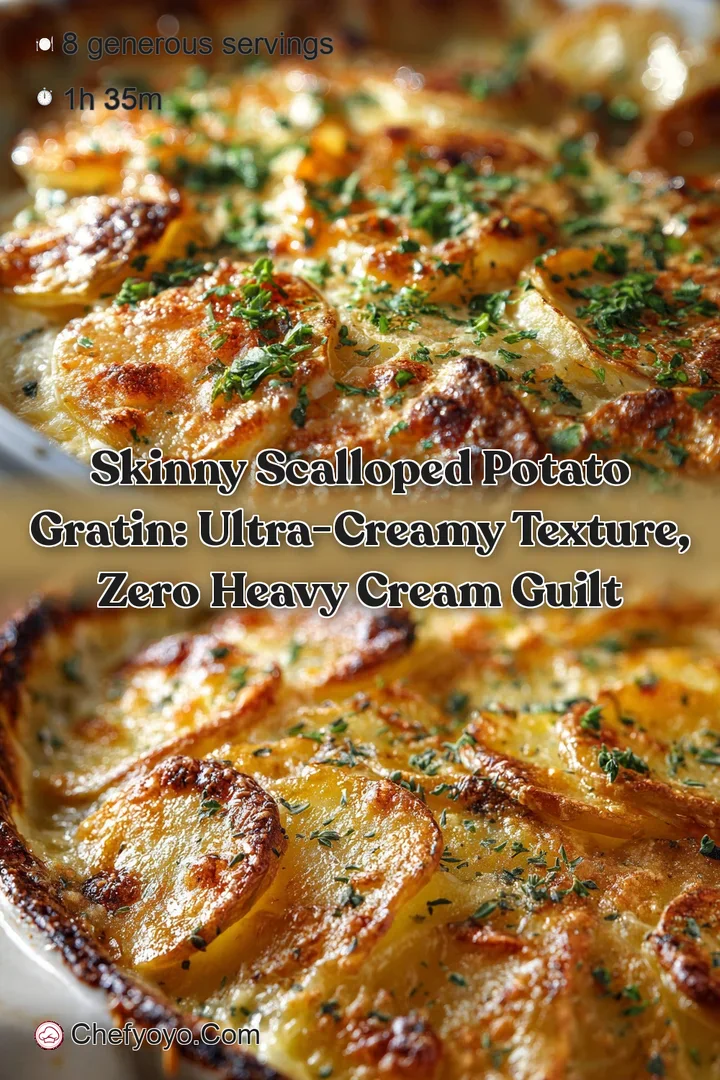
We are aiming for those impossibly soft, melt-in-your mouth potato slices topped with a shatteringly crisp, golden crust.
Classic Au Gratin Potato Recipes, while amazing, are notorious for absolutely drowning the poor spuds in heavy cream and butter. This skinny version is a total lifesaver for any Sunday dinner or holiday meal, allowing us to cut serious fat without sacrificing any of that luxurious, comforting texture.
It’s surprisingly quick to prep, seriously cheap to make, and guarantees zero post meal guilt.
I spent years testing substitutes and techniques to get this skinny scalloped potato gratin just right, forcing the humble potato’s own starch to do the hard work of thickening the sauce.
Ready to ditch the heavy stuff and make the most satisfying, healthy scalloped potato casserole you've ever had? Let’s crack on.
Achieving Perfect Texture: The Science Behind This Skinny Scalloped Potato Gratin
When you tackle a classic dish like Gratin Dauphinois, you quickly learn that the texture is everything. Most people fail because they use too much light liquid that just splits, or they end up with a watery, sad mess at the bottom of the dish.
This recipe uses three smart tricks to guarantee that creamy, thick finish we all crave.
Why We Swapped Heavy Cream for Smart Liquids
The secret here is swapping most of that heavy cream for a balanced blend of low-fat milk and savoury stock. We need moisture and intense, savoury depth, not just saturated fat, to carry the flavour.
The chicken or vegetable stock adds incredible umami and richness that the fat usually masked, making the final dish taste profoundly satisfying. This is how we create truly skinny scalloped potatoes .
Nutritional Breakdown: Classic vs. Skinny Gratin
When using half and half or heavy cream, a single serving of gratin can easily run you 450+ calories and 35g of fat. By switching to 2% milk and stock, and being smart about our cheese choices, we slash those numbers dramatically.
You get all the comfort of Potatoes Au Gratin, but each helping lands closer to 240 calories, proving that guilt free food can still be gourmet.
The Starch Solution: Why Russets (or Maris Pipers) Are Best
We are harnessing natural starch power! High starch potatoes (like Russets or British Maris Pipers) break down slightly while baking, releasing starch into the surrounding liquid. When that liquid cools and rests, the starches thicken and emulsify the low-fat sauce, creating that perfect creamy set.
That’s the magic ingredient in this skinny potato bake no extra butter needed.
Tempering and Simmering: Building the Skinny Sauce Base
When you use low-fat dairy, you run the serious risk of the milk splitting if it boils too fast or hits cold potatoes. We mitigate this risk by gently simmering the milk and stock with aromatics first, which stabilizes the dairy proteins.
It also gives the garlic and shallot time to infuse, building a complex flavour base without requiring a thick, traditional roux.
The Importance of Thin, Uniform Slicing
This isn't negotiable. If you have some slices that are 5mm thick and others that are 1mm, you will have unevenly cooked potatoes. Hard, undercooked edges are the enemy of a perfect gratin. Use a mandolin slicer set to 2mm (1/16 inch) for the best results.
If you're slicing by hand, take your time; consistency ensures every part of the gratin cooks evenly and absorbs the sauce properly. This meticulous step is the key difference between good and great.
If you struggle with slicing, you should check out my tips for making [Grilled Potato Slices: The Secret to Crispy, Flavor Packed Sides] because slicing skill is essential for both!
Essential Ingredients for Your Skinny Scalloped Potatoes
Selecting the Best Spuds for Gratin Success
I'm telling you now, skip the waxy varieties like new potatoes or fingerlings. You need starch! Russets (or British King Edward/Maris Piper) are fluffy, starchy, and ideal for this recipe because they release exactly what we need to thicken the low-fat liquid.
They give you the best foundation for a truly excellent thin scalloped potatoes recipe.
Dairy Swaps: Maximizing Creaminess Without the Fat
We rely on 2% milk because it offers a better mouthfeel than skim milk while still saving tons of fat over heavy cream. The low-sodium stock, whether chicken or vegetable, is non-negotiable as it adds the necessary savory depth without adding fat or excessive salt.
Cheesy Considerations: Choosing Flavour Over Fat Content
We aren't loading this up with mounds of cheese, so the cheese we use needs to pack a punch. Mature Cheddar is brilliant because a small amount delivers intense, sharp flavour. A little sprinkle of freshly grated Parmesan adds saltiness and helps create that incredible browned crust that gives the gratin its name.
Ingredient Substitutions and Vegan Adaptations
If you’re stuck without an ingredient, don't panic! Here are my trusted swaps:
| Ingredient | My Recommended Substitute | Notes |
|---|---|---|
| Russet Potatoes | Yellow Finn or Yukon Gold | Slightly waxier, cook covered for an extra 10 minutes. |
| 2% Milk | Full Fat Oat Milk (Vegan) | Oat milk is naturally thicker than almond milk and won't split. |
| Shallot | Half a Small Yellow Onion | Shallots offer a sweeter flavour, but white onion works fine. |
| Cheddar/Parmesan | Gruyère or Nutritional Yeast + Vegan Cheese | Gruyère melts beautifully. For vegan, use a mix of nutritional yeast and high-quality cheddar alternative. |
| Chicken Stock | Vegetable Stock | Necessary for savoury umami; just be sure it's low-sodium. |
step-by-step Guide: How to Assemble and Bake Your Skinny Potato Gratin

Preparing the Sauce and Infusing Flavour
Start by sautéing your minced shallot in the tablespoon of butter until it's translucent and soft, which takes about three minutes. Add the garlic and cook for just sixty seconds until you smell that amazing nutty aroma; do not let the garlic burn, or the whole dish will taste bitter.
Whisk in the flour quickly, cooking for another minute to remove the raw taste. Gradually pour in the milk and stock, stirring until smooth. Now, season heavily with salt, pepper, and that essential half teaspoon of fresh nutmeg.
Bring the sauce to a very low, gentle simmer and hold it there for five minutes to infuse and slightly stabilize before removing it from the heat.
Layering Technique for Maximum Creaminess
This isn't Jenga, but layering correctly matters! Arrange one-third of the thin potato slices, overlapping slightly, across the bottom of your buttered dish. Ladle one-third of the still warm sauce over this layer, then sprinkle with one-third of your cheese blend. Repeat this process two more times.
Make sure that the final layer of potatoes is completely submerged by the remaining sauce before topping it generously with all the leftover cheese.
Chef's Note: Tapping the dish gently on the counter after layering helps the milk and starch settle evenly around all the slices, preventing dry pockets.
Covered vs. Uncovered: Timing the Bake to Perfection
We bake this skinny scalloped potato gratin in two distinct stages. First, cover the dish tightly with foil and bake at 375°F (190°C) for 40 minutes. This essentially steams the potatoes, guaranteeing they become perfectly tender, even with the lighter sauce.
After 40 minutes, remove the foil and crank the heat up to 400°F (200°C) for the final 20 to 30 minutes, until the crust is bubbly, deeply golden, and gorgeous.
The Crucial Resting Period
I know you want to dig in the moment it comes out of the oven, but seriously, resist the urge. You must let the gratin rest for 15 minutes.
During this period, the residual heat continues to cook the centre, and the slightly thinner sauce thickens fully thanks to the starches stabilizing. If you cut it immediately, it will be watery and fall apart.
Mastering the Technique: Chef's Tips and Troubleshooting Common Gratin Mistakes
Preventing the Potatoes from Curdling the Sauce
This is the number one issue when making healthy scalloped potato bake recipes. The light milk can curdle if it's subjected to intense, prolonged high heat. Fix: First, simmer the sauce gently (never a rapid boil). Second, the initial covered bake at 375°F protects the sauce.
If you see signs of splitting, reduce the oven temperature immediately by 25 degrees.
Ensuring Even Cooking (No Hard Bits!)
Hard, chewy potato bits are the worst. Fix: Use that mandolin uniform slices are the foundation! Also, make sure your final layer of potatoes is completely covered by sauce before it goes into the oven.
If any potato pokes out during the covered phase, it will dry out and refuse to soften.
Achieving the Ultimate Golden Brown Crust
If your gratin is cooked but the top is pale, here’s an easy fix. After the initial covered bake, remove the foil, brush the top potato layer with a tiny amount of melted butter (1 tsp total), and top with the cheese. Bake at 400°F until deeply coloured.
You can also run it under the broiler for 60 seconds at the very end, but watch it like a hawk because cheese burns fast!
Making Ahead and Storing Your Skinny Scalloped Potato Gratin
Refrigerator and Freezer Guidelines
This is fantastic for making ahead! You can assemble the entire skinny scalloped potato gratin up to 24 hours in advance. Cover it tightly and store it in the fridge. Allow it to come to room temperature for 30 minutes before baking as directed.
For freezing, I recommend baking it completely, then cooling, covering, and freezing for up to 2 months.
Best Methods for Reheating Leftovers
If reheating a small portion, the microwave is fine, but the crust will lose its crispness. My preferred method: Preheat your oven to 350°F (175°C), cover the leftovers with foil, and bake until heated through (about 20 minutes).
For the last few minutes, remove the foil for crispness. This preserves the creamy texture beautifully.
What to Serve with Skinny Potato Gratin: Optimal Pairings
This rich tasting, creamy side dish is hearty enough to hold its own against almost any main course. It's truly one of the best side dishes for a special occasion.
Classic Main Dishes and Roasts
This gratin pairs beautifully with a simple roasted chicken, a slow cooked pork shoulder, or traditional holiday turkey. If you want a full, comforting meal, serve it alongside tender roast beef and some vibrant, steamed green beans.
Finishing the Meal
Since we saved so many calories on the main side, you can absolutely enjoy dessert! After a hearty meal featuring this gratin, I usually crave something light and fruity, like my [Skinny Chocolate Raspberry Cheesecake: The Guilt Free Light Cheesecake Recipe].
Or, if you need a quick savoury start, my [Skinny Appetizers: Zesty No-Cook Cucumber Boats with Feta] always hit the spot before the main event.
Recipe FAQs
Which type of potato is best for achieving that ultimate creamy texture?
Starchy potatoes like Russets, Maris Piper, or King Edward are highly recommended for gratin. These high starch varieties break down slightly during cooking, which naturally helps thicken the "skinny" sauce base without needing heavy cream.
Avoid waxy potatoes (like new potatoes) as they hold their shape too well and won't contribute the necessary starch for creaminess.
Since this is a "skinny" recipe, can I substitute the low-fat liquid for heavy cream if I prefer a richer dish?
Absolutely. If you prefer a traditional, high fat gratin, you can easily swap the skimmed milk, broth, or half and-half mixture for heavy cream (double cream) or a combination of cream and whole milk.
Note that using heavy cream will significantly increase the richness and fat content, but the overall layering and cooking time should remain consistent.
My gratin came out watery or runny. What caused this, and how can I prevent it?
A watery gratin is often caused by residual moisture on the potatoes or too much liquid added initially. Ensure that after slicing, you pat the potato slices completely dry with a paper towel; this allows the starch to absorb the sauce rather than being diluted by surface water.
Additionally, covering the gratin too tightly during the final baking stages can trap steam and lead to sogginess.
Can I assemble the gratin the night before and bake it the next day?
Preparing the gratin too far in advance is not recommended, as the raw potatoes will absorb the liquid and result in a mushy texture once baked. If you must prep early, slice the potatoes and store them submerged in cold water in the fridge, assembling the gratin just a few hours before baking.
For best results, bake immediately after assembly.
My potatoes are still hard or slightly undercooked after the recommended baking time. What went wrong?
If the potatoes are tough, they were likely sliced too thickly or the oven temperature was too high, causing the crust to set before the interior cooked. Ensure your slices are uniformly thin (ideally 1/8 inch or 3mm) and always cover the dish tightly with foil for the first half of the baking time to allow the potatoes to steam and soften properly.
What is the best way to store and reheat leftover potato gratin?
Store any leftovers tightly covered in the refrigerator for up to 3 days. To reheat, individual portions warm up well in a microwave, or you can cover the entire dish with foil and bake at 350°F (175°C) until thoroughly heated. Remove the foil for the last five minutes to refresh the crispy crust.
Can I add cheese to this skinny version, and if so, what type works best?
Yes, incorporating a small amount of strong cheese won't drastically increase the calories and adds depth of flavour. Gruyère, mature cheddar, or a mild Parmesan are excellent choices; sprinkle a light layer between the potatoes and ensure a final layer of cheese is added 15 minutes before the end of baking for a golden brown finish.
Skinny Scalloped Potato Gratin Recipe

Ingredients:
Instructions:
Nutrition Facts:
| Calories | 521 kcal |
|---|---|
| Protein | 20.1 g |
| Fat | 16.7 g |
| Carbs | 73.4 g |
