Perfect Peanut Butter Rice Krispie Treats: the Softest Recipe
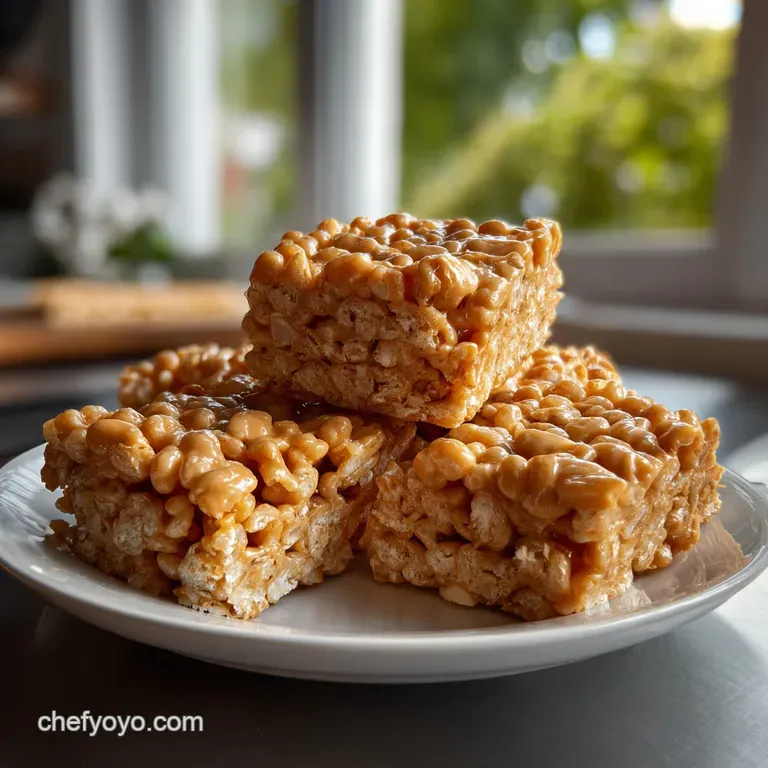
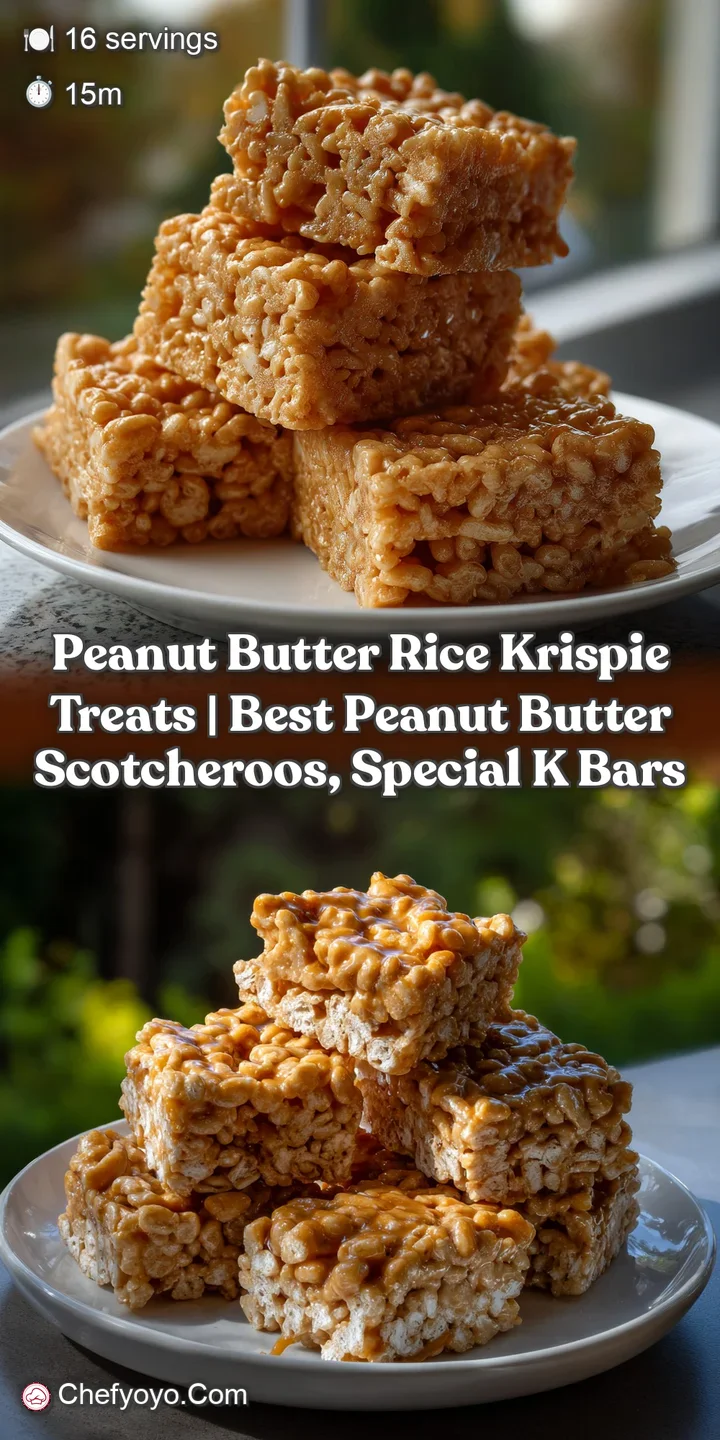
- Effort/Time:15 minutes (Low effort, high precision)
- Flavor Hook: Salted-toffee undertones meets roasted nut richness
- Perfect for: Make-ahead school lunches or high-energy trail snacks
Mastering the Balance of Chewy and Nutty Textures
We’ve all experienced the "concrete block" disaster: you reach for a homemade treat only to find it has fossilized into something capable of chipping a tooth. This usually happens because the sugar in the marshmallows was heated too quickly or too high, causing it to enter the "hard crack" stage.
I spent three summers ruining batches at bake sales before I realized that temperature control is more important than the brand of cereal you buy.
The secret to professional grade peanut butter rice krispie treats isn't just adding more butter; it’s about managing the emulsion. When you introduce peanut butter into a marshmallow base, you are essentially creating a stabilized lipid sugar matrix.
If the emulsion breaks, you get greasy bottoms; if the sugar over caramelizes, you get edible bricks.
The result we’re hunting for is a glossy, pull apart texture that maintains its structural integrity without requiring a saw to cut. This recipe uses specific ratios from the Rice Crispy Treats recipe framework but adapts the chemistry for the heavy protein and fat load of the peanut butter. Expect a treat that yields to the touch but crackles with every bite. This recipe elevates the standard cereal bar into true peanut butter rice krispie treats.
The Molecular Synergy of Lipid Stabilized Sugar Matrices
Controlled Recrystallization: The addition of peanut butter fats coats the sugar molecules in the marshmallows, preventing them from forming a rigid, crystalline structure as they cool.
Starch Protection: Butter and peanut butter lipids create a hydrophobic barrier around the toasted rice, keeping the cereal from absorbing atmospheric moisture and turning soggy.
Essential Kitchen Metrics for Consistent Batch Results
| Metric | Value |
|---|---|
| Yield | 16 servings |
| Prep Time | 10 minutes |
| Cook Time | 5 minutes |
| Total Time | 15 minutes |
| Optimal Setting Temp | 68°F (Room Temp) |
Sourcing high-quality Lipids and Aerated Sucrose Elements
- 1/2 cup (115g) Kerrygold Unsalted Butter: Why this? High butterfat content ensures a richer mouthfeel and superior emulsification compared to water heavy margarines.
- 10 oz (283g) Jet-Puffed Fresh Mini Marshmallows: Why this? Mini versions melt 40% faster, reducing the time the sugar is exposed to high heat.
- 3/4 cup (190g) Jif Creamy Peanut Butter: Why this? Standard commercial creamy PB contains stabilizers that prevent oil separation during the melting phase.
- 1 tsp (5ml) Nielsen Massey Pure Vanilla Extract: Adds floral aromatic depth to balance the heavy roasted nut notes.
- 1/4 tsp Diamond Crystal Fine Sea Salt: Breaks the sweetness threshold and enhances the "toasted" flavor of the rice.
- 6 cups (160g) Kellogg's Toasted Rice Cereal: The structural foundation; must be fresh to ensure the characteristic "shatter" texture.
Precision Tools for Optimal Heat Distribution
To achieve a Masterclass finish, don't just grab any pot. A Lodge Enamel Cast Iron Dutch Oven is preferred because its heavy bottom prevents hot spots that scorch marshmallows. You will also need an 8x8-inch USA Pan Square Cake Pan for sharp, professional edges. A silicone spatula is mandatory; wooden spoons will trap too much of the sticky mixture in their grain. Much like the precision needed for a Butter Cookie Recipe, using a heavy bottomed vessel ensures the fats don't break before the cereal is folded in.
Mastering the Thermal Phase Transitions of Peanut Butter Treats
- Grease your 8x8 pan with a light coating of butter.
- Melt 1/2 cup (115g) Unsalted Butter in a large pot over low heat until it begins to foam and hiss slightly.
- Incorporate 10 oz (283g) Fresh Mini Marshmallows into the melted butter.
- Stir constantly for 3 minutes until the marshmallows lose their shape and form a smooth, opaque white cloud.
- Remove the pot from the heat immediately to prevent the sugar from reaching the hard ball stage.
- Whisk in 3/4 cup (190g) Creamy Peanut Butter until the mixture turns a uniform pale tan and looks velvety.
- Fold in 1 tsp (5ml) Pure Vanilla Extract and 1/4 tsp Fine Sea Salt until the nutty aroma becomes fragrant.
- Add 6 cups (160g) Toasted Rice Cereal all at once.
- Stir gently from the bottom up until every grain of cereal is thinly coated in a glossy sheen.
- Transfer the mixture to the prepared pan and press down with buttered fingers until the surface is level but not compressed.
- Cool at room temperature for 1 hour until the treats feel firm and the tackiness subsides.
Chef's Tip: Freeze your butter for 10 minutes before starting. Then, grate it into the pot. This increases the surface area, allowing the butter to melt at a lower temperature, which protects the marshmallow proteins from toughening.
Resolving Structural Integrity Issues and Texture Imbalances
Why Your Treats Are Rock Hard
If your peanut butter rice krispie treats feel like bricks, you likely fell victim to sugar crystallization. When marshmallows are heated past 110°F, the water evaporates, leaving behind a concentrated sugar syrup that sets into a hard lattice.
| Problem | Root Cause | The Fix | Pro Protocol |
|---|---|---|---|
| Soggy Cereal | High humidity or old cereal | Use fresh boxes; store in airtight containers | Toast cereal in a 300°F oven for 5 mins before mixing |
| Falling Apart | Not enough binder/too much PB | Increase marshmallow count by 10% | Ensure PB is fully emulsified into the butter before adding cereal |
| Greasy Film | Broken butter emulsion | Stir faster during the melting phase | Use a whisk to re-emulsify the fats if you see oil pooling |
Creative Architecture for Expanding Your Dessert Portfolio
Peanut Butter Scotcheroos Twist
To transform these into the midwestern classic, melt a 1:1 ratio of semi sweet chocolate chips and butterscotch chips. Spread this over the set treats. The chocolate provides a "snap" that contrasts with the chewy base.
The integrity of the base layer is crucial for successful Scotcheroos made from peanut butter rice krispie treats.
Ingredient Chemistry Breakdown
| Ingredient | Chemical/Physical Role (Science) | The Pro Secret (Why This Matters) | ||||
|---|---|---|---|---|---|---|
| Marshmallows | Gelatin stabilized sugar foam | Provides the elastic "tug" that defines a chewy treat | ||||
| Peanut Butter | High viscosity lipid suspension | Disrupts sugar crystal formation for a softer bite | ||||
| Toasted Rice | Aerated starch matrix | Provides the "shatter" texture and structural volume | Original Ingredient | Substitute | Why It Works | |
| :--- | :--- | :--- | ||||
| Unsalted Butter | Coconut Oil (refined) | Similar solid-to-liquid melting point. Note: Lacks dairy solids, so flavor is less "toffee like" | ||||
| Creamy Peanut Butter | Almond Butter (no-stir) | Similar fat-to-protein ratio. Note: Results in a grainier texture | ||||
| Rice Cereal | Puffed Quinoa | Higher protein content. Note: Adds a bitter, earthy note |
Preserving Kinetic Crunch and Moisture Content Over Time
Storage: Store peanut butter rice krispie treats at room temperature in an airtight container for up to 5 days. Do not refrigerate; the cold air will cause the sugar to tighten and the cereal to draw in moisture, leading to a "stale" texture.
Freezing: Wrap individual bars in parchment paper, then place in a heavy duty freezer bag. They last 2 months. Thaw at room temperature for 30 minutes before eating.
💡 ZERO WASTE: Don't discard the "crumbs" at the bottom of the cereal box. Transform: Pulse them in a blender to make a nutty, sweet breading for French toast. Science: The residual sugar and toasted starch create a caramelized crust when hit with heat. This technique is similar to how we use leftovers in a Garlic Butter recipe to maximize flavor profiles.
Non-Linear Scaling Laws for Bulk Production
When doubling this recipe, you must respect the laws of thermal mass.
- Thermal Mass Warning: A double batch of marshmallow fluff retains heat 40% longer. This means the cereal in the center of the pot will stay hot longer, potentially losing the crunch of your peanut butter rice krispie treats.
- The 1.5x Rule: When doubling, only use 1.5x the salt. Salt accumulates non-linearly in sugar fat emulsions, and a full 2x dose will overpower the delicate vanilla.
- Pan Crowding: Do not double the recipe and put it into a single 8x8 pan. The increased depth (volume scales cubicly) prevents the center from setting properly. Use two separate pans.
Common Myths Debunked
Myth: "You need to press the treats down hard to make them stay together." Truth: Compression destroys the air pockets in the rice cereal. Gently patting them into place preserves the "shatter" and makes them much easier to bite through.
Myth: "High heat melts marshmallows faster and better." Truth: High heat causes the gelatin in the marshmallows to denature and the sugar to caramelize. This results in a "tough" treat.
Low and slow is the only way to maintain the velvety texture of peanut butter rice krispie treats.
Presentation Aesthetics and Flavor Pairing Strategies
For a "Masterclass" presentation, use a hot knife to cut the bars. Dip a sharp chef's knife in boiling water, wipe it dry, and slice in one clean motion. This prevents the marshmallows from "dragging" and gives you perfectly flat, professional sides.
Pair these treats with a glass of cold whole milk or a dark roast espresso. The bitterness of the coffee cuts through the 11.3g of sugar per serving, highlighting the roasted notes of the peanut butter.
If you're feeling adventurous, top with a sprinkle of Maldon sea salt flakes immediately after pressing into the pan to create a "salted caramel" effect that is absolutely irresistible.
Give these peanut butter rice krispie treats a try next time you need a crowd pleaser that actually tastes like it came from a high end bakery.
Recipe FAQs
How long will these treats stay soft?
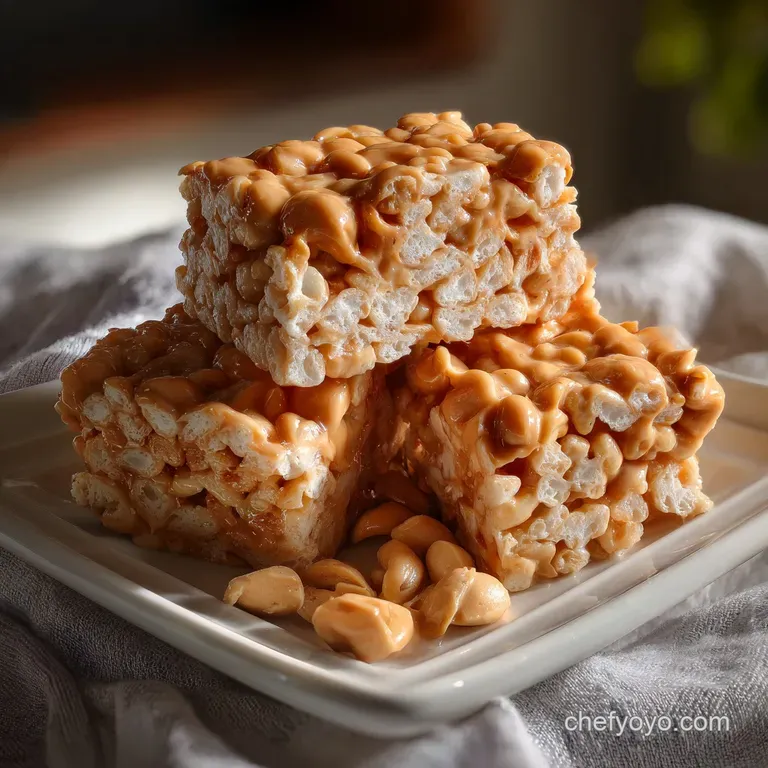
Controlled lipid emulsification maintains moisture retention for days. This technique prevents crystalline sugar hardening commonly found in brittle bars.
- Store in airtight container
- Avoid direct refrigeration
- Ensure peanut butter is fully melted
Should I use creamy or crunchy peanut butter?
Creamy peanut butter stabilizes texture best. Crunchy peanut butter introduces uncontrolled particulate matter, interrupting the smooth lipid suspension necessary for velvety mouthfeel. If you enjoyed mastering fat suspension here, see how the same principle applies to achieving the perfect dipping texture in our Fresh Spring Rolls with Peanut Sauce Ultimate Satay Dipping.
What temperature should the melted marshmallow mix be?
Aim for 180°F, just past the stretch point. Overheating causes sugar inversion and water evaporation, resulting in excessive firmness upon cooling. Undermixing prevents proper binding.
Can I substitute the butter with oil?
No, oil cannot replace butter in this application. Butter contains essential milk solids that aid in emulsion stability through minor protein bonding. Oil lacks these solids, leading to a greasy, unstable final product.
Why are my treats cracking when I press them into the pan?
The mixture was manipulated when the gelatinized matrix was too stiff. Temperature drop too rapid causes the marshmallow polymers to lock before uniform density is achieved.
- Use parchment paper barrier
- Apply light, even pressure
- Work quickly after mixing
Myth: Browning the butter adds significant flavor.
Myth: Browning the butter adds significant flavor. Correction: While brown butter adds nutty notes, excessive heating evaporates too much moisture needed for the marshmallow binding integrity. Focus on even melting instead of deep Maillard development.
Myth: Using stale marshmallows affects the final texture.
Myth: Using stale marshmallows affects the final texture. Correction: Stale marshmallows have lost moisture, meaning you must increase the liquid binder slightly to compensate for lower initial water content.
Soft Peanut Butter Krispie Treats
Ingredients:
Instructions:
Nutrition Facts:
| Calories | 216 kcal |
|---|---|
| Protein | 3.7 g |
| Fat | 11.8 g |
| Carbs | 25.5 g |
| Fiber | 0.7 g |
| Sugar | 11.3 g |
| Sodium | 199 mg |
