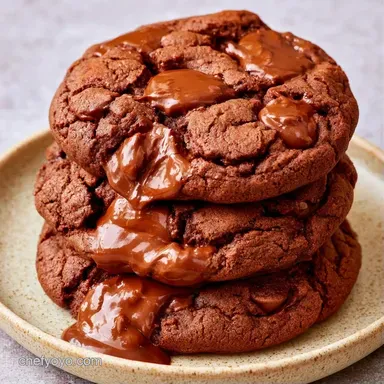
Fudgy Triple Chocolate Chunk Cookies
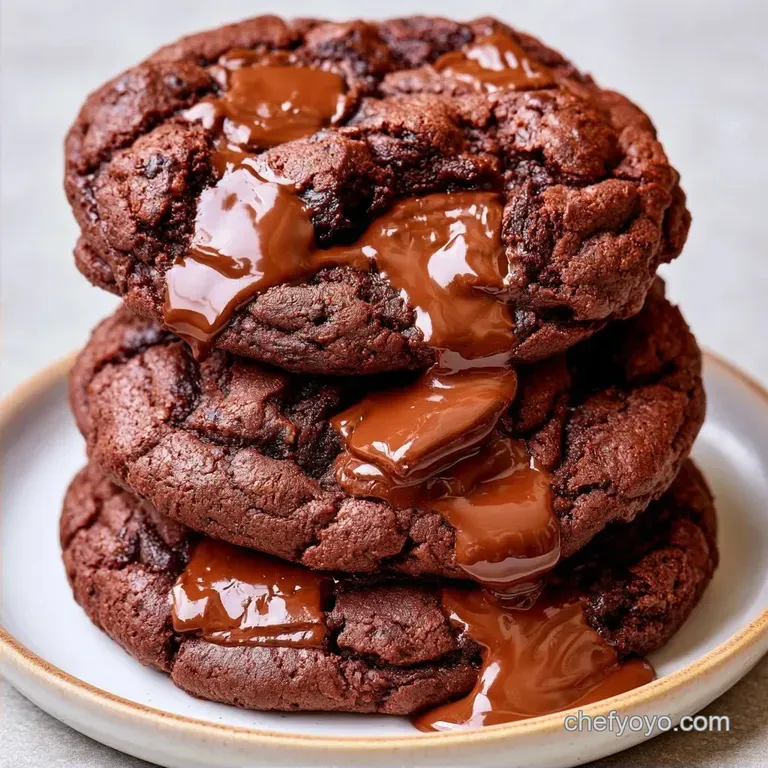
- Time: 10 min active + 11 min baking
- Flavor/Texture Hook: Molten chocolate pools with a shattering outer crust
- Perfect for: Last minute cravings or a rustic dessert platter
Ever wonder why some chocolate cookies taste like dry cocoa powder while others resemble a molten brownie? It typically comes down to the interaction between fats and cocoa solids.
While many believe you need to chill the dough for 24 hours to get that deep, professional taste, that's a huge time commitment when you have a craving right now.
I once believed that a rich result required buying pricey, single origin bars. However, I discovered that combining several different types of chocolate produces a more complex profile than any single bar alone. These Triple Chocolate Chunk Cookies focus on the contrast between bitter dark, creamy milk, and sweet white chocolate.
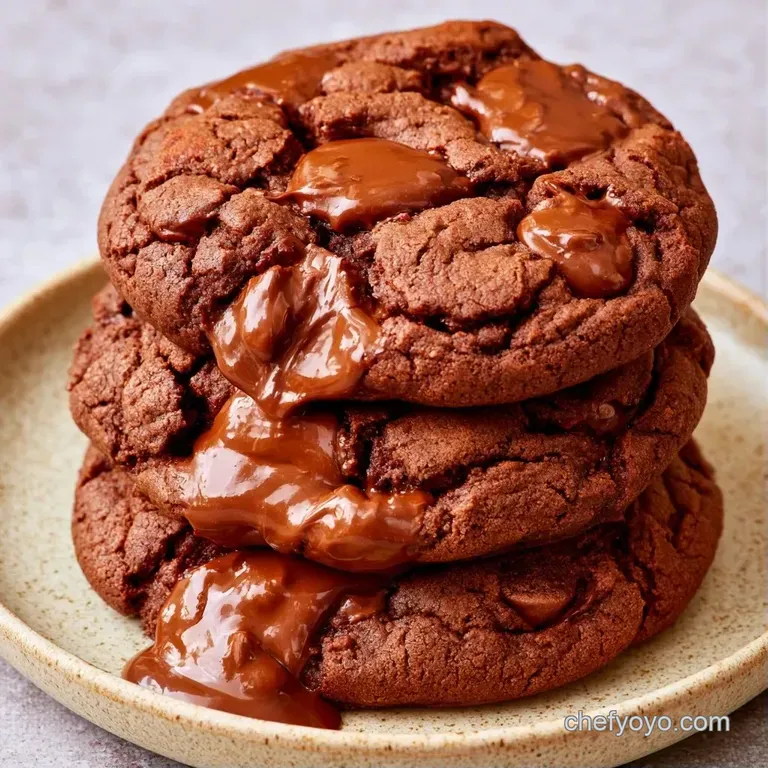
You can expect a mahogany hued cookie that stays soft in the center. We're going for a rustic appearance, so don't stress if they aren't perfectly circular. The goal is pools of melted chocolate and an aroma that fills the whole house.
Why the Texture Works
Cocoa Absorption: Dutch processed cocoa absorbs more liquid than flour, which helps the center stay fudgy rather than cakey.
Sugar Balance: Using more brown sugar than white adds moisture and a slight molasses note that deepens the chocolate flavor.
| Method | Time | Texture | Best For |
|---|---|---|---|
| Fast Bake | 21 mins | Soft and Gooey | Immediate cravings |
| Classic Chill | 24 hours | Chewy and Dense | Formal parties |
Recipe Specs
These cookies rely on a balance of fats to ensure they don't spread into flat pancakes. I’ve found that keeping the butter softened but not melted is the key to that slight dome shape.
For the best result, use a kitchen scale. Volume measurements for flour can vary wildly, but 180g is always 180g. This prevents the common issue of dry, crumbly cookies.
Gathering Your Essentials
I recommend hand chopping dark and milk chocolate bars. This yields rustic chunks that melt into pools, which is far superior to the uniform shape of store-bought chips.
| Ingredient | What It Does | Best Swap |
|---|---|---|
| Dutch processed Cocoa | Deep hue and earthy flavor | Natural cocoa (add 1/4 tsp baking soda) |
| Brown Sugar | Creates chewiness and moisture | Coconut sugar (slightly drier) |
| Unsalted Butter | Adds richness and structure | Coconut oil (solid state) |
The Full List
- 1.5 cups (180g) all purpose flour Why this? Ensures a tender texture. Swap: Spelt flour.
- 0.5 cup (45g) Dutch processed cocoa powder Why this? Lower acidity for a richer shade. Swap: Natural cocoa.
- 1 tsp (5g) baking soda Why this? Provides lift for the dense batter. Swap: 3 tsp baking powder.
- 0.5 tsp (3g) sea salt Why this? Balances the sweetness. Swap: Table salt.
- 0.5 cup (113g) unsalted butter, softened Why this? Whipping in air for better lift. Swap: Margarine.
- 0.5 cup (100g) packed light brown sugar Why this? For a soft, chewy middle. Swap: Dark brown sugar.
- 0.25 cup (50g) granulated white sugar Why this? Creates those crisp edges. Swap: Caster sugar.
- 1 large (50g) egg Why this? Acts as the glue for the mix. Swap: Flax egg.
- 2 tsp (10ml) pure vanilla extract Why this? Softens the intensity of the cocoa. Swap: Maple syrup.
- 0.5 cup (85g) dark chocolate chunks Why this? Gives a bold, bitter edge. Swap: Semi sweet chips.
- 0.5 cup (85g) milk chocolate chunks Why this? Adds a creamy element. Swap: Semi sweet chips.
- 0.5 cup (85g) white chocolate chips Why this? Offers a sugary counterpoint. Swap: Butterscotch chips.
Equipment Needed
While you can get by with the basics, a few tools will speed things along. An electric hand mixer is ideal for creaming the butter, though you can certainly do it by hand if you don't mind the extra effort.
I always rely on parchment paper to prevent the cookies from sticking and to simplify cleanup. A cookie scoop is helpful for keeping the sizes consistent, but a tablespoon works just as well.
Step-by-step Instructions
1. Preparing the Station
Set your oven to 350°F (175°C). To prevent sticking, line two baking trays with parchment paper.
2. Whisking the Dry Ingredients
Pass the flour, cocoa powder, baking soda, and salt through a sieve into a medium bowl. Note: Sifting is essential for cocoa to eliminate clumps.
3. Creaming the Fats and Sugars
Using a mixer, cream together the room temperature butter along with the white and brown sugars. Continue for 2-3 minutes until the mixture is light and airy.
4. Integrating the Liquids
Stir in the vanilla extract and egg. Mix at a medium pace until the consistency is creamy and well blended.
5. Mixing the Base
Slowly add the dry flour mixture into the wet ingredients. Stir on low until only a few streaks of flour remain. Avoid overmixing to ensure the cookies do not become tough.
6. Folding in the Chunks
Using a rubber spatula, gently stir in the milk, dark, and white chocolate chunks. Mix until the pieces are evenly distributed through the dough.
7. Scooping the Dough
Place rounded tablespoons of dough onto the trays. Leave a 2 inch gap between each scoop to allow for spreading.
8. Baking to Perfection
Bake for 10-11 minutes until the perimeter is firm while the middle remains a bit soft. They will harden further as they cool.
How to Fix Common Problems
Cookies that flatten too much often result from butter that was too warm at the start. The fat liquefies too rapidly in the oven before the structure can set.
Overworking the dough after incorporating the flour can lead to a sandy or dry consistency. Excess gluten development destroys that desired fudgy quality.
Preventing Flat Cookies
If the dough seems oily, place the scooped balls in the freezer for 5 minutes to stabilize the fat.
Fixing a Dry Crumb
To avoid using too much flour, use a spoon to fill your measuring cup instead of dipping the cup directly into the bag.
Avoiding Burnt Bottoms
Inspect your oven rack placement. Shift the rack up one position if it is sitting too close to the heating element.
| Problem | Fix |
|---|---|
| Cookies spread too much | Chill dough balls for 5-10 mins |
| Center is too raw | Bake for an extra 1-2 mins |
| Cocoa clumps in dough | Sift cocoa powder with flour |
Dietary Adaptations
To add a nuttier note, stir in 0.5 cup of toasted walnuts. This provides a satisfying crunch that balances the decadence of these chocolatey treats.
For those craving a more buttery foundation, my Butter Cookie Recipe is another great option.
Decision Shortcut:
- Want more bitterness? → Boost the dark chocolate to 1 cup.
- Prefer a saltier finish? → Top with flaky sea salt immediately after baking.
- Looking for a chewier texture? → Replace white sugar with more brown sugar.
| Ingredient | Budget Swap | Impact |
|---|---|---|
| Pure Vanilla | Vanilla Essence | Slightly less depth, costs 70% less |
| Name Brand Chunks | Store Brand Bars | Nearly identical results if chopped |
| Dutch Cocoa | Natural Cocoa | Lighter color, slightly more acidic |
Freezing and Reheating Guide
Keep baked cookies in a glass jar or airtight container for up to 4 days. They will harden more quickly if left uncovered on a plate.
I suggest freezing the raw dough balls. Place them on a tray to freeze individually before transferring them to a bag. You can bake these directly from frozen; simply increase the baking time by 2 minutes.
To reheat, microwave a cookie for 10 seconds. This melts the chocolate chunks again and restores that fresh baked quality.
Pairing Ideas
Since these are very rich, they pair well with something acidic or bitter. A cold glass of milk is the classic choice, but a strong espresso also works.
If you're making a dessert board, add some fresh raspberries or sliced strawberries. The tartness of the berries cuts through the heavy chocolate.
Getting the Texture Right
The real trick to these Homemade Triple Chocolate Chunk Cookies is the "underbake." If you wait until they look fully cooked in the oven, they will be dry once they cool.
As the cookies sit on the hot pan for 5 minutes after baking, carryover heat finishes the center. This is how you get that velvety, fudgy middle.
Debunking Cookie Myths
Some say you must use melted butter for chewy cookies. Actually, creaming softened butter creates air pockets that provide a better lift.
Another common idea is that more chocolate equals more spread. In reality, the chunks act as structural barriers that actually help the cookie hold its height.
For more variety in your baking, you might like these Chocolate Chip Cookies which are a bit lighter.
Scaling the Recipe
If you're doubling the batch, don't double the salt or baking soda exactly. Use 1.5x for those to avoid a metallic taste.
For a half batch, beat one egg in a small bowl and use about 2 tablespoons of it. This keeps the hydration ratio correct. If you're baking a double batch, lower the oven temp by 25°F and bake for a few minutes longer to ensure the centers cook without burning the edges.
Recipe FAQs
What makes a triple chocolate cookie?
It combines a chocolate based dough with three different types of chocolate. This recipe uses cocoa powder in the batter along with dark, milk, and white chocolate chunks.
Which chocolate works best for these chunks?
High-quality bars chopped into irregular pieces create the best pools of melted chocolate. Using chunks instead of chips provides a more professional texture and better flavor release.
Is it true that dark chocolate chips aren't suitable for baking cookies?
No, this is a common misconception. Dark chocolate chips hold their shape well and add a sophisticated bitterness that balances the sugar.
How to create the perfect cookie texture?
Mix the butter and sugars for 2-3 minutes until pale and fluffy. If you enjoyed handling this thick batter, see how the same precision works in our cookie dough ice cream.
How do I prevent the cookies from overbaking?
Pull the sheets from the oven when the edges are set but the centers still look slightly underbaked. They will finish firming up on the hot pan during the cooling process.
Why are my cookies flattening too much?
This usually happens if the butter is too melted or the oven is not yet at 350°F. Ensure your butter is softened but still cool to the touch before beating.
Should the cocoa powder be sifted?
Sifting is essential because cocoa powder naturally forms tight clumps. This step ensures a smooth batter without bitter pockets of dry powder.
Triple Chocolate Chunk Cookies